Pudgy Penguins come to Melbourne

Last week, I got to chill out with some of the Pudgy Penguins crew, as they launched the Oceania chapter of their NFT community. In case you weren’t aware, Pudgy Penguins are one of the top NFT collections, and have built a loyal fan base for these digital characters.

I went to a major Pudgy Penguin “Pengu Fest” in Hong Kong last year, and got to see first hand how engaged their members are. I also gained some insights as to how this ecosystem enables their NFT holders to license the IP associated with their individual characters into royalty-based income. In short, a subset of the NFT characters are chosen to be turned into merchandise. (For example, Pudgy Penguin soft toys are available in major stores such as Walmart in the USA, and Big W in Australia.) Owners of the selected NFTs earn a percentage of the sales revenue (less tax and production costs etc.).

The most recent collection of Pudgy collectibles are the Igloo figurines, which include early online access to Pudgy World. As a proud owner of one of these plastic figures, I’m still not sure what I have let myself in for…

As well as local meetups, other ways in which the community can interact include a trading card game called Vibes, also launched via the Overpass IP licensing platform.

Igloo Inc, the parent company to Pudgy Penguins and Overpass, has also announced it is launching a Layer 2 blockchain on Ethereum, to be called Abstract, and is being positioned as a “the blockchain for consumer crypto”.

Whatever your views on crypto, NFTs, on-line worlds and collectibles, there is no doubt that Pudgy Penguins have set themselves up with the admirable goals of building a healthy and inclusive community, underpinned by the twin pillars of individual creativity and positive culture.

To crypto sceptics (and the merely crypto curious), the “community” and the enthusiasm of its members could resemble something of a cult. Someone did say during last week’s panel discussion that “I am my penguin, and my penguin is me”. But there are worse things for people to get involved with – and for younger people (I don’t regard myself as part of the Pudgy core demographic), I can see the appeal. For example, your Pudgy Penguin PFP can act as a protective avatar as you engage and explore online – allowing you to share only the personal information that you want to, while you build up trust with other community participants, and before you choose to meet IRL.

There was also a discussion about the difference between meme coins and NFTs – the short answer is that the former represent pure speculation, while the latter aim to create value for their holders. In fact, someone suggested that meme coin trading is not that different to punting on betting apps. But since most NFT collections are well down on their market highs of a couple of years ago, maybe NFT holders and communities like Pudgy Penguins are trying to convince themselves that they are still backing a winner?

Overall, however, I remain positive to the opportunities that NFTs represent – especially in the creative fields, and as a new model for IP licensing. Even if cute flightless birds from the southern hemisphere are not your thing, I don’t think you can dismiss or ignore the social, cultural and economic impact that NFTs will have.

Next week: “When I’m Sixty-Four”


The Maker Culture

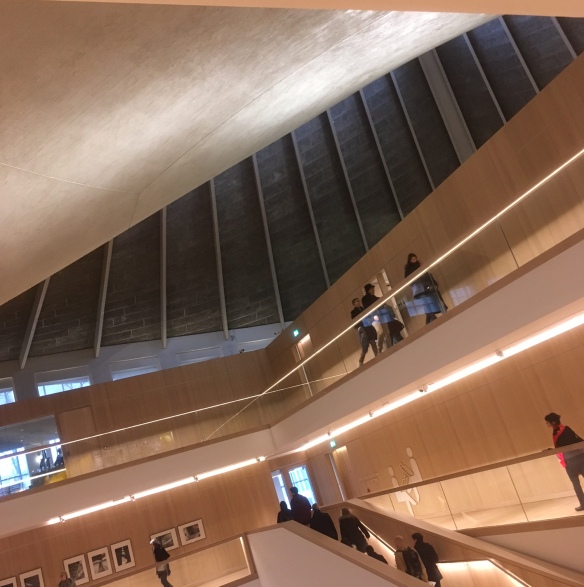
London’s newly re-opened Design Museum welcomes visitors with a bold defining statement of intent. According to the curators, there are only designers, makers and users. To me, this speaks volumes about how the “makers” are now at the forefront of economic activity, and how they are challenging key post-industrial notions of mass-production, mass-consumption and even mass-employment. Above all, as users, we are becoming far more engaged with why, how and where something is designed, made and distributed. And as consumers we are being encouraged to think about and take some responsibility for our choices in terms of environmental impact and sustainability.

Design Museum, London (Photo: Rory Manchee)

Design Museum, London (Photo: Rory Manchee)

There are several social, economic, technological and environmental movements that have helped to define “maker culture”, so there isn’t really a single, neat theory sitting behind it all. Here is a (highly selective) list of the key elements that have directly or indirectly contributed to this trend:

Hacking – this is not about cracking network security systems, but about learning how to make fixes when things that don’t work the way that we want them to, or for creating new solutions to existing problems – see also “life hacks”, hackathons or something like BBC’s Big Life Fix. Sort of “necessity is the mother of invention”.

Open source – providing easier access to coding tools, software programs, computing components and data sources has helped to reduce setup costs for new businesses and tech startups, and deconstructed/demystified traditional development processes. Encompasses everything from Linux to Arduino; from Github to public APIs; from AI bots to widget libraries; from Touch Board to F.A.T. Lab; from SaaS to small-scale 3-D printers.

Getting Sh*t Done – from the Fitzroy Academy, to Andrea de Chirico’s SUPERLOCAL projects, maker culture can be characterised by those who want: to make things happen; to make a difference; to create (social) impact; to get their hands dirty; to connect with the materials, people, communities and cultures they work with; to disrupt the status quo; to embrace DIY solutions; to learn by doing.

The Etsy Effect – just part of the response to a widespread consumer demand for personalised, customised, hand-made, individual, artisan, crafted, unique and bespoke products. In turn, platforms like the Etsy and Craftsy market places have sparked a whole raft of self-help video guides and online tutorials, where people can not only learn new skills to make things, they can also learn how to patch, repair, re-use, recycle and re-purpose. Also loosely linked to the recent publishing phenomena for new magazines that combine lifestyle, new age culture, philosophy, sustainability, mindfulness, and entrepreneurism with a social conscience.

Startups, Meetups and Co-working Spaces – if the data is to be believed, more and more people want to start their own ventures rather than find employment with an existing organisation. (Under the gig economy, around 40% of the workforce will be self-employed, freelance or contractors within 5 years, so naturally people are having to consider their employment options more carefully.) While starting your own business is not for everyone, the expanding ecosystem of meetups and co-working spaces is enabling would-be entrepreneurs to experiment and explore what’s possible, and to network with like-minded people.

Maker Spaces – also known as fabrication labs (“FabLabs”), they offer direct access to tools and equipment, mostly for things like 3-D printing, laser-cutting and circuit-board assembly, but some commercial facilities have the capacity to support new product prototyping, test manufacturing processes or short-run production lines. (I see this  interface between “cottage industry” digital studios and full-blown production plants as being critical to the development of high-end, niche and specialist engineering and manufacturing services to replace the declining, traditional manufacturing sectors.) Some of the activity is formed around local communities of independent makers, some offer shared workshop spaces and resources. Elsewhere, they are also run as innovation hubs and learning labs.

Analogue Warmth – I’ve written before about my appreciation for all things analogue, and the increased sales of vinyl records and even music cassettes demonstrate that among audiophiles, digital is not always better, that there is something to be said for the tangible format. This preference for analogue, combined with a love of tactile objects and a spirit of DIY has probably reached its apotheosis (in photography at least) through Kelli Anderson’s “This Book Is A Camera”.

Finally, a positive knock-on effect of maker culture is the growing number of educational resources for learning coding, computing, maths and robotics: Raspberry PI, Kano and Tech Will Save Us; KidsLogic, Creative Coding HK and Machinam; Robogals, Techcamp and robokids. We can all understand the importance of learning these skills as part of a well-rounded education, because as Mark Pascall, founder of 3months.com, recently commented:

“I’m not going to advise my kids to embark on careers that have long expensive training programs (e.g. doctors/lawyer etc). AI is already starting to give better results.”

Better to learn how things work, how to design and make them, how to repair them etc., so that we have core skills that can adapt as technology changes.

Next week: Life Lessons from the Techstars founders