F for Facsimile: What are ‘Digital Forgeries’?

Last week, I attended the 2014 Foxcroft Lecture, given by Nicholas Barker, entitled “Forgery of Printed Documents”. The lecture prompted the question, what would we consider to be a ‘digital forgery’?

Make Up

The lecture was an investigation into a practice that emerged in the 18th century, when reproductions (‘fac similes’ – Latin for ‘make alike’) of early printed texts were created either as honest replicas, or to enable missing pages from antiquarian books to be restored to ‘make up’ a complete work. In some cases, the original pages had been removed by the censors, for others the pages had been left out in error during the binding process, and mostly they had simply been lost through damage or age.

Other factors created the need for these facsimiles: the number of copies of a book that could be printed at a time was often limited by law (censorship again at work), or works were licensed to different publishers in different markets, but printed using the original plates to save time and money.

Despite the innocent origins of facsimiles, unscrupulous dealers and collectors found a way to exploit them for financial gain – and of course, there were also attempts to pass off completely bogus works as genuine texts.

Replication vs Authentication

Technology has not only made the mass reproduction of written texts so much easier, it has also changed the way physical documents are authenticated – for example, faxed and scanned copies of signed documents are sometimes deemed sufficient proof of their existence, as evidence of specific facts, or in support of a contractual agreement or commercial arrangement. But this was not always the case, and even today, some legal documents have to be executed in written, hard-copy form, signed in person by the parties and in some situations witnessed by an independent party. For certain transactions, a formal seal needs to be attached to the original document.

Authenticating digital documents and artifacts present us with various challenges. Quite apart from the need to verify electronic copies of contracts and official documents, the ubiquity of e-mail (and social media) means it has been a target for exploitation by hackers and others, making it increasingly difficult to place our trust in these forms of communication. As a result, we use encryption and other security devices to protect our data. But what about other digital content?

Let’s define ‘digital artifacts’ in this context as things like software; music; video; photography; books; databases; or digital certificates, signatures and keys. We know that it is much easier to fabricate something that is not what it purports to be (witness the use of photo-editing in the media and fashion industries), and there is a corresponding set of tools to help uncover these fabrications. Time stamping, digital watermarks, metadata and other devices can help us to verify the authenticity and/or source of a digital asset.

Multiplication

In the case of fine art, the use of digital media (as standalone images or video, as part of an installation, or as a component in mixed media pieces) has meant that some artists have made only a single unique copy of their work, while others have created so-called ‘multiples’ – large-scale editions of their work. (The realm of ‘digital works’ and ‘digital prints’ produced by photographers and artists is worthy of a separate article.)

Making copies of existing digital works is relatively simple – the technology to reproduce and distribute digital artifacts on a widespread scale is built into practically every device linked to the Internet. Not all digital reproduction and file sharing is theft or piracy – in fact, through the wonders of social media ‘sharing’, we are actually encouraged to disseminate this content to our friends and followers.

The song doesn’t remain the same

Apart from the computer industry’s use of product keys to manage and restrict the distribution of unlicensed copies of their software, the music and film industries have probably done the most to tackle illegal copying since the introduction of the CD/DVD. At various times, the entertainment industries have deployed the following technologies:

  • copy-protection (to prevent copies being ripped and burned on computers)
  • encryption (discs and media files are ‘locked’ to a specific device or user account)
  • playback limits (mp3 files will become unplayable after a specific number of plays)
  • time expiry (content will be inaccessible beyond a specific date)

Most of these technologies have been abandoned because they either hamper our use and enjoyment of the content, or they have been easy to over-ride.

One technical issue to consider is ‘digital decay’ (*) – mostly, this relates to backing up and preserving digital archives, since we know that hard drives die, file formats become obsolete and software upgrades don’t always retrofit to existing data. But I wonder whether each subsequent copy of a digital artifact introduces unintentional flaws, which over time will generate copies that may render nothing like the original?

In the days of analogue audio tape, second, third and fourth generation copies were self-evident – namely, the audible tape hiss, wow and flutter caused by copying copies, by using machines with different motor speeds, and by minor fluctuations in power. Today, different file formats and things like compression and conversion can render very different versions of the ‘same’ digital content – for example, most mp3 files are highly compressed (for playback on certain devices) while audiophiles prefer FLAC. Although this is partly a question of taste, how do we know what the original should sound like? With a bit of effort, we can re-process an ‘original’ downloaded mp3 into our own unique ‘copy’ which may sound very different to the version put out by the record company (who probably mastered the commercially released mp3 from studio recordings created using high-quality audio processing and much faster data sampling rates).

So, would the re-processed version be a forgery?

(*) Thanks to Richard Almond for his article on Digital Decay which I found very useful.


Publishers’ Choice: Be a Victim, or Join the Vanguard?

I recently posted a blog about saving the Australian publishing industry, prompted by some research I was doing on government-sponsored initiatives, notably EPICS and BISG. This generated a couple of (indirect) responses, one from the Department of Industry itself, the other from a long-time colleague in the industry. More on these later.

The future of publishing - circa 2000....

The future of publishing – circa 2000….

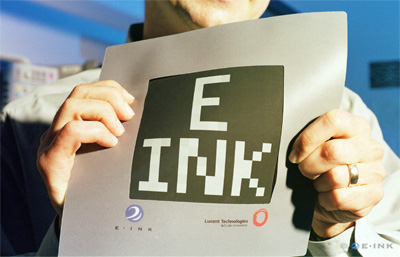
But first, some more industrial archeology, by way of demonstrating that book publishers are not shy about new technology – remember the first electronic ink? When I was working at the Thomson Corporation in the late 1990s, we were given access to a prototype version of what we would now recognise as an e-reader. It was about the size and thickness of a mouse pad but less flexible, and could only hold a small amount of data in its memory (content was uploaded via an ethernet cable). It was described as the future of book publishing, and was predicated on the idea of portability (it could be rolled up like a newspaper if the screen was thin and pliable enough), and updating it with new content whenever it was (physically) connected to a computer or the internet.

However, whatever their apparent appetite for new technology, publishers struggle to adapt their business models accordingly, or they are fixated on “old” ways of monetizing content, and locked into traditional supply chains, archaic market territories (geo-blocking), restrictive copyright practices and arcane licensing agreements; and unlike other content providers (notably music, TV and newspapers which have shifted their thinking, albeit reluctantly) the transition to digital is still tied to specific platforms and devices, unit-based pricing and margins, and territorial restrictions.

Anyway, back to the future. In response to my enquiry about the outcome of the BISG initiative, and the creation of the Book Industry Collaborative Council (BICC), the Department of Industry offered the following:

“A key outcome of the BICC process was to have been the establishment of a Book Industry Council of Australia, an industry-led body based on the residual BICC membership that would come to be a single point of policy communication with government, though following its own reform agenda in the identified areas and unsupported by any taxpayer funding. Terms of Reference and so forth were drawn up but as nearly as we can ascertain from media monitoring and contacts, the BICA was never formed. It appears the industry is waiting to ascertain what the current government’s policy priorities might be, as expressed in the outcomes of the current Commission of Audit and Budget, before possibly resurrecting the BICA concept and/or the policy issues identified in the BICC report.” (emphasis added)

My read on this is that the industry won’t take any initiatives itself until it knows what the government might do (i.e., let’s wait to see if there are any handouts, and if not, we can plead a special case about the lack of subsidies/protection and the threat of extinction…).

This defeatist attitude is not just confined to Australia – my former colleague recently attended the 2014 Digital Book World Conference in New York. He commented:

“I was disappointed to see the general negativity of the publishing industry and the “victim” like mentality – also the focus on the arch-enemy – AMAZON! I see great opportunities for content – but companies have to get their head around smaller micro transactions and a freemium model. Big publishers are “holding on” to margins – it’s a recipe for disaster – [but] I think we can become small giants these days.”

There are some signs that the industry is taking the initiative, and even grounds for optimism such as embracing digital distribution in Australia, moving to a direct-to-consumer (“D2C”) model in the USA, and new approaches to copyright and licensing in the UK.

The choice facing the publishing industry is clear: continue to see itself as a victim (leading to a self-fulfilling prophecy of doom and extinction), or become part of the vanguard in developing leading-edge products and services for the digital age.

Amazon finally comes to Australia; local retailers still want government action on sales tax

A short (and seasonal) post this week, as everyone starts easing off for the holidays.

It may just be coincidence, but about the same time Amazon launched their new Australian website local retailers renewed their campaign to lower the $1,000 sales-tax exemption for online purchases from overseas retailers. And both events came at the start of the Christmas shopping season….

Obviously too early to say which way this will go, but here are a few personal observations:

First, the local Amazon site is limited to e-books, games and Android apps. So, no access to music, television or film content (digital or physical), no sales of print books and no Amazon marketplace. For these products and services, customers are directed to the US site. (Previously, the dormant Amazon.com.au domain name referred customers to the UK site.)

[Note: neither the US nor the UK sites allow overseas customers to buy mp3 content, but they can download digital music via Amazon’s AutoRip service when purchasing physical goods – confused? Me too….]

Second, prices for e-books on Amazon’s Australian site appear to be comparable to the US store, and presumably include local sales tax (GST) to keep on-side of the local real world and online retailers (as well as the ATO, of course).

Third, the general consensus is that if the $1,000 threshold was lowered or even abolished, the amount of sales tax to be collected would be more than outweighed by the additional costs of processing, administration and remittance (which would likely be passed on to local consumers at a “cost-plus” rate by overseas online retailers).

Fourth, many local retailers who voice their opposition to the $1,000 tax-free exemption fail to understand some of the reasons why local shoppers prefer to buy from overseas online retailers:

1. Price – even if overseas sales attract the 10% GST, in some cases this would still be cheaper than buying locally (especially so when the A$ was above parity with the US$). For example, from time to time, Amazon’s UK store offers free shipping on physical goods to Australia….

2. Choice – many products available from overseas online stores just aren’t available in Australia. This is primarily due to geo-blocking, confusion over local distribution rights, and simple lack of interest in stocking some items for the local market

3. Service – from recent personal experience, buying from a local online retailer took much longer than buying the same product from an overseas site, because the supply chain logistics were woefully inept.

[Note: As a separate but related example, I recently ordered a new iPhone 5S direct from Apple’s local website, and received it within 3 days, including a weekend; whereas my telco provider – which prides itself on its on-line business model and customer service standards – took more than 2 weeks to send me a new nano SIM card….. I had also been told by a couple of local Apple re-sellers that it would take 3-4 weeks to order the new phone, unless I took out a new mobile plan with them – which may say more about Apple’s trading policies than the resellers’ business operations.]

My advice to local bricks and mortar and even some online retailers is to look at their own limitations before insisting that the government amend the GST-free threshold on overseas online purchases.

As for Amazon, I wish them well in developing their local service. Much has been made of the stated intention to focus on Australian titles, and the opportunity for local authors to self-publish via Amazon. But already there have been some rumblings that this new site may cannibalize Kindle sales made via some of Amazon’s local retail channel partners.

From student hacker to start-up mogul – an audience with Jonathan Teo

“The man with the Midas touch…”

Jonathan Teo, tech VC with a Midas touch, has been back in Australia recently, and found time to stop by Lean Startup Melbourne for a Q&A with Michelle Bourke in front of an audience of 350 members of the local startup scene.

With a track record that includes Twitter, Instagram and Snapchat in his portfolio of start-up investments, Teo is obviously someone who deserves to be taken seriously, but the candour and humility with which he talked about his experience made for a very down-to-earth evening with such a high-profile investor.

As usual, the event was hosted by Inspire9, with generous support from Kussowski Brothers, Startup Victoria, Products Are Hard, BlueChilli, Investors’ Organisation, Startup Weekend and National Australia Bank.

Teo’s backstory has been told elsewhere (childhood in Singapore, college in Sydney, post-grad at Stanford, Google engineer, venture capitalist…) but the combination of having a great mentor, working in the (then) emerging technology of cloud computing, and some “right time, right place” good fortune has provided him with a powerful platform from which to join the upper echelons of silicon valley VCs.

“The Secrets of My Success”

Naturally, people wanted to know the key to his investing success. Rather than referring to some “special sauce”, Teo pointed to some simple principles:

  • Relationships – strong relationships are essential, both within the founding team, and across the right networks and insiders
  • Self awareness – many founders don’t see their own capability gaps, and therefore can overlook inherent weaknesses in their business
  • Key metrics – know what run-rates the business needs to achieve to meet its performance goals (cash burn rate, retention levels, acquisition costs, daily and consecutive customer usage)

In particular, Teo stressed that new distribution models form the lens for assessing new investment opportunities.

“Show me the money!”

During a discussion about bringing in investors, Teo was pretty sanguine – what works for some start-ups, won’t work for others. If you can self-fund, then do so; if you do need to tap external funding, start with friends and family (who will generally be more patient than professional investors); and if you have to bring in VC’s, make sure you know the trade-offs. He also suggested that crowdfunding is great for consumer plays, but ultimately valuations are determined by demand.

“New Thang”

When asked where “the next big thing” was going to come from, Teo was understandably coy (or simply discreet), and politely suggested it could emerge from somewhere in the audience. What he did offer were some thoughts on emerging trends that will influence future start-ups:

  • Fewer mass-market consumer products – according to Teo, “only China can support a purely domestic consumer play”
  • Less focus on patents, more emphasis on survival – not that IP isn’t important, just that the cost and effort of securing patents mustn’t outweigh the need to generate revenue in the early stages
  • Content niches – unique content is key to attracting advertisers and subscribers, and when combined with rich user data makes for compelling communication and network apps
  • The human touch – products that bring a more human digital experience will gain traction

Finally, Teo predicted the growth of disposable hardware – not sure I agree with this one, but I understand what he is getting at. Personally, I’d be more interested in recyclable hardware, and greater user-serviceable and customisable components.

Declaration: Thanks to the hosts and sponsors, I along with everyone else enjoyed the bounteous gift of free pizza laid on by the organisers.