“I’m old, not obsolete”

In the recent “Terminator” sequel, Arnold Schwarzenegger coins a new catchphrase: “I’m old, but I’m not obsolete”. He may not be the latest android, but he has learned to adapt, he is still relevant and his purpose remains consistent. A bit like older workers, then: not ready to be consigned to the scrap-heap, consistent and reliable, and even capable of being upgraded (as Arnie is towards the end of the film).

Terminator Genisys

Remaining relevant is tough, even for a Terminator….  (Copyright 2015 Paramount Pictures)

A great deal of the discussion on employee engagement, business productivity, workplace flexibility and career transition talks about what we do with older employees, particularly those in their 50’s, who often struggle to find comparable work when they are retrenched or “restructured”.

Many 50-somethings can vouch for the fact that making a career transition into another full-time role can be extremely difficult. In my own case, I left my last corporate position just after I turned 50, and I soon realised it would be virtually impossible to find the exact same or similar permanent role elsewhere. So I embarked on a portfolio of interests (non-executive board positions, consulting work, contract roles and entrepreneurship) in order to remain “economically active”.

Over the past four years, in order to remain active, retrain and build my professional networks, I have:

  • completed the AICD Company Director course
  • served on a number of advisory and pop-up boards
  • launched this weekly blog, and written for 3rd party sites
  • coached business owners and entrepreneurs
  • competed in a FinTech hackathon and a MedTech startup competition
  • consulted in the education, public, NFP, publishing, manufacturing, technology and professional services sectors
  • joined numerous MeetUp and networking groups
  • participated in the Lightning Conference on Victoria’s StartUp Future
  • developed a new app for employee performance management,
  • trained as a presenter on community radio, and
  • become a participant and adviser at the Slow School of Business.

As part of my plan to become familiar with new technology, I have also built a side-project to record and release my own music via Bandcamp and Soundcloud, incorporating many iOS apps for which I am a beta-tester.

Not all of this activity is remunerated, yet the people I work with all tell me how much they value my unique input and original insight, and so I keep on doing it. Given the need/expectation to work longer, and the continued tinkering with tax, super and income rules and policies, I’m not sure many of us can ever think about full-time “retirement” (whatever that now means).

I’m aware that there are some ad hoc initiatives to engage older workers as mentors for new entrants to the workplace. While such projects are well-meaning, and may have some desirable benefits, they are not yet financially sustainable, and don’t address the core issue that the expectation of full-time, permanent, lifelong employment is no longer realistic, and we will all have to adapt to these new circumstances.

On the few occasions I have considered full-time roles, I am staggered that so many prospective employers seem incapable of thinking outside the box: on the one hand, they say they want diversity and fresh thinking; but on the other, they resort to the habit of appointing square pegs for square holes.

There is a real sense among many of my peers that their age counts against them, because either employers don’t believe they can learn new technology or processes, or that their previous seniority means they are only interested in roles where they can wait out their retirement, or simply “direct traffic”, rather than getting their hands dirty. Which is both insulting and demoralising. I recall one early discussion where the recruitment consultant said, “despite what the ad says, the business just wants a safe pair of hands – someone who has done the exact same role in a similar organisation for the past 20 years”. How does that support diversity, in particular, cognitive diversity?

So, my question to employers, hiring managers, industry bodies and policy-makers is: when will you truly embrace the challenge of (and opportunity for) change in your hiring and employment practices, and how do older age workers fit into your thinking (if at all)?

Next week: Startups, VC’s and Entrepreneurs

The changing economic relationship of #work

Whether or not we are comfortable with the notion, the work we do can come to define us. In some societies, family names are derived from our forebears’ occupations or professions (Butcher, Baker, Smith, Cartwright, etc.).  The rapid shift to the knowledge economy is challenging our traditional economic relationship with work, and what it means to be an employer or employee. For example, the idea of a “job for life” within the same industry, let alone the same company, is no longer the norm.
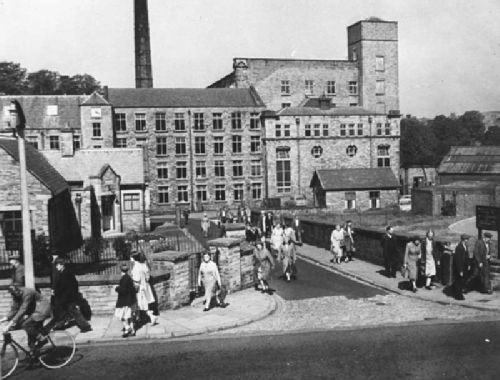
Workers leave Waterhouse Mill, Bollington, Cheshire, UK (1959)

Workers leave Waterhouse Mill, Bollington, Cheshire, UK (1959)

“Welcome to the working week”

This past week I have been listening to the latest thinking on the nature of “work”, from the perspective of technology and its impact on task-based activity (courtesy of Donald Farmer from Qlik), and from the perspective of organizational culture and its importance in motivating knowledge workers (courtesy of Didier Elzinga of Culture Amp). If you are not familiar with either of these thought leaders, than I thoroughly recommend them to anyone interested in organisational behaviour, career development, business transformation and lifelong learning.

Technology and changing demographics require each of us to reframe our ideas about work as a homogenous lifelong activity, because the economic bargain between employer and employee is no longer as simple as a 40 hour working week and a regular paycheck.

Reframing “employment” #1:

By 2020, average job tenure will be 3 years, and around one-third of the workforce will be employed on a casual basis (part-time, temporary, contractor, freelance etc.). The proliferation of services such as Freelancer, O-desk/Elance, Sidekicker, 99designs, Envato and Fiverr are evidence of this shift from employee to supplier.

“The Dignity of Labour, Pts. 1-4”

Around 200 years ago, at the height of the Industrial Revolution in England, the typical worker was employed in a factory or mill, lived in housing owned by the employer, and was paid some or all of his wages in the form of vouchers that could only be spent in shops also owned by the employer. A hundred years later, my grandparent’s generation were still exposed to the practices of indentured labour (“master and servant”) or the idea of “going into service” (as domestic workers). My father’s generation is certainly the last in my family to have had a 30-year salaried career within the same organisation.

So, in just a few generations we have transitioned from the idea that employment provides for all our needs, to the increasingly common perception that every worker is in fact a micro-business, supplying their labour to multiple employers or clients via fee-based services. (The potential irony here is that in a world of freelancers and contractors, the time-based or task-linked approach to employment pricing starts to resemble Marx’s idea of the labour theory of value…..).

“Cottage Industry”

It’s also interesting to note that before workers were employed in factories, and as agrarian labourers transitioned from toiling in the fields to working in manufacturing production, they were hired on piece-rates, working from home in the form of (literally) cottage industries. Of course, this was not exactly self-employment, as their tools (looms and lathes) were probably provided by their “client” who also set the prices (for raw materials and finished goods), had exclusive rights over the finished goods, and determined the number of units required. But, within the constraints of meeting target numbers and societal norms such as Sunday observance and customary holidays, these labourers were “free” to work for as many hours as they wanted, and at times that suited them. So, like many contemporary issues we still seem to be struggling with, flexible working arrangements are nothing new….

“Work is a four-letter-word”

Aside from connecting with your purpose, understanding your personal value proposition and knowing what you are “worth” in the market, one of the biggest challenges I see for employees/workers is the paradox between shorter careers (witness the increasing unemployment rates among older workers) and longer working lives.

Thanks to medical advances, we are living longer, but there is a mismatch between workforce participation rates and increased welfare and social security costs, leading to continuous policy tinkering on pensions, tax and superannuation.

As individuals, we need to build up sufficient financial assets to sustain us both post-retirement, and during erratic periods of personal income. As “free agents”, we have to learn to live with:

  • increasing job insecurity (companies continuously de-layering and restructuring)
  • significantly different career paths (compared to personal aspiration/expectation)
  • rapidly changing working environments (hot-desking, co-working spaces)
  • greater self-reliance (“bring your own device”) and
  • heightened resilience (“shape up or ship out”)

“Opportunity”

The good news is that the model of portfolio, portmanteau and protean careers means that new jobs and new forms of working are emerging all the time – and with personal resilience etc., come flexibility, adaptability, knowledge sharing, skills transfer and new opportunities for personal development, along with self-defined roles, self-directed learning, self-managed performance and self-determined accountability.

We are no longer defined just by what we do, but how/where/why/when we do it.

Reframing “employment” #2:

A friend recently asked me for some advice on how to transition from “employment” to “self-employment”. She has regular part-time work with one organisation (which she views as employment), but wants to find more of her “own work” with other clients. She does not want to give up the part-time gig just yet, but feels that it is preventing her from growing her own business. So I suggested that she should see herself as being self-employed already, and that the part-time work is her first client, allowing her to build a portfolio of new business.  

“Earn enough for us”

What does this brave new world of work mean for employers – in particular, what is the new economic bargain organisations need to have with their workers?

If companies are no longer willing/able to offer long-term, permanent employment opportunities, how do they manage their labour requirements, attract and retain the best talent (when they need it), and engage highly motivated and skilled people?

First and foremost, the idea of workplace flexibility has to be truly reciprocal – but obviously aligned and clearly articulated – to be of any real benefit to both parties.

Second, if employers are increasingly reliant on freelance resources, this does not obviate their obligations to invest in their workforce – whether that includes benefits, training or rewards and recognition – the same as they would have in their employees.

Third, companies will need to do an even better job of attracting and retaining the skills and knowledge they require – and be willing to offer different kinds of incentives (e.g., opportunities to work on engaging projects and to collaborate with interesting people) beyond basic pay and conditions.

Fourth, employers may have to adjust to the idea of “syndicating” their talent resources (“it’s the shared economy, stupid”) not just within their own workplaces, but across their client organisations, suppliers, service providers and other collaborators – sometimes, even their competitors. Employers can no longer expect to have a total monopoly on their workforce talents, unless they make it really interesting, financially or otherwise…

Fifth, if companies continue to espouse the message that “our people are our best asset” then they need to update their asset management model to demonstrate they mean what they say. For example, more needs to be done in helping employees to retrain and up-skill (for jobs and roles that haven’t yet been thought of), even if that may mean employees are more likely to move on. The amount of goodwill that this will create in the wider community cannot be underestimated.

Reframing “employment” #3:

Employers and HR managers are re-assessing how they evaluate employee contribution. It’s not simply a matter of how “hard” you work (e.g., the hours you put in, or the sales you make). Companies want to know what else you can do for them, how you collaborate, do you know how to ask for help, and are you willing to bring what you know to the role?  

Finally, rather like their employees, employers are increasingly expected to connect with their purpose and to align their values with their objectives. New entrants to the workplace are better informed about the organisations they work for and want to work for, because free agents know they have a choice.

Next week: How to work with Boards

5 Challenges for Performance Management

I recently facilitated a round-table discussion on Performance Management, with senior executives from commercial, not-for-profit and public sector enterprises. Our topic was current practice in Performance Management, and was hosted together with my colleagues at Bravo Consulting Group.

At the outset, we posed a number of discussion points, including:

Are there direct correlations between Performance Management, Employee Engagement and Productivity?

How is Performance Management linked to Rewards, Recognition and Compensation?

Do your people understand the context for Performance Management?

We also discussed the true costs of Performance Management systems (time, resources, software, administration), as well as the different attitudes of management, team leaders, HR and employees toward current processes.

The good news is that all the organisations represented are running annual or semi-annual employee appraisals. There was also an increased focus on performance outcomes (i.e., it’s not just about effort expended on job-defined tasks, but more about what is being achieved and how). And our participants reported the importance of using appropriate tools to deliver effective employee communications around corporate strategy, organizational goals, change management and project roll-outs to ensure greater alignment with, and context for Performance Management.

However, we identified a number of key challenges and critical issues facing any organization that takes Performance Management seriously, or who wishes to increase the effectiveness of their current practices:

1. Negative Perceptions of Performance Management

Despite the widespread use and acceptance of Performance Management systems, there remains considerable negativity around the process, the context, and the even discussions themselves. There appears to be a sense of foreboding when it comes to the mid- or end-of-year appraisal, a fact that was borne out for me just a few weeks ago: I was in the furniture display area of a well-known department store, when I overheard the floor manager say to one of her sales colleagues: “Mike says he’ll do your one-on-one at 3pm today.” What might appear to be a fairly innocuous statement visibly filled the employee with dread, at the prospect of his annual review. Surely Performance Management discussions should not be fraught with such unnecessary anxiety or stress?

2. Performance Management Systems Are All Different, And Too Rigid

Our round-table participants all reported using different software (and paper-based) systems, which is understandable given the proliferation of HRMS tools that support Performance Management. But many of these systems resemble accounting or project management software, and lack more qualitative or cultural performance measures. Alternatively, systems tend to be rigid, process-driven applications that often take a checklist and compliance approach to conducting Performance Management. They can also suffer from a “one size fits all” solution, and don’t readily help organizations to develop meaningful performance measures or point-in-time indicators, mainly because they are backward-looking and use retrospective data. Shouldn’t Performance Management help employees move towards the job that they want (and towards their longer-term career objectives), rather than confining the discussion to current or out-dated tasks?

3. Formal Processes Are Disconnected From Informal Processes

By making it a “process” (and an infrequent one at that), Performance Management becomes artificial, and divorced from day-to-day reality. This can result in performance issues being stored up and only “discovered” during the formal appraisal – which will add to the anxiety and stress if long-term resentments about manager-employee behaviours and relationships are only brought to light during the Performance Management process. A common outcome from the formal Performance Management process is a corrective or punitive response, due to the absence of continuing efforts to manage and direct performance. Why should employees only hear feedback about their performance at the end of the year, when it might be too late to address the issue, leading to knock-on implications for remuneration, recognition and promotion. Shouldn’t Performance Management be part of the everyday dialogue between colleagues?

4. Many Managers Are Simply Ill-Equipped To Have The Performance Conversation

Without the appropriate skills to foster meaningful and open dialogue with their direct reports, managers end up having to manage the Performance Management conversation, rather than helping their people self-manage their own performance. This awkwardness is compounded if there is a lack of organizational context for Performance Management; worse, poor performance is ignored or circumvented because managers do not feel confident to start the dialogue, which is not fair to the individuals concerned if they are not given the opportunity to discuss what might be the root cause of a performance issue. If there is no dialogue around Performance Management, how can employees know what they are being held accountable for, or appreciate the consequences of not meeting performance goals and objectives?

5. Performance Management Systems Ignore The Middle Majority

Most Performance Management systems (certainly the ones I have been exposed to) end up using forced bell curve distribution analysis to classify employees according to high, middle, low and under achievement categories of performance. I recall one former colleague who used to cite Garrison Keillor when annual appraisal ratings had to be allocated according to the expected distribution curve: “Well, that’s the news from Lake Wobegon, where all the women are strong, all the men are good-looking, and all the children are above average.”

When we asked our participants “what keeps you awake at night?”, one CEO commented that he worries about the middle 60%-65% of his employees – the bulk who “do a good job” – because more of his attention and focus is on the high and low performers (the top and bottom 15%-20% respectively). This “bias” can distort management perspective, and lead to disaffection in the middle band, unless there are adequate ways to recognize and reward solid performance independent of annual compensation or promotion. (This issue is particularly acute in Australia when we consider the impacts of slower economic growth, comparatively high wages and sluggish productivity – yet, employers face a war for talent as new and highly valued skills become harder to resource.)

Conclusion

If Performance Management could become a continuous dialogue, backed by meaningful performance criteria and underpinned by a greater emphasis on employee self-awareness and self-directed Performance Management, then organisations could spend more time on strategy and execution, and less time on managing individual performance. Not only would this create greater cost efficiencies in the Performance Management process itself, it would likely lead to improved productivity outcomes because there would be more clarity and engagement around goals, outcomes and incentives.

Portfolio, Portmanteau or Protean: what shape is your career?

In a previous article, I commented on the non-linear nature of career development in the Information Age, in response to changes brought about by new technology, market dynamics and demographic trends.

Following recent research and policy proposals on workforce flexibility and workplace productivity by the Australian Workforce and Productivity Agency and the Australian Industry Group it is clear that more than ever, employees must take more responsibility for managing their own career, and be willing to embrace life-long learning and skills re-training to navigate non-traditional career paths.

Whether it is the need to address the current shortage of IT skills, or the need to prepare for the post-mining boom, employers will have to re-think traditional approaches to hiring, engaging and performance managing the workforce; and employees will be obliged to re-think the shape of a traditional career trajectory to take advantage of new opportunities, and to remain relevant in the modern workplace.

There are essentially three career models emerging: Portfolio, Portmanteau and Protean.

Portfolio Career: this model is probably quite familiar to more mature workers, who have embarked on a mix of different career activities, either as a planned transition to retirement or as a means to re-enter the workforce; or by default in response to external changes in employment circumstances.

In this scenario, someone might work part-time in a paid job or consulting role, volunteer part-time for a not-for-profit organisation and hold 1 or 2 non-executive board positions. In my own case, for example, I consult to a number of corporate clients on a regular basis, I am a member of an advisory board for a family owned business, I am working on start-up projects, and I have also been known to do some broadcasting on community radio. My significant other, meanwhile, balances a part-time job in accounting with her practice as an artist and art teacher.

This portfolio career model is no longer the exclusive domain of baby-boomers – witness a former and much younger colleague of mine who undertakes a series of HR contract roles, while helping to build a new IT business with her partner. The portfolio career typically appeals to people who enjoy a variety of different activities, have a broader mix of skills and experience, or who wish to create a personal work-life balance.

Portmanteau Career: this is a term I have coined myself, in an attempt to describe a career model that applies to either meaning of “portmanteau” – a) a travelling case, or b) a compound word.

In the former meaning, a portmanteau career is one where an employee’s skills are easily transferable to another role, a different organization, or even a new industry – the skills are literally portable, and can be carried from place to place. In my own case, I once transitioned from law publishing to financial information services, even though at the time I knew little about the latter – it was the core skills around content development, product management and commercial publishing models that were applicable and relevant.

In the latter meaning, a portmanteau career can be a product of new and emerging technologies or sectors. For example, digital media and social networks (in themselves, “portmanteau” industries) are attracting people with a mix of IT and marketing skills, a combination that would have been highly unlikely 10-15 years ago.

Protean Career: the protean career model is not a new concept but has been brought into the spotlight by the current economic environment, a supply/demand mismatch in skills, and the challenge of employees taking responsibility for their own careers. This challenge especially applies to employees coming into the workplace for the first time – even recent graduates who have gravitated towards a specific career path or vocation based on their choice of courses and qualifications  must be cognizant of the fact that they need to maintain and update their skills and knowledge once they enter the workforce.

In my own case, after graduating in law, and following a career as a paralegal, I decided I wanted to make a move into publishing. I retrained as an editor, and then looked for roles where I could combine my academic qualification with my personal interest – resulting in a successful career in law publishing.

I would summarise the protean career model as one where the individual defines, manages and determines his or her own destiny, rather than letting a career “happen” to them. It requires a pro-active approach to career management, combined with continuous skills improvement, supported by formal and informal learning, a willingness to embrace flexibility, an appetite for taking informed risks – and all underpinned by heightened self-awareness gained through experience and enhanced personal development.

The person who understands and pursues a protean career will likely be creating their own work, managing their own work preferences, and making easier and happier work choices.

In each of these career models, employers must also be willing to embrace flexibility, to adopt creative solutions for hiring and engaging their workforce, and to resist traditional “square pegs for square holes” resourcing models. As the productivity and flexibility debate continues to gain traction, the opportunity to re-think traditional approaches to career development and career management should not be lost in the noise.