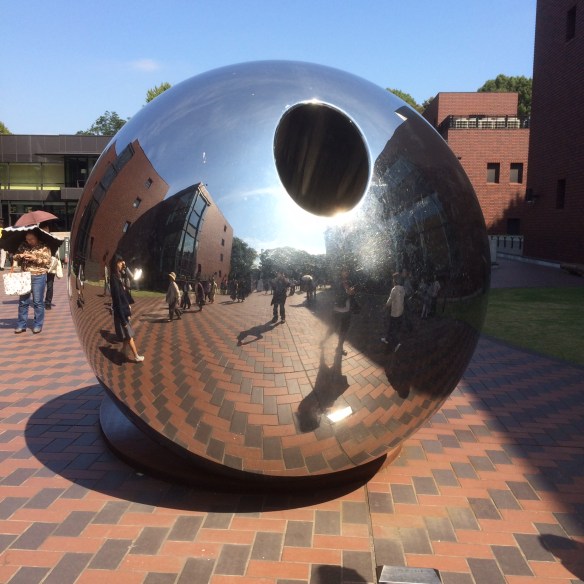
Moving #innovation from “permitted” to “possible”

As the dust settles on the Federal election results, the Turnbull government has already been taken to task for failing to get one of its key messages across to the public: how to take advantage of the economic, technological, scientific, social and cultural opportunities inherent in the “Innovation Agenda”.  It seems that the so-called “Ideas Boom” failed to resonate with much of the electorate because, apparently, no-one has explained to them how innovation actually impacts their lives.

Screen Shot 2016-07-18 at 8.39.24 PMUnfortunately, I think it goes deeper than that: the recent campaign debates were limited to concepts of “traditional” job-creation; reliance on conventional relationships between the State, the private sector and individual citizens; and the priorities of (pre)serving the interests of public institutions such as 3-year Parliaments and even political parties themselves. The electorate may (perhaps rightly) feel short-changed by the level of the debate, but voters also need to take some responsibility for not challenging candidates to raise their game: where were the mainstream discussions on climate change, new technology, the future of “work”, digital disruption, scientific advances, and the changing attitudes towards end of life?

There is also a core misconception, that the government is responsible for fostering  innovation, that only public policy (and public resources?) can set the innovation agenda. I don’t believe it is the role of government to “make it happen”, and certainly, such an approach is not going to occur overnight. At best, government can create a framework, highlight best practice, and encourage appropriate activity. Just as I don’t think you can “teach” creativity (only identify, support and nurture it), I don’t think innovation is something to be determined from the outside. As with creative inspiration, innovation has to come from within: from employees, from customers, from suppliers, etc.

The risk of relying solely on governments or other vested interests to shape innovation is that our thinking becomes constrained by what is “permitted”, rather than what is “possible”.

On a related theme, it was refreshing to listen to a panel of speakers at a seminar on “Innovation from the inside out” held during Melbourne Startup Week. The key messages were:

  • how to instill purpose in any organisational change, business transformation or innovation project;
  • how to empower all levels of an organisation to make ideas happen; and
  • how to incentivize intrapreneurship?

This naturally leads to a discussion of developing more adaptable and resilient career paths. If you don’t have transferable skills, or if you not prepared to update your knowledge, or if you think of your career path as a straight linear projection, it will be much harder to cope with the demands of a flexible work environment. If you think of yourself as only ever performing a specific job function, or identify only as your profession or job title, or define yourself only by your formal qualifications, you will only ever think about what roles you may be “permitted” to perform, rather than seeing what career opportunities may be possible. As a careers adviser in the Victorian Government’s Skills and Job Centre network told his audience at a recent Small Business workshop: it’s not the responsibility of the government or your employer to manage your career. Notwithstanding upskilling initiatives and structured outplacement programs, we are each responsible for shaping our own destiny – especially in the increasingly on-demand economy.

Back to the main topic, I’ve been participating in a series of workshops on the Future of Work, Money, Ageing, Death, Democracy etc. hosted by the Re-Imagineers, an on-line ideas playground that builds co-created artifacts to support people-led innovation. The model is designed to help organisations draw on insights from their in-house knowledge and skills, customer experience and feedback, and external expertise to originate new ideas and innovative solutions from within their own resources, and which align with their values and those of their stakeholders. It’s still early days, but all of the discussions have identified some amazing ideas and possibilities.

The team from Re-Imagineers will be visiting Australia during July and August, so if you or your organisation would like to hear about the key learnings from these forums, especially as they impact sectors such as finance, health care and IT, please contact me via this blog, and I will make the relevant introductions.

Next week: Update on the New #Conglomerates
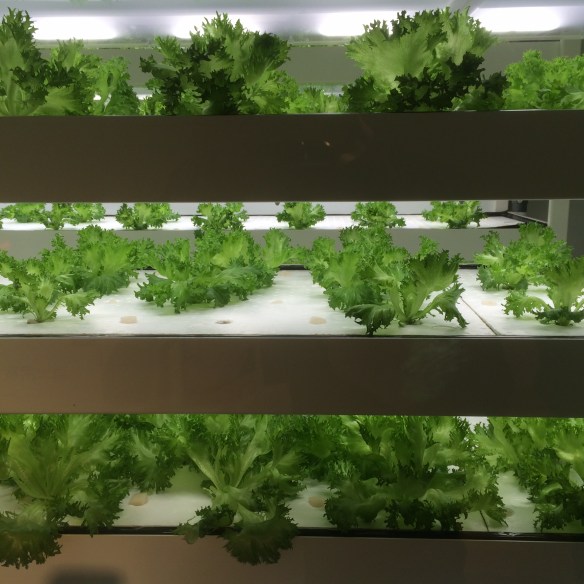
 

Challenging Monocultures via Crop Rotation

Agricultural scientists are advocating a return to crop rotation. They argue that if farmers diversify what they grow each season, they can achieve more sustainable environmental and economic outcomes. Whereas, industrial-scale, intensive and single crop farming depletes the soil, and requires the use of expensive (and potentially harmful) pesticides and chemical fertilizers. In short, monocultures are self-limiting and ultimately self-destructive.

Indoor salad garden, Itoya department store, Ginza, Japan (Photo © Rory Manchee, all rights reserved)

Indoor salad garden, Itoya department store, Ginza, Japan (Photo © Rory Manchee, all rights reserved)

The same concept applies to teams and organisations. If we only associate with people who look, talk, sound, think and act like us, we not only risk group-think, we also promote unconscious collective bias. While it might seem comfortable to only deal and interact with “people like us”, it creates unrealistic cognitive and cultural homogeneity.

I understand why we often talk about “finding our tribe”, but for me, I find connections and shared values among several tribes: partly because no single community can provide for all our needs; partly because at their worst, monocultures can result in in-breeding….

One antidote to organisational monocultures is to promote diversity (especially cognitive diversity), so you mix up the elements that make up a team or an entity. Another solution (a bit like crop rotation itself) is to alternate and rotate roles on a project, within a team or at the executive level. (Some corporate boards already practise this.)

I once had a marvellous CEO who liked to boast that he had worked in every department within the company, from editorial to production, from sales to marketing. Not only did he have a more complete view of the organisation, he also had a much better understanding of how to get each department to collaborate.

At the individual level, alternating roles within the organisation can help them to acquire new skills, develop fresh perspectives, build different networks, gain valuable experience, and avoid going stale.

If you are uncomfortable with the horticultural or biological analogies, then perhaps the work of Michael Simmons is more palatable. From his research, “simply being in an open network instead of a closed one is the best predictor of career success”.*

Another way of looking at this notion of “crop rotation” is through the lens of a corporate turnaround, or a company trying to move from start-up to scale-up.

In the former scenario, the owners, board and CEO recognise that they need to bring in different people, even if only on a short-term basis, to help them:

  • Review the status quo objectively
  • Identify new ideas and fresh thinking
  • Enhance in-house skills and resources
  • Apply a circuit-breaker to unblock the stalemate
  • Join the dots between different parts of the organisation, the market and the client base

In the latter situation, bringing in specialist advisers, or “pop-up boards”, can:

  • Provide an injection of strategic focus
  • Develop a dynamic business planning process
  • Ramp up capacity or capability in a very short space of time
  • Open up new networks or provide access to capital, resources and markets
  • Expand the team’s “bench strength” at critical times

As an independent consultant with a portfolio of interests, I provide an interim resource to my clients, fulfilling different roles depending on their specific requirements. I also serve on pop-up and advisory boards.  And because I am naturally curious, and like to immerse myself in different ideas, I am an “open networker”, meaning that I engage and connect with different people across the various groups of which I am a member. Where I increasingly add value is in joining the dots between otherwise unconnected or seemingly disparate elements.

Next week: Latest #FinTech Round-Up

* Thanks to Jessica Stillman at Inc.Com for bringing this article to my attention

Finding purpose through self-reflection

We hear a lot about “finding your purpose” these days, whether it’s to develop a personal career plan, or to validate a business idea. My colleague Carolyn Tate, founder of the Slow School of Business, spoke on “purpose” at the recent Huddle Design Fest drawing on her TEDx talk for Telstra entitled “Profit on Purpose”. During her presentation, Carolyn referenced the Japanese concept of 生き甲斐 (“ikigai” = “a reason for being”) which is sometimes represented in the following diagram:

Ikigai-EN-optimized-PNG

“Finding the purpose of your life”. Graphic representation by @emmyzen (Emmy van Deurzen). Image sourced from Wikimedia Commons

Variations on this theme include, for example, the work of Lianne Bridges and Susan Biali. Earlier, more prosaic, interpretations might be found in the work of Richard N. Bolles (“What Colour is Your Parachute?”) or Spencer Johnson (“Who Moved My Cheese?”).

What it all boils down to is connecting with your values and interests, and finding a balance between what motivates you, what rewards you, what you can contribute, and what people want from you.

For me, a the starting point is developing a personal narrative, to understand how you have arrived at this particular point in your life and/or career, in particular your influences, achievements, challenges, experiences and insights. Through this self-reflection, some common themes should emerge that can form of the basis of defining your own purpose. This should include your core values, the things that are important to you, and your own particular passion.

Where I may differ in my interpretation of “purpose” is that I believe that our purpose can change over time. I don’t see purpose as singular or even linear – it’s multi-dimensional, dynamic, situational and contextual. Our needs and our circumstances don’t stay the same. Likewise, our relationships and the the external environment are constantly changing. So our purpose will likewise be different at different points in our life. For example:

  • Early in our career we may be technically qualified, but without relevant experience we may not be able to command the most senior roles or the highest pay – so our purpose may be to hone our skills and knowledge
  • Later, we may find that our focus on things like marriage, children and a mortgage means we may be willing to get well-paid for work that we don’t actually enjoy – someone I was coaching recently stated that “I’m caught in a job” which was preventing him from pursuing his passion (thankfully, he has since decided to pursue a portfolio of interests, rather than stick with a single job he no longer enjoys)
  • During the “third act” of our career, financial or material rewards may not be so important, but we still need to be engaged in work that we enjoy, that motivates us and which can still sustain us at more than just a basic level of food and shelter
  • Throughout, I think it is essential to keep connected to our true passions (especially creative outlets), in part to provide a counterbalance to work/financial/external imperatives, in part to explore alternative ideas, find linkages between our other interests, and even to connect with new technology – for example, in my own case, my interest in electronic music has led me to recording an album using iOS devices, releasing it via social media sites Soundcloud and Bandcamp, getting it broadcast on the ABC, and beta-testing new music apps

When working with clients to help them re-connect with their business or their career purpose, I like to do an audit of where they are now, and where they could be in 3-5 years time. Through a process of exploring what might be possible, and reframing the present to re-position it for future growth and development, we can discover ways to regain balance by prioritising what’s important, reconfigure or even abandon what isn’t working, and re-establish goals and objectives.

While it is important to strike a balance between the “four pillars” of the ikigai model, my experience is that rarely will all four be in equilibrium – at times they may even be in conflict with one another, or at least in a state of flux. But it’s the resulting points of friction, when we look at them objectively, that can be the source of ideas, context, clarity and resolution. Making time for regular self-reflection enhances our pursuit of purpose, and allows us to take stock of our current situation, without undermining our core values or abandoning our particular interests.

Next week: Challenging Monocultures via Crop Rotation

It’s never too late to change….

Few things annoy me more than when someone in their late 20’s or early 30’s says: “I’m stuck in my job, and I can’t do anything about it.” My immediate reaction is to shout, “No you’re not, and yes you can!” But I stop myself, and ask instead, “What’s stopping you from making a change?” Usually, there is a mental blockage, and an inability to think outside or beyond the immediate situation. In turn, this is often linked to a distorted perspective about how they got to where they are, coupled with unreasonable (and therefore, unrealised) expectations.

Sculpture, Ueno Park, Tokyo (Photo © Rory Manchee, all rights reserved)

” A new perspective?” (Ueno Park, Tokyo – Photo © Rory Manchee, all rights reserved)

Helping my clients to identify the barriers in their way (in particular any deeply entrenched obstacles), and to explore ways to dismantle or overcome them usually leads to alternatives: a new job opportunity, a potential career transition or a new business direction. It may not be an easy or comfortable process, but it’s not impossible. At its heart is the need for self-awareness, the willingness to embrace change, and the commitment to making it happen.

“See You At The Barricades”

Here are some of the initial objections I hear when people say they can’t make a career change or transition:

  • Financial security
  • Lack of time
  • No access to resources
  • No idea what to do next, where to look, how to plan
  • Enjoy the job, but not the organisation (or vice versa)
  • This is the only work they know, or studied/trained for
  • Non-transferable skills or inadequate training

My usual response is to get them to re-contextualize. It’s rather like using cognitive behaviour therapy, to reframe the situation. “How could you look at this differently?”, “What if you did this?”, “Who could help you overcome that?”, “What would be the ideal situation?”.

“Money’s Too Tight To Mention”

I understand that financial insecurity can be a major cause for concern. The certainty of a regular salary (even if you hate the job) can be preferable to taking a pay cut for a more rewarding role, or having to forego immediate financial return during a period of retraining or re-skilling. But if you are only doing a job because of the money, the likelihood is that you may never be entirely happy in your role, you may come to resent the work you do, and eventually you may lose sight of what is important to you. Plus, the knock-on effect on your personal well-being and that of your family can be significant. After all, no job has a lifetime warranty or even a 2-year guarantee, so the paycheck will probably run out anyway.

“Time Is On My Side”

Even if your financial circumstances or apparent lack of time mean that you can’t leave your current job or explore other options without securing a comparable income in another role, there are several ways to prepare for a career transition:

  • Re-train in your own-time – use on-line courses, evening classes and weekend workshops to access new skills and education
  • Ask your current organisation about options for study leave or flexible work hours
  • Suggest a personal development plan that draws on existing resources – e.g., shadow another colleague, or do a rotation or secondment to another team or department
  • Workers in some industries or older employees may be able to access public funding to support retraining and re-skilling
  • Use your annual leave to intern or volunteer at an organisation where you might like to work in the future

“Possibly Maybe”

There are many new opportunities for personal development through short courses, skill sharing or peer-to-peer platforms, and alternative learning paths to re-connect with your purpose. It might even be possible to reconfigure or restructure your current role to better suit your needs. Besides, the job you were originally hired for (or the industry and/or the career you trained for) has probably changed significantly; if you are not doing some regular re-engineering, you risk being confined to outdated thinking or processes, or worse, becoming obsolete.

“This Is Your Big Opportunity”

In fact, you have an obligation to yourself to invest in your own career, by re-training, updating your skills, or embarking on new challenges. Increasingly, organisations expect employees to take personal responsibility for self-managing their career, their professional development and to maintain the technical currency of their skills. Even better if you can demonstrate that learning a new skill can support innovation, generate efficiency gains, or deliver customer benefits. There are increasing examples where collaboration, co-creation and cross-pollination of ideas, skills and people between organisations and their suppliers/vendors/clients/distributors can have mutual outcomes, and employers are looking for people who can identify these opportunities.

“This Is The Way”

From personal experience, curiosity, pro-active networking, asking questions and generally taking an interest in what is going on in and around the organisation and wider world can reap huge rewards. In my own case, having a sense of enquiry prompted a transfer from London to Hong Kong to open a new Asian office for the company I worked for. Earlier in my career, I took evening classes so I could transition from a role in the public sector to a new career in publishing. And I continue to find new learning opportunities through meetups, hackathons and startup pitch nights, and attending workshops on innovation, collaboration, design thinking and technology.

I’ve written previously about the changing economic relationship of employment, because it’s incumbent on all of us to learn resilience and adaptability. We have a duty to equip ourselves in order to cope with and prepare for the continuous change and volatility we are all experiencing in the nature of the work we do.

Finally, for anyone who says they are “too old to change”, consider this: I recently met a man in his 60s, who had retired from a lifelong career in teaching, quickly got bored, and so he went back to college and is now a licensed horse trainer. He gets up earlier than he used to as a teacher, but he has connected with a passion and made it his career choice.

Declaration of Interest: I am a member of the Slow School of Business Advisory Council, which delivers Slow Coaching and Talk on Purpose

Next week: ANZ’s new CEO on #FinTech, CX and #digital disruption