What A Waste!

Local government is like the unwanted stepchild (or even bastard) of Australian politics – not formally recognised by the Constitution, but expected to provide all the services that neither the Commonwealth nor the States want to deliver. So they get delegated with roads and recreation, planning, libraries, waste management and other more esoteric activities.

Most of their funding comes from Federal and State coffers, plus property rates, permit fees and income from sundry services, but they have limited discretion as to how and where to allocate their resources since local by-laws must be consistent with State legislation.

So when it comes to the straightforward provision of rubbish collection and waste recycling, it’s quite amazing how inconsistent these services are from once council to the next.

In the case of my own local authority, we now have four different waste bins, one each for: glass; recycling; organic; and general (i.e., pretty much anything else that does not belong in the other three bins).

In addition to having to remember which bins get collected each week, residents also have to interpret what items can actually go in each bin. For example, “glass” really means only bottles and jars – so no cookware, drinking vessels or other glass products. “Recycling” only covers paper, cardboard, metal cans and lids, foil, and a few categories of plastic bottles and containers (and only as long as the lids have been removed and placed in the “general” waste). Soft plastics such as food packaging are not accepted, nor are Tetra Paks (one of the most common forms of beverage containers). As for the “organic” bin (or FOGO – “food and garden organic”), while this is no doubt a helpful solution to separate valuable compostable materials from general waste, our local council will not allow us to use bio-degradable bags, so the FOGO is thrown straight into the bin (nice in the height of summer!). Yet my friends and neighbours who live in other local council areas are able to use these convenient bags to manage their organic waste. Go figure why there is this difference!

On the question of recycling drink containers, things get even more confusing when looking at the Victorian government’s Container Deposit Scheme (CDS). First, the CDS collection points, despite there being over 600 across the State, are still quite limited (by location and operating hours). Second, the list of eligible categories is shorter than the types of ineligible items (5 vs 7). Third, it seems that unlike local council waste collection, the CDS will accept container lids, and even Tetra Paks (but the latter only applies to flavoured milks, not plain or plant-based milks). Fourth, while my council is willing to accept any glass bottle that has contained alcohol, the CDS only accepts beer and cider bottles. Why do they have to make it so confusing and complicated?

I know that there have been huge problems with the collection and recycling of soft plastics. For a few years, it was possible to return most plastic food packaging (bags and wrappers) to local supermarkets for recycling. But whoever signed off on those service contracts forgot to check what was actually happening to these materials, until there were a series of warehouse fires and other problems. Yet, this reverse supply chain model would be a logical way to manage the CDS – we buy most of our drinks from bottle shops and supermarkets, so why not encourage us to take back the empties to the point of sale? When my family lived in South Australia in the early 1970s, there was already a CDS scheme for bottles, and I remember as kids we would collect the empties and take them back to the local milk bar and use the deposit refunds towards our next purchases. Made sense then, should make even more sense now?

Finally, another example of how inconsistent my local authority is when it comes to waste management: the council operates a depot where local residents can take a range of household items for recycling and disposal, including hard and soft plastics, batteries, electrical goods, computers and peripherals, and larger items that won’t fit in the domestic bins. I took a large plastic item all the way to the depot in person, only to be told I would have to book a hard waste collection service so it could be picked up when they next sent out a truck. Surely I was saving them time and resources by dropping it off at the depot myself?
 

Unintended Consequences?

Last month, Melbourne City Council banned e-scooters for hire. The City’s Lord Mayor argues that the current trial needs to be re-set, as a result of increased traffic violations and personal injuries. So far, similar trials running in other local government areas adjacent to the City will continue, but they will no doubt be seeking to ensure the hire schemes are implemented and managed in a responsible, compliant and sustainable fashion, when the trials expire.

Despite the promised (and welcome) benefits of e-scooter hire schemes, I have yet to see current data that would support their continued operation. E.g., has the introduction of e-scooters reduced either the overall number of cars on the road, or the number of short car journeys under 2km?

I can see that e-scooters are probably popular with shift workers, largely because public transport services do not run at the times these commuters need them or where they need to go.

As well as living close to the City, I live in an adjacent LGA that is running a similar trial, so I have plenty of anecdotal evidence of the downside.

It’s not just users riding on pavements and in pedestrian-only areas with little care for those on foot. Many riders are carrying passengers (unlawfully) and choosing not to wear helmets (also unlawful). There appear to be a large number of joy riders, who often leave vehicles strewn across footpaths, rather than parking them responsibly. Then there are the helmets discarded without care or thought. Many of which probably end up in landfill, especially if they have been cracked or damaged through misuse. (A few months ago, I spoke to a Melbourne City Council street cleaner, and he admitted that if helmets are discarded like litter, they go into the general waste collection.)

I also see e-scooters for hire being lined up by their operators outside pubs and bars. I get that we don’t want people to drink and drive, but riding an e-scooter while drunk is hardly the answer!

I suspect that the obvious problems and misuse could have easily been anticipated, and even mitigated. Here are just a few suggestions:

1. Require all ride-share customers to have appropriate insurance. This could be done via the operator apps, and/or via a subscription model.

2. E-tag all helmets as well as the scooters themselves, so operators can keep track of their property. If I was an investor in these companies, I’d be concerned that they aren’t protecting their assets!

3. Require users to pass some sort of proficiency test – including basic road rules, and traffic regulations.

4. As well as limiting the vehicle speed, disable any e-scooter that is being driven on pedestrian-only footpaths or other “out of bounds” areas. The City of Melbourne and surrounding LGAs now have extensive cycle lanes, so there shouldn’t be any excuse for riding on pavements.

5. Consider attaching breathalysers to each scooter and applying weight limits on vehicles (to counter the problem of passenger over-loading).

Finally, the use of contributory negligence in assessing potential damages should be a default position. Indeed, any rider who causes an accident, injures a pedestrian or damages another vehicle or property, directly or indirectly as a result of the rider’s misuse or negligence should result in strict liability for all damages.

Next week: Ticket scalpers? Blockchain could fix that!


Dud Housing*

Recent media commentary suggests we have a housing crisis in Australia – ranging from affordability and supply, to quality and location, as reported here. Renters are being priced out of the market, ageing stock means houses that are too cold in winter or too hot in summer, and there aren’t enough homes to rent where people want to live. I suspect that all of these factors have been in place for several years, but the knock-on effects from the Covid pandemic have exacerbated these trends.

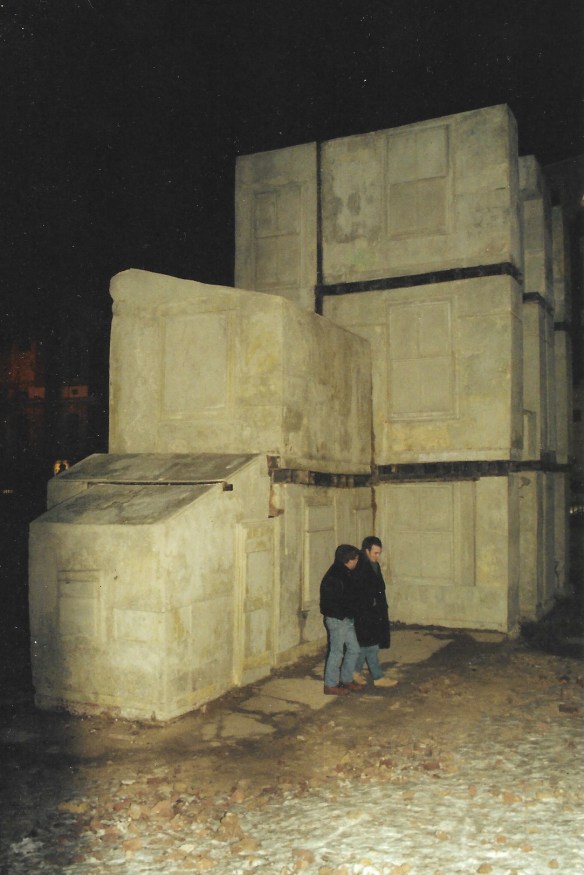
“House” (1993) © Rachel Whiteread. Photo © Rory Manchee

For background, I should explain that at the start of my career, I worked as a housing officer and paralegal in the UK. I worked for three different local councils in inner London, advising tenants, leaseholders and landlords on their respective rights and obligations – and where there were infringements, preparing prosecutions against landlords and their agents. I dealt with people facing harassment, unlawful eviction, homelessness and housing disrepair. Mostly, my work involved advising the parties of their legal position and available remedies, often I helped them reach an amicable solution, and occasionally I had to take enforcement action with the support of the council’s legal powers. The latter included injunctions against the threat of unlawful eviction, the issuance of proper rent records, repair notices, rehousing directives, and even compulsory purchase orders.

It was stressful, and at times confrontational, work – after 5 years, I was pretty burned out, and decided to make a career change. At the time, London (and the UK) was experiencing a huge amount of change that impacted both the public and private rental sectors. First, the Conservative government under Margaret Thatcher had introduced “right to buy” legislation, meaning public housing tenants could apply to buy the homes they lived in. Second, the government also introduced “mortgage interest relief at source” (MIRAS) which meant home buyers received tax relief on their interest payments. Third, central London in particular was going through a period of gentrification, with public money made available to property owners to improve and upgrade period homes. As a result, Georgian and Victorian houses that had been sub-divided into apartments (mainly occupied by long-term tenants) were restored to single family homes. Added to that, one of the council’s I worked for had been engaged in a “homes for votes” scandal, a “policy” to (re-)engineer the local demographics.

In the past, I’ve been both a tenant and a landlord, so I’ve also experienced some of these issues for myself. As a tenant, I’ve had landlords who denied that their properties were poorly wired or had defective plumbing (despite formal notifications from the council), and denied all requests to have the defects fixed. As a landlord, I’ve had tenants sub-letting to their “friends”, and who assured me that these “friends” could pay the rent.

So what is going on in parts of Australia, that there is such a misalignment between where tenants want to live, and vacant housing stock?

First, to touch on property ownership. Home owners don’t receive anything like the former MIRAS scheme in the UK, but there are various financial incentives for first-time buyers (such as zero stamp duty when buying a property off the plan), and during the Covid pandemic, some first-time buyers could access their superannuation (pension) fund to help with the deposit or down-payment. Property investors can take advantage of negative gearing to offset mortgage interest payments and costs of repairs against their income tax. These factors are generally considered to push up house prices – and despite recent interest rate rises, the cost of borrowing has remained at historic lows for more than a decade. Housing inflation means aspiring buyers are priced out of the market (especially as wages have not kept pace with inflation, let alone the rise in property prices). And landlords are now seeking to increase rents to offset rising interest rates.

Second, I’ve never really understood why some landlords don’t maintain their properties to an adequate standard – it surely detracts from the value of their assets, as well as deterring potential tenants. And when there may be improvement funds available (e.g., insulation grants, solar rebates) why wouldn’t they take advantage? On the reverse, should tenants have more powers to undertake essential repairs and improvements, and withhold rent to cover the costs? (Equally, I find it surprising that some tenants don’t feel it is their responsibility to undertake minor maintenance or running repairs, such as mowing the grass, clearing gutters or replacing cracked window panes.)

Third, it’s an economic imperative to have a supply of housing stock in the rental market. It helps people who prefer to rent rather then buy, it allows for workforce mobility, and it supports seasonal demand in industries like agriculture. I don’t believe that all rental stock should be held and managed in the public sector – it represents a huge obligation (not just an asset) on government balance sheets, tying up capital and incurring huge running costs. We need a component of public housing, but otherwise leave it to the private sector, with appropriate safeguards.

Fourth, why the apparent mismatch between supply and demand? On one level, developers are building the wrong types of properties and/or building in the wrong locations. Inner city areas have seen a massive growth in high-rise apartments over the past 20 years, supposedly in response to increased housing demand. In theory, these projects generate more yield for developers, although the apparent over-supply leads to depressed rents, and some banks won’t lend against these properties due to uncertain re-sale value and over-capitalised assets.

In the suburbs, archetypal quarter acre blocks have been sub-divided to cram in more town houses and units, or developers are building bigger houses (McMansions) on smaller plots, leaving minimal gardens and no breathing space between properties, as they build right up to the boundary lines. Many new suburban developments lack proper infrastructure and services (public transport, schools, shops, clinics), making them less attractive to renters – while the owners expect higher rents to cover the cost of their mortgages. Plus, many new properties have been built “on the cheap”, using inferior materials and design – hence the issues with heating/cooling. On the other hand, ageing stock, especially weatherboard and brick veneer structures, can also be hard to heat/cool. Many houses (new and old) lack double-glazing, for example, which would go a long way to resolving this energy conundrum.

Meanwhile, the recent lock downs in Melbourne (and to a lesser extent, Sydney) have meant many urbanites have moved to regional locations, putting upward pressure on property values and rents, pricing out locals who already live and work there. Of course, another reason for the mismatch in supply and demand is the growth in short-term lets, mainly for holiday-makers – such that local stock is taken out of the regular rental market. However, a lot of the Airbnb accommodation I have used over the years would never have been available on the rental market, because they were pre-existing holiday lets, or they are principal homes, where the owners are temporarily working abroad or interstate. And this type of flexible accommodation is also in demand by a mobile workforce that can, and prefers to, work from anywhere (so-called digital nomads).

None of which explains or resolves the current crisis. If governments want to address the bigger issues, they need to consider a range of solutions: updating building standards, upgrading land-use rezoning and planning regulations, encouraging a greater variety of housing development and management (soclal housing, shared ownership, property exchanges, rent holidays in return for repairs and improvements), and the use of modular/portable homes to meet fluctuating demand. All of which requires vision, and most party political objectives are driven by short term goals and the next election cycle.

* Apologies to Pere Ubu for (mis-)appropriating the title of their second album

Next week: Picasso and his circle

Renzo Piano & the Centro Botín

In March this year, the Victorian Government unveiled the winning concept design for the NGV Contemporary, a new centre for art and design, forming part of the planned revamp of the Arts Precinct on Melbourne’s Southbank. Due to open in 2028, The Fox: NGV Contemporary (to give it’s full name, thanks to the benevolence of trucking magnate and close acquaintance of Premier Daniel Andrews, Lindsay Fox) is being heralded as an iconic, nation-defining statement in support of Melbourne’s claim to be the cultural centre of Australia. So far, so good – but I can’t help feeling the design competition has been conducted with some undue haste: Expressions of Interest were sought in March 2021, with a one-week registration deadline. The competition for Stage One of the project closed in August 2021, and Stage Two in November 2021, with the winning team announced in March 2022, barely 12 months from the EOI. Why the hurry (especially as Melbourne was in lockdown for much of that time), and up to now, there does not appear to have been any public consultation in the design process.

The Centro Botín, Santander, designed by Renzo Piano (image sourced from Wikimedia)

Contrast this with the design of the Centro Botín in Santander, Spain, by Italian architect Renzo Piano, whose story is told in an absorbing documentary, “Renzo Piano: The Architect of Light”. First, neither the architect nor the sponsoring Botín Foundation had any aspirations of creating an “iconic building”; instead, the goal was to have as minimal physical impact as possible, while reclaiming an area of land and returning it to public use. Second, there was a public consultation process, to overcome concerns expressed by some nearby residents. Third, while the documentary has no doubt been artfully edited, it does provide extensive “behind the scenes” access to the design and construction process over its 7-year development, which included a 3-year delay in completion. The fact that this was a private commission rather than a competition may account for this approach, but there was still a great deal of negotiation with municipal and community stakeholders.

The documentary itself is notable not only for the degree of transparency (we observe meetings between architect, client and project managers throughout the process), but also for the simplicity of its narrative, and the wise decision to dispense with any voiceover commentary – the subjects are allowed to speak for themselves. There are also references to cultural icons such as novelist Italo Calvino and film-maker Roberto Rossellini. The use of Mahler’s ‘Symphony No. 5’ in the soundtrack underlines Renzo Piano’s fascination with light as a construction material, as important to him as glass, concrete and steel – the music is most famously associated with the film of ‘Death in Venice’, a city renowned for its light.

If the primary inspiration for the design of the Centro Botín is light (and lightness of construction), I’m struggling, based on the available evidence, to see what the inspiration is for the NGV Contemporary. Despite being a statement about “art and design”, I fear that this project is as much about political statements and lasting personal legacies. Much has been made about the potential job creation during its construction, but much less about the design principles and aesthetic objectives. I hope this project does not turn into a municipal white elephant.

The original NGV (now referred to as NGV International) is a landmark building and one of the most popular destinations in Melbourne. I have known it most of my life, having first visited it aged 10, when it left an indelible impression on me. Having lived in Melbourne the past 20 years, I have been a regular visitor since it was extensively refurbished in 2003. As part of the Arts Precinct, the NGV is a focal point for the city’s cultural activities, and is a major draw card for local and international visitors. Any enhancement of the NGV and the surrounding facilities is generally to be welcomed, and certainly there are parts of the precinct that could do with upgrading. However, I’m not sure the design for the NGV Contemporary is the right decision.

Aside from the hastiness shown by the NGV Contemporary’s design phase, I’m surprised that the winning design team, Angelo Candalepas and Associates, do not appear to have built any comparable projects, despite winning multiple awards for their past work. The Candalepas studio has designed many residential buildings (and I lived very happily in one of their first competition successes, ‘The Point’ in Sydney’s inner city suburb of Pyrmont), but as far as I can see, nothing on the scale, significance or importance as NGV Contemporary. The proposed design looks very “blocky”, notwithstanding the internal “spherical hall”, which is highly reminiscent of New York’s Guggenheim Museum. It’s also not clear what the spacial relationship will be with the existing NGV and other neighbouring buildings, nor whether any of them will need to be remodelled or demolished to make way for this latest addition. I’ve tried, without success, to find a map or ground plan of the proposed development, or any details on how the NGV Contemporary will be accessed from adjacent streets, other than via a new garden that appears to envelop the NGV International – so what existing land will this garden occupy, and what current facilities might be lost in the process?

In conclusion, since its opening in 2017, the Centro Botín appears to have been enthusiastically embraced by the residents of Santander, and manages to be both utterly modern and easily accessible, unlike so many other examples of “statement” architecture. I hope we will see a similar outcome for NGV Contemporary.

Next week: Mopping up after the LNP