Hong Kong – Then and Now

I’ve visited Hong Kong twice in the last 6 months, and what a difference half a year can make.

Back in October, the Covid hotel quarantine programme for visitors and returning residents had just ended (which largely prompted my visit). I still had to undergo a PCR test on arrival, plus regular testing for the first 7 days of my stay. In addition, for the first 3 days I was unable to dine-in at cafes, restaurants and bars, or visit public places (museums, cinemas, gyms, etc.), until I had a blue “all clear” QR code on a tracking app. Masks were still mandatory for everyone, indoors and outside, but the QR check-in system was only sporadically enforced.

Of course, this being Hong Kong, the 3-day ban did not prevent me from taking taxis or public transport, going to work, or shopping. So, earn, spend, travel!

Compared to my previous visit in August 2019, there were no signs of any public protests (thanks to ongoing legal and political measures), nor many visitors from mainland China or overseas. The number of expats out and about in Central was well down (although I suspect a lot of people were still working from home), and I don’t recall there being many crowds even during peak shopping and business hours in the CBD.

I visited M+, the amazing new art museum in the West Kowloon Cultural District – which was probably the most popular location I saw during my stay, in part because admission was still free. There was a really interesting and charming exhibition of art and design in Hong Kong since 1945, from the context of cultural, social, commercial, industrial and political developments.

On a past visit, the ground had not yet been broken on the Cultural precinct, and the only art exhibition on show was a series of pop-up installations housed in re-purposed shipping containers (a link to Hong Kong’s important role as an entrepôt?).

Staying near Clearwater Bay also meant being among fewer people, and even gave an opportunity to visit a beach I had never seen before – where local residents had posted signs to encourage visitors not to despoil this small and natural idyll amid Hong Kong’s ever-expanding reclaimed land development.

Talking to some local contacts, there was a suggestion that the key motivation for scrapping the hotel quarantine programme in October was due to the Hong Kong FinTech Week being held the following month along with the much-postponed Hong Kong Rugby Sevens tournament (both expected to attract lots of bankers, brokers, traders and investors…). Yes, in Hong Kong, money still talks.

Fast forward to March, and my latest visit was a stark contrast. Not only were airfares much more expensive than late last year, but the number of visitors (especially from the Mainland) had also boomed. Now that there were no PCR tests or mask mandates, and as domestic tourism has opened up, it seems everyone was desperate to get to Hong Kong. Apparently, in the 30 days since the mask mandate was lifted, 1.5 million people had entered the Special Administrative Region, compared to the few thousand monthly visitors in previous months.

During March alone, Hong Kong hosted the Clockenflap festival, Art Basel Hong Kong, Art Central, a major golf tournament and the WOW Web3 Summit, as well as the Hong Kong Rugby Sevens restored its regular (and rightful) spot on the international sporting calendar.

Out and about in Central on a Friday night at the Tai Kwun art and entertainment precinct almost felt like old times, with people competing for taxis along Hollywood Road. I also got my fill of art – Joan Miró at the HK Museum of Art, Yayoi Kusama at M+, modern Chinese art at the JC Contemporary, and installations and pop-up shows at the K11 and Landmark malls.

From a business perspective, most of my meetings centred on the recent consultation process for Hong Kong’s proposed regulations on Virtual Assets, due to come into effect in June this year. It’s expected to boost the number of licensed crypto exchanges and brokerages operating in Hong Kong, and is a significant leap forward compared to past conversations I have had on the topic, where there was a general reluctance to engage in any meaningful discussions. Now it seems, whether encouraged by Beijing, or seeing the regulatory push back on crypto in the USA, Hong Kong is seeking to become a regional and global hub for all things web3, DeFi, tokenisation and digital currencies. (Not content with the WOW Web3 Summit in March, Hong Kong hosted the Web3 Festival earlier in April.)

Hong Kong is usually very good at reinventing its economic profile following business downturns and market setbacks – especially in the areas of trade, technology, commerce and finance. Perhaps the shift towards embracing virtual assets is simply a pragmatic move. While a large part of GDP is still driven by property and traditional finance, there is a recognition among some that the future is digital…

As much as things change in Hong Kong, they also largely stay the same. Back in October, there was 100% compliance with the mask mandate – but the vast majority of passengers ignored the compulsory seat belt regulation on buses. A breach of the former would have attracted a HK$1,000 fine; the latter, HK$5,000 and 3 months’ imprisonment.

Finally, talking of masks, it’s not that long ago that masked protestors on the streets of Hong Kong were a major legal and political issue. Since then, wearing any sort of mask on a public march or demonstration has been illegal. While I was in Hong Kong last month, the city witnessed its first authorised protest march in several years (about the environmental impact of land reclamation). In a new twist on the right of assembly, march numbers were strictly limited, and all demonstrators had to wear a visible number to identify them. From the TV coverage I watched, the march stewards contained the moving protest behind a rope cordon – so that participants did not literally step out of line.

(On this last trip, I also took a side-trip to Macau – more on that next time.)

Next week: Revisiting Macau – Asia’s Casino Theme Park
 

Public Indifference?

A few weeks ago, two connected but unrelated news items caught my attention. The first concerned the death of an elderly man, who froze to death in plain sight on a busy city street. The second, published barely 10 days later, reported that the mummified body of an elderly woman was only found two years after she died. Much of the commentary surrounding both stories talked about public indifference (even callousness) and lack of concern for our neighbours, especially those who live alone.

I suspect that two years of pandemic, lock-downs and isolation have only amplified preexisting conditions. Depending on our perspective, we may choose not to do or say anything in these situations because: we don’t want to get involved, we don’t want to interfere, we don’t want to risk infection, we don’t feel adequately trained to deal with these situations, or we simply don’t have the time.

Scenarios like these can often make us think about how we might react in similar circumstances – the thing is, we won’t know until it happens. But equally, acquiring some basic skills or adopting some common protocols might help prevent future individual tragedies.

In my inner city suburb, during the pandemic, there has been a sense of “looking out” for your neighbours – some enterprising folk even organised local soup deliveries, and unwanted home produce was left by front gates. It was all totally spontaneous, but largely driven by existing relationships. If we want to do this properly, by fully respecting older neighbours’ independence whilst not interfering in their daily lives, we need some different community models.

One positive example came from the ABC’s inspirational documentary series, “Old People’s Home For 4 Year Olds”. Although a large part of the outcome was to help older people in building up their physical and cognitive skills, by also framing it about boosting pre-schoolers’ social development, it underlined the longer-term community benefits of such initiatives. It also showed that in raising mutual awareness of the need for social interaction, and by creating a level of co- and inter-dependency, communities can find practical solutions and achievable outcomes, often using existing and available resources more creatively.

Next week: Ask an expert…


Same, same – but different?

At the time of writing, Melbourne and the rest of Victoria are waiting to know when (if?) the current lock-down will be lifted.

Just to recap: Melbourne is presently in its sixth shut down since March of last year, and the fourth so far of 2021. All combined, Melbourne has now clocked up more than 200 days under lock-down. The present measures were introduced on August 5, originally scheduled to last one week, and came barely a week after the previous lock-down ended. Lock-down #6 was soon extended by another week, and then by another two weeks, and will now extend beyond September 2. This is not counting the “stay at home” directive that was in place for most of 2020, along with the various limits and restrictions on social interaction, workplace capacity, public gatherings, hospitality, events, sport, gyms, retail, schools, funerals and weddings. We also have a night-time curfew for good measure.

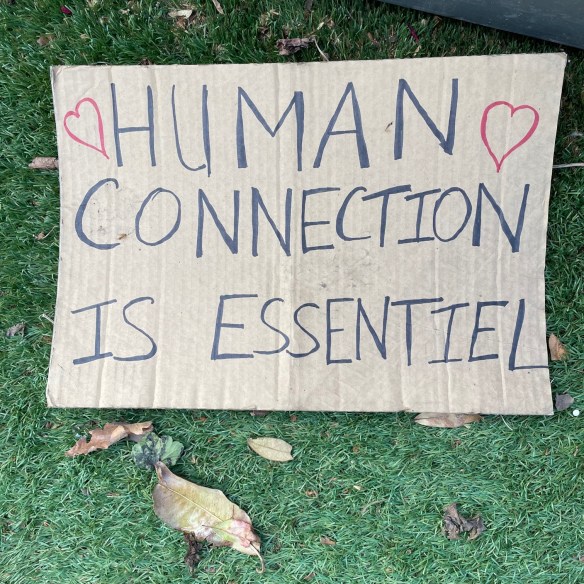
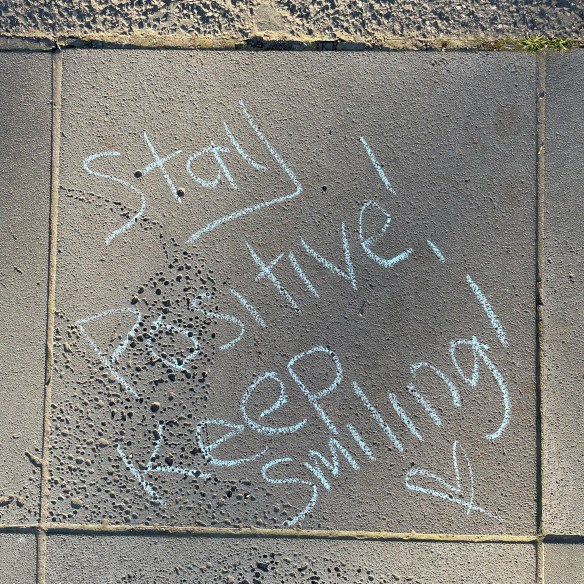
The following two pictures convey similar human sentiments, but they also represent very different responses to the situation we are living under. One is an example of the numerous messages of hope and encouragement that I see around my neighbourhood on my statutory daily walks. The other is a discarded placard seen a few days after an anti-lock-down protest.

The first reflects a “let’s grin and bear it” attitude – nobody likes being in lock-down, but we are all in this together, and if we can just remain positive, we will come through it OK.

The second is more reactive, and emotionally charged – the enforced isolation brought on by the lock-down is having an enormous effect on peoples’ mental health.

It’s hard to argue with either message….

I thought I would be able to cope better with each successive lock-down. Building a daily routine, maintaining some physical discipline (courtesy of the permitted daily exercise), managing at least 2-3 AFDs per week, treating myself to a nice restaurant-prepared meal now and then, catching up on films that I didn’t get to see at the cinema. But despite the recurring groundhog scenario, this lock-down seems different, and much harder to manage mentally.

First, the uncertainty of when it will end creates a sense of dread that we could be like this for 100 days or more (like lock-down #2). Second, the daily drip feed of data and the endless press conferences only reinforce the sense that we are not being given the full picture. Third, the sense of helplessness that for all our individual sacrifices of the past 18 months, we don’t seem to be any further ahead (if anything, we have gone backwards on so many counts). Fourth, State politicians seem to view this public health scare as a war of attrition between themselves and the voters (and their interstate and Federal counterparts). Gone is any sense that we are all in this together.

Quite apart from the cracks in Federation that the pandemic and its response has exposed, entire sections of the community are being driven apart and/or pitted against one another. Despite the so-called “National Plan” that the Commonwealth, State and Territory governments have all signed-up for, it’s clear that individual Premiers each reserve the right to interpret it differently, and will continue to impose internal border closures if they see fit. So, while Victoria and New South Wales seem aligned on this National Plan, Western Australia and Queensland in particular are more circumspect. Then there is the “race” to vaccinate their respective populations (or, as has been said a few times already, “our State citizens”, rather than “our Commonwealth citizens”).

At what point will the 70% and 80% vaccination levels be achieved to herald the promised social and economic freedoms? Is it the % of total population, or only the adult population, or only the eligible population, or only those between certain ages? Is it going to be calculated Federally, or at the State/Territory and/or LGA level? What about mandatory vaccinations for essential and front line workers, and those that have face-to-face dealings with the public? What about employers who require their staff to be fully vaccinated, but face resistance from unions?

Continued lock-down risks becoming a blunt instrument, and a tool of first (rather than last) resort. As such, it also risks alienating the majority of the population who are doing the right thing, in observing the public health directions and getting vaccinated (like, where’s the benefit?). And a prolonged lock-down risks undermining the efficacy of the vaccine, so we’ll need booster shots before we know it!

It seems that Covid19 is challenging our notions of the social contract between the government and the governed, and even testing the social license to operate we grant to big business (especially monopolies and cozy duopolies). The pandemic is also demonstrating the limits of individual responsibility and accountability, and potentially undermining the duty of care we owe to one another. If I knowingly, recklessly or carelessly (and as a result of breaching public health orders or OH&S measures) infect my family, my neighbour, my colleague or my customer, am I culpable? Does that mean I forfeit certain of my rights, especially if infection leads to death?

Just on the data, another reason the current lock-down seems different is because the information is being presented is not the same. Last year, everything was about the R0 number, flattening the curve, and “double-donut days”. There was also confusion over agreed terminology for “clusters”, “unknown cases”, “hot spots”, “red zones”, “complex cases” and “linked cases”. Politicians and bureaucrats talked about “settings”, “circuit breakers”, and “gold standards” for contact tracing. This year, it’s all about the “number of days infected”, “chains of transmission”, “mystery cases”, as well as the number of tests and vaccinations – much less analysis, it seems, on the number of confirmed cases per 1,000 tests or per 1,000 of the population, recovery rates or deaths as a percentage of cases.

From what I can glean, the stubborn levels of “mystery” cases can only be explained by the following:

  • more asymptomatic cases (are people building natural immunity?);
  • legacy cases shedding (a result of long Covid?);
  • longer incubation (and reporting) periods (less obvious initial symptoms?);
  • novel forms of transmission (or the virus is lingering longer on outdoor surfaces?);
  • QR codes and contact tracing not working (or the data is not usable?);
  • confusion over domestic/social/workplace/health/retail settings (e.g., extended families and multi-generational households?);
  • people being unclear about their movements (for fear of being victimised?).

Finally, I’m also not sure if lessons are being learned from elsewhere. We are still applying 14 day quarantine/isolation periods (albeit now with a day 17 test), yet in Hong Kong, for example, quarantine was extended to 21 days some time ago.

Next week: To be or NFT?


Goodbye 2020

Just when we thought it was safe to go out and about, Covid19 has once again put much of Australia on high alert, following the latest virus outbreak in New South Wales. And with impeccable timing, this cluster has emerged only a few days before the Christmas holidays – peak super-spreader season. On top of the months of lock-down, working from home, toilet paper shortages, job losses, food deliveries, economic disruption, closed borders, non-stop streaming, social distancing, restricted movements, panic buying, mask wearing, night-time curfews, Zoom calls, on-line shopping, cancelled events and home-made entertainment, we now have the prospect of a muted festive period. Like most people, I will be glad to see the back of 2020 – not that 2021 will necessarily be a whole lot better, given the ongoing rates of infection around the world, and the other knock-on effects of the pandemic.

My holiday plans are all mapped out….

Overall, I can count myself fortunate to have had a “good pandemic” – I managed to keep working from home, I don’t work in any of the front line sectors (health, education, hospitality, logistics, tourism), I live close to public parks and open spaces for daily exercise, and none of my immediate family or circle of friends caught the virus (although I have spoken to a number of people who were not so lucky). However, my travel plans were severely disrupted, so I have been unable to see any of my family overseas, and the prospect of visiting them in 2021 still looks remote.

As I write, the Report into Victoria’s failed Hotel Quarantine Program has just been released. The findings conclude that no single person was responsible for the ill-fated decision to engage private security firms to enforce the quarantine restrictions (which in turn led to Victoria’s second wave and Stage 4 lock-down for over 100 days). Instead, the Report underscores the notion of “acquiescence” (and “creeping assumptions“) – and of course, the failure of governance and proper decision-making.

The significance of this Report is now being brought into stark relief in light of the latest NSW outbreak – which appears to be as a result of a breach in hotel quarantine measures. Having read the Executive Summary, it’s clear that respective Victorian government departments and agencies charged with implementing and managing the HQP did not understand their specific roles and responsibilities. Regardless of the decision to engage private security firms, it seems that the procurement process was seriously flawed; and even if the Department of Jobs, Precincts and Resources was not at fault in how it hired certain private-sector security firms, it’s a serious oversight (and failure of process) that neither it nor the Department of Health and Human Services were fully aware of who was accountable for monitoring these contractors.

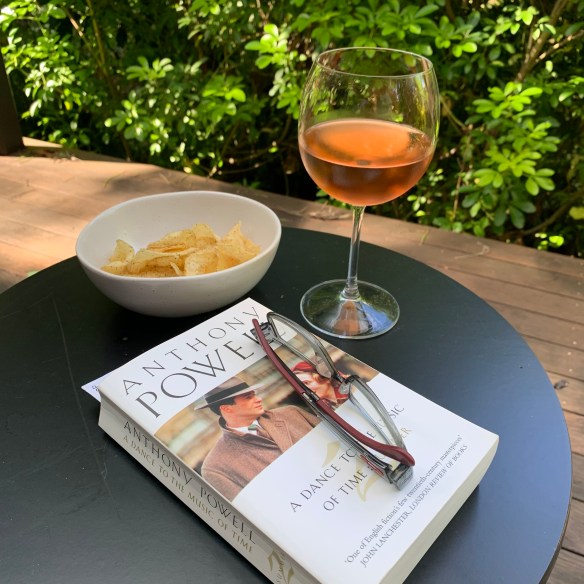
Of course, the ramifications of the US Presidential Election and a no-deal Brexit are still playing out – and the New Year is unlikely to bring immediate closure. For myself, I am lying low and staying close to home during the Saturnalia celebrations. As the above photo suggests, my plans involve nothing much more than catching up on my reading, and exploring my wine collection. Consequently, this blog will be taking a break for a few weeks, but I trust that this holiday season will bring a welcome respite from the events of 2020 for you and yours. Thanks for reading.

Next: The NGV Triennial