Integrity and the Acid Test: How Would it Look as Front Page News?

We have been hearing a great deal recently about allegations of political corruption in Australia, culminating in the resignation of a State Premier. This has raised questions about integrity in public office, given the steady stream of stories concerning dubious donations to election campaigns, murky business deals involving politicians and party power-brokers, misuse of trade union members’ assets by officials who were also prominent party figures, opaque political lobbying by industry, tawdry backroom deals to preference election candidates… oh, and the gift of a $3,000 bottle of wine.
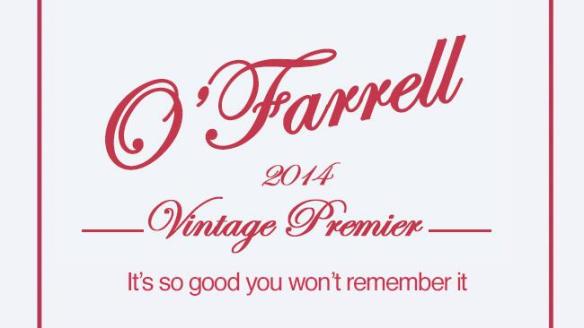
Premier Cru-elled de Chateau ICAC?

I won’t dwell on the whys and wherefores of Mr O’Farrell’s resignation, except to say this: If the Premier genuinely believed he did not receive the bottle of wine in question, and his assertion was subsequently shown to be wrong, does this amount to giving false witness? Surely, the act of giving false evidence involves the commission of a deliberate lie, either with the intention of causing a deception or creating an erroneous version of events. It seems that had Mr O’Farrell, as a Member of the New South Wales Parliament, remembered to declare the gift on his register of pecuniary interests, but later forgot about it or failed to recall it when giving evidence, he might have been made to look merely foolish. However, failing to register the gift was either a costly mistake or a grave error of judgement, and by forgetting it altogether (including his handwritten letter of thanks) it reveals a certain level of incompetence. Yet, how many foolish and incompetent politicians manage to keep their jobs, and even get re-elected?

Some commentators have suggested that the nature of the Premier’s resignation showed real integrity – but the truth is, once the facts contradicted his evidence, his position became untenable, and he realised he had no choice in the matter. (The relevant inquiry had in fact already cleared Mr O’Farrell of any suggestion of wrongdoing in the matter under investigation, but now his reputation is probably tarnished by the implication or perception of corrupt behaviour.)

The big lesson from these latest events is that when we get wrapped up in process or get sidetracked by personal, political or financial outcomes, we can easily lose sight of the need to act with integrity and to exercise our authority and powers of influence with transparency. Otherwise, we end up colluding which allows the smell of corruption to permeate. Politics is not alone in these matters – religious institutions, professional sport and corporate boardrooms have more than contributed to the current malaise.

I experienced a small but significant test of personal integrity early on in my career, when I was working as a paralegal in local government. Part of my role was to provide impartial legal advice to local residents facing housing problems. At the time, the area was undergoing intensive gentrification, and many private tenants were being “persuaded” to move out by landlords and property developers. In many cases, all I could do was advise parties of their respective rights, particularly the tenants who had protection from harassment and unlawful eviction under the relevant housing laws. In some cases, the council could mount criminal prosecutions for more serious offences, but this was rare.

So, one day, one of my “clients” (the advice service was free to the public) brought me a personal gift: a bottle of vodka and a bottle of champagne (probably no more than $50 in total value). I initially refused because I did not feel it was necessary or appropriate that he reward me in this way for simply doing my job. However, because my legal advice had enabled him to negotiate a lucrative payout from his landlord to vacate his home, and because he had been brought up to value displays of gratitude, he insisted I keep the gift and refused to take it back.

I could have just taken the bottles and not said anything to anyone, as there were no witnesses. But whether it was my conscience, or the thought that the client might have said something to a third party that may have compromised me, I immediately raised the matter with my manager. He acknowledged my honesty in reporting it (even though I wasn’t really sure what the council policy was on gifts), but said I could keep the present as it was of nominal value, and because I hadn’t sought or solicited a personal benefit. (He also said that if it was a bottle of gin, he might have taken it for himself… but I think he was joking?)

Nowadays, I’m not so sure that I would have got the same response, and over the years, having worked in some high-profile and highly regulated industries, I am aware that there is far more scrutiny around formal compliance, self-regulation, voluntary codes of conduct and business ethics. Of course, individuals need to feel comfortable about the organization they work for and the role they are expected to perform, to ensure there is alignment with their personal values. In addition, I’m often reminded of three questions you should ask yourself in corporate life whenever you have any doubts about the integrity of your actions:

  • Would you still do it if the CEO or Chairman was watching?
  • What might your clients or your shareholders think?
  • How would it look if it made front page news in the morning?

I think the problem for many modern politicians is that they hardly ever say exactly what they are thinking, for fear of letting slip a personal opinion that may differ from their public persona or their party’s stated policy position. (How often nowadays do Ministers resign on a point of personal principle?) Worse, it has been suggested that “loyalty to party” has been displaced by “loyalty to faction”. As a consequence, they are compromised because they forget about individual accountability; and they collude because they either prefer to toe the party line or hide behind the collective shield of cabinet, ministry or faction. In doing so they demonstrate a lack of personal integrity. Unfortunately, when even “benign” or “innocent” collusion emerges, corruption is never very far away.


POSTSCRIPT:

Since drafting this blog, I have heard several “wise after the event” comments from the chattering classes, which can be summarised as follows:

  • If the original enquiry was not interested in a bottle of wine, was the Premier “mere” collateral damage of the anti-corruption investigation?
  • How could he possibly have forgotten about such a significant gift, and his written note of thanks? What was going on? What was he thinking? What were his staff doing?
  • The 1959 Grange vintage is somewhat overrated (and well past its best drinking) – which might suggest it was worth less than $3,000 (NB: gifts under $500 do not need to be declared on the Parliamentary register of MPs’ pecuniary interests…)
  • On the other hand, bottles of 1959 Grange are being advertised at over $4,000 because the notoriety has boosted its value
  • It again raises questions about whether the electorate can trust any of our politicians – the backdrop being “lies” and “broken promises” over pre-election commitments

When Less really is More

I’ve been doing some home renovations recently, which meant that my kitchen was out of action for several weeks, giving me an excuse to visit a number of local restaurants for the first time. This experience made me realise that as with most other things in life, when it comes to restaurant menus, less is definitely more – the fewer the items, and the simpler the design, the more likely I will enjoy the meal.

At the risk of drawing a very long bow, I see there is a lesson here for anyone involved in product development, content marketing, or service-based solutions: the more choice we lavish on our customers, the more likely we are to confuse or overwhelm them, and ultimately disappoint or even lose them as customers.

As consumers, we are increasingly accustomed to having multiple and seemingly endless choices. While this can make for healthy competition (as long as it can support and sustain market efficiencies), sometimes the fewer options we have the more invested we are in our decisions.

In the case of a restaurant menu, having fewer choices is actually a good thing – either because we are more likely to think carefully before ordering, or because we are being guided to choose between items that have been purposely selected and assembled (curated?) by the chef. Plus, if we make a wrong or poor decision, there may be less to choose from the next time!

So, I found I really appreciated menus that had only 2-3 entrees, no more than 4 main dishes, and a discrete dessert selection. (OK, so the wine list can know no bounds….) Also, if the maitre d’ or waiters have to spend too much time explaining the menu structure, then it tells me more often than not that the restaurant hasn’t got it right.

When you think about it, the notion of “less is more” makes complete sense in this context:

  • If a restaurant has too many items, then not all of them can be of equal quality – how can the kitchen specialise in such a wide variety of dishes?
  • The best ingredients are usually those in season, and preferably locally sourced – which should be a natural constraint on the menu selection
  • Faced with limited choices, there is actually less risk of “menu anxiety” – whereas, agonising over a long list of dishes, or spending time ploughing through an over-elaborate menu can actually diminish the appetite…

I would also be more willing to let the chef decide for me, because a more focused menu should mean that the restaurant is more able to play to its strengths – this concept of the chef as curator should sit at the heart of product portfolios, content selection strategies and customer service options, while still making the customer still feel they have made an informed choice or purchasing decision.

Over the years, I have had the privilege to dine out in major cities and tourist destinations around the world. Some of the most memorable dining experiences I have had usually come down to a specific dish served in a particular restaurant – local speciality, seasonal ingredient, signature recipe, etc. – to which I have often gone back for more because it created such a lasting impression first time around, and because I know my choice will never fail to disappoint. (Of course, there is also the Proustian echo of associating food with a significant time or place….but let’s not over complicate the theory.)

If only everything else could be as reassuringly simple and consistent as a well-designed menu and a well-prepared meal.

Building a Personal Brand via Social Media – or the AAA Guide to Blogging

I’ve been working with content since I was a teenager – from writing articles for school magazines, to contributing gig reviews to a leading Manchester music magazine; from working for global media and information brands, to freelance editorial and writing projects.

Even now, as a business coach and consultant, I continue to focus on my clients’ content strategies – whether developing new products and services, managing IP, or capturing and commercialising in-house knowledge.

I have to admit to being an early sceptic about Social Media – but I soon recognised its importance, especially when building a personal brand on-line. Now it’s just another communication channel. I sometimes reflect on our ancestors who resisted the telephone, radio and television, and wonder if my own suspicions about Social Media will seem unfounded in retrospect.

About a year ago, I started this blog as a personal brand for my consulting work, as well as giving me a license to write about “Exploring the Information Age”, however tangential it might be to my professional work.*

After 12 months, I think I have found the essence to building a personal brand through social media – otherwise known as the AAA Guide to Blogging. Those elements are: Authenticity, Awareness and Attribution.

Authenticity

In an on-line environment where people hide behind avatars and aliases, you need to find the appropriate level of authenticity if you are going to be taken seriously by or establish trust with your audience. Being authentic means finding your “voice” to express yourself in any given situation, and to be true to yourself in that particular context.

I will admit to having several on-line profiles. For example, when connecting with my family and close friends, I am very circumspect about which Social Media platforms I use, and how I use them. My profile is extremely locked down and tightly controlled – you won’t be able to find me because I won’t let you in.

For my activities as a musician, I have another profile for self-promotion, sales and distribution, community engagement and beta testing new apps. You probably won’t find me because I use an alias, unless I am inviting you in.

Finally, in my professional life, I am very pro-active, interacting via an increasingly interconnected multi-channel strategy.

Does having multiple profiles mean I am being inauthentic? I would say no, because I am being authentic to who I am in those particular situations, and I don’t believe it is unreasonable to keep my private life, my personal interests, and my professional profile separate from one another. That’s why, even though I have a public profile on Facebook as part of my professional brand, I won’t be sharing my musical tastes because it’s not relevant (unless I might be going to a karaoke sessions with my clients?).

Awareness

Just as you need to be aware of the possibilities and limitations of different Social Media tools, you also need to understand your “character” when blogging, sharing and providing status updates. I see this as a natural extension to being authentic – in my professional life, should I really be sharing selfies (especially not at the client karaoke night…)?

There are 4 main categories of Social Media protagonists and bloggers:

1) Enthusiasts – personal stuff, “what I ate for breakfast”, no real purpose
beyond “sharing” or “look at me

2) Broad Experts – know their Yammers from their Spammers, their Blogrolls from their Facebook Trolls – understand how and where they need to engage, they know what works for them (they have found their own level)

3) Niche Specialists – the Twitterati (Stephen Fry), the star fashion bloggers, the political and media pundits, viral cat videos, and the quirky (@God) – NOT Katy Perry – she probably has people to do that for her, namely….

4) Professionals – so-called “prosumers” who use Social Media as part of their job or about their work, or it’s part of their public and personal profile, and the boundaries are increasingly blurred.

Attribution

As far as possible, I always attribute third party content or references I use in my blogs, even if they are deemed to be in the public domain, and I endeavour to acknowledge the original sources as far as possible.

Not only can this create reciprocal links and traffic to my blog, I just believe it is more ethical, rather than “sharing” content with no attribution. It’s not just about copyright law, or respecting IP, I happen to think it is more intellectually honest to acknowledge original ideas, rather than imply they are our own.

I came across a good example recently on LinkedIn, where a connection “shared” an infographic on social media, without providing the original source. In fact, it almost looked as if it was an original post. However, I was sure I had seen the same content elsewhere, and after a short Internet search, I was able to locate the original post and the author very easily. Maybe it’s laziness, or lack of consideration, but this common failure to attribute sources risks undermining your work and devaluing your creativity.

Final thoughts on blogging and Social Media

• No-one gets it right 100% of the time – and even when we do, we don’t always know why
• Conversely, everyone gets it a little bit wrong, so the real learning is in that collective experience
• Prospective employers, clients, customers all expect to find evidence of your Social Media and online presence – even if you are only engaged in Social Media in a professional/work capacity, you still need to develop a personal profile

*See previous blog 10 Rules for Effective Blogging. I recently did some analysis of my blog traffic, to see where my readers are coming from. I don’t use Google Adwords, and I don’t have any paid-for SEO – so I rely on my WordPress stats:

  • Nearly half of all traffic is coming from social networks
  • One third comes from search engines (of which Google accounts for 90%)
  • 10% comes from Reddit

Search results for my blog always come in the top 10 (plus it helps to have an unusual first and last name – always #1 search result!)

Footnote A slightly different version of this article was given as a presentation at the Australian chapter of PR over Coffee earlier this month

My Top 10 Blogs

Following on from my Top 10 Tips for Effective Blogging, I decided to list my most popular blogs so far this year. According to the WordPress stats, these are my most popular blogs this year by number of views:

1. Audiobus – a case study in app collaboration

2. In Praise of Analogue

3. Product Development 101

4. Bring back the Court Jester

5. Six Melbourne Start-Ups to Watch

6. Broadcastr signs off: 9 Challenges for Social Media

7. “If it’s not on Facebook, it didn’t happen…”

8. “Everything on the Internet should be free…”

9. Would you take career advice from a sushi chef?

10. Ten Reasons why the Lean Start-Up Model is here to stay

My conclusions?

1. Anything with numbers and lists does well

2. Anything about Start-Ups is popular

3. Anything on social media creates a buzz

4. Anything a bit leftfield (sushi chefs, analogue production, Court Jesters) gets attention

5. Audiobus is a phenomenal app!