My local gym has recently installed new cardio equipment with touch screen monitors and internet access. So I find myself indulging in what some musicologists call “guilty pleasures” on YouTube – music that was so naff or cheesy when it first came out that no serious music lover would ever admit to liking it, but now it’s OK because retro is cool.*
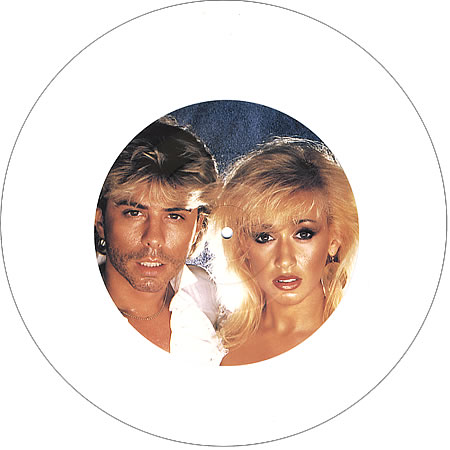
However, when I stumbled upon a couple of unauthorised YouTube posts featuring my own band, it got me thinking about all the “unofficial” uploads, and the impact that digital technology and social media are having through the increasing disregard for copyright and the rapid erosion of traditional business models by which content creators commercialize their intellectual property.
As more companies use digital media to support sales and marketing, brand management, customer engagement and market analysis, it becomes a valuable product or asset in its own right.
Even if you don’t believe your business is concerned with either content creation or commercializing intangible assets, there are implications for how you protect your business against commoditization or disintermediation.
What are the implications of new delivery channels for contemporary content creators, and what lessons does this offer to other businesses?
For example, how can artists earn adequate fees from music streaming services? What do broadcasters gain from personalised radio apps? Who is making sure authors and publishers get their fair share of royalties from “curated” and aggregated content services?
The truth is, I don’t think anyone really knows the answers to these questions.
Some musicians may feel they are not adequately compensated by commercial streaming services; others recognise that the game has changed, that releasing recorded music is no longer enough to provide them with a living. In the past, musicians toured to promote their latest albums; now they release music to promote their next concert tour. They also know they must take more direct control over their income sources and revenue streams from music sales, live performance, merchandising and publishing.
For broadcasters, traditional content syndication models may no longer work if content can be disaggregated and re-aggregated without them really knowing about it. Internet streaming and web broadcasting are wonderful things, but how will advertisers react when broadcasters have limited ways of measuring the audience, because nobody knows where they are, or who they are, or when they are listening/watching?
Even authors and publishers, with a long and established history of licensing systems such as public lending rights, are wary of schemes to digitize their back catalogues. They are in a bind, because they know some income from these programs is better than none, but does it justify losing a high degree of control over the commercialisation and distribution of their copyright material?
Which brings me back to YouTube, one of the “best” examples of commercialised copyright infringement that the internet and social media have created. Even if file sharing services such as Megaupload are no longer with us, or controversial music re-sellers like LegalSounds have shut down, with very little effort anyone can extract content posted to YouTube, despite the fact that the latter does not actually support a download function.
For my part, I’ll happily admit to accessing YouTube content which is subject to copyright infringement – so much material on YouTube appears to have been posted without the prior consent (or knowledge) of the copyright holder. I’m actually very pleased that someone has posted it because I enjoy watching long-forgotten documentaries and TV interviews, out-of-print live recordings and broadcasts, and stuff that is unavailable commercially. But my consumption of this content is largely predicated on unauthorised uploading.
Although much of this “re-cycled” content is tagged with a “Standard YouTube License” (which simply means the viewer cannot record, download, monetize or claim ownership over the content), many people posting and uploading 3rd party content don’t have permission to do so in the first place. (Even a broad interpretation of “fair use” exemptions would not justify the wholesale uploading of complete albums which are still commercially available.)
I acknowledge that YouTube provides a copyright infringement process, and a Content ID system designed to help content owners assert copyright over material that has been unlawfully uploaded. But personally, I can’t help feeling that this is a rather disingenuous arrangement. YouTube stresses it is not in a position to determine copyright status – but it is more than happy to create opportunities for generating advertising revenue as part of the dispute resolution process (revenue which it presumably shares with the aggrieved copyright holder?).
YouTube started out as a platform for user-defined and user-contributed content. It does not create its own content – although it invests in original content for its “channels”, and supports curated and personalised content (“recommendations”). This means YouTube attracts everything from amateur cat videos to professionally produced music promos, as well as highly original, creative and informative content uploaded by the independent musicians, artists, designers, educators and film-makers who create it and who choose to upload it.
And yet I keep coming back to the fact that YouTube is also full of “shared” content – content which is not owned by or licensed to the people uploading it. This is where the real commercial value of YouTube was always going to be found: in 3rd party content, however dodgy the provenance, because this reveals what might be popular and therefore, what can be monetized.
As a result, it could be argued that YouTube has been a considerable beneficiary of copyright abuse – by using its analytics and other data mining, it can identify potential revenue “hotspots”, even if the content has not been legitimately uploaded in the first place.
So, while YouTube is very useful as an archive resource, its future is written in the terms of its commercial alliance with Vevo. This deal is designed to promote popular artists through the distribution of their music and video content via highly controlled sales and marketing channels.
On one level, it’s merely the latest attempt by major record labels to reclaim their market dominance over a music industry that is increasingly subject to vertical re-integration. On another, it will inevitably lead to an uneven playing field: some (a very few?) content producers will generate huge revenues from mobile and on-line platforms through their share of the advertising (rather than from traditional airtime and mechanical royalties); others (the majority?) will neither be able to collect royalties (because the model is broken), nor attract advertising (because they don’t have the marketing budgets to spend on buying an audience big enough to be of interest to advertisers).
What is happening in the content and media industries today will likely happen to other industries tomorrow, especially in the services sector; but we can already see that the development of domestic 3-D printers creates the possibility of “open source” designs for producing our own consumer products – so what impact will this have on manufacturing, for example?
*Confession: Yes, I admit that Dollar’s “Hand Held in Black and White” is one of the “guilty pleasures” in my record collection. It’s big on cheese and none of my friends would ever admit to liking it, but it features some classic ’80s synth arpeggios and electronic drum programming, and was produced by Trevor Horn as he transitioned from the bubblegum synth pop of the Buggles to the splendour that was Art Of Noise….

