Audiobus – a case study in app collaboration

An elegant solution for audio app management

Like many leading CEOs and successful business people, I think it’s essential for all of us to have a creative outlet or a hobby, something that is not directly connected to our working lives.

For my part, I like to compose and record music using iOS apps, under an assumed nom de musique. Several of my compositions have been broadcast on national radio, and occasionally listeners are kind enough to purchase and download the music from my artist website.

In exploring this newer form of music-making, I am fortunate enough to gain access to pre-release and beta versions of new apps, which allows me to provide constructive feedback on new designs and recommend suggested features. This activity also provides some insights on best practice for collaborative app development:

  • Listen to your customers and their needs
  • Listen to your customers’ suppliers and their problems
  • Create a common technical standard (not the same as an open standard)
  • Encourage early adoption by making the standard available to key suppliers
  • Embark on an engaging programme of pre-release marketing via social media
  • Underpromise and over-deliver (but always deliver what you promised, and on time)
  • Repeat the process ad infinitum

There is a very active community of iOS musicians. This community is a thriving cottage industry: most practitioners are non-professionals; some are working on the fringes of the music industry; and a few are well-known software developers, producers and commercial recording artists in their own right. It’s a supportive community, and one where it’s easy to find your own level. It also tends to be a highly collaborative environment, with most participants willing to share their knowledge and provide help and advice. There are dedicated micromusic blogs, helpful product review sites and supportive technical forums.

Which brings me to Audiobus, one of the more interesting new apps that is gaining a lot of attention from developers, users and reviewers alike.

Music apps can be divided into 3 broad categories:

The problem is that most of these apps were not designed to “talk” to one another. Initially, it was possible to connect some apps using MIDI tools, but for many amateurs, this is probably a technical stretch. Besides, in the real world, I can plug a guitar and a keyboard into the same amplifier, or connect them to my desktop recording software via a single interface, easily enough.

Unfortunately, real-time audio generated in one app could not be connected to another app. Audio recordings could only be shared across multiple apps using some tedious save/copy/paste functions, or long-winded export and import processes. Audiobus solves this problem with an elegant design solution that works so simply, you have to wonder why Apple didn’t think of it themselves.

Rather than provide a technical overview of Audiobus, I’m more interested in the business model, and the potential case study it offers for future collaboration between app designers and content developers:

1. Audiobus is a collaboration between the developers behind two of the more successful audio apps, SoundPrism and Loopy HD

2. The developers have released an SDK for easier integration of new and existing 3rd party apps

3. There were a reasonable number of existing apps compatible with Audiobus when it launched, and more are being added all the time

4. As one reviewer has commented, buying the Audiobus app actually increases the useability (and therefore the value) of other apps

5. The key to Audiobus is providing a common standard for handling and processing audio recordings created in different apps

At least one app developer abandoned a new design for audio sharing between his own apps when he realised that the Audiobus solution would offer much more flexibility.

When combined with apps like AudioShare (a document management and conversion tool for audio files) and SoundCloud (THE social media platform for audio), Audiobus is really helping to open up and foster a multi-function environment for musicians through content compatibility, integration, sharing, exporting and collaboration.

Frustratingly, I sometimes struggle to figure out which of my iOS apps I need to use to open, edit and share text files, pdf documents, spreadsheets and slides. All too often, files suffer from incompatible formats, fonts, layout and graphics. If only we could have the same level of collaboration for e-books and productivity tools that Audiobus has fostered for music apps!
Geo-blocking: the last digital frontier?

Last month, senior executives from Adobe, Apple and Microsoft were summoned to appear before an Australian Parliamentary inquiry into IT pricing policies. It was alleged that Australian consumers can pay up to 70% more for comparable products and services sold in other markets.

Leaving aside the additional costs of distributing and shipping physical goods to Australia, at the heart of the pricing disparity is the practice of “geo-blocking” whereby customers in one location cannot purchase digital or physical products direct from vendors outside their country of residence. It’s the sort of industry practice that prevents Australian consumers buying some print books and CD’s from Amazon.com or Amazon.co.uk (and neither store sells MP3’s to Australian customers).

When asked to explain the apparent disparity in market pricing, the tech execs responded with comments such as, “the inclusion of Australian sales tax in the retail price is confusing”, “it’s a reflection of the cost of doing business in Australia” and “it’s all because of the content owners’ and copyright holders’ archaic territorial licensing practices”.

Their answers were variously described as “evasive“, “unbelievable” and “failed to impress“. The suggestion by one CEO that Australian consumers should fly to the USA to buy cheaper products overseas, was frankly ludicrous, especially as sales warranties given in America would likely be invalid once the goods were brought back to Australia.

When it can be cheaper to buy a CD copy of an album from an on-line music retailer in the UK rather than download the MP3 version from a vendor in Australia, clearly there is something wrong with this picture.

“Parallel imports” and “grey goods” are terms used in the fashion, cosmetic and other retail sectors to describe situations where wholesalers and distributors import branded goods that are technically subject to strict territorial sales and distribution licenses held by third parties. Alternatively, consumers in one country purchase goods direct from a retailer or distributor located in another country, who does not have the rights to sell or export the products to the consumer’s country of residence. The license holders can seek to block these unauthorized imports/exports, but in cases where the license holder has chosen not to distribute those specific goods, these “grey” imports could possibly be deemed legitimate (under the “use it or lose it” principle).

Whatever the legal interpretation of territorial licensing, when it comes to digital content, is geo-blocking still appropriate? Let me offer an illustration:

Imagine you are an Australian traveller on a business trip to New York. You visit a local book shop, to pick up a copy of the latest novel by your favourite author.

Unfortunately, the salesperson tells you the book is not in stock, because the publisher does not distribute that particular title to independent stores; instead, you have to go to the mega book store across town.

After making your way to the mega store, you find out that before you can make any purchase, you have to open an account, submit your credit card details and other personal information (and sign a contract that says things like “you must always keep books bought from our store in our proprietary and specially designed book shelves”).

Just as you are about to make your purchase, the shop assistant asks you for your passport. “Oh, I’m sorry, we don’t sell our books to people from Australia. You have to go to our mega store in Sydney.”

On the way back to your hotel, you phone the publisher (whose office is on your route) to see if you can buy a copy direct from their sales department. The conversation goes something like this:

“You sound Australian. Sorry, but we can’t sell it to you. You have to buy it from our Australian distributor.”

“OK, can you tell me who the Australian distributor is, or which shops stock your titles?”

“I’m not sure. I think it depends on who the author is. Or whether it’s the hardback or paperback edition. Or whether our distributor is importing that particular title. Maybe we only sell it through the Australian branch of the mega book store that wouldn’t sell you it to you while you were in town. Have a nice day.”

Great. With nothing to read on the 20-hour flight back to Australia, you catch up on a lot of episodes of “Bored to Death”, because you don’t expect them to be shown on Australian TV for at least a year. (But that’s another industry scenario…)

Back home in Australia, you visit the Sydney branch of the mega book store. “I’m sorry, we don’t have that title in stock, because we haven’t had enough customer requests to justify importing any copies…..”

Is it any wonder, with these sorts of restrictive commercial practices common in the software and digital content industries, that Australia has the highest level of illegal music downloading by capita, not because all Australian consumers are unwilling to pay for content, but often because customers cannot legitimately buy it.

“I blogged the news today, oh boy…”

In the week when eyewitness photos posted on social media helped to break the story of an Indonesian aeroplane that landed in the sea off Bali, we cannot ignore the potency of Netizen journalism  to create the news (even if we have concerns about accuracy and quality). And in the same week when “The Voice” returns to our TV screens for a 3-month season, we cannot ignore the potency of audience voting via SMS and social media to create new pop stars (even if we have concerns about accuracy and quality….).

As The Beatles might have sung, “I blogged the news today, oh boy…”

News and music are now confirmed as the key social network content for attracting audiences, if recent market activity is any indication of where the competition for eyeballs and eardrums is being played out.

  • Google’s decision to close down its popular Reader service simply drove customers into the arms of the competition. Unless Google rethinks the service closure, or has another product in development for Google+, Readers will be switching to alternative solutions. The community backlash has been significant, which suggests the audience for news aggregation is large, passionate and willing to be loyal to services that meet their needs. (For reviews on a range of Reader substitutes, see the links below.)*
  • Just a few days ago, LinkedIn announced it has acquired Pulse, a news-aggregation app, as part of a strategy to enhance its news content and build on LinkedIn Today’s curated news feed. Pulse is promoting itself heavily as a Reader replacement, so I am curious as to when LinkedIn settled the purchase price for Pulse – was it before or after Google’s March 13 announcement about the closure of Reader?
  • At the same time, Twitter has followed up its recent announcement to introduce better contextualization for trending news stories with the curious (but not surprising) decision to acquire We Are Hunted, a service that helps users discover new music, based on internet-sourced analysis of what other people are listening to. Expect to see millions of Justin Bieber fans tweeting his #music as a way to influence what Twitter pushes to its audience… and then wait for the feedback
  • Meanwhile, the other Justin has been working on the relaunch of Myspace as a “free” streaming music library (because no-one actually buys this stuff anymore, do they….?) Based on personal attempts to explore the new Myspace and upload my own music to this platform, it would be fair to say this relaunch is an “extended beta” version
  • Oh, and in case you missed the story, Yahoo! bought Summly, another news aggregation app, developed by someone younger than Justin Bieber…

* Here is a non-exhaustive and random selection of blogs offering reviews of Reader substitutes:

Life Hacker: Five Best Google Reader Alternatives

Extreme Tech: Google Reader Replacements

Edudemic: Google Reader Alternatives

Digital Trends: Best Google Reader Alternatives

CNET TV: Alternatives to Google Reader


In Praise Of Analogue…

Let me start by saying that I am not a technophobe, and I certainly do not consider myself a Luddite. But in this digital age, I do have a certain fondness for all things analogue.

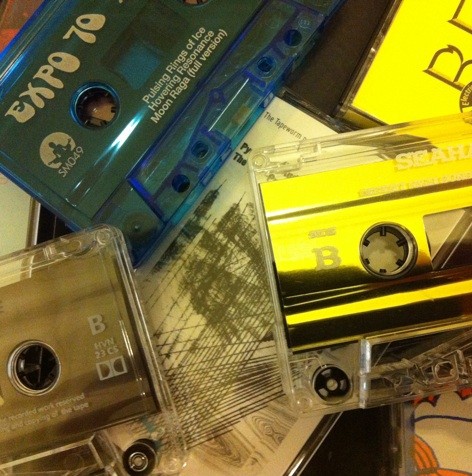
Cassette Culture is alive and well in the analogue world...

Cassette Culture is alive and well in the analogue world…

There are growing analogue trends in:

  • photography – Lomography and Polaroid
  • music – vinyl and cassette
  • publishing – zines and artists’ books
  • film – Super 8
  • graphics – letterpress
  • arts & crafts – Etsy and Craftsy

More and more of us are drawn to the charms and quirks of the analogue world, and not out of some perverse counter-culture posturing – we actually like this stuff for its own sake, and for the qualities that it represents:

  • slowness
  • tactile
  • considered
  • basic
  • hand-made
  • imperfect
  • uncomplicated
  • finite
  • flawed
  • serendipitous
  • warm
  • personal
  • custom-made
  • limited
  • simplicity

In fact, these key characteristics of analogue are antonyms of most things digital….

For many people who are using analogue production processes, the medium really is the message; and what you see really is what you get, because the products are usually a true representation of the work and effort that go in to making them.

However, the appeal of analogue is not just about the format or the technology; the inherent limitations of analogue production processes lead to natural constraints which inform the content and determine the final outcome of the finished object. For example, the number of photographs an analogue camera can take at any one time is limited by the length of the roll of film; a vinyl album can carry about 22-23 minutes of music on each side; a plate used in a hand-made printing process can usually generate editions of no more than 30 before it starts to deteriorate.

There are some traditional analogue domains where the digital format does enhance the user experience e.g., digital radio (although I sometimes miss the hum and crackle of AM broadcasts); or where digital technology introduces a whole new dimension e.g., 3-D printing; or where digital can resurrect/replicate a virtual experience of analogue e.g., iOS apps that mimic classic analogue synthesizers.

On the other hand, on-line communities are moving to “analogue” events via meet-ups because being there in person offers a deeper connection. I recently attended an afternoon salon conducted by a digital media agency, because they recognize the need to interact face-to-face with customers.

I anticipate that in response to a growing sense of digital disintermediation, more of us will start to engage with and interact through analogue media. This should not be seen as an out and out rejection of digital, but more as a means to establish balance and to find a deeper level of engagement beyond the often superficial shimmer of digital gloss.

Declaration of interest: the author, under an assumed nom de musique, recently released a limited edition cassette version of his last album, available on-line and from select record stores in Melbourne