It’s never too late to change….

Few things annoy me more than when someone in their late 20’s or early 30’s says: “I’m stuck in my job, and I can’t do anything about it.” My immediate reaction is to shout, “No you’re not, and yes you can!” But I stop myself, and ask instead, “What’s stopping you from making a change?” Usually, there is a mental blockage, and an inability to think outside or beyond the immediate situation. In turn, this is often linked to a distorted perspective about how they got to where they are, coupled with unreasonable (and therefore, unrealised) expectations.
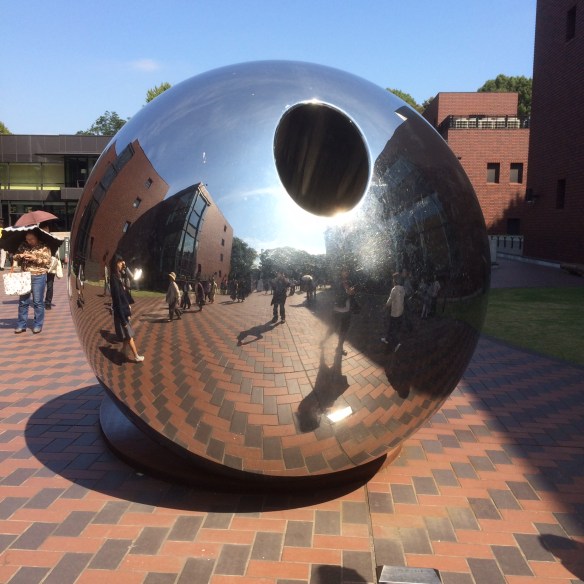
Sculpture, Ueno Park, Tokyo (Photo © Rory Manchee, all rights reserved)

” A new perspective?” (Ueno Park, Tokyo – Photo © Rory Manchee, all rights reserved)

Helping my clients to identify the barriers in their way (in particular any deeply entrenched obstacles), and to explore ways to dismantle or overcome them usually leads to alternatives: a new job opportunity, a potential career transition or a new business direction. It may not be an easy or comfortable process, but it’s not impossible. At its heart is the need for self-awareness, the willingness to embrace change, and the commitment to making it happen.

“See You At The Barricades”

Here are some of the initial objections I hear when people say they can’t make a career change or transition:

  • Financial security
  • Lack of time
  • No access to resources
  • No idea what to do next, where to look, how to plan
  • Enjoy the job, but not the organisation (or vice versa)
  • This is the only work they know, or studied/trained for
  • Non-transferable skills or inadequate training

My usual response is to get them to re-contextualize. It’s rather like using cognitive behaviour therapy, to reframe the situation. “How could you look at this differently?”, “What if you did this?”, “Who could help you overcome that?”, “What would be the ideal situation?”.

“Money’s Too Tight To Mention”

I understand that financial insecurity can be a major cause for concern. The certainty of a regular salary (even if you hate the job) can be preferable to taking a pay cut for a more rewarding role, or having to forego immediate financial return during a period of retraining or re-skilling. But if you are only doing a job because of the money, the likelihood is that you may never be entirely happy in your role, you may come to resent the work you do, and eventually you may lose sight of what is important to you. Plus, the knock-on effect on your personal well-being and that of your family can be significant. After all, no job has a lifetime warranty or even a 2-year guarantee, so the paycheck will probably run out anyway.

“Time Is On My Side”

Even if your financial circumstances or apparent lack of time mean that you can’t leave your current job or explore other options without securing a comparable income in another role, there are several ways to prepare for a career transition:

  • Re-train in your own-time – use on-line courses, evening classes and weekend workshops to access new skills and education
  • Ask your current organisation about options for study leave or flexible work hours
  • Suggest a personal development plan that draws on existing resources – e.g., shadow another colleague, or do a rotation or secondment to another team or department
  • Workers in some industries or older employees may be able to access public funding to support retraining and re-skilling
  • Use your annual leave to intern or volunteer at an organisation where you might like to work in the future

“Possibly Maybe”

There are many new opportunities for personal development through short courses, skill sharing or peer-to-peer platforms, and alternative learning paths to re-connect with your purpose. It might even be possible to reconfigure or restructure your current role to better suit your needs. Besides, the job you were originally hired for (or the industry and/or the career you trained for) has probably changed significantly; if you are not doing some regular re-engineering, you risk being confined to outdated thinking or processes, or worse, becoming obsolete.

“This Is Your Big Opportunity”

In fact, you have an obligation to yourself to invest in your own career, by re-training, updating your skills, or embarking on new challenges. Increasingly, organisations expect employees to take personal responsibility for self-managing their career, their professional development and to maintain the technical currency of their skills. Even better if you can demonstrate that learning a new skill can support innovation, generate efficiency gains, or deliver customer benefits. There are increasing examples where collaboration, co-creation and cross-pollination of ideas, skills and people between organisations and their suppliers/vendors/clients/distributors can have mutual outcomes, and employers are looking for people who can identify these opportunities.

“This Is The Way”

From personal experience, curiosity, pro-active networking, asking questions and generally taking an interest in what is going on in and around the organisation and wider world can reap huge rewards. In my own case, having a sense of enquiry prompted a transfer from London to Hong Kong to open a new Asian office for the company I worked for. Earlier in my career, I took evening classes so I could transition from a role in the public sector to a new career in publishing. And I continue to find new learning opportunities through meetups, hackathons and startup pitch nights, and attending workshops on innovation, collaboration, design thinking and technology.

I’ve written previously about the changing economic relationship of employment, because it’s incumbent on all of us to learn resilience and adaptability. We have a duty to equip ourselves in order to cope with and prepare for the continuous change and volatility we are all experiencing in the nature of the work we do.

Finally, for anyone who says they are “too old to change”, consider this: I recently met a man in his 60s, who had retired from a lifelong career in teaching, quickly got bored, and so he went back to college and is now a licensed horse trainer. He gets up earlier than he used to as a teacher, but he has connected with a passion and made it his career choice.

Declaration of Interest: I am a member of the Slow School of Business Advisory Council, which delivers Slow Coaching and Talk on Purpose

Next week: ANZ’s new CEO on #FinTech, CX and #digital disruption

Technology vs The Human Factor

Several times over the past month I have been reminded that the pursuit of technology for its own sake can give rise to misguided innovation; so-called solutions that are divorced from real world problems cannot justify the effort or resources. It feels like we are entering a new phase of the post-industrial revolution era, where a lack of “the human touch” will render many new inventions as worthless, irrelevant or redundant.

Street scultpure, Nagoya. Photo © Rory Manchee (all rights reserved)

Street sculpture, Nagoya. Photo © Rory Manchee (all rights reserved)

In no particular order:

  • At the second Above All Human conference in Melbourne, there was a consistent theme: how do we make sure there is a real connection between human needs and bleeding edge technology?
  • A Slow School of Business excursion to an eco-friendly homestead in rural Victoria offered a practical lesson on how to create harmony between technology and nature, and still achieve a modern (but modest), highly personal and comfortable home.
  • The economic debate about whether technology is improving our standard of living (as reported in the latest CPA magazine), which also echoes a recent CEDA report on automation and the implications for job losses.
  • A Q&A with Shayne Elliott, the new CEO of ANZ Bank, which prompted the observation that big data analytics, process automation and digital disruption are all very well, but will prove meaningless unless they can improve the customer experience. (But Elliott also conceded that the likes of Uber and Airbnb have succeeded because of complacency among industry incumbents.)

Advances in technology don’t have to lead us to the dystopian worlds of “Modern Times” or “Metropolis” (or any of the other post-apocalyptic visions that cinema and literature like to give us). However, the understandable focus on innovation must take the “human factor” into greater account when making design decisions, undertaking cost-benefit analysis and opting for one technology format over another.

Conclusion? It’s not totally clear whether we are entering another dot.com market correction, but there is a case to be made for whether or not we are seeing enough of a “technology dividend” from the current digital disruption and economic displacement centred on the use of cloud, social and mobile platforms; and whether we need a new methodology to measure the impact of the Internet of Things, robotics, AI, nano-technology, AR/VR, cognitive apps, wearables, 3-D printing, etc.

Next week: It’s never too late to change….

Surrealism, Manifestos and the Art of Juxtaposition

Like all good coaches and mentors, the best artists challenge our assumptions, reframe our perspective, and re-contextualise both the positive and negative, to provide a narrative structure with which to navigate the world around us. Likewise, they don’t tell us what to think, but leave us to interpret events for ourselves, having given us the benefit of an informed and critical vantage point.

Image: "Untitled" (2012) by Greatest Hits, NGV, Melbourne © Greatest Hits

Image: “Untitled” (2012) by Greatest Hits, NGV, Melbourne © Greatest Hits

Over the holidays, I went to a couple of unrelated but inter-connected exhibitions that both played with our traditional perception of reality while demonstrating the importance of context in providing meaning.

The Comfort of the (Un)Familiar?

First up was Lurid Beauty: Australian Surrealism and its Echoes, at the NGV Australia. I’m a big fan of Surrealist art, having visited the landmark retrospective, Dada and Surrealism Reviewed at London’s Hayward Gallery in 1978 (and I later made a very minor contribution to a documentary on Eileen Agar in 1989). What I particularly like about Surrealism is its use of the familiar to create alternative realities, which is both comforting and unsettling. Sadly, I know next to nothing about Australian Surrealism (and I imagine I am hardly alone, given it has only recently gained formal recognition and critical appreciation).

So I was pleasantly surprised to find early pieces by major artists such as Albert Tucker and Sidney Nolan, which to my mind were far more interesting than the works for which they are popularly known. When seen alongside contemporaneous exhibits by Max Dupain, Eric Thake and James Gleeson, it’s easy to see how Surrealism was a significant influence on Australian art from the 1930’s to 1950’s. And yet I don’t recall many references to the local Surrealist movement or a wide acknowledgment of its impact on 20th century Australian art. More’s the pity, when you can see how the threads of Surrealism continue to be woven into the work of contemporary artists like David Noonan, Julie Rrap, Anne Wallace and Pat Brasington.

The Long Shadow of 19th Century Gothic

Part of the problem might be the fact that later, more familiar works by Nolan, Tucker and Gleeson have become severed from the artists’ original (and modernist) Surrealist roots. Instead, as I see it, these artists (along with Boyd, Perceval, Olsen et al) have been re-cast as part of the continuing 19th century Australian Gothic sensibility (Goths being more tangible than Surrealists?). This prism prefers the literal over the metaphorical, “real” legends over allegories, and landscapes over mind scapes.

Even Inarticulate Art Speaks for Itself?

Another issue, from my perspective, is that contemporary Australian Surrealism continues to play with psychological and political issues, alongside themes of gender, sexuality and hierarchy – topics designed to make us feel uncomfortable. Whereas, in my view, too many contemporary artists are either obsessed with process over form/form over content (to the point that any potential meaning is lost); or conversely, output is everything (often reducing their work to mere illustration or decoration).

Not Made Here?

On a purely aesthetic level, and to be hyper-critical for one moment, I wonder if Australian Surrealism is overlooked because received art opinion considers it to be too derivative of its European counterpart – and therefore, it has fallen victim to cultural cringe. One possible example is Barry Humphries‘ sculpture “Siamese Shoes” (originally made in 1958, shown here in its 1968 remake). While Humphries, according to the exhibition notes, “is considered to be Australia’s first Dada artist” (only 40 years too late, some might say…), I don’t believe for a moment that he was trying merely to imitate Meret Oppenheim‘s almost identical and much earlier work, “Das Paar” (originally made in 1936, remade in 1956).  When viewed in the context of its companion pieces that also formed part of Humphries’ solo exhibitions and artistic happenings, and when one considers Australia’s cultural climate of the 1950’s, then it’s more likely that Humphries was appropriating Dadaism and Surrealism for his own purposes, specifically designed to stir up his local audience out of their suburban bourgeois complacency.

Re-directing Surrealism’s Legacy in Australia

What was especially telling about Lurid Beauty was the 15-20 minute conversation I had with one of the gallery volunteers. She was very keen to get my views on the work, and asked how I came to learn about this particular exhibition. I got the impression that attendance has not been as high as anticipated, perhaps due to a lack of publicity. Despite being on several mailing lists for Melbourne’s arts and cultural events, I had not received any promotional material about this exhibition. We also discussed whether Surrealism features in the high school art curriculum, and whether the exhibition needed to emphasise the contemporary works and themes (rather than taking a somewhat traditional or historical narrative, based on a selective bunch of male artists – the usual suspects).

Given the legacy of Surrealism on film, literature, advertising, music videos, fashion and design, I think more could have been done to make this exhibition appeal to a broader and younger audience. The works, for the most part, are vibrant (if at times challenging), and even the themes depicted in the older pieces still resonate today. (A concurrent exhibition of Les Mason‘s advertising, graphic and visual design work only emphasises the point about Surrealism’s continuing influence.)

Finally, one very welcome aspect of Lurid Beauty was the extensive collection of original publications from the NGV’s library: magazines, catalogues, journals, and of course, André Breton‘s “Surrealist Manifesto”.

In the Artists’ Own Words

Speaking of Manifesto, this is the title of Julian Rosefeldt‘s video exhibition next door at ACMI. I had the privilege of hearing the artist introduce one of the works at a special screening, in which he mentioned his fascination with art manifestos. In a rare example of an artist directly and explicitly acknowledging his sources and inspiration, Rosefeldt shared with the audience that he had even become somewhat obsessed with a particular feminist manifesto. Not only did this provide some fascinating insights on the artistic process, it demonstrated yet again that we are all products of what has gone before, and it reinforced the importance of understanding art in the context of the history, theory and criticism, when it comes to interpreting old and new art.

Using around 50 different manifestos (artistic, political, cultural, critical), Rosefeldt has created 13 short films, each representing a particular art movement. The selected texts have been juxtaposed as monologues for 13 different characters, who deliver their lines, seemingly out of context with the visual settings, but at the same time, totally integrated into coherent narrative forms.

The fact that Cate Blanchett is cast in all 13 lead roles has no doubt created additional interest among local audiences. But, not to take anything away from her performances, this should be irrelevant – the point is that Rosefeldt has taken something with very specific meaning from one context, combined it with a mix of related and unrelated elements, and created a whole set of new meanings. (If anything, seeing simultaneous versions of Blanchett performing multiple, disparate roles, screened side by side, only underlines the fact that actors are the great deceivers – which, if any, is the “real” Cate?)

The videos are looped and synchronised. At times, the monologues converge and overlap, creating three and four-part harmonies for spoken word. This further de-contextualises the source materials, while lending them further meaning, even if we can’t immediately fathom what that might be. (Personally, I think it could be a subliminal reference to the Tower of Babel, or simply a comment on the manifestos themselves – and by extension, the vacuous words of so many artists’ statements.)

Less Is More

Two other works in the exhibition, Stunned Man and The Soundmaker (both from The Trilogy of Failure), are more straightforward narratives, also featuring a single character cast in a familiar setting.

First, Stunned Man is a dual screen projection, comprising mirror images of the same apartment. Over time, elements appear to interchange between the two screens, in a process of forward/reverse destruction and re-construction. But there are enough visual clues to suggest that not all is as it seems, in this parallel universe.

Next, The Soundmaker deconstructs the work of the Foley artist, using a similar process of destruction and re-construction – but split across three screens and two scenes, the viewer could be left wondering whether the “real” action is actually the soundtrack for the Foley artist at work.

What all these works demonstrate is that sometimes less is more – a simple idea can still be executed with wit, sophistication and restraint, to lend it a level of complexity that does not over-burden the final result. It requires a deft touch. There is nothing obvious or ponderous in these films. Nothing about these highly staged videos has been left to chance – every detail has been meticulously thought through. They are perhaps all too rare examples of when formal planning, combined with creative process and technical production, can give us content that is fully formed, but still open to interpretation.

The Artistic License

In my professional work as a coach and mentor, I’m not in the habit of constructing manifestos (believe it or not, I don’t possess that level of didacticism…). But I try to challenge my clients’ assumptions, reframe their situations, and draw on analogous scenarios (not just from business, but from technology, culture, art, music, etc.) that can help re-contextualise their perspectives, especially when clients are stuck. I see a large part of my role as consultant to use the “artistic license” I have been given to investigate, interpret and identify solutions to client problems – which at times can even take the form of a type of alchemy. As one client I worked with recently commented, “the way you reframed the situation was like pure gold”.

Next week: Why The Service Sector Lacks Self-Awareness

“I’m old, not obsolete”

In the recent “Terminator” sequel, Arnold Schwarzenegger coins a new catchphrase: “I’m old, but I’m not obsolete”. He may not be the latest android, but he has learned to adapt, he is still relevant and his purpose remains consistent. A bit like older workers, then: not ready to be consigned to the scrap-heap, consistent and reliable, and even capable of being upgraded (as Arnie is towards the end of the film).

Terminator Genisys

Remaining relevant is tough, even for a Terminator….  (Copyright 2015 Paramount Pictures)

A great deal of the discussion on employee engagement, business productivity, workplace flexibility and career transition talks about what we do with older employees, particularly those in their 50’s, who often struggle to find comparable work when they are retrenched or “restructured”.

Many 50-somethings can vouch for the fact that making a career transition into another full-time role can be extremely difficult. In my own case, I left my last corporate position just after I turned 50, and I soon realised it would be virtually impossible to find the exact same or similar permanent role elsewhere. So I embarked on a portfolio of interests (non-executive board positions, consulting work, contract roles and entrepreneurship) in order to remain “economically active”.

Over the past four years, in order to remain active, retrain and build my professional networks, I have:

  • completed the AICD Company Director course
  • served on a number of advisory and pop-up boards
  • launched this weekly blog, and written for 3rd party sites
  • coached business owners and entrepreneurs
  • competed in a FinTech hackathon and a MedTech startup competition
  • consulted in the education, public, NFP, publishing, manufacturing, technology and professional services sectors
  • joined numerous MeetUp and networking groups
  • participated in the Lightning Conference on Victoria’s StartUp Future
  • developed a new app for employee performance management,
  • trained as a presenter on community radio, and
  • become a participant and adviser at the Slow School of Business.

As part of my plan to become familiar with new technology, I have also built a side-project to record and release my own music via Bandcamp and Soundcloud, incorporating many iOS apps for which I am a beta-tester.

Not all of this activity is remunerated, yet the people I work with all tell me how much they value my unique input and original insight, and so I keep on doing it. Given the need/expectation to work longer, and the continued tinkering with tax, super and income rules and policies, I’m not sure many of us can ever think about full-time “retirement” (whatever that now means).

I’m aware that there are some ad hoc initiatives to engage older workers as mentors for new entrants to the workplace. While such projects are well-meaning, and may have some desirable benefits, they are not yet financially sustainable, and don’t address the core issue that the expectation of full-time, permanent, lifelong employment is no longer realistic, and we will all have to adapt to these new circumstances.

On the few occasions I have considered full-time roles, I am staggered that so many prospective employers seem incapable of thinking outside the box: on the one hand, they say they want diversity and fresh thinking; but on the other, they resort to the habit of appointing square pegs for square holes.

There is a real sense among many of my peers that their age counts against them, because either employers don’t believe they can learn new technology or processes, or that their previous seniority means they are only interested in roles where they can wait out their retirement, or simply “direct traffic”, rather than getting their hands dirty. Which is both insulting and demoralising. I recall one early discussion where the recruitment consultant said, “despite what the ad says, the business just wants a safe pair of hands – someone who has done the exact same role in a similar organisation for the past 20 years”. How does that support diversity, in particular, cognitive diversity?

So, my question to employers, hiring managers, industry bodies and policy-makers is: when will you truly embrace the challenge of (and opportunity for) change in your hiring and employment practices, and how do older age workers fit into your thinking (if at all)?

Next week: Startups, VC’s and Entrepreneurs