Building a Personal Brand via Social Media – or the AAA Guide to Blogging

I’ve been working with content since I was a teenager – from writing articles for school magazines, to contributing gig reviews to a leading Manchester music magazine; from working for global media and information brands, to freelance editorial and writing projects.

Even now, as a business coach and consultant, I continue to focus on my clients’ content strategies – whether developing new products and services, managing IP, or capturing and commercialising in-house knowledge.

I have to admit to being an early sceptic about Social Media – but I soon recognised its importance, especially when building a personal brand on-line. Now it’s just another communication channel. I sometimes reflect on our ancestors who resisted the telephone, radio and television, and wonder if my own suspicions about Social Media will seem unfounded in retrospect.

About a year ago, I started this blog as a personal brand for my consulting work, as well as giving me a license to write about “Exploring the Information Age”, however tangential it might be to my professional work.*

After 12 months, I think I have found the essence to building a personal brand through social media – otherwise known as the AAA Guide to Blogging. Those elements are: Authenticity, Awareness and Attribution.

Authenticity

In an on-line environment where people hide behind avatars and aliases, you need to find the appropriate level of authenticity if you are going to be taken seriously by or establish trust with your audience. Being authentic means finding your “voice” to express yourself in any given situation, and to be true to yourself in that particular context.

I will admit to having several on-line profiles. For example, when connecting with my family and close friends, I am very circumspect about which Social Media platforms I use, and how I use them. My profile is extremely locked down and tightly controlled – you won’t be able to find me because I won’t let you in.

For my activities as a musician, I have another profile for self-promotion, sales and distribution, community engagement and beta testing new apps. You probably won’t find me because I use an alias, unless I am inviting you in.

Finally, in my professional life, I am very pro-active, interacting via an increasingly interconnected multi-channel strategy.

Does having multiple profiles mean I am being inauthentic? I would say no, because I am being authentic to who I am in those particular situations, and I don’t believe it is unreasonable to keep my private life, my personal interests, and my professional profile separate from one another. That’s why, even though I have a public profile on Facebook as part of my professional brand, I won’t be sharing my musical tastes because it’s not relevant (unless I might be going to a karaoke sessions with my clients?).

Awareness

Just as you need to be aware of the possibilities and limitations of different Social Media tools, you also need to understand your “character” when blogging, sharing and providing status updates. I see this as a natural extension to being authentic – in my professional life, should I really be sharing selfies (especially not at the client karaoke night…)?

There are 4 main categories of Social Media protagonists and bloggers:

1) Enthusiasts – personal stuff, “what I ate for breakfast”, no real purpose
beyond “sharing” or “look at me

2) Broad Experts – know their Yammers from their Spammers, their Blogrolls from their Facebook Trolls – understand how and where they need to engage, they know what works for them (they have found their own level)

3) Niche Specialists – the Twitterati (Stephen Fry), the star fashion bloggers, the political and media pundits, viral cat videos, and the quirky (@God) – NOT Katy Perry – she probably has people to do that for her, namely….

4) Professionals – so-called “prosumers” who use Social Media as part of their job or about their work, or it’s part of their public and personal profile, and the boundaries are increasingly blurred.

Attribution

As far as possible, I always attribute third party content or references I use in my blogs, even if they are deemed to be in the public domain, and I endeavour to acknowledge the original sources as far as possible.

Not only can this create reciprocal links and traffic to my blog, I just believe it is more ethical, rather than “sharing” content with no attribution. It’s not just about copyright law, or respecting IP, I happen to think it is more intellectually honest to acknowledge original ideas, rather than imply they are our own.

I came across a good example recently on LinkedIn, where a connection “shared” an infographic on social media, without providing the original source. In fact, it almost looked as if it was an original post. However, I was sure I had seen the same content elsewhere, and after a short Internet search, I was able to locate the original post and the author very easily. Maybe it’s laziness, or lack of consideration, but this common failure to attribute sources risks undermining your work and devaluing your creativity.

Final thoughts on blogging and Social Media

• No-one gets it right 100% of the time – and even when we do, we don’t always know why
• Conversely, everyone gets it a little bit wrong, so the real learning is in that collective experience
• Prospective employers, clients, customers all expect to find evidence of your Social Media and online presence – even if you are only engaged in Social Media in a professional/work capacity, you still need to develop a personal profile

*See previous blog 10 Rules for Effective Blogging. I recently did some analysis of my blog traffic, to see where my readers are coming from. I don’t use Google Adwords, and I don’t have any paid-for SEO – so I rely on my WordPress stats:

  • Nearly half of all traffic is coming from social networks
  • One third comes from search engines (of which Google accounts for 90%)
  • 10% comes from Reddit

Search results for my blog always come in the top 10 (plus it helps to have an unusual first and last name – always #1 search result!)

Footnote A slightly different version of this article was given as a presentation at the Australian chapter of PR over Coffee earlier this month

YouTube and guilty pleasures…

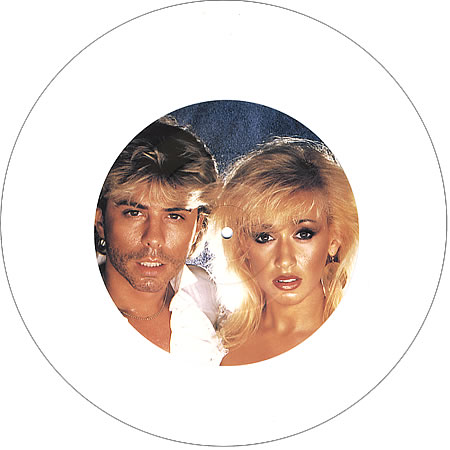
My local gym has recently installed new cardio equipment with touch screen monitors and internet access. So I find myself indulging in what some musicologists call “guilty pleasures” on YouTube – music that was so naff or cheesy when it first came out that no serious music lover would ever admit to liking it, but now it’s OK because retro is cool.*

Dollar-Hand-Held-In-Blac-116568

However, when I stumbled upon a couple of unauthorised YouTube posts featuring my own band, it got me thinking about all the “unofficial” uploads, and the impact that digital technology and social media are having through the increasing disregard for copyright and the rapid erosion of traditional business models by which content creators commercialize their intellectual property.

As more companies use digital media to support sales and marketing, brand management, customer engagement and market analysis, it becomes a valuable product or asset in its own right.

Even if you don’t believe your business is concerned with either content creation or commercializing intangible assets, there are implications for how you protect your business against commoditization or disintermediation.

What are the implications of new delivery channels for contemporary content creators, and what lessons does this offer to other businesses? 

For example, how can artists earn adequate fees from music streaming services? What do broadcasters gain from personalised radio apps? Who is making sure authors and publishers get their fair share of royalties from “curated” and aggregated content services?

The truth is, I don’t think anyone really knows the answers to these questions.

Some musicians may feel they are not adequately compensated by commercial streaming services; others recognise that the game has changed, that releasing recorded music is no longer enough to provide them with a living. In the past, musicians toured to promote their latest albums; now they release music to promote their next concert tour. They also know they must take more direct control over their income sources and revenue streams from music sales, live performance, merchandising and publishing.

For broadcasters, traditional content syndication models may no longer work if content can be disaggregated and re-aggregated without them really knowing about it. Internet streaming and web broadcasting are wonderful things, but how will advertisers react when broadcasters have limited ways of measuring the audience, because nobody knows where they are, or who they are, or when they are listening/watching?

Even authors and publishers, with a long and established history of licensing systems such as public lending rights, are wary of schemes to digitize their back catalogues. They are in a bind, because they know some income from these programs is better than none, but does it justify losing a high degree of control over the commercialisation and distribution of their copyright material?

Which brings me back to YouTube, one of the “best” examples of commercialised copyright infringement that the internet and social media have created. Even if file sharing services such as Megaupload are no longer with us, or controversial music re-sellers like LegalSounds have shut down, with very little effort anyone can extract content posted to YouTube, despite the fact that the latter does not actually support a download function.

For my part, I’ll happily admit to accessing YouTube content which is subject to copyright infringement – so much material on YouTube appears to have been posted without the prior consent (or knowledge) of the copyright holder. I’m actually very pleased that someone has posted it because I enjoy watching long-forgotten documentaries and TV interviews, out-of-print live recordings and broadcasts, and stuff that is unavailable commercially. But my consumption of this content is largely predicated on unauthorised uploading.

Although much of this “re-cycled” content is tagged with a “Standard YouTube License” (which simply means the viewer cannot record, download, monetize or claim ownership over the content), many people posting and uploading 3rd party content don’t have permission to do so in the first place. (Even a broad interpretation of “fair use” exemptions would not justify the wholesale uploading of complete albums which are still commercially available.)

I acknowledge that YouTube provides a copyright infringement process, and a Content ID system designed to help content owners assert copyright over material that has been unlawfully uploaded. But personally, I can’t help feeling that this is a rather disingenuous arrangement. YouTube stresses it is not in a position to determine copyright status – but it is more than happy to create opportunities for generating advertising revenue as part of the dispute resolution process (revenue which it presumably shares with the aggrieved copyright holder?).

YouTube started out as a platform for user-defined and user-contributed content. It does not create its own content – although it invests in original content for its “channels”,  and supports curated and personalised content (“recommendations”). This means YouTube attracts everything from amateur cat videos to professionally produced music promos, as well as highly original, creative and informative content uploaded by the independent musicians, artists, designers, educators and film-makers who create it and who choose to upload it.

And yet I keep coming back to the fact that YouTube is also full of “shared” content – content which is not owned by or licensed to the people uploading it. This is where the real commercial value of YouTube was always going to be found: in 3rd party content, however dodgy the provenance, because this reveals what might be popular and therefore, what can be monetized.

As a result, it could be argued that YouTube has been a considerable beneficiary of  copyright abuse – by using its analytics and other data mining, it can identify potential revenue “hotspots”, even if the content has not been legitimately uploaded in the first place.

So, while YouTube is very useful as an archive resource, its future is written in the terms of its commercial alliance with Vevo. This deal is designed to promote popular artists through the distribution of their music and video content via highly controlled sales and marketing channels.

On one level, it’s merely the latest attempt by major record labels to reclaim their market dominance over a music industry that is increasingly subject to vertical re-integration. On another, it will inevitably lead to an uneven playing field: some (a very few?) content producers will generate huge revenues from mobile and on-line platforms through their share of the advertising (rather than from traditional airtime and mechanical royalties); others (the majority?) will neither be able to collect royalties (because the model is broken), nor attract advertising (because they don’t have the marketing budgets to spend on buying an audience big enough to be of interest to advertisers).

What is happening in the content and media industries today will likely happen to other industries tomorrow, especially in the services sector; but we can already see that the development of domestic 3-D printers creates the possibility of “open source” designs for producing our own consumer products – so what impact will this have on manufacturing, for example?

*Confession: Yes, I admit that Dollar’s “Hand Held in Black and White” is one of the “guilty pleasures” in my record collection. It’s big on cheese and none of my friends would ever admit to liking it, but it features some classic ’80s synth arpeggios and electronic drum programming, and was produced by Trevor Horn as he transitioned from the bubblegum synth pop of the Buggles to the splendour that was Art Of Noise….

Demo Day for MAP’s Class of 2013 Startups

The Melbourne Accelerator Program (MAP) supported by University of Melbourne’s School of Engineering and Faculty of Business and Economics is only in its second year, but already shows signs of becoming a leading incubator of new and emerging entrepreneurial talent in the burgeoning Melbourne startup community.

Last week was Demo Day (a.k.a. pitch night) for the 6 successful teams who were selected from over 50 applications submitted for the 2013 program. Presenting to an audience of fellow entrepreneurs, potential investors, program mentors and “interlopers” (a term used by Dr Charlie Day in his introduction), each team was invited to present the fruits of their labours from the 3-month accelerator program.

To kick things off, there was a quick update on the Class of 2012, including the team behind the new Omny audio app, which offers curated audio content.

From the Class of 2013, first up was 2Mar Robotics, who are developing a remote-controlled robotic arm, aimed at helping people with quadriplegia or with restricted arm movement and control. An earlier, voice-operated prototype proved unstable due to interference from background noise, but the team, led by Young Australian of the Year 2012, Marita Cheng (and founder of Robogals) have already secured a number of pre-orders for the latest version, which they hope to ship in early 2014. While it is understandable that the team would want to keep key commercial aspects of their project confidential, the less-than-open responses to audience questions about product costs and market pricing created the impression that the team are still developing their business case.

The next project, also healthcare-related, was from Cortera Neurotechnologies, who specialise in remote monitoring sensors for epilepsy patients. The team’s goal, using highly developed neural interface technology, is to significantly reduce the risk of infection caused by major invasive surgery for the 30% of epilepsy sufferers who are unable to take medication. Despite some theoretical discourse and good-natured banter with the audience about cyborgs and mind control interfaces, the team (which is divided between Melbourne Uni and UC Berkeley) is well on its way to securing prototype funding.

Client Catalyst offers digital marketing services for SMEs, via mobile websites and integrated search solutions. Given that nearly half of all mobile searches are for local services, the solution has targeted the trade vertical (plumbers, builders, electricians, etc.) which accounts for about 25% of the SME market. Claiming much lower customer acquisition costs for their clients (compared to traditional classified directories), and a very high client conversion rate, the team has established a solid subscription business that more than covers their primary input cost of paid search terms.

By using highly intuitive data visualisation and enhanced search, the team behind The Price Geek claim to have established a major competitive edge over other price comparison sites, in their bid to help you “find out the market price for anything” (although currently, it really only covers tech devices, sneakers, and Tiger Woods memorabilia…). They have built affiliate programs with multiple merchants, giving them more market sources, more contributed content, and more data analytics. The site has already picked up some strong media coverage, and in future, The Price Geek plans to offer price comparison for cars.

Before commenting on Ebla, a self-publishing platform for lawyers, I should declare an interest: I previously worked for the legal information division of Thomson Reuters, including the Westlaw online service. So, IMHO, anyone who is attempting to bring a new technology solution to informed legal commentary and analysis deserves a lot of credit, especially if, as intended, the service empowers individual lawyers to showcase their expertise in a collaborative and adductive environment. Contrary to some popular misconception, the legal profession (along with financial services) was one of the first industries to embrace the digital age*. Yet consider this: the sheer volume of legislation, case-law and commentary; the complexity of the material and its many idiosyncrasies (e.g., case citation systems); the proprietary nature of much document drafting; and the “knowledge is power” approach to researching obscure precedents before facing your opponent in court – all these factors tend to work against the notion of knowledge sharing and collaboration among lawyers. (I have heard of some law firms that embed deliberate mistakes in their commercial drafting templates, to deter plagiarism by their competitors if the originals were to fall into the wrong hands.) Access to the site, which is still in Beta, is by invitation only, and will offer a freemium subscription model.

The last team to present was SwatchMate, with a Bluetooth-enabled reader that helps users to “capture the color of any surface” (or “Shazam for color”). I have to say that when I first saw this team present at a Lean Startup Melbourne event earlier this year, I was somewhat sceptical about the product, as they seemed to be focussing on the paint market (both trade and DIY customers), yet didn’t appear to realise that most people only paint their home once every 5-7 years. However, I am pleased to report that SwatchMate have since lifted their game, by identifying strong opportunities among designers and creatives, brand managers, the cosmetics industry, and even TV and monitor calibration. With linkages to major design software, as well as to leading colour and paint catalogues, SwatchMate will offer an integrated solution once they go into production. Meanwhile, they are planning to launch on Kickstarter, and are a finalist at next week’s Melbourne Design Awards (plus shortlisted for the Sydney and Brisbane Design Awards)**.

Applications for MAP 2014 close on April 24, and there are also opportunities to participate as a mentor (full details not yet available).

* Lawyers love their technology: The Wang word processing system was eagerly adopted by law firms in the 1970s and 1980s, for its ability to support complex document formatting. Online legal research tools like Westlaw and Lexis-Nexis were launched in the 1970s. Some of the first CD-ROM and web-based law publications in the 1990s deployed specialised html coding and Boolean logic designed for legal search and retrieval purposes. Many law firms use sophisticated knowledge management systems to capture the in-house expertise of their lawyers. Court reporting and litigation support tools have been using advanced voice recognition, extensive text parsing and real-time data capture and processing for many years.

** Declaration of interest: I am currently involved with the Design Awards, although I have no say in the selection of shortlisted entries or finalists.

Is it safe to upgrade to iOS 7?

I ask the question because like many other users, I am holding off upgrading to iOS 7. I have even backed up a copy of iOS 6.1.3 to “freeze” it in case I am forced to upgrade before I am ready. I am holding out until some of the potential glitches and bugs are ironed out. I was first alerted to the issue by the developers of Audiobus, but it seems that they are not alone….

orphionarticulation-640x480

Leaving aside the fact that many customers could not easily download the new operating system, or the fact that the shiny “new” iTunes Radio is not available outside the US, it seems that iOS 7 has been launched rather hastily, along with iTunes 11.1 (barely a month after iTunes 11.0.5….).

Audiobus had earlier notified their customers that iOS 7 would automatically update apps, without users even knowing, which risked corrupting personalised settings, especially for more complex apps. Now, it seems that the upgrade function has been modified, so that users can select when and how their apps will be upgraded.

But Audiobus, who launched inter-app connectivity for live audio, could be one of a number of apps that Apple is seeking to render obsolete or redundant, since iOS 7 supports Inter-App Audio. Other apps seemingly under threat include those featuring, photography, music streaming and document sharing.

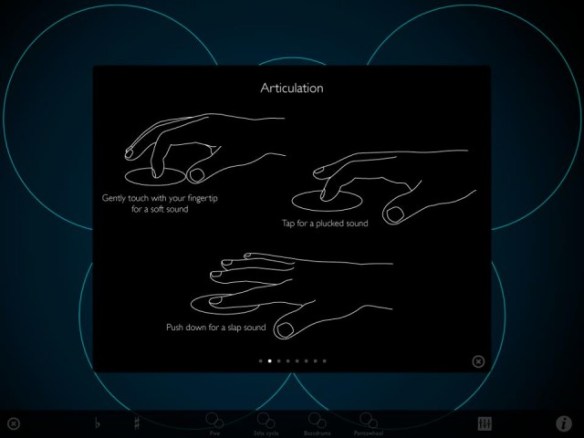
Even an app that utilises the amount of contact area made by your fingers on the device touch screen was forced to remove that functionality by Apple. To me, this type of gesture or articulation could be critical in helping people with accessibility issues – so why should its deployment be restricted at the whim of Apple, rather than being made available to all developers?

Apple will not countenance any app that “interferes” with the telephony functions of an iPhone, and until iOS 6 introduced “Do Not Disturb”, I wonder how many 3rd party apps with similar functionality were rejected by the iTunes Store?

Now Apple appears to be cornering other functionality and interactivity design – even if Apple didn’t think of them first…. In fact, every original app design or feature is like a piece of middleware, that allows the user to interact with the device’s operating system, in a way that the system developers probably had not anticipated; this process is at the heart of innovation – taking something good and making it even better.

The fanfare of the new iPhone 5S (and its colourful cousin the 5C) probably won’t allow any criticisms about iOS 7 to rain on Apple’s new product parade – but I can’t help feeling that as customers we are being oversold each new release of an Apple device or operating system upgrade.

Although every incremental release or upgrade is supposed to come with lots of great new features and benefits, we actually lose some functionality and user options as Apple continuously locks down customisation and personalization. For example, iTunes 10.8 disabled the option to manually sync Notes between devices – now it’s all done via iCloud, and legacy data that predates iCloud (or is in a folder “On My iPhone” and thus not “recognised” by iCloud) has to be copied over to a cloud-enabled folder, one-by-one, as I have learned to my cost. Why does Apple think it can determine how I manage my own data?

While I understand that all product developers rely on user experience and expectations to help them develop new features, and they need customers to migrate to single, common platforms and versions as quickly as possible post-release, I’d prefer that my loyalty and patience were not taken for granted.