Bringing Back Banter

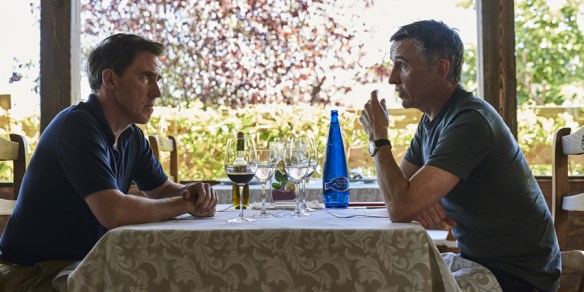
Last week I watched “The Trip To Spain”, the latest in the “Trip” franchise. For anyone who has not yet seen these films (or the TV series from which they are compiled), the narratives revolve around a pair of actors playing fictional versions of themselves, as they embark on road trips to sample some of the best restaurants, hotels and historic locations. The semi-improvised dialogue between the two main characters is classic banter – as in “the playful and friendly exchange of teasing remarks“.

The gentle art of banter is at the heart of “The Trip To Spain” – Image sourced from British Comedy Guide

Sadly, just as the public discourse has become much uglier in recent years (despite various calls for a “kinder, gentler politics”), it seems there is something of a backlash against neo-banter (or “bantaaaaaaah!” as some would have it). Maybe there is a connection?

If our political leaders cannot engage in the natural ebb and flow of an ideological discussion shaped as informed conversation (rather than embarking on all out verbal warfare), then don’t be surprised if this is the same boorish, belligerent and bellicose tone adopted by protagonists in social media, op eds and parliamentary “debates”. (And I am not defending anyone who uses the term “banter” to excuse/explain the inappropriate.)

Banter can help to explore hypothetical scenarios, suggest alternative opinions, and take a discussion in different directions, without participants being hidebound by the first thing they say. Plus, if done really well, it allows us to see the ultimate absurdity of untenable positions.

Next week: Supersense – Festival of the Ecstatic


Surrealism, Manifestos and the Art of Juxtaposition

Like all good coaches and mentors, the best artists challenge our assumptions, reframe our perspective, and re-contextualise both the positive and negative, to provide a narrative structure with which to navigate the world around us. Likewise, they don’t tell us what to think, but leave us to interpret events for ourselves, having given us the benefit of an informed and critical vantage point.
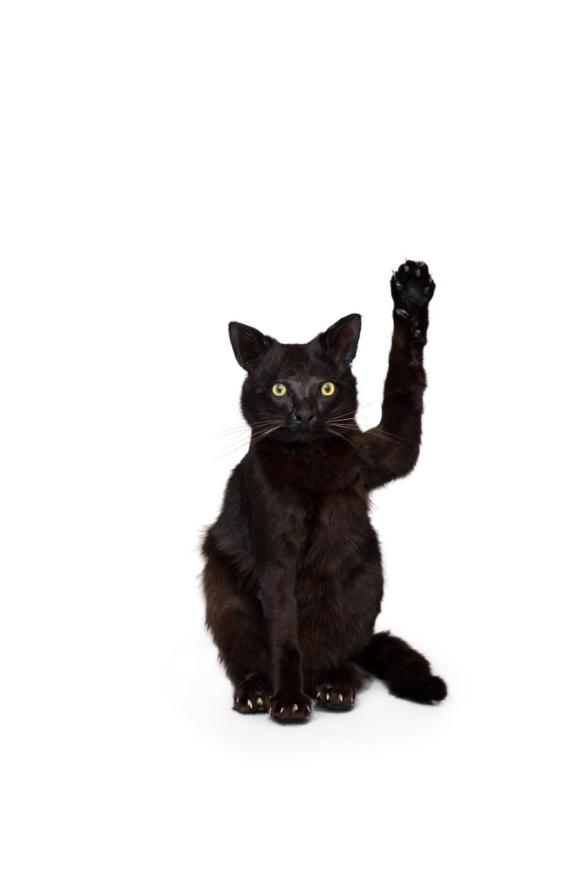
Image: "Untitled" (2012) by Greatest Hits, NGV, Melbourne © Greatest Hits

Image: “Untitled” (2012) by Greatest Hits, NGV, Melbourne © Greatest Hits

Over the holidays, I went to a couple of unrelated but inter-connected exhibitions that both played with our traditional perception of reality while demonstrating the importance of context in providing meaning.

The Comfort of the (Un)Familiar?

First up was Lurid Beauty: Australian Surrealism and its Echoes, at the NGV Australia. I’m a big fan of Surrealist art, having visited the landmark retrospective, Dada and Surrealism Reviewed at London’s Hayward Gallery in 1978 (and I later made a very minor contribution to a documentary on Eileen Agar in 1989). What I particularly like about Surrealism is its use of the familiar to create alternative realities, which is both comforting and unsettling. Sadly, I know next to nothing about Australian Surrealism (and I imagine I am hardly alone, given it has only recently gained formal recognition and critical appreciation).

So I was pleasantly surprised to find early pieces by major artists such as Albert Tucker and Sidney Nolan, which to my mind were far more interesting than the works for which they are popularly known. When seen alongside contemporaneous exhibits by Max Dupain, Eric Thake and James Gleeson, it’s easy to see how Surrealism was a significant influence on Australian art from the 1930’s to 1950’s. And yet I don’t recall many references to the local Surrealist movement or a wide acknowledgment of its impact on 20th century Australian art. More’s the pity, when you can see how the threads of Surrealism continue to be woven into the work of contemporary artists like David Noonan, Julie Rrap, Anne Wallace and Pat Brasington.

The Long Shadow of 19th Century Gothic

Part of the problem might be the fact that later, more familiar works by Nolan, Tucker and Gleeson have become severed from the artists’ original (and modernist) Surrealist roots. Instead, as I see it, these artists (along with Boyd, Perceval, Olsen et al) have been re-cast as part of the continuing 19th century Australian Gothic sensibility (Goths being more tangible than Surrealists?). This prism prefers the literal over the metaphorical, “real” legends over allegories, and landscapes over mind scapes.

Even Inarticulate Art Speaks for Itself?

Another issue, from my perspective, is that contemporary Australian Surrealism continues to play with psychological and political issues, alongside themes of gender, sexuality and hierarchy – topics designed to make us feel uncomfortable. Whereas, in my view, too many contemporary artists are either obsessed with process over form/form over content (to the point that any potential meaning is lost); or conversely, output is everything (often reducing their work to mere illustration or decoration).

Not Made Here?

On a purely aesthetic level, and to be hyper-critical for one moment, I wonder if Australian Surrealism is overlooked because received art opinion considers it to be too derivative of its European counterpart – and therefore, it has fallen victim to cultural cringe. One possible example is Barry Humphries‘ sculpture “Siamese Shoes” (originally made in 1958, shown here in its 1968 remake). While Humphries, according to the exhibition notes, “is considered to be Australia’s first Dada artist” (only 40 years too late, some might say…), I don’t believe for a moment that he was trying merely to imitate Meret Oppenheim‘s almost identical and much earlier work, “Das Paar” (originally made in 1936, remade in 1956).  When viewed in the context of its companion pieces that also formed part of Humphries’ solo exhibitions and artistic happenings, and when one considers Australia’s cultural climate of the 1950’s, then it’s more likely that Humphries was appropriating Dadaism and Surrealism for his own purposes, specifically designed to stir up his local audience out of their suburban bourgeois complacency.

Re-directing Surrealism’s Legacy in Australia

What was especially telling about Lurid Beauty was the 15-20 minute conversation I had with one of the gallery volunteers. She was very keen to get my views on the work, and asked how I came to learn about this particular exhibition. I got the impression that attendance has not been as high as anticipated, perhaps due to a lack of publicity. Despite being on several mailing lists for Melbourne’s arts and cultural events, I had not received any promotional material about this exhibition. We also discussed whether Surrealism features in the high school art curriculum, and whether the exhibition needed to emphasise the contemporary works and themes (rather than taking a somewhat traditional or historical narrative, based on a selective bunch of male artists – the usual suspects).

Given the legacy of Surrealism on film, literature, advertising, music videos, fashion and design, I think more could have been done to make this exhibition appeal to a broader and younger audience. The works, for the most part, are vibrant (if at times challenging), and even the themes depicted in the older pieces still resonate today. (A concurrent exhibition of Les Mason‘s advertising, graphic and visual design work only emphasises the point about Surrealism’s continuing influence.)

Finally, one very welcome aspect of Lurid Beauty was the extensive collection of original publications from the NGV’s library: magazines, catalogues, journals, and of course, André Breton‘s “Surrealist Manifesto”.

In the Artists’ Own Words

Speaking of Manifesto, this is the title of Julian Rosefeldt‘s video exhibition next door at ACMI. I had the privilege of hearing the artist introduce one of the works at a special screening, in which he mentioned his fascination with art manifestos. In a rare example of an artist directly and explicitly acknowledging his sources and inspiration, Rosefeldt shared with the audience that he had even become somewhat obsessed with a particular feminist manifesto. Not only did this provide some fascinating insights on the artistic process, it demonstrated yet again that we are all products of what has gone before, and it reinforced the importance of understanding art in the context of the history, theory and criticism, when it comes to interpreting old and new art.

Using around 50 different manifestos (artistic, political, cultural, critical), Rosefeldt has created 13 short films, each representing a particular art movement. The selected texts have been juxtaposed as monologues for 13 different characters, who deliver their lines, seemingly out of context with the visual settings, but at the same time, totally integrated into coherent narrative forms.

The fact that Cate Blanchett is cast in all 13 lead roles has no doubt created additional interest among local audiences. But, not to take anything away from her performances, this should be irrelevant – the point is that Rosefeldt has taken something with very specific meaning from one context, combined it with a mix of related and unrelated elements, and created a whole set of new meanings. (If anything, seeing simultaneous versions of Blanchett performing multiple, disparate roles, screened side by side, only underlines the fact that actors are the great deceivers – which, if any, is the “real” Cate?)

The videos are looped and synchronised. At times, the monologues converge and overlap, creating three and four-part harmonies for spoken word. This further de-contextualises the source materials, while lending them further meaning, even if we can’t immediately fathom what that might be. (Personally, I think it could be a subliminal reference to the Tower of Babel, or simply a comment on the manifestos themselves – and by extension, the vacuous words of so many artists’ statements.)

Less Is More

Two other works in the exhibition, Stunned Man and The Soundmaker (both from The Trilogy of Failure), are more straightforward narratives, also featuring a single character cast in a familiar setting.

First, Stunned Man is a dual screen projection, comprising mirror images of the same apartment. Over time, elements appear to interchange between the two screens, in a process of forward/reverse destruction and re-construction. But there are enough visual clues to suggest that not all is as it seems, in this parallel universe.

Next, The Soundmaker deconstructs the work of the Foley artist, using a similar process of destruction and re-construction – but split across three screens and two scenes, the viewer could be left wondering whether the “real” action is actually the soundtrack for the Foley artist at work.

What all these works demonstrate is that sometimes less is more – a simple idea can still be executed with wit, sophistication and restraint, to lend it a level of complexity that does not over-burden the final result. It requires a deft touch. There is nothing obvious or ponderous in these films. Nothing about these highly staged videos has been left to chance – every detail has been meticulously thought through. They are perhaps all too rare examples of when formal planning, combined with creative process and technical production, can give us content that is fully formed, but still open to interpretation.

The Artistic License

In my professional work as a coach and mentor, I’m not in the habit of constructing manifestos (believe it or not, I don’t possess that level of didacticism…). But I try to challenge my clients’ assumptions, reframe their situations, and draw on analogous scenarios (not just from business, but from technology, culture, art, music, etc.) that can help re-contextualise their perspectives, especially when clients are stuck. I see a large part of my role as consultant to use the “artistic license” I have been given to investigate, interpret and identify solutions to client problems – which at times can even take the form of a type of alchemy. As one client I worked with recently commented, “the way you reframed the situation was like pure gold”.

Next week: Why The Service Sector Lacks Self-Awareness
Cultural Overload: Oblique Strategies vs Major Tom

This week, Content in Context took a break from start-ups, fintech and the information superhighway to immerse itself in some cultural overload, with hardly a digital device in sight. However, I didn’t need to wander very far to realise that digital technology is both enhancing and restricting our ability to engage with art, music, culture and live performance – while analogue still wins out in terms of creating tangible experiences.

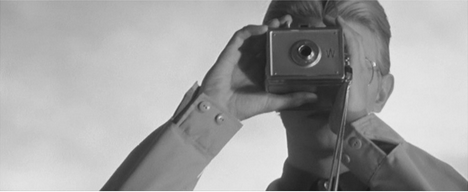
What technology would Thomas Jerome Newton have used to interpret “David Bowie Is”? (Image found here.)

To start with, I went to the “David Bowie Is” exhibition currently showing at Melbourne’s ACMI. As a retrospective on Bowie’s music career, including his dalliances with mime, theatre, fashion, videos, cut-ups, painting and film, it’s pretty comprehensive. What makes it particularly engaging is the lack of digital trickery among the exhibits: no touch screens, no VR or AR spectacular, not even a smart phone app to accompany your visit. It’s all very museum-like sedateness, well-presented artefacts, and extensively annotated displays – not surprising given the V&A provenance.

The absence of complex digital displays or an interactive/interpretive visitor experience is somewhat surprising, given that Bowie has always been an early adopter of new technologies (after all, this is the man who launched his own ISP, BowieNet, and was one of the first musicians to securitise his songwriting royalties via the so-called Bowie Bonds). Not forgetting that  Bowie was using multiple characters, personas and alter-egos long before we got around to internet avatars.

Bowie’s remarkable run of studio albums in the 1970s (unparalleled in popular music) stretched the limits of contemporary recording standards, because each LP has a distinct sonic palette, based on the careful selection of locations, musicians and studio technology. There’s even a section dedicated to some lyric-writing software that Bowie used to automate his cut-up process (which emulated the Dadaists and writers like Burroughs and Gysin). And videos for some of his early 80s songs (“Ashes to Ashes”, “Fashion”, “Let’s Dance” and “China Girl”) were MTV staples when the medium was still in its infancy. (But as the exhibition reminds us, Bowie was using the short film format as early as the late 60s.)

The only real concession to digital technology is the audio guide, which uses a personal playback device. These devices are linked to either NFC tags or wireless beacons to trigger specific music, commentary or soundtracks when the visitor is in a relevant location. Mostly it works well, and provides a collage of sounds to accompany the more significant exhibits. However, the cut-over between some “trigger zones” is a bit abrupt, even clunky, and there is nothing interactive for the visitor to explore or experience.

At the end, each visitor was given a postcard with a promotional code to download a free Bowie album. All very nice, and a great idea, but poorly executed:

  • The choice of albums is limited to his more recent studio albums, and a fairly average live album (by Bowie’s standards) – so none of those classic 70s recordings
  • The promotion is linked to Google Play and the process of setting up and downloading my account was not very intuitive, and compared to iTunes was very clunky (at least on my iMac)
  • It was not possible to curate my own personal Bowie album, which could have been fun – now, I understand the reluctance to deconstruct complete albums into individual songs, but perhaps some specially selected and Bowie-approved thematic compilations (e.g., based on his many stage and studio personas) could have provided a neat compromise?

While I liked the fact that the exhibition mainly used analogue technology, I think there was a missed opportunity to create an additional layer of interactivity, either via the audio guide, or via a separate smart phone app or website (I’m thinking of MONA’s “O Device”, the NGV’s “Melbourne Now” app, or some of the marvelous exhibition apps developed by London’s Tate Modern, the Réunion des Musées Nationaux in France, and both the MCA and Gallery of NSW in Sydney). Something for the V&A and ACMI to think about?

Then, it was a short walk across Federation Square to the Arts Centre, for a 3-day extravaganza of live events (music, dance, theatre, mixed media) collectively known as “Supersense”. OK, so I appreciate that this curated festival was all about experiencing live performance up close and in the moment – without being (dis)intermediated by any layer of technology between performer and audience (apart from some 3D glasses I wore for one mixed media show). But a festival app would have been very useful to help navigate the warren of corridors and backstage areas where the festival was held, to let visitors know when events were due to start, and to notify them when there no more seats in the smaller performance spaces.  Also, the festival website’s complicated schedule of events was impossible to read on a smart phone, so an app would have been great!

Anyway, the festival format, range of styles and mixed quality inevitably meant it was a veritable curate’s egg – the broad theme made it difficult to establish a cohesive context, and yet there were some connections and overlaps (both direct links between performers, and indirect conceptual links among the cross-cultural references and influences). Again, an app would have helped to make those connections. But the organisers (and performers) are to be congratulated for pulling off this inaugural event, and I look forward to next year’s programme.

Finally, for the culturally aware (or just plain old trainspotters) there were a number of connections to be made between “Bowie Is” and “Supersense”:

  • The performance of Brian Eno‘s ground-breaking ambient composition “Discreet Music” by The Necks and friends reminded us of Eno’s crucial role in recording Bowie’s trio of Berlin albums, “Low”, “Heroes” and “Lodger”
  • More specifically, the incorporation of Eno’s “Oblique Strategies” into the “Discreet Music” concert was very pertinent; not only did Eno use this system of random instructions when working on “Lodger”, he gave Bowie his own deck of “Oblique Strategies” cards, which are on display at ACMI
  • The festival finale by John Cale (also a sometime collaborator with Eno) included versions of “I’m Waiting for My Man” and “Venus in Furs” which he first recorded with The Velvet Underground in the 60s – and Bowie was one of the earliest artists to cover songs by The Velvet Underground in the early 70s.
  • Bowie’s early career incorporated mime, poetry and performance art, reflecting his influences and interests. In turn, thanks to the influence of cultural polymaths like him, a festival as diverse as Supersense seems perfectly natural to contemporary audiences.

Next week: Tourism – time to get digital


Deconstructing #Digital Obsolescence

Remember the video format wars of the 1980s? At one point, VHS and Betamax were running neck and neck in the consumer market, but VHS eventually won out (although the also-ran V2000 was technically superior to both). Since then, we’ve had similar format battles for games consoles, video discs, computer storage, CD’s and e-books. It’s the inevitable consequence of operating platforms trying to dominate content – a continuing trend which has probably reached its apotheosis with the launch of Apple’s Beats 1 streaming service. This convergence of hardware and software is prompting some contrary trends and, if nothing else, proves our suspicion of hermetically sealed systems…

about-format2

Trevor Jackson embarks on a format frenzy….

1. Digital Divergence

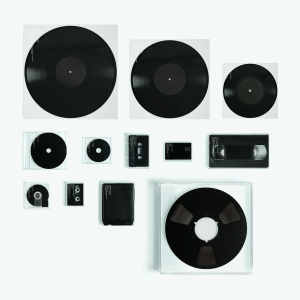
Earlier this year, UK music producer Trevor Jackson released a collection of 12 songs, each one pressed on a different media format: 12″, 10″ and 7″ vinyl; CD and mini-CD; cassette; USB; VHS; minidisc; DAT; 8-track cartridge; and reel-to-reel tape. Of course, he could have also used 78 rpm shellac records, digital compact cassettes, Digital8 tapes, 3.5 and 5.25 inch floppy disks (still available, I kid you not) or any of the multitude of memory cards that proliferate even today.

While Jackson’s “Format” project might seem gimmicky, it does demonstrate that many digital formats are already obsolete compared to their analogue counterparts (and until very recently, I could have played 8 of the 12 formats myself – but I’ve just donated my VHS player to our local DVD store).

As I have blogged previously, there is an established body of digital/analogue hybrids, especially in data storage, and I can only see this continuing as part of the creative tension between operating systems and content formats.

2. Digital Archeology

Each new hardware/software upgrade brings a trail of digital obsolescence (and a corresponding amount of e-waste). It’s also giving rise to a new discipline of digital archeology, combining forensics, anthropology and hacking.

Back in 2002, it was discovered that a 15-year old multimedia version of the Domesday book was unreadable* – yet the hand-written version is still legible, and available to anyone who can read (provided they can decipher 1,000-year old Norman English). Apparently, it has taken longer to decrypt the 1986 video disc than it took to create it in the first place.

More digital archeologists will be needed to mine the volumes of data that reside in archival formats, if we are to avoid losing much of the knowledge we have created since the advent of the personal computer and the public internet.

3. Digital Provenance

We’re used to managing our data privacy and computer security via password protection, network protocols and user authentication. If we think about it, we also question the veracity of certain e-mails and websites (phishing, scamming, malware, trojans etc.).

A while ago I blogged about the topic of digital forgeries, and the associated phenomenon of digital decay. Just as in the art world, there is a need to establish a method of digital provenance to verify the attributes and authenticity of content we consume.

We are already seeing this happen in the use of block chains for managing cryptocurrencies, but I believe there is a need to extend these concepts to a broader set of transactions, while also facilitating the future proofing and retrofitting of content and operating systems.

4. Digital Diversity

In response to closed operating systems, sealed hardware units and redundant formats, there are several interesting and divergent threads emerging. These are both an extension of the open source culture, and a realisation that we need to have transferable and flexible programming abilities, rather than hardwired coding skills for specific operating systems or software platforms.

First, the Raspberry Pi movement is enabling richer interaction between programming and hardware. This is especially so with the Internet of Things. (For a related example, witness the Bigshot camera).

Second, Circuit Bending is finding ways to repurpose otherwise antiquated hardware that still contain reusable components, processors and circuit boards.

Third, some inventive musicians and programmers are resuscitating recent and premature digital antiques, such as Rex The Dog‘s re-use of the Casio CZ-230S synthesizer and its Memory Tapes to remix their first single, and humbleTUNE‘s creation of an app that can be retrofitted to the original Nintendo Gameboy.

These trends remind me of those Radio Shack and Tandy electronics kits I had as a child, which taught me how to assemble simple circuits and connect them to hardware. (And let’s not forget that toys like LEGO and Meccano started incorporating motors, electronics, processors and robotics into their kits many years ago.)

 5. Salvaging the Future

Finally, as mentioned above, built-in digital obsolescence creates e-waste of the future. A few recycling schemes do exist, but we need to do a better job of reclaiming not just the data archives contained in those old disks, drives and displays, but also the materials from which they are made.

* My thanks to Donald Farmer of Qlik for including this in his recent presentation in Melbourne.

Next week: #FinTech – what’s next?