101 #Startup Pitches – What have we learned?

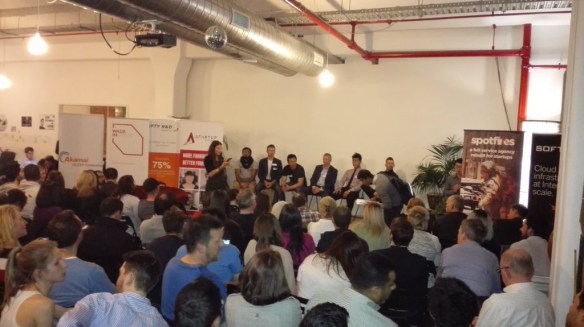
During the past 3 years of writing this blog, I have probably heard more than 100 startup founders pitch, present or share their insights. Most of these pitch nights have been hosted by Startup Victoria, with a few on the side run by the Melbourne FinTech Meetup and elsewhere.

Image sourced from Startup Victoria Meetup

Image sourced from Startup Victoria Meetup

Based on all these presentations, I have collated a simple directory of each startup or pitch event I have covered or mentioned in this blog, as well as a few key accelerators and crowdfunding platforms.

What have we learned over that time?

First, apart from the constant stream of new startups pitching each month, it’s been impressive to witness the Melbourne startup community collaborate and support one another.

Second, some of the international founders who have spoken are among the rock stars of startups – and we are fortunate that they have been willing to spend time in Melbourne.

Third, a number of the local startups who have pitched during this time have become well-established and well-known businesses in their own right.

This all means that besides creating great products and services, and being willing to share their experiences, the founders have helped aspiring founders and entrepreneurs to appreciate the importance of:

  • product-market fit;
  • working with agile processes and lean startup models;
  • tackling prototyping and launching MVPs;
  • learning what to measure via key metrics;
  • figuring out funding; and
  • knowing when to pivot or fold.

Looking at the cross section of pitch nights, panel discussions and guest speakers, there are some significant trends and notable startups to have emerged:

Industry focus: Not surprisingly, the pitches are heavily biased towards FinTech, MedTech, Education, Digital Media, Enterprise Services and Consumer Services. There are a some key startups focused on devices (e.g., SwatchMate and LIFX); a smattering in recruitment, fashion, gaming, health and well-being, property services, social media and even logistics. But there are surprisingly few in environmental technology or services.

Business models: Two-sided market places abound, as do customer aggregators, sharing platforms (“the Uber for X”, or “the AirbnB of Y”), freemium apps and subscription services (as opposed to purely transactional businesses). There are also some great social enterprise startups, but surprisingly no co-operative models (apart from THINC).

Emerging stars:  Looking through the directory of startups, some of the star names to have come through during this time, based on their public profile, funding success, awards (and ubiquity at startup events….) include:

CoinJar, LIFX, Tablo, SwatchMate, etaskr, DragonBill, Culture Amp, Eyenaemia, Timelio, Moula, nuraloop,  Konnective, OutTrippin and SweetHawk.

Acknowledgments: Some of the startups and pitches in the list are just ideas, some don’t even have a website, and some didn’t get any further than a landing page. However, I have not been able to include all the startups that turned up at Startup Alley, nor the many more startup founders I have met through these events (but whom I didn’t get to see pitch or present), nor the startup ideas that were hatched during the hackathons I have participated in. And there are a few startups that I could not include because I heard them pitch at closed investor events. Finally, I am and have been very fortunate to work with a number of the startups listed, in various capacities: Brave New Coin, Ebla, Re-Imagi, Slow School of Business and Timelio. To these startups and their founders, I am extremely grateful for the opportunities they have given me.

Next week: Putting a Price on Value


The arts for art’s sake…

Last week I wrote about the importance of learning coding skills. This prompted a response from one reader, advocating the teaching of STEM (science, technology, engineering and maths) in schools: “Coding and the STEM subjects are our gateway into the future.” I would agree. But, as other commentators have noted elsewhere, we also need to put the A (for art) into STEM to get STEAM to propel us forward….

Equivalent VIII (1966) Carl Andre (b.1935) Purchased 1972 http://www.tate.org.uk/art/work/T01534

Equivalent VIII (1966) Carl Andre (b.1935) Purchased by Tate Gallery in 1972 http://www.tate.org.uk/art/work/T01534

I recently attended a talk by renowned arts administrator Michael Lynch, as part of the FLAIR art event, where he expressed frustration at the state of the arts in Australia, the lack of a public arts policy, and the associated cuts to government funding. It can’t help that from John Howard onward, we have had a sequence of Prime Ministers who, while not total Philistines, have shown little enthusiasm, appetite or appreciation for the arts. And during Q&A, Mr Lynch referenced the conservative and “safe” nature of so much arts programming as evidenced by the lack of risk-taking and the stale and over-familiar choice of repertoire, although he did acknowledge some arts organisations were doing exciting work.

The debate then shifted to whether we need a new method to evaluate the benefits of a strong arts sector that is not purely dependent on economic terms or financial performance. It was not possible in the time available to come up with a suitable indicator, but I suggest we can derive a range of benefits from putting more emphasis on teaching, supporting and sponsoring the arts. This RoI might be measured in such terms as the following:

  • Enhancing creativity among students will benefit individual problem-solving skills and collective innovation;
  • A healthy arts scene is indicative of a balanced, self-assured and progressive society;
  • Participating in the arts can give people a sense of confidence and well-being;
  • Through art we can learn about culture, philosophy and history – especially of other societies;
  • Giving people the means to express themselves through art is an important outlet for their skills, talent and interests.

We agonize about the amount of investment in our Olympic athletes in pursuit of gold medals, and whether the money can be justified (goodness – Australia only just made the top 10!)  But no-one (yet) has suggested it’s not worth doing, even if we don’t win as many medals as is often predicted. And of course, together with the wider popular entertainment industry, professional sports attract more dollars, airtime and support through sponsorship, advertising, broadcasting rights, gambling revenue, club memberships and merchandise than the arts could ever hope to.

Part of the challenge lies in the popular notion that arts are either elitist, worthy, self-important, or simply frivolous – which makes it harder to build an economic case for the arts, but which can also lead to the worst kind of cultural cringe. Also, if the arts are really doing their job, they hold up a mirror to our society, and we may not like what we see. Populist politicians can’t afford to be associated or identified with such critiques – either as the targets or as de facto protagonists – so would they rather be seen shaking hands with gold medalists (or attending a Bruce Springsteen concert…) than maybe attending a cutting-edge performance by The Necks?

Next week: The latest installment of Startup Victoria pitch night

University Challenge – #Startup Victoria’s Student #Pitch Night

There were around 500 people in the audience for last week’s #StartupVic University Startup Battle, which either says there was nothing better to do on a chilly Melbourne evening, or that this new Meetup format is working – or that the students of today are less interested in finding a job, and more interested in building their own career opportunities that connect with their purpose. (Our political leaders should take note….)

A sell out audience for the University Startup Battle (Image by Stefan Welack sourced from Twitter)

A sell out audience for the University Startup Battle (Image by Stefan Welack sourced from Twitter)

After a series of campus competitions, the finalists on the night were representing 6 of Victoria’s universities, and revealed a wealth of talent, ideas, innovation and inspiration. In order of appearance, the pitches were:

InternMe – (Victoria University)

With a tagline of “Experience the Experience”, this is a 2-sided market for graduate recruitment, that revealed some interesting stats about the student employment market.

Revenue is expected to come from fees for successful placements, and job advertisements. The business plans to cover work experience, internships, part-time and temporary work during study, as well as permanent and full-time roles.

Currently sourcing leads via LinkedIn and social media (notably Instagram), the founders say they may include psychometric profiling tools for better matching applicants with opportunities.

The pitch was to raise $100,000 for website development, but as the judges commented during the Q&A, the biggest challenge is engaging employers. As regular attendees to these pitch nights will recall, this mismatch or disconnect between students/graduates and employers continues to provide startup opportunities.

Printabox – (Swinburne University)

This website is designed to reduce the time, cost and complexity of ordering short-run branded boxes. Basically a self-serve model, the founders have spent $500,000 in development costs, primarily on a proprietary design tool. The resulting products come in 3 standard sizes – perhaps more customisation will become available?

The target clients are the 44,000 online stores in Australia who often need small numbers of branded boxes for sending out customer orders. But as the judges noted (based on a quick online search) there does appear to be a lot of competition. And although Printabox claims that their source code is protected, they have not applied (or are unable to apply) for a design patent.

Mech X Innovation – Project Ora – (Deakin University)

The founders have developed a hardware device that fits on standard tablet computers, and is designed to help children reduce and prevent eyesight damage caused by too much screen time, and by being too close to the device.

Essentially a Bluetooth-enabled accessory linked to an app, Ora monitors the amount of user screen time, proximity to the device and ambient lighting, and can be used in conjunction with “time outs”, scheduled messages and reminders to “go and do something else”. It can be semi-customised, so that parents can create a reward system, for example.

According to the designers, the competitor products (Appomate and samtime) are app-based only, and focus on time and distance – not lighting. Ora may also integrate with other devices, e.g. FitBit, but the target market is children and teenagers up to age 18, and their parents.

Asked about their path to market, they are planning a crowdfunding campaign. The key to adoption, though, will be via schools (who either provide or prescribe what devices pupils use) and schools suppliers (e.g., digital text books and e-learning tools).

ICallDibs – (Monash University)

This idea grew out of direct user experience, namely how can overseas students coming to Melbourne buy and sell furniture? The business is aiming to provide a market place for “Second Hand Furniture, First Class Deals”.

The biggest challenges faced by international students when buying/selling furniture are transportation, timing and finding buyers/sellers. The business will offer bundled services, including storage and removals/delivery, via partnerships.

The company aims to target international student agencies, and will ensure better matching between buyers and sellers (although they may want to consider changing the name unless they can trademark it….).

Rather than an “Ask”, the team offered a “Give” in the form of a customer discount for the evening’s attendees.

When asked about logistics and insurance, the founders clarified that the counterparts (buyer and seller) bear the direct risk. The business takes their commission upfront, then release the order details to the customers.

Assignment Hero – (Melbourne University)

It felt that this app, a collaboration tool for group work (sort of Slack for education?) was speaking to the converted, given the audience response. In short, having access to lots of different collaboration tools sounds great, but they each only do one or two things (albeit, really well). And if you use more than one app, you end up with too many tools and too many notifications.

While students may hate group assignments, they’re an important aspect of learning how to work with other people and acquiring other soft skills. They also seem to comprise a greater component of student assessments – possibly because they require less direct teacher-student face time?

Rather than build a whole new system, the founders have opted for native integration with Google Docs, plus some dashboard reporting tools (including the amount of individual input to a project).

The app is free to end users, but will generate revenue from education providers (enterprise sales) and on-demand services and commissions. When asked about existing tools like Moodle and Blackboard, the founders noted that these were designed for teaching, not collaboration.

It was also noted that existing productivity apps are not easily accessible by students (although no doubt, as with education content providers, enterprise app vendors will make student versions and pricing available). Plus, the “edtech” sector is of particular interest when linked to life-long learning, professional development and self-directed study.

Eat Up – (RMIT)

Finally, Eat Up is a social enterprise trying to address the number of school children who turn up at school without anything for lunch – estimated to be as many as 1 in 8 schoolchildren. Personally, I find this an indictment on our society – why should anyone in Australia need to go without basic food? – but the causes/reasons are far too complex to address here.

Essentially a partnership for sourcing, assembly and distribution, Eat Up has created a service model which they hope to roll out in more and more schools. They tap into the established Food Bank network for supplies, engage TAFEs to prepare the lunches, and use OzHarvest and SecondBite for logistics. There has also been support from Virgin Australia, ygap, Karma Canteen and Education Changemakers.

Eat Up aims to avoid passing on the costs to kids, parents or schools, and in part takes inspiration from another social enterprise, Thank You Water.

During a panel Q&A, the founders were asked about the apparent lack of technical skills or resources on their teams. In response, it was noted that there are many open source apps, available templates and market places for code and plugins. One founder commented that despite studying computer science, he used very little of what he learned to develop his app.

Revealing another apparent weakness in their pitches, the founders were quizzed on their respective sales models, costs of acquisition and pathway to revenue. The responses suggested that the startups risk being limited by their own inexperience, and that they each need to do more market analysis, assessment of customer willingness/ability to pay, and identify the best ways to scale their businesses.

There was also a lack of clarity around near-term goals and milestone planning.

In the end, the winner was Assignment Hero, no doubt reflecting the needs of the audience, plus the fact that the business has gained traction with some universities.

Next week: ASIC’s new regulatory sandbox for #FinTech #startups
#StartupVic launches new-look #pitch event

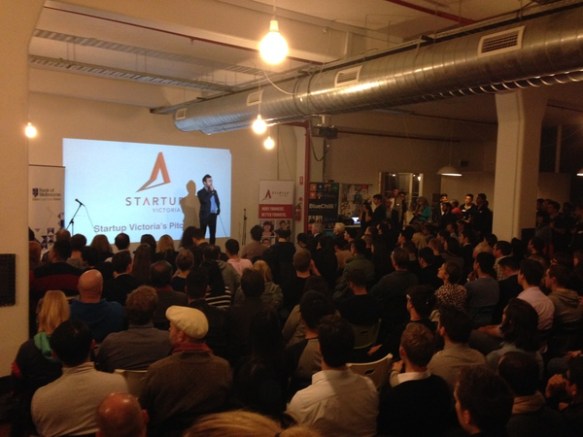
The team at Startup Victoria have been working hard over the summer: not only have they brought on a whole bunch of new commercial sponsors, but they have also launched a new format for their pitch nights. The idea is to invite startup founders to register their interest in pitching to a panel of judges. The contestants get the opportunity to compete in front of a live audience, for a chance to win face time with local VC’s, along with some other startup goodies.

global_446720634It’s not Shark Tank (there’s no hard cash on offer), nor is it an open mic night (there is a pre-screening and audition process) – but it does enable entrepreneurs to test their pitch, get some early exposure, and receive some great feedback and advice. It also doesn’t matter what stage the startups are at, although businesses that already have some market traction or have built and tested an MVP are probably in a better position to compete.

The launch night saw pitches from four startups, who are at various stages of development. In no particular order they were:

Ad Hoc Media with Passenger Pad, a digital Out Of Home advertising medium for taxis, using interactive touch screens inside the cab. To date, there has been a low take-up rate of this technology by the taxi industry in Australia, mainly due to regulatory issues, but the landscape is changing. With a background in taxi electronics and hardware, the founders are about to launch with 400 taxis in Melbourne, and plan to expand to other cities. There is no doubt that using a combination of passenger, location and fare data (duration, time of day, pick-up and drop-off points), the screens will be able to offer brands and their media buyers targeted audiences and in-depth customer analytics. The challenge will be to offer advertisers a competitive rate card, especially as this is essentially a new medium: it offers viewer choice like TV, can serve up targeted content like web or mobile, and is ideal for special offers linked to location and time of day.

Global Patient Portal offers a free platform for e-health records. Having already launched in Kolkata, India with 40,000 users signed up in 11 weeks, GPP is aiming at lower socio-economic communities and emerging markets. The initial business goal is simple: to support ownership of e-health records by users. Using a combination of bootstrapping and NGO funding, GPP has been able to hire a team of “scribes” in India who sit in on patient consultations and capture the medical notes, which can then be referred to at the next consultation. (Currently, a lot of time and resource is wasted because patient records are captured on paper, which is easily lost once the patient leaves the clinic.) Commercial revenue will come from selling anonymized patient data (subject to legal compliance, privacy obligations and data accuracy) for research and policy planning purposes. In choosing to launch in Kolkata, GPP was aware that in some more affluent urban communities in India, the favoured means of patient communication is WhatsApp?, so they would be less likely to adopt a separate platform. Also, in Australia, having talked to GPs about the various government attempts to establish the e-health system for patient records, I am aware of a reluctance within the medical profession to buy in to the scheme: first, there is no financial incentive for them to capture patient data via a common e-health platform; second, why would they want to share patient data with their competitors?

prevyou is aiming to disrupt a large part of the recruitment and job ad market, by directly connecting students with job opportunities at SMEs. The two-sided market effectively crowdsources available jobs from SMEs, who typically do not have access to the hiring market or to full-time and dedicated HR resources. The goal is to streamline the hiring process, and to offer a mix of standard and premium services (e.g., video resumes, applicant screening, skills matching, personality profiling etc.) and later to add validation of applicant credentials and qualifications. In return, the business will take a commission once a job has been offered and/or candidate hired. While the focus is initially on capturing the market for casual and part-time jobs, the judges urged them to look at the enterprise HR market (under an outsourcing or white label model?). Looking ahead, there is the opportunity include student internships (although, like the legal issues with Year 10 work experience, internships and placements present additional challenges such as achieving student learning outcomes and other employment law issues).

OurHome is an app to help families manage, share and track household chores, so that children learn to take some responsibility around the house, and they can get rewarded for their contribution. It emerged out of an earlier app, Fairshare, that was aimed at shared houses. Apparently, people living in shared houses don’t care enough about whose turn it is to clean the bathroom, or are happy with paper charts and lists on the fridge door. Describing itself as “an integral household tool with indirect network effects (i.e., like Google, not Facebook)”, OurHome also claims to be the #1 chores app. Using advanced algorithms, and other features such as customisation and Dropbox integration, the app also introduces an element of gamification through rewards (intrinsic and extrinsic). For busy families, it replaces those fridge notes and task charts (although, as the judges noted, there’s no calendar yet). Of particular interest is the very positive feedback the team have had from families who have children with ADD.

Despite a few technical glitches (concerning mics and audio quality), the first new-look pitch night was a success, and Global Patient Portal won the on-line audience vote. I was luck enough to meet with one of the teams a few days later. They thought it was a useful experience, but they hadn’t quite known what to expect, and they had anticipated more of a grilling from the judges and tougher questions from the audience.

Next week: More In The Moment