Taxing the Intangibles – coming soon to a screen near you!

No sooner had Netflix launched in Australia than Treasurer Joe Hockey announced the imposition of GST on “intangibles” purchased from overseas vendors. The Treasurer has also indicated that the GST-free threshold for on-line imports will be lowered from the current $1,000. Dubbed the “Netflix tax”, Australian consumers should now expect to pay more for their digital content such as video, music, software and e-books, even though on most evidence, we are already charged more for comparable products than in other markets.
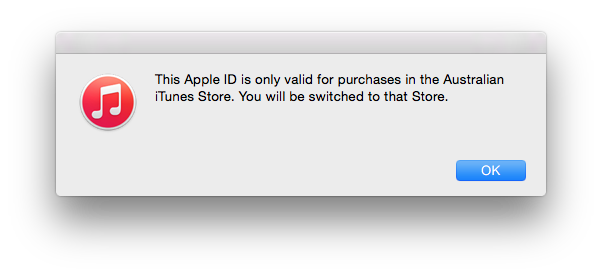
Geo-blocking is already an obstacle for Australian consumers…

Backdrop

We all know why the Treasurer has proposed this scheme: the Government has to make up for declining tax receipts, and appease the States who are squabbling over the allocation of GST revenue between them. Plus the current Senate inquiry into corporate tax avoidance by companies like Apple, Google and Microsoft (who divert locally sourced income to offshore entities to reduce their income tax liability in Australia) is driving the public and political agenda on global tax minimization schemes (which are nothing new, of course).*

But it’s not as simple as slapping an extra 10% on the price of a movie download, even though GST is a relatively easy and cost-effective way of generating tax revenue. For one thing, there is little consistency in how vendors currently sell their digital products in Australia. Secondly, geo-blocking is already an obstacle for Australian consumers, leading to the sort of content piracy infringement that will now make local ISP’s and their subscribers more vulnerable to legal action, following the recent “Dallas Buyers Club” court ruling. Thirdly, local retailers who have long campaigned to have the GST-free threshold removed or lowered fail to acknowledge why customers prefer to shop from overseas vendors.

Goods & Services Tax

GST (similar to VAT in Europe) is a simple consumption tax. It applies to the sale or supply of most items (except things like fresh food and health services) at a flat rate of 10%.

Even better, the Government and the tax authorities rely on businesses to collect, report and remit GST receipts, making it relatively cheap to administer (when compared to other taxes) via the Business Activity Statement process managed by the Australian Taxation Office.

The GST is a key topic of the current review of the tax system – likely to result in a higher rate (or different rates), and/or broader application to items not currently included.

Vendor Inconsistency

In principle, I don’t have a problem in paying GST on digital items I buy from overseas vendors – but there is so much inconsistency that there is a risk of consumers having to pay two lots of sales tax.

For example, every iTunes receipt issued by Apple Pty Ltd (an Australian entity) states that the sale amount already includes GST – in which case, Apple should be remitting that component to the ATO, and no need for a price increase.

However, Adobe chooses to invoice me from Ireland, and as such no GST (or VAT) is applied, but I am charged forex fees, even though the invoice amount is expressed in Australian dollars, because my bank treats this as a foreign transaction.

Meanwhile, although some UK vendors I buy from direct do not apply GST/VAT on my orders (Amazon UK included), others do – meaning I risk having to pay both the GST and VAT. As a further sign of vendor inconsistency, Amazon’s US store does not appear to deduct US sales tax for foreign customers; neither the UK or US Amazon stores sell music downloads to Australian customers; and Amazon’s Australian store only sells e-books and apps.

Geo-blocking

The decision in the “Dallas Buyers Club” IP infringement case brought by Voltage Films, has again drawn attention to Australia’s poor reputation for copyright piracy as evidenced by the number and frequency of illegal downloads.

Some journalists have commented that distributors often delay the local release of imported content (for various reasons) although this was not seen as a justification for piracy (and quite rightly so).

While foreign films are frequently released later in Australia, it’s interesting that TV (even free to air channels) has woken up to this, and now broadcasters rush to fast-track imported shows to keep audiences happy.

It’s also interesting to note that the Productivity Commission, as part of its competition policy review of IP laws, has suggested that if local rights holders and distributors choose not to exercise their commercial rights, under a “use it or lose it” model, third-party distributors would be able to step in. This also has the potential to undermine the archaic industry practice of geo-blocking, whereby sales of music, film and TV content (physical and digital) are restricted by territory.

Local retailers and distributors need to lift their game

Does the absence of GST really encourage consumers to buy from offshore retailers? I would beg to differ.

Local rights holders often do not bother to make content and products available in Australia. And local retailers won’t usually stock products if they are not readily available from wholesalers or distributors.

I recently had to contact an overseas artist, the UK record label and its Australian distributor several times to make their music available online in Australia. The local distributor had not bothered to release the content, even though they had the rights, but geo-blocking prevented me from accessing it legally from overseas suppliers.

It’s the combination of inadequate local distribution, non-availability, higher prices and lacklustre service that encourages Australian consumers to buy from overseas, even if that means circumventing geo-blocking. In many cases, I doubt the addition of GST will be a serious deterrent to online overseas shopping.

In my own case, I once found that the local branches of a global retail brand chose not to stock the item I wanted, and their US parent geo-blocked me from ordering on-line. So I resorted to buying in the “grey” or parallel imports market, from an offshore vendor willing to ship direct to Australia. It was still cheaper, even after shipping costs, and even if GST had been added (I probably paid US sales tax on the transaction anyway), than if I had bought from a local retailer (assuming they bothered to stock the item).

Hopefully, this debate on GST and the Productivity Commission’s review of competition policy will finally give local retailers an incentive to do a better job of serving their customers.

* The debate on corporate tax minimization might want to look at where “value” is created, and where the revenue is booked, that gives rise to a tax on the resulting profits. For me, the retail value of intangibles such as digital products is created when someone pays to download them, at the point of sale – i.e., in the consumer’s geographic location.  Although the vendor may argue that the IP is owned by an offshore entity to whom they must pay royalties, the individual download itself does not have any standalone value, until it is accessed by the consumer. Even a high rate of royalty repatriation could not be more than the retail price, so logic might suggest that local profits should be taxed accordingly.

Next week: What can we learn from the music industry?

Personal vs Public: Rethinking Privacy

An incident I recently witnessed in my neighbourhood has caused to me to rethink how we should be defining “privacy”. Data protection is one thing, but when our privacy can be compromised via the direct connection between the digital and analog worlds, all the cyber security in the world doesn’t protect us against unwanted nuisance, intrusion or even invasion of our personal space.

Pressefotografen mit KamerasScenario

As I was walking along the street, I saw another pedestrian stop outside a house, and from the pavement, use her smart phone to take a photograph through the open bedroom window. Regardless of who was inside, and irrespective of what they were doing (assuming nothing illegal was occurring), I would consider this to be an invasion of privacy.

For example, it would be very easy to share the picture via social media, along with date and location data. From there, it could be possible to search land registries and other public records to ascertain the identity of the owners and/or occupants. And with a little more effort, you might have enough information to stalk or even cyber-bully them.

Privacy Law

Photographing people on private property (e.g., in their home) from public property (e.g., on the street outside) is not an offence, although photographers must not cause a nuisance nor interfere with the occupants’ right of quiet enjoyment. Our current privacy laws largely exclude this breach of privacy (unless it relates to disclosure of personal data by a regulated entity). Even rules about the use of drones are driven by safety rather than privacy concerns.

Since the late 1990’s, and the advent of spam and internet hacking, there have been court decisions that update the law of trespass to include what could be defined as “digital trespass”, although some judges have since tried to limit such actions to instances where actual harm or damage has been inflicted on the plaintiff. (Interestingly, in Australia, an act of trespass does not have to be “intentional”, merely “negligent”.)

Apart from economic and financial loss that can arise from internet fraud and identity theft, invasion of privacy via public disclosure of personal data could lead to personal embarrassment, damage to reputation or even ostracism. (In legal terms emotional stress falls within “pain and suffering”).

Data Protection Law

The Australian Privacy Principles contained within the 1988 Privacy Act apply to government agencies, private companies with annual turnover of $3m or more, and any organisations trading in personal data, dealing with credit information or providing health services. There are specific provisions relating to the use and misuse of government-derived identifiers such as medical records and tax file numbers.

The main purpose of the privacy legislation is to protect “sensitive” information, and to prevent such data being used unlawfully to identify specific individuals. At a minimum, this means keeping personal data such as dates of birth, financial records or hospital files in a secure format.

Some Practical Definitions

The following are not legal definitions, but hopefully offer a practical framework to understand how we might categorise such data, and manage our obligations towards it:

“Confidential”

Secret information that must not be disclosed to anyone unless there is a legal obligation or permission to do so. (There are also specific issues and exceptions relating to “classified information”, public interest matters, whistleblower protection and Freedom of Information requests.)

“Private”

Information which is not for public or general consumption, although the data itself may not be “confidential”. May still be subject to legal protection or rights, such as the right of adopted children to discover the identity of their birth parents, or the right of someone not to be identified as a lottery winner.

“Personal”

Data that relates to, or can specifically identify a particular individual. An increasing issue for Big Data, because data that otherwise resides in separate locations can now be re-connected using triangulation techniques – scrape enough websites and drill down into enough databases, and you could probably find my shoe size.

“Public”

Anything that has been published, or easily discoverable through open search or public database retrieval (but, for example, does not include my past transactions on eBay unless I have chosen to disclose them to other users). My date of birth may be a matter of record, but unless you have authorised access to the relevant database or registry, you won’t be able to discover it and you certainly shouldn’t disclose it without my permission.

Copyright Law

One further dimension to the debate is copyright law – the ownership and related rights associated with any creative works, including photographs. All original content is copyright (except those works deemed to be in the “public domain”), and nearly all copyright vests with the person who created the work (unless they have legally assigned their copyright, or the material was created in the course of their employment).

In the scenario described above, the photographer would hold copyright in the picture they took. However, if the photograph included the image of an artwork or even a framed letter hanging on the wall, they could not reproduce the photograph without the permission of the person who owned the copyright in those original works. In some (limited) situations, a photograph of a building may be subject to the architect’s copyright in the design.

Curiosity is not enough justification to share

My personal view on all this is that unless there is a compelling reason to make something public, protecting our personal privacy takes precedent over the need to post, share or upload pictures of other people in their private residence, especially any images taken without the occupants’ knowledge or permission.

Just to clarify, I’m not referring to surveillance and monitoring by the security services and law enforcement agencies, for which there are understandable motives (and appropriate safeguards).

I’m saying that if we showed a little more respect for each others’ personal space and privacy (particularly within our homes, not just in cyberspace) then we might show a little more consideration to our neighbours and fellow citizens.

Next week: It’s OK to say “I don’t know”

The Great #Data Overload Part 2: Is #Digital Making Us Dumber?

The pursuit of digital (and by implication, many data-related activities) is making us dumber. Whether it’s constant multi-tasking, the need for instant gratification, the compulsion to always be “on”, or the ease of access to content and connections, there’s actually a law of diminishing returns in trying to capture and engage with all this “stuff”.

Screen Shot 2015-02-02 at 10.24.54 am

Image © 2014 Universal Pictures

Consequently, our decision-making is increasingly governed by a hair-trigger mechanism – a single-click here, a right-swipe there, a “Like”/”Share” here, there, everywhere – which makes the outcome far less important than the instantaneous and self-validating process (“I Tweet therefore I am”). The quality of our interactions and relationships risks being reduced to a single lowest common denominator of the “fear of missing out” (#FoMo).

Current business practises focus on lean, agile and flexible – meaning that we have to get used to operating in a rapidly moving environment. However, agility is not helped by either procrastination or rash calls.

Faced with these demands on our attention, how can we come to a truly informed opinion or considered conclusion? The trick is knowing whether or not you are required to respond (not everything is relevant, vital or critical that it needs your constant or immediate participation – sometimes silence is golden). If you must make a call, then know when you have enough (hopefully, the “right”) data to make a rational and reasonable decision.

How do we build a capacity for calm, considered and constructive engagement with the digital world?

Part of the challenge is changing our (recently acquired) habits and behaviours. Speaking to friends and colleagues, there is a growing realization that reaching for your smart phone just before going to sleep (or as soon as you wake up), or constantly checking for status updates, is a noxious habit. Apart from the impact it has on our brain activity, it is also reinforcing our belief that this is normal, that we are somehow subservient to these devices, and that interacting with the digital environment takes priority over everything else. I know, I’m as guilty as the next person (watching the tennis on TV while checking the cricket scores on my iPhone…), but I am also trying to be more critical of my own digital consumption:

  • Not responding immediately to every e-mail – this is about time management skills as much as anything else; the faster you respond, the more you raise expectations that you will always answer straightway
  • Unsubscribing to mailing lists – in recent weeks, I have been unsubscribing to various newsletters because I was simply no longer interested in them or because they were no longer useful; if something’s important enough, I’ll no doubt find out about it from another source
  • Being selective about social media – I’ve written about this before in the context of authenticity and personal branding; in short, I find it essential to use different social media tools for different purposes (and to use each tool differently). That way, I manage to keep some separation between various parts of my professional and personal lives – at the very least, it acts as a helpful filter between the public and private
  • Choosing on-line connections carefully – this is another topic I have covered in a previous blog; not all our interactions are equal, and other than some basic relationship filters, most social network platforms don’t allow us to distinguish between friends, colleagues, acquaintances, and someone we met at a conference.* So, I generally decline unsolicited “friend” requests if I have not actually met or interacted with the person previously, or if I cannot find relevant mutual connections, or if I do not see what value I can add by being connected to this person.
  • Limiting notifications and status updates – similar to managing in-bound e-mail, I tend to switch off/ignore real-time notifications and updates. Instead, I prefer to check-in no more than once or twice a day, rather than always being logged in.

Finally, I’m hoping to develop a status setting for my smart phone that responds to all incoming notifications with messages such as: “Neither on nor off, merely resting”, “taking a mental pause”, “out to lunch”, or “making time for reflection before I respond”.**

Next week: Differentiating in a digital world

Notes:

* I recently heard about Humin, which is sort of moving in this direction, but it’s really a personalised CRM tool for your smart phone

** Apple’s “Do Not Disturb” function only supports “on/off” with respect to phone calls, and with a limited scope to filter contacts

The Great Data Overload Part 1: Meaning vs Megabytes

Data storage is big business, and research suggests we currently spend 30% more per annum on buying additional capacity. Interestingly, a significant part of that growth is being met by the use of tape storage – which is far more energy-efficient than traditional hard drive arrays.

Screen Shot 2015-02-01 at 4.17.07 pm

Image © 1943 Universal Pictures Co., Inc.

No doubt, this storage demand is being driven by data automation, cloud technologies, mobile transactions, social media and the desire to know everything about everything. But why do we really need to store so much data? Although we have the ability to store exponentially increasing numbers of terabytes, and even though the management costs are stabilising, what are we really doing with it all? Aside from meeting legal and compliance obligations, what are we hoping to achieve with all this data? How much of it is actually contributing to improving our knowledge, increasing our understanding or helping us to uncover valuable insights?

First a slight detour. A few days ago, I was watching a DVD of “Sherlock Holmes in Washington” (1943). Holmes is investigating the disappearance of a top-secret document, which he deduces has been transferred to microfilm “the size of a postage stamp”. He further explains to Dr. Watson that microfilm enables carrier pigeons to transport the equivalent of 18,000 letters*. I was surprised, because I hadn’t been aware that microfilm was in use in the 1940’s (but a quick check of this article soon clarified the issue).

Anyway, to return to my original theme: have we lost sight of meaning in our pursuit of megabytes?

The issue of contextualisation is central to much of my work, and increasingly I am finding that while companies (especially those engaged in data analytics, content marketing and social media) understand the mechanics of Big Data, SEO, blogging, channel management etc., they are less able to understand the “why?” of what they are doing, or cannot articulate what their goals are or what their expectations might be in trying to capture ever-increasing amounts of data, or deploying new content generation and management tools.

It seems to me that they haven’t clearly framed the context for the tools they are using, nor have they anticipated what results they should expect to see from these efforts. Rather, they focus on capturing more data and generating more content; instead of stepping back and asking “if we do this, what might the outcome be?”, and then clarifying whether that is a good use of their resources.

A small example: the use of “smart” content management tools means that companies can automate the sharing of third-party posts, headlines, Tweets, news and blogs. One of my clients is a career management consultancy, whose content was recently referenced by another career information service. Which was flattering, until I investigated further and discovered that this latter company had simply chosen to share any content with the words “career” or “careerchange” in the headline – which included news items about cars crashing into buildings and athletes achieving PB’s….

If only they had bothered to think ahead about what content they were likely to end up sharing, rather than trying to maximise their output, they wouldn’t have risked confusing their audience.**

Next week: Is Digital Making Us Dumber?

Notes:

* Watch here from about 20:15 onwards. For comparison, it prompted me to estimate how many 3.5″ floppy disks you would have needed to store that many documents, given their meagre 1.44MB capacity. (The answer is 48.) For further comparison, the computer aboard Apollo 11 had 36KB of ROM, and 2KB of RAM. Nowadays, we won’t leave home without a minimum 16GB smart phone.

** See my related analysis which led me to conclude that context is all about the difference between “data” and “knowledge”.