Another #pitch night in Melbourne…

If there is one basic theme emerging from Startup Victoria‘s monthly pitch nights, it is this: whatever market you are in, regardless of your business model, and however disruptive you are trying to be, if you don’t know how to engage or reach your customers your idea is far less likely to succeed. This message came across loud and clear during last week’s event where four startup hopefuls pitched their business ideas to a panel of judges in front of a packed audience.

Picture sourced from Startup Victoria Meetup page

Picture sourced from Startup Victoria Meetup page

So let’s look at this specific issue in respect to each of the pitches:

First came JobPokes, an online recruitment service designed to help candidates match job opportunities to their career preferences. Because it claims to be addressing the hidden job market, candidates aren’t applying for specific roles – instead, it’s a form of reverse enquiry, where recruiters target potential applicants via their registered profiles. I applaud the focus on the non-advertised job market, but while it may well offer an additional channel for recruiters, I’m not sure there was a clear strategy to reach job candidates who need to create a user account, and who are probably already using platforms like LinkedIn and Seek.

Next was Airly, which is sort of “Uber for private aircraft”. The business model involves signing up a minimum number of customers (who pay a monthly subscription fee, entitling them to unlimited flights), and securing sufficient seat capacity via scheduled charter contracts. There is no doubt that the idea of flight flexibility, and an element of passenger exclusivity met with audience approval (Airly took out the people’s choice vote on the night). Also, the PR around Airly has generated in-bound enquiries, suggesting there is demand. But how does this market interest convert to individual customers, when many corporate travel policies rely on wholesale and bulk-purchase models (i.e., aggregation, consolidation, vendor discounts, agency rebates, preferred airlines) rather than catering for individual travel needs or preferences? Unless the target customers are business travelers that manage and pay for their own tickets?

If Airly was about the Uberisation of air travel, RagRaider revealed another aspect of the shared economy model. Squarely aimed at fashion- and budget-conscious women, RagRaider offers a peer-to-peer service whereby customers can hire clothes for one-time use. No doubt there is a market (high school formal, spring carnival, wedding reception…) but the question is how to connect with actual lenders and hirers? We know that the per customer cost of acquisition for 2-sided markets is a key metric, and it wasn’t clear how the founders were addressing this, other than a pre-launch website and some social media. As one observer has commented, the “model is focusing on the ‘product’ part first which is the reverse of how it should be”, and another commented that despite a defined market, the barriers to entry are considerable. The judges also questioned some of the proposed pricing, commission rates and logistics.

Finally, Rounded is another FinTech startup looking to service the SME sector, specifically sole traders, freelancers, sub-contractors and tradies. Another spin on the invoice solution when suppliers need to get paid efficiently, Rounded does not claim to be a full-service accounting software – but, as one attendee commented, key to success will be reaching and educating the end-user market.  Also, they are entering a competitive space, where a new entrant like Xero has already disrupted incumbents like QuickBooks, Reckon and MYOB. I wasn’t able to stay for the pitch, but I did have the opportunity to speak with the founders beforehand. Clearly driven by their own experience and needs, there is a solid but simple idea here – but as Xero and others are increasingly able to serve similar customers, Rounded will find it really difficult to compete.

If anything, these latest pitches showed how hard it is to compare apples with oranges, although the voting criteria (market traction, product viability, team composition, pitch presentation, and responses to judges’ questions) are designed to deliver a consistent evaluation. It was also apparent that these pitches divided audience opinion more so than previous contestants – which is probably a good thing as variety is the spice of life….

Acknowledgments: thanks to Graphican, Marlene M., Cornell and Dale G. for their input.

Next week: Re-Imagining Human-led #Innovation


Moving #innovation from “permitted” to “possible”

As the dust settles on the Federal election results, the Turnbull government has already been taken to task for failing to get one of its key messages across to the public: how to take advantage of the economic, technological, scientific, social and cultural opportunities inherent in the “Innovation Agenda”.  It seems that the so-called “Ideas Boom” failed to resonate with much of the electorate because, apparently, no-one has explained to them how innovation actually impacts their lives.

Screen Shot 2016-07-18 at 8.39.24 PMUnfortunately, I think it goes deeper than that: the recent campaign debates were limited to concepts of “traditional” job-creation; reliance on conventional relationships between the State, the private sector and individual citizens; and the priorities of (pre)serving the interests of public institutions such as 3-year Parliaments and even political parties themselves. The electorate may (perhaps rightly) feel short-changed by the level of the debate, but voters also need to take some responsibility for not challenging candidates to raise their game: where were the mainstream discussions on climate change, new technology, the future of “work”, digital disruption, scientific advances, and the changing attitudes towards end of life?

There is also a core misconception, that the government is responsible for fostering  innovation, that only public policy (and public resources?) can set the innovation agenda. I don’t believe it is the role of government to “make it happen”, and certainly, such an approach is not going to occur overnight. At best, government can create a framework, highlight best practice, and encourage appropriate activity. Just as I don’t think you can “teach” creativity (only identify, support and nurture it), I don’t think innovation is something to be determined from the outside. As with creative inspiration, innovation has to come from within: from employees, from customers, from suppliers, etc.

The risk of relying solely on governments or other vested interests to shape innovation is that our thinking becomes constrained by what is “permitted”, rather than what is “possible”.

On a related theme, it was refreshing to listen to a panel of speakers at a seminar on “Innovation from the inside out” held during Melbourne Startup Week. The key messages were:

  • how to instill purpose in any organisational change, business transformation or innovation project;
  • how to empower all levels of an organisation to make ideas happen; and
  • how to incentivize intrapreneurship?

This naturally leads to a discussion of developing more adaptable and resilient career paths. If you don’t have transferable skills, or if you not prepared to update your knowledge, or if you think of your career path as a straight linear projection, it will be much harder to cope with the demands of a flexible work environment. If you think of yourself as only ever performing a specific job function, or identify only as your profession or job title, or define yourself only by your formal qualifications, you will only ever think about what roles you may be “permitted” to perform, rather than seeing what career opportunities may be possible. As a careers adviser in the Victorian Government’s Skills and Job Centre network told his audience at a recent Small Business workshop: it’s not the responsibility of the government or your employer to manage your career. Notwithstanding upskilling initiatives and structured outplacement programs, we are each responsible for shaping our own destiny – especially in the increasingly on-demand economy.

Back to the main topic, I’ve been participating in a series of workshops on the Future of Work, Money, Ageing, Death, Democracy etc. hosted by the Re-Imagineers, an on-line ideas playground that builds co-created artifacts to support people-led innovation. The model is designed to help organisations draw on insights from their in-house knowledge and skills, customer experience and feedback, and external expertise to originate new ideas and innovative solutions from within their own resources, and which align with their values and those of their stakeholders. It’s still early days, but all of the discussions have identified some amazing ideas and possibilities.

The team from Re-Imagineers will be visiting Australia during July and August, so if you or your organisation would like to hear about the key learnings from these forums, especially as they impact sectors such as finance, health care and IT, please contact me via this blog, and I will make the relevant introductions.

Next week: Update on the New #Conglomerates


Field report from Melbourne #Startup Week

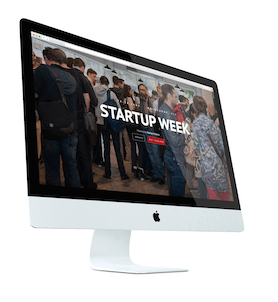
The third Melbourne #Startup Week has confirmed Startup Victoria‘s pivotal role in supporting local entrepreneurs, founders, startups and anyone interested in innovation and disruption. Over the next few posts, I will be commenting on some of the events I attended. Meanwhile, here is a brief summary of the key themes that emerged.

Screen Shot 2016-06-26 at 1.43.16 PMFirst, there is a continued shift from B2C and 2-sided markets, to B2B and enterprise solutions among the startup pitches I saw. Medtech is also getting some renewed attention, as are XaaS business models. And of course, there has to be scale in the idea.

Second, nearly all of the feedback from the judges at the pitch events centred on “why you?” –  What makes your idea different to the competition? What is the problem statement? Where are the solution proof points?

Third, there was an interesting session on “innovation from within” and the rise of intrapreneurship. There were also discussions on whether (and how) aspiring founders should leave an existing job to embark on a startup project, and how to navigate an entrepreneurial career. (More on this to follow.)

Fourth, the notion of “disruption for disruption’s sake” is being challenged – it’s not enough to be disruptive, there has to be substance (and purpose) to back it up.

Fifth, the use of design thinking, human-centred design and CX mapping in fostering creativity is breaking through to large corporations, but it is just one of many available innovation techniques – without context and framing, it can simply become a process.

Finally, I heard very little (in fact, absolutely nothing) about the role of government(s) in fostering innovation and entrepreneurship, and in supporting startup founders – notwithstanding LaunchVic, and the National Innovation & Science Agenda. Maybe there is so much election campaign fatigue that the startup community has already discounted the impact politicians (of any persuasion) can have on their business aspirations. Certainly, the numbers of Gen X and Gen Y attending some of last week’s events is testament to how engaged younger citizens are in finding purpose through the type of work they do (and what sort of organisations they work for), that they are less focussed on securing a “job”, and more concerned about building a career.

Next week: Level 3’s Enterprise Pitch night

University Challenge – #Startup Victoria’s Student #Pitch Night

There were around 500 people in the audience for last week’s #StartupVic University Startup Battle, which either says there was nothing better to do on a chilly Melbourne evening, or that this new Meetup format is working – or that the students of today are less interested in finding a job, and more interested in building their own career opportunities that connect with their purpose. (Our political leaders should take note….)

A sell out audience for the University Startup Battle (Image by Stefan Welack sourced from Twitter)

A sell out audience for the University Startup Battle (Image by Stefan Welack sourced from Twitter)

After a series of campus competitions, the finalists on the night were representing 6 of Victoria’s universities, and revealed a wealth of talent, ideas, innovation and inspiration. In order of appearance, the pitches were:

InternMe – (Victoria University)

With a tagline of “Experience the Experience”, this is a 2-sided market for graduate recruitment, that revealed some interesting stats about the student employment market.

Revenue is expected to come from fees for successful placements, and job advertisements. The business plans to cover work experience, internships, part-time and temporary work during study, as well as permanent and full-time roles.

Currently sourcing leads via LinkedIn and social media (notably Instagram), the founders say they may include psychometric profiling tools for better matching applicants with opportunities.

The pitch was to raise $100,000 for website development, but as the judges commented during the Q&A, the biggest challenge is engaging employers. As regular attendees to these pitch nights will recall, this mismatch or disconnect between students/graduates and employers continues to provide startup opportunities.

Printabox – (Swinburne University)

This website is designed to reduce the time, cost and complexity of ordering short-run branded boxes. Basically a self-serve model, the founders have spent $500,000 in development costs, primarily on a proprietary design tool. The resulting products come in 3 standard sizes – perhaps more customisation will become available?

The target clients are the 44,000 online stores in Australia who often need small numbers of branded boxes for sending out customer orders. But as the judges noted (based on a quick online search) there does appear to be a lot of competition. And although Printabox claims that their source code is protected, they have not applied (or are unable to apply) for a design patent.

Mech X Innovation – Project Ora – (Deakin University)

The founders have developed a hardware device that fits on standard tablet computers, and is designed to help children reduce and prevent eyesight damage caused by too much screen time, and by being too close to the device.

Essentially a Bluetooth-enabled accessory linked to an app, Ora monitors the amount of user screen time, proximity to the device and ambient lighting, and can be used in conjunction with “time outs”, scheduled messages and reminders to “go and do something else”. It can be semi-customised, so that parents can create a reward system, for example.

According to the designers, the competitor products (Appomate and samtime) are app-based only, and focus on time and distance – not lighting. Ora may also integrate with other devices, e.g. FitBit, but the target market is children and teenagers up to age 18, and their parents.

Asked about their path to market, they are planning a crowdfunding campaign. The key to adoption, though, will be via schools (who either provide or prescribe what devices pupils use) and schools suppliers (e.g., digital text books and e-learning tools).

ICallDibs – (Monash University)

This idea grew out of direct user experience, namely how can overseas students coming to Melbourne buy and sell furniture? The business is aiming to provide a market place for “Second Hand Furniture, First Class Deals”.

The biggest challenges faced by international students when buying/selling furniture are transportation, timing and finding buyers/sellers. The business will offer bundled services, including storage and removals/delivery, via partnerships.

The company aims to target international student agencies, and will ensure better matching between buyers and sellers (although they may want to consider changing the name unless they can trademark it….).

Rather than an “Ask”, the team offered a “Give” in the form of a customer discount for the evening’s attendees.

When asked about logistics and insurance, the founders clarified that the counterparts (buyer and seller) bear the direct risk. The business takes their commission upfront, then release the order details to the customers.

Assignment Hero – (Melbourne University)

It felt that this app, a collaboration tool for group work (sort of Slack for education?) was speaking to the converted, given the audience response. In short, having access to lots of different collaboration tools sounds great, but they each only do one or two things (albeit, really well). And if you use more than one app, you end up with too many tools and too many notifications.

While students may hate group assignments, they’re an important aspect of learning how to work with other people and acquiring other soft skills. They also seem to comprise a greater component of student assessments – possibly because they require less direct teacher-student face time?

Rather than build a whole new system, the founders have opted for native integration with Google Docs, plus some dashboard reporting tools (including the amount of individual input to a project).

The app is free to end users, but will generate revenue from education providers (enterprise sales) and on-demand services and commissions. When asked about existing tools like Moodle and Blackboard, the founders noted that these were designed for teaching, not collaboration.

It was also noted that existing productivity apps are not easily accessible by students (although no doubt, as with education content providers, enterprise app vendors will make student versions and pricing available). Plus, the “edtech” sector is of particular interest when linked to life-long learning, professional development and self-directed study.

Eat Up – (RMIT)

Finally, Eat Up is a social enterprise trying to address the number of school children who turn up at school without anything for lunch – estimated to be as many as 1 in 8 schoolchildren. Personally, I find this an indictment on our society – why should anyone in Australia need to go without basic food? – but the causes/reasons are far too complex to address here.

Essentially a partnership for sourcing, assembly and distribution, Eat Up has created a service model which they hope to roll out in more and more schools. They tap into the established Food Bank network for supplies, engage TAFEs to prepare the lunches, and use OzHarvest and SecondBite for logistics. There has also been support from Virgin Australia, ygap, Karma Canteen and Education Changemakers.

Eat Up aims to avoid passing on the costs to kids, parents or schools, and in part takes inspiration from another social enterprise, Thank You Water.

During a panel Q&A, the founders were asked about the apparent lack of technical skills or resources on their teams. In response, it was noted that there are many open source apps, available templates and market places for code and plugins. One founder commented that despite studying computer science, he used very little of what he learned to develop his app.

Revealing another apparent weakness in their pitches, the founders were quizzed on their respective sales models, costs of acquisition and pathway to revenue. The responses suggested that the startups risk being limited by their own inexperience, and that they each need to do more market analysis, assessment of customer willingness/ability to pay, and identify the best ways to scale their businesses.

There was also a lack of clarity around near-term goals and milestone planning.

In the end, the winner was Assignment Hero, no doubt reflecting the needs of the audience, plus the fact that the business has gained traction with some universities.

Next week: ASIC’s new regulatory sandbox for #FinTech #startups