Blipverts vs the Attention Economy

There’s a scene in Nicolas Roeg’s 1976 film, “The Man Who Fell To Earth”, where David Bowie’s character sits watching a bank of TV screens, each tuned to a different station. At the same time he is channel surfing – either because his alien powers allow him to absorb multiple, simultaneous inputs, or because his experience of ennui on Earth leads him to seek more and more stimulus. Obviously a metaphor for the attention economy, long before such a term existed.

Watching the alien watching us… Image sourced from Flicker

At the time in the UK, we only had three TV channels to choose from, so the notion of 12 or more seemed exotic, even other worldly. And of those three channels, only one carried advertising. Much the same situation existed in British radio, with only one or two commercial networks, alongside the dominant BBC. So we had relatively little exposure to adverts, brand sponsorship or paid content in our broadcast media. (Mind you, this was still the era when tobacco companies could plaster their logos all over sporting events…)

For all its limitations, there were several virtues to this model. First, advertising airtime was at a premium (thanks to the broadcast content ratios), and ad spend was concentrated – so adverts really had to grab your attention. (Is it any wonder that so many successful film directors cut their teeth on commercials?) Second, this built-in monopoly often meant bigger TV production budgets, more variety of content and better quality programming on free-to-air networks than we typically see today with the over-reliance on so-called reality TV. Third, with less viewing choice, there was a greater shared experience among audiences – and more communal connection because we could talk about similar things.

Then along came cable and satellite networks, bringing more choice (and more advertising), but not necessarily better quality content. In fact, with TV advertising budgets spread more thinly, it’s not surprising that programming suffered. Networks had to compete for our attention, and they funded this by bombarding us with more ads and more paid content. (And this is before we even get to the internet age and time-shift, streaming and multicast platforms…)

Despite the increased viewing choices, broadcasting became narrow-casting – smaller and more fractured viewership, with programming appealing to niche audiences. Meanwhile, in the mid-80s (and soon after the launch of MTV), “Max Headroom” is credited with coining the term “blipvert”, meaning a very, very short (almost subliminal) television commercial. Although designed as a narrative device in the Max Headroom story, the blipvert can be seen as either a test of creativity (how to get your message across in minimal time); or a subversive propaganda technique (nefarious elements trying to sabotage your thinking through subtle suggestion and infiltration).

Which is essentially where we are in the attention economy. Audiences are increasingly disparate, and the battle for eyeballs (and minds) is being fought out across multiple devices, multiple screens, and multiple formats. In our search for more stimulation, and unless we are willing to pay for premium services and/or an ad-free experience, we are having to endure more ads that pop-up during our YouTube viewing, Spotify streaming or internet browsing. As a result, brands are trying to grab our attention, at increasing frequency, and for shorter, yet more rapid and intensive periods. (Even Words With Friends is offering in-game tokens in return for watching sponsored content.)

Some consumers are responding with ad-blockers, or by dropping their use of social media altogether; or they want payment for their valuable time. I think we are generally over the notion of giving away our personal data in return for some “free” services – the price in terms of intrusions upon our privacy is no longer worth paying. So, brands are having to try harder to capture our attention, and they need to personalize their message to make it seem relevant and worthy of our time – provided we are willing to let them know enough about our preferences, location, demographics, etc. so that they can serve up relevant and engaging content to each and every “audience of one”. And brands also want proof that the ads they have paid for have been seen by the people they intended to reach.

This delicate trade-off (between privacy, personalisation and payment) is one reason why the attention economy is seen as a prime use case for Blockchain and cryptocurrency: consumers can retain anonymity, while still sharing selected personal information (which they own and control) with whom they wish, when they wish, for as long as they wish, and they can even get paid to access relevant content; brands can receive confirmation that the personalised content they have paid for has been consumed by the people they intended to see it; and distributed ledgers can maintain a record of account and send/receive payments via smart contracts and digital wallets when and where the relevant transactions have taken place.

Next week: Jump-cut videos vs Slow TV


Box Set Culture

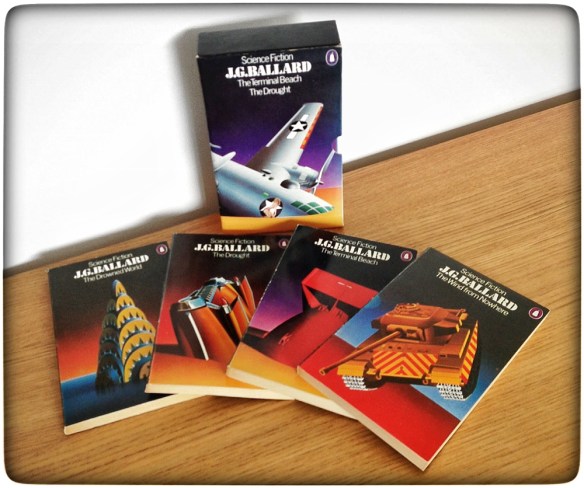
I was first introduced to the box set phenomenon in 1974, when I received a collection of novels by J G Ballard for my birthday. This led to an on-off interest in sci-fi (Asimov, Aldis, Bradbury, Dick, Spinrad, Crichton et al). It also made me aware that curators (like librarians) have an enormous influence on the cultural content we consume, and the way we consume it. Even more so nowadays with streaming and on-demand services. Welcome to the binge society.

Welcome to box set culture (Image sourced from Unsubscriber)

With network TV being so rubbish (who needs more “reality” shows, formulaic sit-coms or re-hashed police procedurals?) I am slowly being drawn back into the Siren-like charms of Netflix. More on that in a  moment.

Box set culture has been especially prevalent in the music industry, despite or even because of downloading and streaming services. It’s possible to buy the complete works of particular artists, or curated compilations of entire record labels, music genres or defining eras of music. It’s a niche, but growing, business. In recent times, I have been lured into buying extensive box set retrospectives of major artists (notably Bowie, Pink Floyd, The Fall, Kraftwerk), as well as extended editions of classic albums (Beatles, Beach Boys), and first time releases of exhumed and near-mythical “lost” albums (Big Star, Brian Eno, Beach Boys again). I like to justify these acquisitions on the basis that they are significant works in the canon of contemporary music. But only die-hard fans would attempt to embrace the monumental box set put out recently by King Crimson – comprising a 27-disc compilation of just TWO(!) years in the band’s history.

Death (and/or lapsed copyright) has become a fertile ground for box set curators and re-issue compilers, whether in literature, film or TV, as well as music. I’m sure there are publishers and editors maintaining lists of their dream compilations, waiting for the right moment to release them (a bit like the TV stations and newspapers who keep their updated obituaries of the Queen on standby). Sadly, in the case of Mark E Smith of The Fall, his death was immediately preceded by a significant box set release (tempting fate?). And as for Bowie, he had no doubt planned his legacy (and now posthumous) retrospectives prior to his own demise.

On the other hand, streaming services create the false impression we are in control of what we listen to or watch. Unless we meticulously search, select and curate our own individual playlists, we are at the mercy of algorithms that are based on crowd-sourced behaviours that are imposed upon our own personal preferences. These algorithms are based on what is merely popular, or what the service providers are being paid to promote. And while it is possible to be pleasantly surprised by these semi-autonomous choices, too often they result in the lowest common denominator of what constitutes popular taste.

And so to Netflix, and the recent resurgence in pay TV drama. Binge watching (and box set culture in general) has apparently heralded a “golden age of television“ (warning: plug for Sky TV). But depending on your viewpoint, binge watching is either a “boon to shared culture“ (the normally stoical New Statesman) or results in “half-baked content” (the usually culturally progressive Guardian). Typically, the Independent is on the fence, acknowledging that binge viewing has “changed the way TV is made“ (and watched) but at what price? Not to be left out, even Readers Digest has published some “handy health tips for binge-TV addicts“. Meanwhile, Netflix itself has released some research on how binge-watching informs our viewing habits (and presumably, our related consumer behaviours). And not everyone thinks this obsession with binge watching is healthy, or even good for business – presumably because it is not sustainable, as consumers will continue to expect/demand more and more at lower and lower subscription fees.

Meanwhile, for a totally different pace of binge-watching, SBS recently tested audience interest in “slow TV”. The free-to-air network screened a 3 hour, non-stop and ad-free documentary (with neither a voice-over narrative nor a musical soundtrack) featuring a journey on Australia’s Ghan railway. So successful was the experiment, not only did the train company’s website crash as viewers tried to find out about tickets, but SBS broadcast a 17 hour version just days later.

Next week: Infrastructure – too precious to be left to the pollies…

Radio comes of age in the social media era

About a year ago, I posted a blog on “Steam Internet” which included some ideas about the importance of radio as a communications platform – even in the age of social media.

Among the individual responses I received, a former colleague recalled how he grew up with radio, and how it was a significant presence in his life as a source of news and entertainment – it kept him company while revising for exams, and allowed him to “share” songs with this friends (via personalised mixtapes). He commented that a pharmaceutical company in Indonesia uses radio as a mainstream outreach channel – because it is relatively cheap, it offers targeted demographics, and it provides access to a large-scale, mass market.

He went on: “Radio is probably still the most effective medium to reach out to large audiences – it is targeted, it is always ON, it is always entertaining, it has loyal followers, and it does not require the listener to have an expensive receiver. More importantly, radio traditionally reached a far larger percentage of the population than what the Internet does today, especially in large developing markets.”

Consumer interest in and demand for audio content is recognised by today’s media industry – hence the growth of podcasting, audio platforms like SoundCloud, streaming services such as Spotify and Pandora, and radio apps like TuneIn – not to mention the growth in Internet radio, digital stations and web-streaming broadcasts.

I tend to agree that radio, after more than 100 years, still offers “new” opportunities for reaching an audience, even Gen Y – but as with any content strategy, it pays to get the model right by:

1. Having great content (plus engaging presenters and skilled producers)
2. Enabling access (broadcasting via any platform, anywhere, any time)
3. Cultivating a strong programming culture (i.e., scheduling and curating a logical flow of information, and across multiple platforms)
4. Encouraging audience participation – radio thrives on giving people a voice, either through phone-in sections, community-made programming, or connecting via “traditional” media such as SMS and Twitter

Radio is also very local (despite global access/reach via apps like SoundCloud Radio) and is usually subject to broadcast regulation. I’ve been involved with a community radio station over the past 3 years, and it has made me aware that audience diversity can be a challenge for broadcasters (how to cater for smaller, minority audiences?), but at the same time many people feel unconnected to mainstream media, such that radio is actually their preferred platform to engage with the world.

Acknowledgment My thanks to Rudy J. Rahardjo for his input to this article.

YouTube and guilty pleasures…

My local gym has recently installed new cardio equipment with touch screen monitors and internet access. So I find myself indulging in what some musicologists call “guilty pleasures” on YouTube – music that was so naff or cheesy when it first came out that no serious music lover would ever admit to liking it, but now it’s OK because retro is cool.*

Dollar-Hand-Held-In-Blac-116568

However, when I stumbled upon a couple of unauthorised YouTube posts featuring my own band, it got me thinking about all the “unofficial” uploads, and the impact that digital technology and social media are having through the increasing disregard for copyright and the rapid erosion of traditional business models by which content creators commercialize their intellectual property.

As more companies use digital media to support sales and marketing, brand management, customer engagement and market analysis, it becomes a valuable product or asset in its own right.

Even if you don’t believe your business is concerned with either content creation or commercializing intangible assets, there are implications for how you protect your business against commoditization or disintermediation.

What are the implications of new delivery channels for contemporary content creators, and what lessons does this offer to other businesses? 

For example, how can artists earn adequate fees from music streaming services? What do broadcasters gain from personalised radio apps? Who is making sure authors and publishers get their fair share of royalties from “curated” and aggregated content services?

The truth is, I don’t think anyone really knows the answers to these questions.

Some musicians may feel they are not adequately compensated by commercial streaming services; others recognise that the game has changed, that releasing recorded music is no longer enough to provide them with a living. In the past, musicians toured to promote their latest albums; now they release music to promote their next concert tour. They also know they must take more direct control over their income sources and revenue streams from music sales, live performance, merchandising and publishing.

For broadcasters, traditional content syndication models may no longer work if content can be disaggregated and re-aggregated without them really knowing about it. Internet streaming and web broadcasting are wonderful things, but how will advertisers react when broadcasters have limited ways of measuring the audience, because nobody knows where they are, or who they are, or when they are listening/watching?

Even authors and publishers, with a long and established history of licensing systems such as public lending rights, are wary of schemes to digitize their back catalogues. They are in a bind, because they know some income from these programs is better than none, but does it justify losing a high degree of control over the commercialisation and distribution of their copyright material?

Which brings me back to YouTube, one of the “best” examples of commercialised copyright infringement that the internet and social media have created. Even if file sharing services such as Megaupload are no longer with us, or controversial music re-sellers like LegalSounds have shut down, with very little effort anyone can extract content posted to YouTube, despite the fact that the latter does not actually support a download function.

For my part, I’ll happily admit to accessing YouTube content which is subject to copyright infringement – so much material on YouTube appears to have been posted without the prior consent (or knowledge) of the copyright holder. I’m actually very pleased that someone has posted it because I enjoy watching long-forgotten documentaries and TV interviews, out-of-print live recordings and broadcasts, and stuff that is unavailable commercially. But my consumption of this content is largely predicated on unauthorised uploading.

Although much of this “re-cycled” content is tagged with a “Standard YouTube License” (which simply means the viewer cannot record, download, monetize or claim ownership over the content), many people posting and uploading 3rd party content don’t have permission to do so in the first place. (Even a broad interpretation of “fair use” exemptions would not justify the wholesale uploading of complete albums which are still commercially available.)

I acknowledge that YouTube provides a copyright infringement process, and a Content ID system designed to help content owners assert copyright over material that has been unlawfully uploaded. But personally, I can’t help feeling that this is a rather disingenuous arrangement. YouTube stresses it is not in a position to determine copyright status – but it is more than happy to create opportunities for generating advertising revenue as part of the dispute resolution process (revenue which it presumably shares with the aggrieved copyright holder?).

YouTube started out as a platform for user-defined and user-contributed content. It does not create its own content – although it invests in original content for its “channels”,  and supports curated and personalised content (“recommendations”). This means YouTube attracts everything from amateur cat videos to professionally produced music promos, as well as highly original, creative and informative content uploaded by the independent musicians, artists, designers, educators and film-makers who create it and who choose to upload it.

And yet I keep coming back to the fact that YouTube is also full of “shared” content – content which is not owned by or licensed to the people uploading it. This is where the real commercial value of YouTube was always going to be found: in 3rd party content, however dodgy the provenance, because this reveals what might be popular and therefore, what can be monetized.

As a result, it could be argued that YouTube has been a considerable beneficiary of  copyright abuse – by using its analytics and other data mining, it can identify potential revenue “hotspots”, even if the content has not been legitimately uploaded in the first place.

So, while YouTube is very useful as an archive resource, its future is written in the terms of its commercial alliance with Vevo. This deal is designed to promote popular artists through the distribution of their music and video content via highly controlled sales and marketing channels.

On one level, it’s merely the latest attempt by major record labels to reclaim their market dominance over a music industry that is increasingly subject to vertical re-integration. On another, it will inevitably lead to an uneven playing field: some (a very few?) content producers will generate huge revenues from mobile and on-line platforms through their share of the advertising (rather than from traditional airtime and mechanical royalties); others (the majority?) will neither be able to collect royalties (because the model is broken), nor attract advertising (because they don’t have the marketing budgets to spend on buying an audience big enough to be of interest to advertisers).

What is happening in the content and media industries today will likely happen to other industries tomorrow, especially in the services sector; but we can already see that the development of domestic 3-D printers creates the possibility of “open source” designs for producing our own consumer products – so what impact will this have on manufacturing, for example?

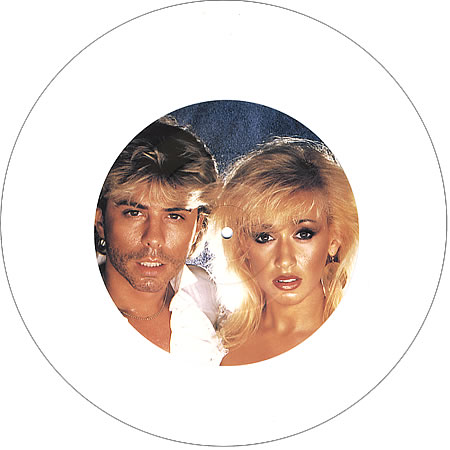
*Confession: Yes, I admit that Dollar’s “Hand Held in Black and White” is one of the “guilty pleasures” in my record collection. It’s big on cheese and none of my friends would ever admit to liking it, but it features some classic ’80s synth arpeggios and electronic drum programming, and was produced by Trevor Horn as he transitioned from the bubblegum synth pop of the Buggles to the splendour that was Art Of Noise….