The latest installment of Startup Victoria #pitch night

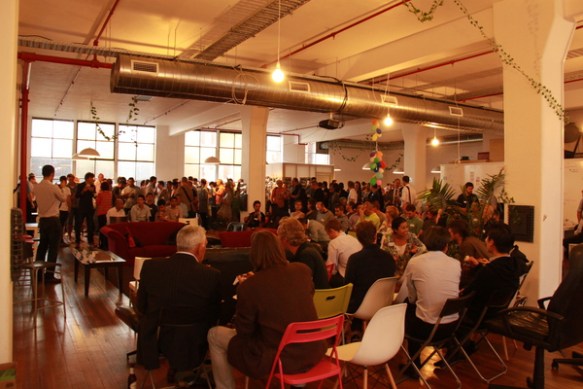
The numbers were out in force for the August edition of Startup Victoria‘s monthly pitch night. A full house (no doubt helped by a new beverage sponsor…) heard from another batch of startup hopefuls, operating in very different sectors: medtech, recruitment, food logistics and domestic services. Despite some AV issues, this event showcased some interesting businesses, all of them demonstrating some impressive early stage traction.

In order of appearance, the night’s pitches came from:

VideoMyJob

Launched in April 2016, this online tool allows recruiters and hiring managers to film, edit and share their job ads. The business already boasts more than 60 clients (some of them very high-profile), with the data suggesting an 82% higher success rate in hiring outcomes. This performance is largely attributed to the simple fact that candidates spend up to 4 minutes watching a video ad, rather than the average 12 seconds candidates spend reading a text-based ad before they submit an application.

The tool, which runs on a mobile device, includes a tele-prompt feature, in-app editing functions, a one-step process to publish to social, plus e-mail. Customer pricing is based on a $79 monthly subscription to place unlimited video ads. One reported benefit for clients is much stronger candidate short lists.

Given the changing dynamics in the recruitment market, where companies are finding themselves competing for talent and striving to become employers of choice, any new hiring solution has the potential to be a game-changer. Which is what the founders are probably banking on as their exit strategy, with a likely trade sale to a complementary recruitment platform.

PredictBGL

This medtech startup (previously known as ManageBGL) offers an app-based solution to help diabetes patients manage, monitor and predict their blood glucose levels. Despite regular patient testing, according to the founders, 80% of the data is actually ignored.

Able to offer more “real-time” testing, the app claims to fix wrong insulin doses within 3 hours (not the usual 14 days with traditional clinic-based testing), offers more precision dosing, and predicts patient levels up to 8 hours ahead.

It also has the option to incorporate live exercise data (from wearables), and serve patients who can’t afford expensive insulin pumps. As well as paying a monthly subscription, patients are also paying for insights based on the data. With a $10 per month fee, over 80% customer retention rates, and around 600 sign-ups per month, the app is breaking into the US market.

Asked about potential risk factors and the margin for error in patient testing, the founders explained that the user results are somewhat conservative, so they are embarking on clinical trials to refine the analytics.

Jarvis

Billed as “your very own personal butler”, Jarvis is one of a number personal concierge services, catering to the time-poor, inner-city residents who want to outsource domestic chores and errands.

From $33 per week (and an average of $55), Jarvis differentiates itself by offering a more personal touch, because the business hires and trains employees, rather than using freelancers or contractors.

Launched in January 2016, Jarvis is experiencing 20% growth per week, 90% customer retention, high referral rates and generating 10-15% margins. The founders are working on their logistical efficiency – routing, grouping – and deploying scalable technology – such as cluster algorithms. Pat of the attraction for clients is the fact that Jarvis does not see itself as a transactional service like some freelance and task-based apps and platforms.

The panel of judges asked about the risk of being disintermediated (by their own employees going direct to client). Jarvis claims that their key defense is the proprietary Butler app for employees.

Pantreeco

Last up was Pantreeco, which was established in 2014, with the goal of building “productive partnerships in food” by streamlining the logistics and supply chain communications between food suppliers and buyers.

A self-styled “co-commerce” solution, Pantreeco includes a messaging tool between producers, wholesalers, distributors, restaurants, cafes, grocers and providores.

Offering a freemium SaaS model (based on a per customer per channel basis plus commission), Pantreeco is in the process of taking its model to overseas markets via some major international expansion.

Asked by the judges about the competition, such as TradeGecko and Unleashed, the founders stress that they are not simply an e-commerce or inventory management solution. Instead, Pantreeco developing a range of integration services in response to customer demand – e.g., invoicing, accounting, communications as well as inventory management with 3rd party platforms such as Xero, ZenDesk and SalesForce. They also have plans to on-board major enterprise clients in the food and beverage industry.

Based on the audience voting, Pantreeco took out the honours on the night.

Next week: When robots say “Humans do not compute…”

Another #pitch night in Melbourne…

If there is one basic theme emerging from Startup Victoria‘s monthly pitch nights, it is this: whatever market you are in, regardless of your business model, and however disruptive you are trying to be, if you don’t know how to engage or reach your customers your idea is far less likely to succeed. This message came across loud and clear during last week’s event where four startup hopefuls pitched their business ideas to a panel of judges in front of a packed audience.

Picture sourced from Startup Victoria Meetup page

Picture sourced from Startup Victoria Meetup page

So let’s look at this specific issue in respect to each of the pitches:

First came JobPokes, an online recruitment service designed to help candidates match job opportunities to their career preferences. Because it claims to be addressing the hidden job market, candidates aren’t applying for specific roles – instead, it’s a form of reverse enquiry, where recruiters target potential applicants via their registered profiles. I applaud the focus on the non-advertised job market, but while it may well offer an additional channel for recruiters, I’m not sure there was a clear strategy to reach job candidates who need to create a user account, and who are probably already using platforms like LinkedIn and Seek.

Next was Airly, which is sort of “Uber for private aircraft”. The business model involves signing up a minimum number of customers (who pay a monthly subscription fee, entitling them to unlimited flights), and securing sufficient seat capacity via scheduled charter contracts. There is no doubt that the idea of flight flexibility, and an element of passenger exclusivity met with audience approval (Airly took out the people’s choice vote on the night). Also, the PR around Airly has generated in-bound enquiries, suggesting there is demand. But how does this market interest convert to individual customers, when many corporate travel policies rely on wholesale and bulk-purchase models (i.e., aggregation, consolidation, vendor discounts, agency rebates, preferred airlines) rather than catering for individual travel needs or preferences? Unless the target customers are business travelers that manage and pay for their own tickets?

If Airly was about the Uberisation of air travel, RagRaider revealed another aspect of the shared economy model. Squarely aimed at fashion- and budget-conscious women, RagRaider offers a peer-to-peer service whereby customers can hire clothes for one-time use. No doubt there is a market (high school formal, spring carnival, wedding reception…) but the question is how to connect with actual lenders and hirers? We know that the per customer cost of acquisition for 2-sided markets is a key metric, and it wasn’t clear how the founders were addressing this, other than a pre-launch website and some social media. As one observer has commented, the “model is focusing on the ‘product’ part first which is the reverse of how it should be”, and another commented that despite a defined market, the barriers to entry are considerable. The judges also questioned some of the proposed pricing, commission rates and logistics.

Finally, Rounded is another FinTech startup looking to service the SME sector, specifically sole traders, freelancers, sub-contractors and tradies. Another spin on the invoice solution when suppliers need to get paid efficiently, Rounded does not claim to be a full-service accounting software – but, as one attendee commented, key to success will be reaching and educating the end-user market.  Also, they are entering a competitive space, where a new entrant like Xero has already disrupted incumbents like QuickBooks, Reckon and MYOB. I wasn’t able to stay for the pitch, but I did have the opportunity to speak with the founders beforehand. Clearly driven by their own experience and needs, there is a solid but simple idea here – but as Xero and others are increasingly able to serve similar customers, Rounded will find it really difficult to compete.

If anything, these latest pitches showed how hard it is to compare apples with oranges, although the voting criteria (market traction, product viability, team composition, pitch presentation, and responses to judges’ questions) are designed to deliver a consistent evaluation. It was also apparent that these pitches divided audience opinion more so than previous contestants – which is probably a good thing as variety is the spice of life….

Acknowledgments: thanks to Graphican, Marlene M., Cornell and Dale G. for their input.

Next week: Re-Imagining Human-led #Innovation


Startup Victoria’s #Pitch Night for #Startup Week

The grand finale of Melbourne Startup Week was Startup Victoria‘s regular pitch night held at inspire9. Six months in, and this new monthly format has become a major fixture on the startup calendar, judging by the audience size, and the range of startups applying to pitch. There are still a few teething problems (the AV quality is a bit variable, and some of the judging panels are probably too “soft”…), but it’s established something of a benchmark against which other pitch nights might be compared. This month’s cohort covered medtech, wellness and the greetings industry.

StartUp Vic 240616

Cardly

Cardly is an online service that allows users to send personalized greetings cards to friends and loved ones. Under the banner of “you write, we post”, customers can choose from a range of artist-designed cards, add their own message, and Cardly will then print and send the card from a location as close as possible to the recipient (currently London, Sydney and New York).

A variant on the familiar 2-sided market model, Cardly has built a community of independent artists who supply the card designs. Artists are charged a sales commission on each order, and they get their own store front on Cardly. And for anyone struggling for words, there’s a range of predefined texts and doodles.

Because this is a print-on-demand model, using digital printing, there is zero wastage (unlike the traditional greeting card industry where over-production and limited distribution are commercial headaches). However, even with some “handwriting” fonts, there are some design and user limitations, which something like the Sensel Morph touch-sensitive track-pad may be able to address?

Cardly is aiming to take a chunk of the retail market and disrupt the global greetings card industry. The judges took a slightly different view. Based on the founders’ own data, consumer customers will probably send an average of 12 cards per annum, and at $6.45 per card, it’s a tough sell. However, by looking at a lower cost per acquisition, addressing the corporate market and offering a white label solution, the business would be in a better position to scale. There was also a suggestion for an engineered viral solution to drive traction through collaborative cards, and other ideas for partnerships (e.g., gift buying services and gift cards).

Cardihab

Cardihab (“Get Back To Life”) has appeared in this blog before, and is a CSIRO spin-out that has developed a mobile support solution for cardiac patients via an app and a patient/GP portal. As someone whose father is recovering from major heart surgery, this pitch got my personal vote!

The success rate is staggering – patients using the app are 70% more likely to complete rehab. So far, four hospitals have signed up, with three more in the pipeline. As well publishing their research, the founders see Cardihab as being a broader platform for managing chronic illnesses.

Currently in the process of getting investor ready, the proposed business model will charge an annual license for hospitals, plus a per patient fee.

The judges had some questions about the potential market (“Anyone with heart disease”) and wanted to know a bit more about the bench strength of the team.

Black

Staying with the medtech and after-care theme, Black‘s modest goal is to “revolutionise healthcare”, via an in-home observation solution that scans patient movement and analyses interaction with their helpers. The scanner strips out personal data (features, attire) using skeleton tracking to monitor movement and falls, while learning from patient gestures. It can use real-time alerts to contact helpers, carers and emergency services.

The scanning software is currently trialing in casinos to refine the machine-learning algorithms, and all trials are subject to ethical approval.

Although still at a conceptual stage (in terms of health care applications), and notwithstanding privacy concerns, this project demonstrates that predictive tools will be vital to helping the elderly and the infirm to continue living independently in their own homes, which will have significant advantages to the cost of long-term care, preventative health services, patient rehabilitation and after-care services. There are doubtless other, similar solutions in development, and the outcome will likely be a mix of blended services based on ease of use, cost of roll-out, system interoperability and patient efficacy.

Honee

Last to present was the team from Honee which is bringing digital connectivity to the wellness, fitness and beauty industry. The solution they offer is designed to make it easier to discover and book an appointment for a treatment, consultation or workout session, by connecting merchants and users.

With previous international experience at Delivery Hero, Quandoo and Zomato, the founders have strong startup business credentials in adjacent markets – connecting consumers to service providers via search discovery, customer reviews, personal recommendations and proximity.  Of particular interest in this sector is the growing “wellness travel market”.

There are undoubtedly competitors already working on similar solutions; and it may just be that I’ve seen far too many pitches in the past few years, but I’m sure there was a startup out there offering a “just in time” service to help find and book appointments for personal services – Fit Me In? – and I recall another comparable startup idea for restaurants to offer last-minute menu specials via a location-based app.

Nevertheless, as we know, execution is key, and the judges asked about the huge cost to build a consumer brand – hence Honee is focusing on service providers to get their brands on line. There is an MVP in pre-launch, and Honee has built a mobile responsive website, with a grant from the Melbourne Accelerator Program.

After the vote (and thanks to technology, the results of which were available in minutes….) Cardly was declared the night’s winner.

Next week: Moving #innovation from “permitted” to “possible”

Field report from Melbourne #Startup Week

The third Melbourne #Startup Week has confirmed Startup Victoria‘s pivotal role in supporting local entrepreneurs, founders, startups and anyone interested in innovation and disruption. Over the next few posts, I will be commenting on some of the events I attended. Meanwhile, here is a brief summary of the key themes that emerged.

Screen Shot 2016-06-26 at 1.43.16 PMFirst, there is a continued shift from B2C and 2-sided markets, to B2B and enterprise solutions among the startup pitches I saw. Medtech is also getting some renewed attention, as are XaaS business models. And of course, there has to be scale in the idea.

Second, nearly all of the feedback from the judges at the pitch events centred on “why you?” –  What makes your idea different to the competition? What is the problem statement? Where are the solution proof points?

Third, there was an interesting session on “innovation from within” and the rise of intrapreneurship. There were also discussions on whether (and how) aspiring founders should leave an existing job to embark on a startup project, and how to navigate an entrepreneurial career. (More on this to follow.)

Fourth, the notion of “disruption for disruption’s sake” is being challenged – it’s not enough to be disruptive, there has to be substance (and purpose) to back it up.

Fifth, the use of design thinking, human-centred design and CX mapping in fostering creativity is breaking through to large corporations, but it is just one of many available innovation techniques – without context and framing, it can simply become a process.

Finally, I heard very little (in fact, absolutely nothing) about the role of government(s) in fostering innovation and entrepreneurship, and in supporting startup founders – notwithstanding LaunchVic, and the National Innovation & Science Agenda. Maybe there is so much election campaign fatigue that the startup community has already discounted the impact politicians (of any persuasion) can have on their business aspirations. Certainly, the numbers of Gen X and Gen Y attending some of last week’s events is testament to how engaged younger citizens are in finding purpose through the type of work they do (and what sort of organisations they work for), that they are less focussed on securing a “job”, and more concerned about building a career.

Next week: Level 3’s Enterprise Pitch night