Musical Memories – Of Time and Place

Although sound is supposed to be the weakest sensory trigger for recalling memories, I suspect most of us can readily associate a song or a piece of music with a significant time, event or place we heard it. Indeed, music is often more evocative of our emotional response than either smell or taste, which at a primal level are readily connected with survival and self-preservation. (Music cannot kill or harm us, but poisonous or rancid food can.)
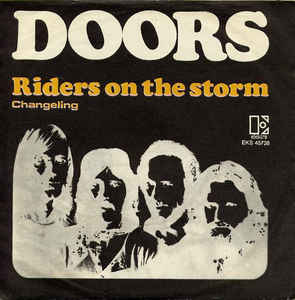
This thought occurred to me recently when I was on a weekend trip to the country with a group of friends. Sitting round the log fire under a starlit sky, The Doors’ “Riders on the storm” came on the streaming playlist. At that particular moment, it seemed an ideal setting to hear this track. Even though I have heard the song many times before, this latest airing has now created a new memory association – the time, the setting, the people I was with, the food and drink we enjoyed.

Of course, in this particular context, it also reminded me of the first time I consciously heard the record. As a young teenager in the mid-seventies, I used to fall asleep listening to my transistor radio, usually tuned into the original UK pirate station, Radio Caroline. Caroline mostly broadcast classic and progressive rock – often playing a whole album without interruption. It introduced me to a lot of bands and music I did not hear on Top 40 or daytime radio – so it was an important part of my musical education.

Road trips seem particularly adept at forming musical associations: in my case, a drive to the Yorkshire coast accompanied by a bootleg tape of the Beach Boy’s “Smile” sessions; a night time journey through the Anza-Borrego Desert, with the roof down, listening to Primal Scream’s “Screamadelica”; and just a couple of months ago, hearing the Pink Floyd song “Wish You Were Here” while touring part of the Croatian coast. Even though I was very familiar with those records before these particular journeys, the specific context of those trips means the music will forever be linked to the events.

I suspect this memory association is largely because our response to, and engagement with music is often dependent on our mood. If we are more alert to and in tune with our surroundings, this receptive state of mind leads us to make mental and emotional links via the accompanying musical soundtrack. These triggers mean that we are more able to recall or even replicate that mood via the use of the associated songs.

All this as The Beatles’ “Abbey Road” celebrates its 50th anniversary. As a child, this was the first Beatles album we had in our home. We already owned a number of their singles, which had a huge impact on my early listening adventures. But “Abbey Road” was probably the first album I really engaged with. Even now, there are large sections I can replay in my head. The song order is likewise entrenched, thanks to the format of the vinyl LP in the pre-shuffle and pre-streaming era. The cathartic extended coda of “I Want You (She’s So Heavy)” at the end of side 1, that gives way to the upbeat and optimistic “Here Comes The Sun” at the start of side 2. I have every expectation that when I next listen to “Abbey Road”, it will still trigger memories of my childhood and listening to the record with my older sisters.

Next week: School Reunion


You said you wanted a revolution?

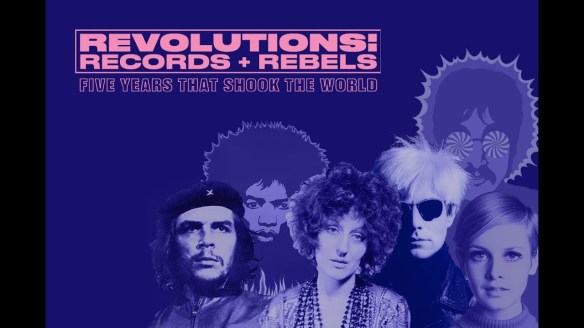
In terms of popular music and the “revolutionary” counter-culture, the Hippie Dream was born during the Summer of Love in 1967 (Haight-Ashbury to be precise) and died in December 1969 (The Rolling Stones’ concert at Altamont). The tipping point was probably The Beatles’ “White Album” released in 1968, featuring “Helter Skelter” and “Revolution 9”. Along the way, we had the “14 Hour Technicolour Dream (April 1967); the Monterey Pop Festival (June 1967); the first Isle of Wight Festival (August 1968); the Miami Pop Festivals (May and December 1968); Stones In The Park (July 1969); oh, and Woodstock (August 1969). From visiting the current “Revolutions: Records + Rebels” exhibition at Melbourne Musuem, the most significant outcome from this era was Woodstock, even though it came close to being a self-inflicted human, environmental and logistical disaster. It was only saved by a combination of the emergency services, the military, local residents – and sheer luck.

This ambitious and uneven exhibition spans the years from 1966 (The Beatles’ “Revolver”, The Beach Boys’ “Pet Sounds”, and Bob Dylan’s “Blonde on Blonde”) to 1970 (Deep Purple’s “Deep Purple in Rock”, Black Sabbath’s “Paranoid”, and The Stooges’ “Fun House”). Despite covering the peak psychedelic era of “Sergeant Pepper”, “Their Satanic Majesties Request” and “The Piper At The Gates Of Dawn”, the exhibition leaves you with the impression that Woodstock is the only enduring musical or cultural event from this time. Yet, the music portrayed in Woodstock is far from revolutionary – being mostly a bland collection of highly-derivative (and by then, almost passé) rock, blues and folk.

It almost feels like the curators of this exhibition set themselves up for failure. By trying to cover such a broad spectrum of political, social, economic and cultural themes, and then view them primarily through the rather narrow lens of popular music, the net effect is a grab bag of museum artifacts assembled with little coherence, all accompanied by a rather insipid soundtrack selection.

I’m not doubting the importance and lasting significance of the topics included (civil rights, peace movement, feminism, class war and gay liberation) – but the attempt to tack on some Australian relevance almost backfires. Let’s not forget that homosexuality was not decriminalised in Tasmania until 1997, and abortion is still not decriminalised in NSW. In fact, Australia was possibly more progressive on some issues in the early 1970s (anti-Vietnam War, ecology, feminism) than it is today with the current resurgence of populism, nationalism and religious conservatism.

Anyway, back to those “Records + Rebels”. I was surprised there was nothing about the radical developments in jazz or improvised music by the likes of Miles Davis (“In A Silent Way, “Bitches Brew”), The Art Ensemble of Chicago and Ornette Coleman, or labels like ESP, BYG and ECM. Absent also was any reference to the mod and early skinhead movements that were the antidote to hippiedom, embracing soul, r’n’b and reggae music. No mention of Soft Machine (who were contemporaries and colleagues of both Pink Floyd and Jimi Hendrix). Very little significance given to The Velvet Underground (probably the most influential band of the era in terms of inspiring the music that came after the hippie dream dissipated). And where were the likes of Can, Tangerine Dream, and Kraftwerk (their first album came out in 1970….) to represent the German rejection of traditional Anglo-American rock and roll?

On a somewhat depressing note, apart from Woodstock, two of the other enduring “brands” of this era that were on display were Richard Branson’s Virgin empire, and Time Out magazine…. So much for the Children of the Revolution.

Next week: Top 10 Gigs – revisited.


The Metaphorical Glass Jaw

As I get older (maybe not necessarily wiser), I feel that as a society, we are becoming far less tolerant and yet far more sensitive – something of a paradox, possibly linked to a decline in personal resilience and a lack of quality and robustness in public discourse. And for a country that is both a secular state and a liberal democracy (and definitely not a theocracy), there has been a surprising amount of debate in Australia recently, about the need for a new or revised “freedom of religion“.

John Stuart Mill – Image sourced from Wikimedia

Much of the commentary has been prompted by the thoughtless and potentially harmful remarks by a professional sports player, who espouses a particularly fundamentalist strain of Christianity. Because the very public expression of his personal beliefs led to the termination of his employment, this has been interpreted as a curtailment of the player’s freedom of religion.

Without getting too legalistic (and there is an administrative review pending), the player’s public statements were out of line with the social values and civil rights espoused by his employer – to the extent that they could bring this particular sporting code into disrepute. It was also a repeat incident. At the very least, these comments could have led to a reduction in the employer’s revenue from sponsors or spectators. (And let’s consider that his comments drew so much attention because he had the privilege of a public platform, one which came as a result of his employment status and his professional profile.)

According to this player’s particular creed, his human-constructed belief system permits, condones and even encourages the use of language that bullies and belittles people who don’t adhere to his own views on sexuality, lifestyle choices or even “belief” itself. While much has been said about the homophobic nature of the said player’s tweet, let’s not forget he also targeted atheists in the same context, simply because they are non-believers.

As I frequently tell customer call centres, who often like to blame the “system” for their own organisation’s failings, a system is only as reliable as the people who design and run it. So, if being an adherent to a particular belief system means you have to hold and profess abhorrent views, especially those that are out of step with civil society, then clearly there is something at fault at the heart of that mechanism.

I recently heard a speech by a retired judge on human rights and civil liberties. He referred to an aphorism attributed to John Stuart Mill, in connection with his treatise “On Liberty”, and the harm principle:

“Your Liberty To Swing Your Fist Ends Just Where My Nose Begins”

In other words, you may be free to say what you like, but Isaiah Berlin’s concept of negative freedom means that (despite Voltaire’s standpoint in defence of free speech) even your verbal punches are not permitted to interfere with or harm someone else’s rights – yet alone instill in them a fear for their personal safety and human dignity.

Nowadays, some might say that too many people are prone to having a metaphorical glass jaw – that they take offence too easily, and seek to find malicious intent in any views or comments that they find objectionable or that do not accord with their own world view. Equally, people can (metaphorically) stick their jaw out, seeking to provoke a reaction by drawing attention to themselves, so that they can claim “foul” when they bang up against a countervailing fist. The boundary between personal rights and freedom of expression is becoming increasingly blurred.

When it comes to calls for the special protection (and even promotion) of religious freedoms, I have something of a problem. Quite apart from the entrenched social prejudices inherent in many organised religions, it seems incongruous that such institutions can claim tax benefits as charitable bodies, and receive public funding while enjoying exemptions from certain anti-discrimination laws.

Although we don’t have a law against heresy in Australia, we still have blasphemy laws in most States. Even though they are rarely invoked, the fact that they exist reinforces the notion that far from needing a “freedom of religion”, religious beliefs are somehow already seen to be above the law. Surely, in a multi-cultural, secular and pluralistic society, religious beliefs will have to take their chances alongside (and rub up against) the rest of human constructs and natural systems – science, history, psychology, philosophy, politics, sociology.

Next week: Startup Vic’s Health Tech & Med Tech Pitch Night


Manchester, so much to answer for….

I spent most of the festive season in and around Manchester, once a focal point of the industrial revolution (and the home to dark satanic mills), now a city that is as much about technology and culture (and the location for MediaCityUK). Plus, it’s a city that takes its hedonism very seriously, a place where a table is simply something to dance on…

Manchester Town Hall – photo by Mark Andrew – image sourced from Wikimedia under Creative Commons

I have had a direct connection with Manchester going back nearly 40 years. Prior to that, Manchester for me was probably defined by its famous football club (and that other one), Coronation Street (the world’s longest-running television soap opera), and the Manchester Guardian newspaper (now one of the few remaining sources of objective news coverage).

Then, in the late 1970s, Manchester started producing some of the most innovative music in the wake of punk. Manchester was the home to cutting-edge bands, labels, producers, designers, writers and fanzines – many of which outshone the best of what even London had to offer at that time. Record labels such as Factory, New Hormones, Object and Rabid helped launch the careers of Joy Division, Durutti Column, A Certain Ratio, Buzzcocks, John Cooper Clarke, Martin Hannett, Peter Saville, Ludus, Malcolm Garrett, The Passage, James and even Jilted John; while bands like The Fall, Magazine, The Frantic Elevators and The Distractions (plus fanzine City Fun) all added to the colourful mix. Then came New Order and The Smiths, followed by the Hacienda, Happy Mondays, Stone Roses and the rest of the Madchester era (as brilliantly told in the film “24 Hour Party People”).

So Manchester’s cultural output from that period has definitely shaped and informed a lot of my musical (and reading) choices. Just before Christmas, it was announced that musician and lyricist Pete Shelley had died. Along with Howard Devoto, he formed Buzzcocks, who inspired many other bands and independent labels with their debut 1977 release, the Spiral Scratch EP (also one of the first UK punk records). Their appreciation of visual artists like Marcel Duchamp and Odilon Redon, and writers like Franz Kafka, Jean-Paul Sartre, Aldous Huxley, Albert Camus, Dostoyevsky and Gogol meant that (along with many of their contemporaries) they made music that was not just about 3 minute pop songs. Plus, these literary influences prompted me to seek out those Penguin Modern Classics – much more interesting than my high-school set texts….

Every time I visit Manchester, I’m also reminded of the wry sense of humour, and the general tendency towards gritty resignation (along the lines of, “If you can’t laugh about it, you may as well give up now”).

One example – while checking my luggage in at the airport, I had the following exchange with the staff member behind the counter:

ME: “How are you today?” (it being a very early morning during the festive season, and goodwill to all people etc.)

THEM: “I’m full of it”

ME: “Full of the joys of Christmas?”

THEM: “No, the flu”

Another example (see opening reference to tables) – a quotation from Mark Twain, appearing in a public art gallery, had been modified to read:

“Explore, Dream, Disco…”

And as if by way of reinforcement, for Christmas I was given two books, essential reading for anyone wanting to further their appreciation of Mancunian (and Salfordian) pop culture – “The Luckiest Guy Alive” by John Cooper Clarke, and “Messing Up the Paintwork – The Wit and Wisdom of Mark E. Smith”.

The late Mark E. Smith, founder of The Fall (and no relation to the band The Smiths…) led  a group famous for its longevity, its voluminous discography, and its revolving door of musicians. In reference to the latter, he once said:

“If it’s me and yer granny on bongos, it’s the Fall.”

Next week: Startup Victoria – supporting successful founders