Ageing Rockers

A few years ago, I mentioned the phenomena of ageing pop stars, that bunch of musicians from the 60s and 70s still recording and touring in their 70s and 80s – retrospective proof that for some, rock was a viable career move after all. Since their professional longevity has extended way beyond anyone’s original expectations, it does mean for us music fans we should make an effort to go and see their live shows, especially as more of these artists shuffle off this mortal coil – because we may never get the opportunity again.
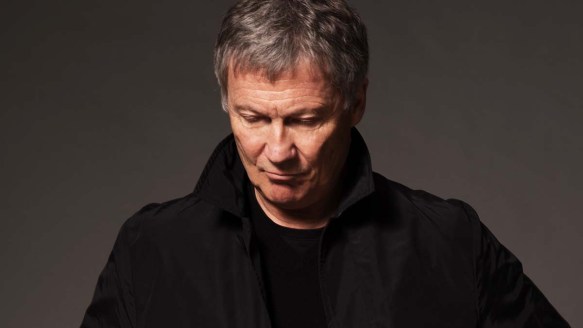
Michael Rother – a sprightly 73-year old continues to record and tour (picture sourced from Melbourne Recital Centre)

A case in point is Kraftwerk, who visited Melbourne last December. The only original member, Ralf Hütter is now in his late 70s, but he stood and led his team of younger musicians for a 2-hour performance that was almost like a tribute show to themselves. Kraftwerk has not released any new music for more than 20 years, but continue to harvest their legacy via regular live shows and careful curation of their back catalogue. I hope they do continue touring but I suspect the chance to see them again in Melbourne may have passed (at least in human form, and not as resurrected VR projections or avatars, although Kraftwerk clearly anticipated this many, many years ago… ).

Last week, a one-time member of Kraftwerk, Michael Rother performed at the Melbourne Recital Centre, to celebrate 50 years of his old band Neu! A fit and sprightly-looking 73-year old, he looks like he still enjoys touring, and seemed very happy to be back in Melbourne. However, this concert was re-scheduled from a couple of years ago, when Rother experienced some health issues that prevented him from travelling to Australia. And the last time he was here, in 2012, he was joined by another stalwart of the German music scene of the 70s and 80s, Dieter Moebius (of Cluster and Harmonia) – who passed away in 2015. Given Rother’s connection to Kraftwerk and his key role in forming the sound of “kosmische Musik” (plus his work with Brian Eno, and the tantalising prospect that he might have played on David Bowie’s “Heroes” album if things had gone differently…) his continued presence on the live circuit is most welcome, especially as very few of his German contemporaries are still with us as going concerns.

Later this month, I’m going to see Laraaji, octogenarian jazz, ambient and new age musician who is coming to Melbourne to perform for the first time in his career (I believe). Another former collaborator of Brian Eno, this promises to be a very special concert.

Meanwhile, Eno himself still shies away from live performance, but an interesting documentary about him has started touring the world – and which, in typical Eno-esque fashion, is never the same film twice. And another documentary showing this month in Melbourne is “Opus”, the final recorded performances of the late Ryuichi Sakamoto (whom I was fortunate to see on his last visit to Melbourne in 2018).

The moral of the story? Get ’em while you can….

Next week: The Grey Ceiling
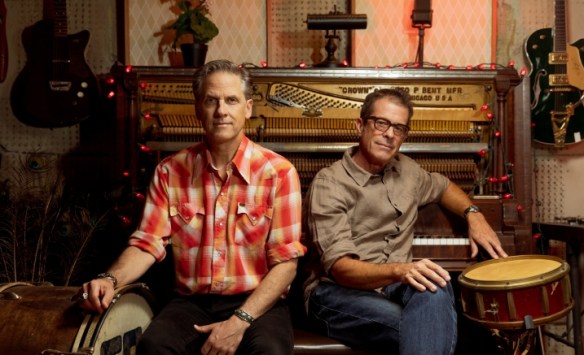
 

The Mercurial Music of Calexico

In addition to Taylor Swift and Katy Perry, Melbourne recently played host to US band Calexico. Given the hype surrounding those pop divas, you’d be forgiven for not noticing the latter’s sell-out concerts at the Recital Centre.

Calexico photo sourced from Melbourne Recital Centre

After nearly 30 years and as many albums, Calexico have a deep back catalogue to draw on, but the focus on the current tour is their 2002 album, “Feast of Wire”, featured in full alongside a few of their greatest hits and a couple of inspired cover versions.

My interest in Calexico stems from the late 1990s, via their involvement with a couple of other bands, Giant Sand and The Friends of Dean Martinez. Alongside these and other groups such as Lambchop and Wilco, Calexico brought a fresh perspective to Americana – that strand of North American music that has its roots in Alt Country, but which eschews many of the conservative (even regressive) styles and values of mainstream country and western music. What sets these bands apart is their willingness to embrace other musical influences, and explore more experimental sounds.

Calexico themselves have collaborated with a range of DJs and producers for some inspired remixes, and have featured on compilation albums alongside their US post-rock counterparts as well as European electronic artists. So quite eclectic company. In fact, Calexico’s own music incorporates Tex-Mex, Mariachi, dub and electronica, Morricone’s spaghetti western soundtracks, Tortoise-style instrumental arrangements, Tindersticks’ atmospherics, and Tijuana trumpets. Having been to California a few times myself (including a road trip from LA to northern Mexico), and having visited Colorado and New Mexico last year, Calexico’s music readily evokes memories of the Anza-Borrego desert, the border town of Tecate, the Skytrain from Santa Fe to Lamy, and the hills of the Tejon Pass.

Live, the core duo of Joey Burns and John Convertino handle vocals/guitar and drums respectively, while a team of four multi-instrumentalists take care of bass, guitar, keyboards, vibes, trumpets and accordions. The technical production is great, and like many visiting musicians, the band enjoy playing with the superb acoustics of the Recital Hall itself.

As for the night’s cover versions, there were two: Love’s “Alone Again Or”, a minor hit for Calexio when first released as a non-album single, and which perfectly suits their “Sounds of the South-West”; and Joy Division’s “Love Will Tear Us Apart”, a song I hadn’t heard played live since one of Joy Division’s last gigs in 1980, and which prompts some emotional audience participation – a brave choice!

Next week: Ageing Rockers


Non-binary Politics?

Regular readers to this blog may have noticed the absence of new posts in the past few weeks. This silence is in large part due to other personal priorities. There is also an overwhelming sense that all is not well in the world, and it hardly seemed appropriate to add to the endless commentary and op-eds on current events.

As world leaders grapple with yet another breakout of ideological warfare, I can’t help being reminded of the Bush Doctrine, built on President George W’s edict that “if you are not with us, you are against us”.

Such binary perspectives overlook the fact that no dispute can be neatly categorised in stark, polarised terms. Yet on so many geopolitical and social issues, we are being forced into making “yes/no”, “either/or”, “left/right”, “A/B” decisions. Ironic, given that in many domains we are also being encouraged to adopt non-binary views!

Whatever happened to bipartisan politics, consensus building, or non-equivalence? Why are we being co-opted into taking unequivocal positions? Have we forgotten that two wrongs don’t make a right?

I’m trying to get more comfortable with ambiguity and ambivalence – especially when few things can be cast in purely “black or white” terms. In fact, the more we can say “it’s OK to be in the grey”, the better our public discourse should become.

Next time: The Mercurial Music of Calexico


Banking Blues (pt. 481)

Last week, I attended a networking evening for Intersekt, Australia’s largest annual fintech conference. Billed as the “flagship event of the Digital Innovation Futures Victoria Festival”, the 2-day event is supposed to take the pulse of Australian fintech – by highlighting current industry trends, showcasing local success stories and identifying areas for future growth and collaboration. I wasn’t able to attend the 2-day conference itself, but based on the networking audience, and the program agenda, it feels like there is very little “innovation” these days, and certainly not among the major banks.

The fintech product focus is still very much on payment solutions and open data – even though we’ve had the NPP and Open Banking for several years – plus SME lending (since the major banks have largely abandoned cashflow lending, just as they have exited wealth management and financial planning). There was barely an hour of the conference given over to crypto currencies and digital assets, and from what I could see, no sessions dedicated to Blockchain technology.

Challenger or neo-banks have not managed to gain traction in Australia, mainly due to the dominance of the incumbent banks, especially the so-called Big 4, which continue to enjoy an entrenched oligopoly protected by regulation. Despite Financial Services (banks, diversified financials and insurance) forming the largest sector (27%) of the ASX 200, it is highly concentrated and appears structurally designed to keep out competition (and hence, stifle innovation).

Indeed, I cannot think of a single new product that my bank has introduced in the 20 years I have been a customer. Over that time, I have held both personal and business accounts with this bank – mortgages, investment loans, credit cards, transaction accounts and savings products. They no longer offer wealth management services under their own name, and the share trading account I hold with them is actually operated by a foreign financial institution. At the same time, the bank has been shuttering branches, and disbanding services, often without any notice or customer communication.

My frustration with this bank goes unheeded – if anything, the customer service has worsened, often under the guise of “the Royal Commission”. The latter has no doubt given rise to staff cuts to pay for greater compliance costs, and is used to justify over-bureaucratic customer processes. Meanwhile, every time I raise a complaint, I’m told it’s the bank’s “systems” that are to blame, or their third-party service providers – it’s never the bank’s own fault, and they never take responsibility or demonstrate accountability.

These are just the latest incidents in a litany of poor customer experience:

1. A simple title transfer involved me visiting three different branches (thanks to branch closures and rotating staff), plus e-mailing and phoning an interstate office (at least the settlement was probably executed on Pexa’s blockchain-enabled platform…)

2. A glitch in setting up a replacement bank-issued credit card in my digital wallet was blamed on the card provider’s technology (even though I had just successfully linked this same card to my smart watch). I hope the bank has robust SLAs with this third party…

3. Some unsolicited (and highly misleading) e-mail marketing sent out under the bank’s name was blamed on another third-party provider (surely the bank must authorise what communications are issued in its name?)

4. I spent over 2 hours in a branch to open some basic term deposits in the name of existing businesses that already have client profiles and accounts with this same bank – a combination of bureaucracy, slow technology and cumbersome processes which still involve wet signatures on hard copy documents.

5. In the process of setting up one of these business accounts, it turns out the bank had the wrong company details on their core records, even though the statements are sent to the correct address. I advised the bank of the change of address several years ago, but despite the findings of the Royal Commission, the bank has not bothered to run a check on the ABN register, which is free to use, to check the company details.

The really depressing thought is that even if I switch banks, I will probably run into similar problems elsewhere!

Next week: Non-binary Politics?