Tourism: Time to Get #Digital

In the latest State of the Nation report, Roy Morgan Research shone a spotlight on Australian tourism, an industry which has the potential to make a larger contribution to national GDP following the commodities boom. But the industry needs to get smarter at leveraging digital technology and embracing disruptive business models to ensure sustainable growth.

Melbourne's White Night Festival (Photo: Paul Jeffers for The Guardian)

Melbourne’s White Night Festival (Photo: Paul Jeffers for The Guardian)

As the report highlights, digital is disrupting traditional operators through “automation and variable pricing of everything from hotel rooms to airline seats”, which combined with huge changes in media consumption “is impacting the very essence of the industry”.

What does this mean for the industry, and how should it respond? Here is a quick overview:

1. Tourism is a major contributor to exports and to GDP

According to data from the Department of Foreign Affairs and Trade, tourism generated over $14bn in exports in 2014, and is #5 after iron ore, coal, natural gas and education.

In particular, revenue from Chinese tourists, especially “Free and Independent Travellers” (FIT), grew 19% in 2014, and now accounts for around one-third of in-bound tourism revenue.

With an increasing proportion of Australia’s population born overseas (in large part driven by people coming here to study or to work from China, India and South East Asia), it’s only natural that their friends and family will come to visit them for holidays. And since they are likely to be more affluent visitors, they can afford to curate their own itineraries, rather than be locked into package tours.

2. Great attractions need even better infrastructure and UX

It’s no longer enough that Australia can boast many of the best natural, cultural and lifestyle tourism attractions in the world. Increasingly, catering for the “visitor experience” means that travel operators, hotels, resorts, attractions and destinations need to consider things like:

  • Multilingual and multicultural capabilities
  • Internet & WiFi access
  • Smartphone compatibility
  • Signage and navigation aids
  • Integrated services (e.g., transportation and visitor attractions)
  • Content and interpretive tools

3. Market and digital disruption means more choice for travellers

Disruptive market forces mean that tourists have more choice, and can access the sharing/informal economy, such as Uber and AirBnB.

Digital disruption also means a myriad of ways to discover, book and pay for transport, accommodation and services, aided by numerous apps that can bypass official travel and tourism services.

Visitors not only have more choice, they are more likely to be well-informed, having done their research before they arrive, aided by social platforms that offer personal reviews and recommendations.

4. What are the reasons tourists come to Australia (and what do we do with them once they are here)?

I don’t have any official data, but anecdotally, tourists come to Australia because in general they believe it’s safe (notwithstanding shark attacks and venomous insects), it’s clean, it’s unique, it has variety, and for some the language is also a convenience.

Whether it’s natural scenery, food and wine, cultural events, sport, historical sites, gambling, surfing, trekking, arts festivals, fashion weeks, galleries, museums, beaches, or just hanging out in coffee shops, Australia has a lot to offer.

I’m obviously biased, but Melbourne alone hosts a full calendar of cultural, sporting, culinary and commercial events – there’s something significant happening every month of the year:

  • Major Festivals – Jazz, Comedy, Film, Arts, Fringe and Cabaret (plus the Laneways Festival)
  • Special Events – White Night, SuperSense, Winter Masterpieces, Gertrude Street Projection Festival
  • Sport – Tennis, Spring Racing Carnival, AFL Grand Final, F1 Grand Prix, Boxing Day Test
  • Commercial – Food & Wine Festival, Design Week, Fashion Week, Art Fair, Trade Expos, Professional and Industry Conferences

And did I mention the coffee shops???

5. Some further opportunities?

Digital won’t displace these attractions; in fact it should make it much easier for tourists to discover, connect to and interact with them before, during and after their visit.

Digital can also help curate the whole end-to-end experience, from suggesting thematic itineraries, managing personalised bookings and organising customised events, to providing travel information and advice in advance, updating information throughout their stay, and keeping in contact with visitors once they leave.

And a personal plea – can Melbourne’s trendy restaurateurs that don’t accept bookings offer an app to let customers know when their table comes up on the waitlist?

Declaration of interest: The author currently consults to Roy Morgan Research. These comments are made in a personal capacity.

Next week: Update on AngelCube


Cultural Overload: Oblique Strategies vs Major Tom

This week, Content in Context took a break from start-ups, fintech and the information superhighway to immerse itself in some cultural overload, with hardly a digital device in sight. However, I didn’t need to wander very far to realise that digital technology is both enhancing and restricting our ability to engage with art, music, culture and live performance – while analogue still wins out in terms of creating tangible experiences.

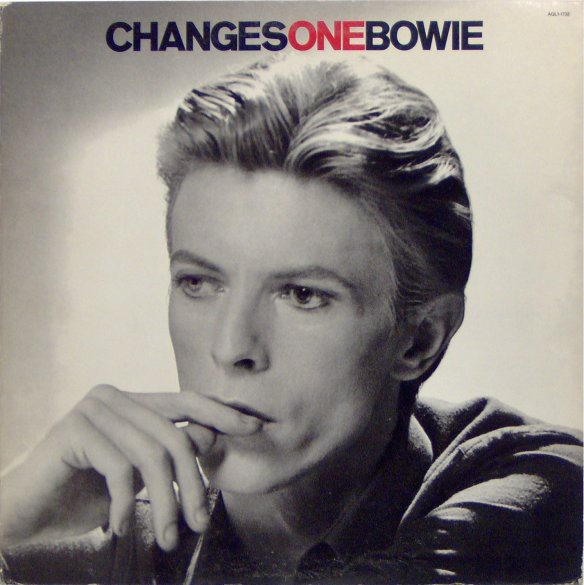
What technology would Thomas Jerome Newton have used to interpret “David Bowie Is”? (Image found here.)

To start with, I went to the “David Bowie Is” exhibition currently showing at Melbourne’s ACMI. As a retrospective on Bowie’s music career, including his dalliances with mime, theatre, fashion, videos, cut-ups, painting and film, it’s pretty comprehensive. What makes it particularly engaging is the lack of digital trickery among the exhibits: no touch screens, no VR or AR spectacular, not even a smart phone app to accompany your visit. It’s all very museum-like sedateness, well-presented artefacts, and extensively annotated displays – not surprising given the V&A provenance.

The absence of complex digital displays or an interactive/interpretive visitor experience is somewhat surprising, given that Bowie has always been an early adopter of new technologies (after all, this is the man who launched his own ISP, BowieNet, and was one of the first musicians to securitise his songwriting royalties via the so-called Bowie Bonds). Not forgetting that  Bowie was using multiple characters, personas and alter-egos long before we got around to internet avatars.

Bowie’s remarkable run of studio albums in the 1970s (unparalleled in popular music) stretched the limits of contemporary recording standards, because each LP has a distinct sonic palette, based on the careful selection of locations, musicians and studio technology. There’s even a section dedicated to some lyric-writing software that Bowie used to automate his cut-up process (which emulated the Dadaists and writers like Burroughs and Gysin). And videos for some of his early 80s songs (“Ashes to Ashes”, “Fashion”, “Let’s Dance” and “China Girl”) were MTV staples when the medium was still in its infancy. (But as the exhibition reminds us, Bowie was using the short film format as early as the late 60s.)

The only real concession to digital technology is the audio guide, which uses a personal playback device. These devices are linked to either NFC tags or wireless beacons to trigger specific music, commentary or soundtracks when the visitor is in a relevant location. Mostly it works well, and provides a collage of sounds to accompany the more significant exhibits. However, the cut-over between some “trigger zones” is a bit abrupt, even clunky, and there is nothing interactive for the visitor to explore or experience.

At the end, each visitor was given a postcard with a promotional code to download a free Bowie album. All very nice, and a great idea, but poorly executed:

  • The choice of albums is limited to his more recent studio albums, and a fairly average live album (by Bowie’s standards) – so none of those classic 70s recordings
  • The promotion is linked to Google Play and the process of setting up and downloading my account was not very intuitive, and compared to iTunes was very clunky (at least on my iMac)
  • It was not possible to curate my own personal Bowie album, which could have been fun – now, I understand the reluctance to deconstruct complete albums into individual songs, but perhaps some specially selected and Bowie-approved thematic compilations (e.g., based on his many stage and studio personas) could have provided a neat compromise?

While I liked the fact that the exhibition mainly used analogue technology, I think there was a missed opportunity to create an additional layer of interactivity, either via the audio guide, or via a separate smart phone app or website (I’m thinking of MONA’s “O Device”, the NGV’s “Melbourne Now” app, or some of the marvelous exhibition apps developed by London’s Tate Modern, the Réunion des Musées Nationaux in France, and both the MCA and Gallery of NSW in Sydney). Something for the V&A and ACMI to think about?

Then, it was a short walk across Federation Square to the Arts Centre, for a 3-day extravaganza of live events (music, dance, theatre, mixed media) collectively known as “Supersense”. OK, so I appreciate that this curated festival was all about experiencing live performance up close and in the moment – without being (dis)intermediated by any layer of technology between performer and audience (apart from some 3D glasses I wore for one mixed media show). But a festival app would have been very useful to help navigate the warren of corridors and backstage areas where the festival was held, to let visitors know when events were due to start, and to notify them when there no more seats in the smaller performance spaces.  Also, the festival website’s complicated schedule of events was impossible to read on a smart phone, so an app would have been great!

Anyway, the festival format, range of styles and mixed quality inevitably meant it was a veritable curate’s egg – the broad theme made it difficult to establish a cohesive context, and yet there were some connections and overlaps (both direct links between performers, and indirect conceptual links among the cross-cultural references and influences). Again, an app would have helped to make those connections. But the organisers (and performers) are to be congratulated for pulling off this inaugural event, and I look forward to next year’s programme.

Finally, for the culturally aware (or just plain old trainspotters) there were a number of connections to be made between “Bowie Is” and “Supersense”:

  • The performance of Brian Eno‘s ground-breaking ambient composition “Discreet Music” by The Necks and friends reminded us of Eno’s crucial role in recording Bowie’s trio of Berlin albums, “Low”, “Heroes” and “Lodger”
  • More specifically, the incorporation of Eno’s “Oblique Strategies” into the “Discreet Music” concert was very pertinent; not only did Eno use this system of random instructions when working on “Lodger”, he gave Bowie his own deck of “Oblique Strategies” cards, which are on display at ACMI
  • The festival finale by John Cale (also a sometime collaborator with Eno) included versions of “I’m Waiting for My Man” and “Venus in Furs” which he first recorded with The Velvet Underground in the 60s – and Bowie was one of the earliest artists to cover songs by The Velvet Underground in the early 70s.
  • Bowie’s early career incorporated mime, poetry and performance art, reflecting his influences and interests. In turn, thanks to the influence of cultural polymaths like him, a festival as diverse as Supersense seems perfectly natural to contemporary audiences.

Next week: Tourism – time to get digital


It’s not enough to be #disruptive – you also have to #collaborate

For most tech #startups, especially in #fintech, it’s no longer just about being #disruptive – there’s a growing realization that entrepreneurs also have to be #collaborative.

One year on from his last visit to Melbourne, Stripe co-founder John Collison was back in conversation with Paul Bassat from Square Peg Capital, courtesy of Startup Victoria and sponsors Envato, LIFX, BlueChilli, Bank of Melbourne and PwC. Previously, John spoke about the need to be “disruptive rather than incumbent”, yet it seems that Stripe’s growing success can be attributed to relationships with other providers in the payments industry, such as AliPay and VISA, plus deals with retail sites such as Catch Of The Day and RedBalloon. Oh, and it probably helps that most U.S. presidential candidates are using Stripe for campaign donations….

Stripe has already launched an SDK platform for developers, and is planning to launch StripeConnect, a market place platform. The point being, the more users (upstream and downstream) you can plug into your platform, the greater the traction, but also the deeper the collaboration. Why would you want to annoy your potential partners, vendors and suppliers?

Meanwhile, Australia is now Stripe’s 4th largest market, and close to being its 3rd largest.

Going forward, despite some criticism (e.g., it’s still not rolled out in Australia), ApplePay has huge potential. It has an estimated 800m credit cards registered with iTunes (making it 5x bigger than PayPal), and with people currently paying as little as $1.69 per song download, ApplePay could crack the market for broader micropayments (e.g., the $2 on-line daily newspaper?).

However, Stripe stills sees that there are disconnects between traditional credit card application processes, account registration forms, payment solutions, merchant set-up and downstream payments for low-value (but high volume) transactions.

Looking ahead, Collison is talking up opportunities in same-day delivery for e-commerce (hard to see this happening outside of Australia’s main metro areas – unless the infrastructure is there…), and better video-conferencing services (again, in Australia this is hampered by poor broadband services).

A few days later, and Adrian Stone from AngelCube was in conversation with StartUpGrind‘s Melbourne convener, Chris Joannou. Adrian restated the sentiment that angel investors tend to back founders rather than ideas, which can seen by some of the ventures AngelCube has backed so far, including Tablo, LIFX and CoinJar. Each venture has been successful in raising early-stage funding (despite some teething problems and much pivoting), although AngelCube itself has not yet completed an exit.

Rather like his associate Dave McClure from 500 Startups, Adrian recognizes that for various reasons, VCs are having to make smaller, multiple bets, rather than betting the farm on single or a few ideas.

Perhaps this gives further credibility to the proposition that every portfolio (including individual members in retail and industry superannuation funds?) should have a discretionary 1-2% allocation to startups, but you still need an investment vehicle or platform to screen and manage opportunities. Sadly, we see that there is still a disconnect between institutional investors and startup founders. The former are having to get bigger to reduce operating costs, yet this means they have what one friend of mine has defined as the “Allocation Gap”. And of course, founders far outnumber the available sources of VC funding. Time for a rethink on how investors can collaborate to access startup opportunities?

Next week: Cultural Overload


“I’m old, not obsolete”

In the recent “Terminator” sequel, Arnold Schwarzenegger coins a new catchphrase: “I’m old, but I’m not obsolete”. He may not be the latest android, but he has learned to adapt, he is still relevant and his purpose remains consistent. A bit like older workers, then: not ready to be consigned to the scrap-heap, consistent and reliable, and even capable of being upgraded (as Arnie is towards the end of the film).

Terminator Genisys

Remaining relevant is tough, even for a Terminator….  (Copyright 2015 Paramount Pictures)

A great deal of the discussion on employee engagement, business productivity, workplace flexibility and career transition talks about what we do with older employees, particularly those in their 50’s, who often struggle to find comparable work when they are retrenched or “restructured”.

Many 50-somethings can vouch for the fact that making a career transition into another full-time role can be extremely difficult. In my own case, I left my last corporate position just after I turned 50, and I soon realised it would be virtually impossible to find the exact same or similar permanent role elsewhere. So I embarked on a portfolio of interests (non-executive board positions, consulting work, contract roles and entrepreneurship) in order to remain “economically active”.

Over the past four years, in order to remain active, retrain and build my professional networks, I have:

  • completed the AICD Company Director course
  • served on a number of advisory and pop-up boards
  • launched this weekly blog, and written for 3rd party sites
  • coached business owners and entrepreneurs
  • competed in a FinTech hackathon and a MedTech startup competition
  • consulted in the education, public, NFP, publishing, manufacturing, technology and professional services sectors
  • joined numerous MeetUp and networking groups
  • participated in the Lightning Conference on Victoria’s StartUp Future
  • developed a new app for employee performance management,
  • trained as a presenter on community radio, and
  • become a participant and adviser at the Slow School of Business.

As part of my plan to become familiar with new technology, I have also built a side-project to record and release my own music via Bandcamp and Soundcloud, incorporating many iOS apps for which I am a beta-tester.

Not all of this activity is remunerated, yet the people I work with all tell me how much they value my unique input and original insight, and so I keep on doing it. Given the need/expectation to work longer, and the continued tinkering with tax, super and income rules and policies, I’m not sure many of us can ever think about full-time “retirement” (whatever that now means).

I’m aware that there are some ad hoc initiatives to engage older workers as mentors for new entrants to the workplace. While such projects are well-meaning, and may have some desirable benefits, they are not yet financially sustainable, and don’t address the core issue that the expectation of full-time, permanent, lifelong employment is no longer realistic, and we will all have to adapt to these new circumstances.

On the few occasions I have considered full-time roles, I am staggered that so many prospective employers seem incapable of thinking outside the box: on the one hand, they say they want diversity and fresh thinking; but on the other, they resort to the habit of appointing square pegs for square holes.

There is a real sense among many of my peers that their age counts against them, because either employers don’t believe they can learn new technology or processes, or that their previous seniority means they are only interested in roles where they can wait out their retirement, or simply “direct traffic”, rather than getting their hands dirty. Which is both insulting and demoralising. I recall one early discussion where the recruitment consultant said, “despite what the ad says, the business just wants a safe pair of hands – someone who has done the exact same role in a similar organisation for the past 20 years”. How does that support diversity, in particular, cognitive diversity?

So, my question to employers, hiring managers, industry bodies and policy-makers is: when will you truly embrace the challenge of (and opportunity for) change in your hiring and employment practices, and how do older age workers fit into your thinking (if at all)?

Next week: Startups, VC’s and Entrepreneurs