Amazon, Apple, Google: Are they the New Conglomerates?

Are Amazon, Apple and Google the new conglomerates? If so, should we be concerned that these leading digital businesses increasingly resemble ‘old school’ industrial behemoths?

The classic model of a conglomerate generally describes a holding company that either owns or has controlling stakes in a diversified range of operating businesses, often in unrelated industries.

Conglomerates largely went out of fashion in America and Europe in the 1980’s and 1990’s (following an era of acquisitions and asset-stripping in the 1960’s and 1970’s), resulting in leveraged buy-outs, spin-offs and partial IPOs, etc. as owners and investors  realised that the total value of the individual parts was greater than the amalgamated whole. Although some major cross-sectoral mergers and acquisitions did occur after this period (e.g., AOL and Time Warner, Vivendi and Universal) most M&A activity was confined to single industry players, in pursuit of market share, economies of scale and other business synergies.

Despite this trend, various types of conglomerates (grounded in the ‘traditional’ industrial model) still exist – including the Chaebol of South Korea, Japan’s Keiretsu, China’s mega-SOEs, the trading houses of Hong Kong, and the FMCG “House of Brands” that fill our supermarket shelves. The UK-based Virgin Group and India’s Tata Group  represent contemporary examples of ‘old’ conglomerates as they operate across very separate and distinct businesses and industries.

Conglomerates are usually created by a need for vertical/horizontal integration or a basic desire to build diversified revenue streams. Some build on a core competence, then find an opportunity in a seemingly unrelated field – thus a company like General Electric, with deep expertise in power generation, storage and transmission, diversified into financial services as a way to help customers fund the purchase of its products.

Sometimes, conglomerates evolve as a result of financial necessity – Canada’s Thomson Corporation (now Thomson Reuters) once owned interests in North Sea oil and gas alongside its newspapers and media companies, but then divested most of these assets to focus on its publishing businesses across legal, scientific, financial, tax and accounting information.

For a long time, it also owned a vertically integrated travel business in the UK, comprising a charter airline, a package holiday company and a chain of high street travel agents.

As it was explained to me when I first worked for Thomson in the late 1980s, the rationale for this diversification was simply a question of cashflow: most of the information businesses were subscription-based, with revenues usually collected in the 4th quarter. Although summer package holidays generated a far lower margin than the information businesses, customers paid up front – normally in the 1st quarter, and up to 6 months in advance, creating more consistent cash flows across the business.

At times, conglomerates may need to diversify into new geographic or sectoral markets to avoid anti-trust measures if they come to dominate a particular territory or industry. However, as we have seen in recent years (Microsoft, EMI, Thomson Reuters) anti-trust measures have been used to force divestment or corporate restructures, across jurisdictions and markets.

Whether they have done so by design or by default, the case can be made that Amazon, Apple and Google have become the new conglomerates. Let’s take each in turn:

Amazon – began as an on-line retailer of hard-copy books, and has since moved into sales and distribution of digital content (books, films, music, games, software); a trading and sourcing platform for a wide range of consumer products; an electronics manufacturer (Kindle); cloud computing and data hosting services; and its own branded credit cards.

Apple – originally a manufacturer of personal computers and proprietary operating systems, now a vertically integrated digital content distribution business; a bricks and mortar retailer; a smart phone manufacturer; a key platform for the capture, creation and playback of audio-visual content (with a growing presence in broadcast television); a provider of cloud services; and now exploring opportunities in the automotive sector.

Google – what was once a late-entrant to on-line search has probably become the closest of these three internet giants to being a ‘true’ industrial conglomerate. In addition to its e-mail and social network offerings, Google has developed its own mobile device operating system (Android) and web browser (Chrome), plus smart phones (Nexus) and laptops (Chromebook). It rivals both Apple (most notably in mobile phones and apps distribution) and Amazon (principally for ebook distribution), and is making inroads into Microsoft’s dominance of productivity software. Plus, with Google Cars, Google Goggles (not forgetting Google Maps, Google AdWords, the Google Books Library Project and the 2006 acquisition of YouTube), Google is clearly on a path to being a diversified technology-based business, with integrated businesses across digital content, entertainment, transportation, navigation, archiving, streaming….

Meanwhile, all three have been investing in robotics; and surely telecoms (network carriers), biometrics, renewable energy, education, health, banking and financial services can’t be that far behind.

The risks for these neo-conglomerates are that they will either lose focus, over-reach themselves, or destroy the core businesses that lie at the heart of their success. Worse, they could fall foul of anti-trust provisions if they continue to become vertically and horizontally integrated – a threat equalled only by international moves to call tech-based multinationals to account for their cross-border tax planning.

As with all empires, the fortunes of conglomerates tend to wax and wane, and while the three companies discussed here have remained close to their core businesses, it will be interesting to see how each of them ensures that they continue to add value while not stretching the boundaries of their capabilities.
Publishers’ Choice: Be a Victim, or Join the Vanguard?

I recently posted a blog about saving the Australian publishing industry, prompted by some research I was doing on government-sponsored initiatives, notably EPICS and BISG. This generated a couple of (indirect) responses, one from the Department of Industry itself, the other from a long-time colleague in the industry. More on these later.

The future of publishing - circa 2000....

The future of publishing – circa 2000….

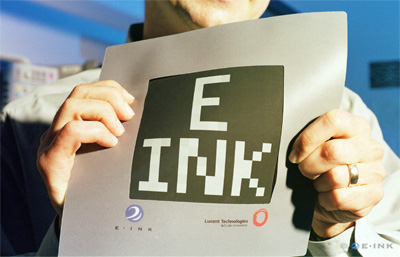
But first, some more industrial archeology, by way of demonstrating that book publishers are not shy about new technology – remember the first electronic ink? When I was working at the Thomson Corporation in the late 1990s, we were given access to a prototype version of what we would now recognise as an e-reader. It was about the size and thickness of a mouse pad but less flexible, and could only hold a small amount of data in its memory (content was uploaded via an ethernet cable). It was described as the future of book publishing, and was predicated on the idea of portability (it could be rolled up like a newspaper if the screen was thin and pliable enough), and updating it with new content whenever it was (physically) connected to a computer or the internet.

However, whatever their apparent appetite for new technology, publishers struggle to adapt their business models accordingly, or they are fixated on “old” ways of monetizing content, and locked into traditional supply chains, archaic market territories (geo-blocking), restrictive copyright practices and arcane licensing agreements; and unlike other content providers (notably music, TV and newspapers which have shifted their thinking, albeit reluctantly) the transition to digital is still tied to specific platforms and devices, unit-based pricing and margins, and territorial restrictions.

Anyway, back to the future. In response to my enquiry about the outcome of the BISG initiative, and the creation of the Book Industry Collaborative Council (BICC), the Department of Industry offered the following:

“A key outcome of the BICC process was to have been the establishment of a Book Industry Council of Australia, an industry-led body based on the residual BICC membership that would come to be a single point of policy communication with government, though following its own reform agenda in the identified areas and unsupported by any taxpayer funding. Terms of Reference and so forth were drawn up but as nearly as we can ascertain from media monitoring and contacts, the BICA was never formed. It appears the industry is waiting to ascertain what the current government’s policy priorities might be, as expressed in the outcomes of the current Commission of Audit and Budget, before possibly resurrecting the BICA concept and/or the policy issues identified in the BICC report.” (emphasis added)

My read on this is that the industry won’t take any initiatives itself until it knows what the government might do (i.e., let’s wait to see if there are any handouts, and if not, we can plead a special case about the lack of subsidies/protection and the threat of extinction…).

This defeatist attitude is not just confined to Australia – my former colleague recently attended the 2014 Digital Book World Conference in New York. He commented:

“I was disappointed to see the general negativity of the publishing industry and the “victim” like mentality – also the focus on the arch-enemy – AMAZON! I see great opportunities for content – but companies have to get their head around smaller micro transactions and a freemium model. Big publishers are “holding on” to margins – it’s a recipe for disaster – [but] I think we can become small giants these days.”

There are some signs that the industry is taking the initiative, and even grounds for optimism such as embracing digital distribution in Australia, moving to a direct-to-consumer (“D2C”) model in the USA, and new approaches to copyright and licensing in the UK.

The choice facing the publishing industry is clear: continue to see itself as a victim (leading to a self-fulfilling prophecy of doom and extinction), or become part of the vanguard in developing leading-edge products and services for the digital age.

When Less really is More

I’ve been doing some home renovations recently, which meant that my kitchen was out of action for several weeks, giving me an excuse to visit a number of local restaurants for the first time. This experience made me realise that as with most other things in life, when it comes to restaurant menus, less is definitely more – the fewer the items, and the simpler the design, the more likely I will enjoy the meal.

At the risk of drawing a very long bow, I see there is a lesson here for anyone involved in product development, content marketing, or service-based solutions: the more choice we lavish on our customers, the more likely we are to confuse or overwhelm them, and ultimately disappoint or even lose them as customers.

As consumers, we are increasingly accustomed to having multiple and seemingly endless choices. While this can make for healthy competition (as long as it can support and sustain market efficiencies), sometimes the fewer options we have the more invested we are in our decisions.

In the case of a restaurant menu, having fewer choices is actually a good thing – either because we are more likely to think carefully before ordering, or because we are being guided to choose between items that have been purposely selected and assembled (curated?) by the chef. Plus, if we make a wrong or poor decision, there may be less to choose from the next time!

So, I found I really appreciated menus that had only 2-3 entrees, no more than 4 main dishes, and a discrete dessert selection. (OK, so the wine list can know no bounds….) Also, if the maitre d’ or waiters have to spend too much time explaining the menu structure, then it tells me more often than not that the restaurant hasn’t got it right.

When you think about it, the notion of “less is more” makes complete sense in this context:

  • If a restaurant has too many items, then not all of them can be of equal quality – how can the kitchen specialise in such a wide variety of dishes?
  • The best ingredients are usually those in season, and preferably locally sourced – which should be a natural constraint on the menu selection
  • Faced with limited choices, there is actually less risk of “menu anxiety” – whereas, agonising over a long list of dishes, or spending time ploughing through an over-elaborate menu can actually diminish the appetite…

I would also be more willing to let the chef decide for me, because a more focused menu should mean that the restaurant is more able to play to its strengths – this concept of the chef as curator should sit at the heart of product portfolios, content selection strategies and customer service options, while still making the customer still feel they have made an informed choice or purchasing decision.

Over the years, I have had the privilege to dine out in major cities and tourist destinations around the world. Some of the most memorable dining experiences I have had usually come down to a specific dish served in a particular restaurant – local speciality, seasonal ingredient, signature recipe, etc. – to which I have often gone back for more because it created such a lasting impression first time around, and because I know my choice will never fail to disappoint. (Of course, there is also the Proustian echo of associating food with a significant time or place….but let’s not over complicate the theory.)

If only everything else could be as reassuringly simple and consistent as a well-designed menu and a well-prepared meal.

From student hacker to start-up mogul – an audience with Jonathan Teo

“The man with the Midas touch…”

Jonathan Teo, tech VC with a Midas touch, has been back in Australia recently, and found time to stop by Lean Startup Melbourne for a Q&A with Michelle Bourke in front of an audience of 350 members of the local startup scene.

With a track record that includes Twitter, Instagram and Snapchat in his portfolio of start-up investments, Teo is obviously someone who deserves to be taken seriously, but the candour and humility with which he talked about his experience made for a very down-to-earth evening with such a high-profile investor.

As usual, the event was hosted by Inspire9, with generous support from Kussowski Brothers, Startup Victoria, Products Are Hard, BlueChilli, Investors’ Organisation, Startup Weekend and National Australia Bank.

Teo’s backstory has been told elsewhere (childhood in Singapore, college in Sydney, post-grad at Stanford, Google engineer, venture capitalist…) but the combination of having a great mentor, working in the (then) emerging technology of cloud computing, and some “right time, right place” good fortune has provided him with a powerful platform from which to join the upper echelons of silicon valley VCs.

“The Secrets of My Success”

Naturally, people wanted to know the key to his investing success. Rather than referring to some “special sauce”, Teo pointed to some simple principles:

  • Relationships – strong relationships are essential, both within the founding team, and across the right networks and insiders
  • Self awareness – many founders don’t see their own capability gaps, and therefore can overlook inherent weaknesses in their business
  • Key metrics – know what run-rates the business needs to achieve to meet its performance goals (cash burn rate, retention levels, acquisition costs, daily and consecutive customer usage)

In particular, Teo stressed that new distribution models form the lens for assessing new investment opportunities.

“Show me the money!”

During a discussion about bringing in investors, Teo was pretty sanguine – what works for some start-ups, won’t work for others. If you can self-fund, then do so; if you do need to tap external funding, start with friends and family (who will generally be more patient than professional investors); and if you have to bring in VC’s, make sure you know the trade-offs. He also suggested that crowdfunding is great for consumer plays, but ultimately valuations are determined by demand.

“New Thang”

When asked where “the next big thing” was going to come from, Teo was understandably coy (or simply discreet), and politely suggested it could emerge from somewhere in the audience. What he did offer were some thoughts on emerging trends that will influence future start-ups:

  • Fewer mass-market consumer products – according to Teo, “only China can support a purely domestic consumer play”
  • Less focus on patents, more emphasis on survival – not that IP isn’t important, just that the cost and effort of securing patents mustn’t outweigh the need to generate revenue in the early stages
  • Content niches – unique content is key to attracting advertisers and subscribers, and when combined with rich user data makes for compelling communication and network apps
  • The human touch – products that bring a more human digital experience will gain traction

Finally, Teo predicted the growth of disposable hardware – not sure I agree with this one, but I understand what he is getting at. Personally, I’d be more interested in recyclable hardware, and greater user-serviceable and customisable components.

Declaration: Thanks to the hosts and sponsors, I along with everyone else enjoyed the bounteous gift of free pizza laid on by the organisers.