The arts for art’s sake…

Last week I wrote about the importance of learning coding skills. This prompted a response from one reader, advocating the teaching of STEM (science, technology, engineering and maths) in schools: “Coding and the STEM subjects are our gateway into the future.” I would agree. But, as other commentators have noted elsewhere, we also need to put the A (for art) into STEM to get STEAM to propel us forward….

Equivalent VIII (1966) Carl Andre (b.1935) Purchased 1972 http://www.tate.org.uk/art/work/T01534

Equivalent VIII (1966) Carl Andre (b.1935) Purchased by Tate Gallery in 1972 http://www.tate.org.uk/art/work/T01534

I recently attended a talk by renowned arts administrator Michael Lynch, as part of the FLAIR art event, where he expressed frustration at the state of the arts in Australia, the lack of a public arts policy, and the associated cuts to government funding. It can’t help that from John Howard onward, we have had a sequence of Prime Ministers who, while not total Philistines, have shown little enthusiasm, appetite or appreciation for the arts. And during Q&A, Mr Lynch referenced the conservative and “safe” nature of so much arts programming as evidenced by the lack of risk-taking and the stale and over-familiar choice of repertoire, although he did acknowledge some arts organisations were doing exciting work.

The debate then shifted to whether we need a new method to evaluate the benefits of a strong arts sector that is not purely dependent on economic terms or financial performance. It was not possible in the time available to come up with a suitable indicator, but I suggest we can derive a range of benefits from putting more emphasis on teaching, supporting and sponsoring the arts. This RoI might be measured in such terms as the following:

  • Enhancing creativity among students will benefit individual problem-solving skills and collective innovation;
  • A healthy arts scene is indicative of a balanced, self-assured and progressive society;
  • Participating in the arts can give people a sense of confidence and well-being;
  • Through art we can learn about culture, philosophy and history – especially of other societies;
  • Giving people the means to express themselves through art is an important outlet for their skills, talent and interests.

We agonize about the amount of investment in our Olympic athletes in pursuit of gold medals, and whether the money can be justified (goodness – Australia only just made the top 10!)  But no-one (yet) has suggested it’s not worth doing, even if we don’t win as many medals as is often predicted. And of course, together with the wider popular entertainment industry, professional sports attract more dollars, airtime and support through sponsorship, advertising, broadcasting rights, gambling revenue, club memberships and merchandise than the arts could ever hope to.

Part of the challenge lies in the popular notion that arts are either elitist, worthy, self-important, or simply frivolous – which makes it harder to build an economic case for the arts, but which can also lead to the worst kind of cultural cringe. Also, if the arts are really doing their job, they hold up a mirror to our society, and we may not like what we see. Populist politicians can’t afford to be associated or identified with such critiques – either as the targets or as de facto protagonists – so would they rather be seen shaking hands with gold medalists (or attending a Bruce Springsteen concert…) than maybe attending a cutting-edge performance by The Necks?

Next week: The latest installment of Startup Victoria pitch night

Moving #innovation from “permitted” to “possible”

As the dust settles on the Federal election results, the Turnbull government has already been taken to task for failing to get one of its key messages across to the public: how to take advantage of the economic, technological, scientific, social and cultural opportunities inherent in the “Innovation Agenda”.  It seems that the so-called “Ideas Boom” failed to resonate with much of the electorate because, apparently, no-one has explained to them how innovation actually impacts their lives.

Screen Shot 2016-07-18 at 8.39.24 PMUnfortunately, I think it goes deeper than that: the recent campaign debates were limited to concepts of “traditional” job-creation; reliance on conventional relationships between the State, the private sector and individual citizens; and the priorities of (pre)serving the interests of public institutions such as 3-year Parliaments and even political parties themselves. The electorate may (perhaps rightly) feel short-changed by the level of the debate, but voters also need to take some responsibility for not challenging candidates to raise their game: where were the mainstream discussions on climate change, new technology, the future of “work”, digital disruption, scientific advances, and the changing attitudes towards end of life?

There is also a core misconception, that the government is responsible for fostering  innovation, that only public policy (and public resources?) can set the innovation agenda. I don’t believe it is the role of government to “make it happen”, and certainly, such an approach is not going to occur overnight. At best, government can create a framework, highlight best practice, and encourage appropriate activity. Just as I don’t think you can “teach” creativity (only identify, support and nurture it), I don’t think innovation is something to be determined from the outside. As with creative inspiration, innovation has to come from within: from employees, from customers, from suppliers, etc.

The risk of relying solely on governments or other vested interests to shape innovation is that our thinking becomes constrained by what is “permitted”, rather than what is “possible”.

On a related theme, it was refreshing to listen to a panel of speakers at a seminar on “Innovation from the inside out” held during Melbourne Startup Week. The key messages were:

  • how to instill purpose in any organisational change, business transformation or innovation project;
  • how to empower all levels of an organisation to make ideas happen; and
  • how to incentivize intrapreneurship?

This naturally leads to a discussion of developing more adaptable and resilient career paths. If you don’t have transferable skills, or if you not prepared to update your knowledge, or if you think of your career path as a straight linear projection, it will be much harder to cope with the demands of a flexible work environment. If you think of yourself as only ever performing a specific job function, or identify only as your profession or job title, or define yourself only by your formal qualifications, you will only ever think about what roles you may be “permitted” to perform, rather than seeing what career opportunities may be possible. As a careers adviser in the Victorian Government’s Skills and Job Centre network told his audience at a recent Small Business workshop: it’s not the responsibility of the government or your employer to manage your career. Notwithstanding upskilling initiatives and structured outplacement programs, we are each responsible for shaping our own destiny – especially in the increasingly on-demand economy.

Back to the main topic, I’ve been participating in a series of workshops on the Future of Work, Money, Ageing, Death, Democracy etc. hosted by the Re-Imagineers, an on-line ideas playground that builds co-created artifacts to support people-led innovation. The model is designed to help organisations draw on insights from their in-house knowledge and skills, customer experience and feedback, and external expertise to originate new ideas and innovative solutions from within their own resources, and which align with their values and those of their stakeholders. It’s still early days, but all of the discussions have identified some amazing ideas and possibilities.

The team from Re-Imagineers will be visiting Australia during July and August, so if you or your organisation would like to hear about the key learnings from these forums, especially as they impact sectors such as finance, health care and IT, please contact me via this blog, and I will make the relevant introductions.

Next week: Update on the New #Conglomerates


Field report from Melbourne #Startup Week

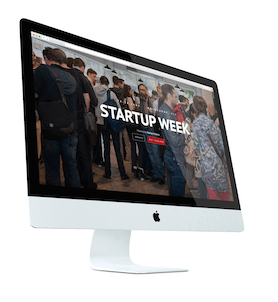
The third Melbourne #Startup Week has confirmed Startup Victoria‘s pivotal role in supporting local entrepreneurs, founders, startups and anyone interested in innovation and disruption. Over the next few posts, I will be commenting on some of the events I attended. Meanwhile, here is a brief summary of the key themes that emerged.

Screen Shot 2016-06-26 at 1.43.16 PMFirst, there is a continued shift from B2C and 2-sided markets, to B2B and enterprise solutions among the startup pitches I saw. Medtech is also getting some renewed attention, as are XaaS business models. And of course, there has to be scale in the idea.

Second, nearly all of the feedback from the judges at the pitch events centred on “why you?” –  What makes your idea different to the competition? What is the problem statement? Where are the solution proof points?

Third, there was an interesting session on “innovation from within” and the rise of intrapreneurship. There were also discussions on whether (and how) aspiring founders should leave an existing job to embark on a startup project, and how to navigate an entrepreneurial career. (More on this to follow.)

Fourth, the notion of “disruption for disruption’s sake” is being challenged – it’s not enough to be disruptive, there has to be substance (and purpose) to back it up.

Fifth, the use of design thinking, human-centred design and CX mapping in fostering creativity is breaking through to large corporations, but it is just one of many available innovation techniques – without context and framing, it can simply become a process.

Finally, I heard very little (in fact, absolutely nothing) about the role of government(s) in fostering innovation and entrepreneurship, and in supporting startup founders – notwithstanding LaunchVic, and the National Innovation & Science Agenda. Maybe there is so much election campaign fatigue that the startup community has already discounted the impact politicians (of any persuasion) can have on their business aspirations. Certainly, the numbers of Gen X and Gen Y attending some of last week’s events is testament to how engaged younger citizens are in finding purpose through the type of work they do (and what sort of organisations they work for), that they are less focussed on securing a “job”, and more concerned about building a career.

Next week: Level 3’s Enterprise Pitch night

ASIC’s new regulatory sandbox for #FinTech #startups

Last week, ASIC published its eagerly awaited public consultation paper on the so-called FinTech regulatory sandbox. ASIC Commissioner, John Price and his colleague Mark Adams launched the paper at a special meeting of the FinTech Melbourne group, hosted by KPMG. There was also participation by FinTech Australia represented by its new CEO, Danielle Szetho, and by the Digital Finance Advisory Committee, represented by Deborah Ralston.

sandbox-295256The Commissioner was at pains to stress that, notwithstanding the developments within FinTech, and ASIC’s contribution via the Innovation Hub, the primary focus of the regulator is to “promote confident and informed consumers and investors, and to promote fair, transparent, orderly and efficient markets”.

To reiterate the point, Mr Price stressed that while the Innovation Hub is designed to help FinTech startups navigate the regulatory system, as well as reducing red tape, there should
be no compromise in ASIC’s fundamental regulatory and licensing regime.

ASIC will continue to adopt what it calls a modular approach to licensing and regulatory oversight, that includes: the ability to operate as a representative of an existing licensee; a focus on organisational competence; and the use of waivers and the “no-action” policy and decisions.

However, ASIC recognises the issues and barriers to entry that face some FinTech startups such as speed to market (a function of technology outpacing compliance?) and organisational competence (do firms need to hire in these skills and/or provide specific undertakings to that effect, or can they make use of third-party resources?). In ASIC’s view, by helping firms to reduce the time to market and to enhance their organisational competence, FinTech startups will be able to overcome the further barrier of access to capital. But there still needs to be acceptable consumer and investor outcomes, and efficient markets.

The proposals include additional guidance and discretion on organisational competence, and a limited license model that makes use of third parties as an alternative to establishing in-house organisational competence from day 1 (e.g., using an accounting firm as an external reviewer or sign-off), and limited exemptions during a defined test phase, yet still subject to some constraints to maintain a balance.

To clarify, ASIC currently exercises its discretion when assessing organisational competence based on the nature of the financial services and financial products to be offered, and the collective knowledge and skills of the people in the business. Under the proposals, the limited license will offer some additional flexibility to heavily automated business services and models, whereby the business can rely on professional third-party sign-off for compliance plans.

The sandbox exemptions will only be available to new Australian entities (to focus on startups) and only for a 6-month duration. It will be confined to certain financial services only – such as providing advice and arranging transactions. It will not include market making, and consumer protection will remain paramount. Once the limited license has expired, companies will either be instructed to cease operations, become an authorised representative of an existing licensee, or submit a full license application.

Other restrictions on the sandbox exemptions mean that applicants must be advising or dealing in liquid products (equities, managed funds and deposits), so not superannuation, insurance or derivatives. There will also be a cap on the number of investors (e.g., 100 retail clients), and on individual exposures (e.g., $10,000 per client), with an overall cap of $5m (but possibly unlimited in respect to wholesale clients?).

Participants must demonstrate they have adequate compensation arrangements, such as holding appropriate professional indemnity insurance and participating in an external dispute resolution process. They must also operate under core conduct and disclosure principles (e.g., disclosing trailing commissions).

There is some thought that sandbox participation could be “sponsored”, by third-party advisers, startup hubs or venture capital funds. This would operate on a “no liability” basis, and would primarily offer a preliminary health check of the FinTech applicant’s proposed business model. Above all, there will need to be adequate notification and reporting requirements, including a feedback process.

When comparing these proposals to what some international regulators are doing, ASIC believes they are more progressive than their counterparts. The UK is adopting a restricted licensing model, the US is using a “No action” process (more focused on credit providers?), and Singapore has recently announced a hybrid sandbox proposal.

During the Q&A session, the following issues were aired:

  • Is ASIC in favour of mandatory client recording? No, it will continue to rely on industry best practice
  • Is general insurance included in the sandbox? No, ASIC is not looking at risk-management products to be part of the exemptions.
  • If incubators and/or VC’s are able to be sandbox “sponsors”, how will ASIC deal with potential bias? ASIC says it is alert to practices such as unreasonable “fees”.
  • Would a new entity or product from an existing authorised representative be able to access the sandbox? It wasn’t clear whether this would be covered, but presumably not if it did not meet the “new business” requirement?
  • Would the sandbox be available to non-financial services co-creating products for existing AFSL holders? Again, it wasn’t clear – but if it was a new business applicant, presumably it would. (This also raised the issue of “mature” businesses using disruptive or outsourced services as a way to access the sandbox.)
  • ASIC will encourage companies to apply for a full license prior to end of the six month test, to ensure timely compliance
  • What will happen as a result of people playing in the sandbox? Clearly, ASIC has a vested self-interest in learning about and getting exposure to innovation, but it needs to demonstrate a pro-active and efficient approach.
  • What are the key criteria for the sandbox exemption? ASIC does not have a prescriptive approach (subject to the sandbox restrictions), so it will look at each application on its merits (e.g., short vs long-dated products, simple vs complex, retail clients vs wholesale), and focus on the financials, the organisational competence, and the business model. And obviously, experience counts.
  • Timing of the sandbox? ASIC hope to see it operating by the end of September (Responses to the CP260 are due in by July 22).

Subject to the consultation feedback, there seems to be general industry consensus that the sandbox proposals are to be welcomed. But there are still some grey areas, as evidenced by the Q&A, and nowhere did I here anything specifically relating to the new emerging class of programmable currencies and other digital assets, many of which are pushing the regulatory boundaries, as well as disrupting traditional markets. And with current equity crowdfunding proposals stuck in Parliament, nothing happening there either.

(For some other responses to Consultation Paper CP260, check the following articles:

http://m.smh.com.au/business/banking-and-finance/asic-to-build-fintech-startups-a-regulatory-sandbox-to-test-ideas-20160608-gpe4l7.html

http://www.financialobserver.com.au/articles/fintechs-welcome-regulatory-sandbox-proposal

http://www.fintechaustralia.org.au/#!Why-the-Fintech-Regulatory-Sandbox-is-a-Game-Changer/ll9ed/5757cd8f0cf245cf71a32089)

Next week: Customer service revisited