Top 10 Gigs – revisited

Last month, I listed my Top 10 gigs of all time. Even as I wrote that blog, I knew I would probably change my mind soon after. Rather than trying to re-work those choices, I’ve decided to recall some of the more significant concerts I have attended – not necessarily the best performances, or even my favourite bands, but simply those that have had left a lasting impression.
In no particular order:

Magazine – London 1979-80

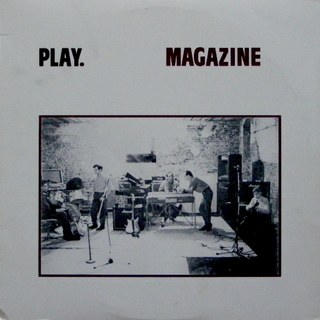
One of my favourite bands of the post-punk era. I saw them on their 1980 tour that eventually gave us “Play” – one of my favourite live albums. Although the London show I saw was good, by the time the band got to Australia, they were at the top of their game, and “Play” was recorded at Melbourne’s Festival Hall. Part of me hopes that the band will re-form to celebrate the 40th anniversary at the same venue…. I met Howard Devoto a couple of times in the mid-80s, including at the bar of the Hacienda in Manchester, and at a party in London where we talked about the prospect of doing jury service (very Kafka-esque).

Sex Pistols – Tokyo 1996

I got a free ticket (thanks, DQ) to see the Pistols on their 20th anniversary “Filthy Lucre” tour, at Tokyo’s Budokan stadium in November 1996. Apart from the sight of seeing 15,000 Japanese fans (many of whom probably weren’t even born when the Pistols were at the height of their notoriety) singing along to “Anarchy”, the concert is memorable because I went drinking with the band afterwards at a Tokyo night club, and got talking to bassist Glen Matlock. Many years later, I bumped into Glen again at a Melbourne cafe, and ended up seeing him play in Robert Gordon’s backing band along with Chris Spedding and Slim Jim Phantom at the Richmond Corner Hotel.

Kraftwerk – Hong Kong 2008

Kraftwerk have a great sense of location when choosing their tour venues. In 2008, they played the AsiaWorld-Expo trade show hall at Hong Kong International Airport, giving added context to the performace of their single, “Expo 2000”.

Diamanda Galás – Sydney 2001

Something of an acquired taste, Diamanda Galás also manages to create a sense of occasion whenever she performs. I first saw her in London in late 1994 when she was touring with John Paul Jones, former bass player for Led Zeppelin. At Sydney Opera House, she performed solo, and filled the venue with her six-octave vocal range.

Radiohead – London 1993

According to the online archives, this concert was at the Town & Country Club in March 1993, a month after they released their debut album, “Pablo Honey”. Although their single, “Creep”, hadn’t yet achieved chart success, it was clear that they were on their way to star status, given that for this gig they were “merely” the support act.

Sonic Youth – London 1985

In November 1985, Sonic Youth played the final gig of their “Bad Moon Rising Tour” at London’s Bay 63 – aka Acklam Hall – a former community centre underneath the Westway. I remember that they came on late, complained about the lights being too bright, and then ripped into an almost non-step set that culminated with “Expressway to Yr Skull” (also known as “Madonna Sean And Me“), the standout track from their 1986 album, “Evol”.

Philip Jeck – London 1993

This was more of an art installation piece than a gig, featuring the work “Vinyl Requiem” performed at the Union Chapel. Incredibly moving, and I have since seen Jeck perform a similar (but much smaller) work at Melbourne’s The Toff in Town venue.

Air – New York, 2007

As part of the Highline Festival curated by David Bowie, Air played a rare gig at Madison Square Garden. I was struggling with jet lag, but the experience of hearing their lush electronic music in a concert setting was well worth it. Featuring some of their soundtrack work for Sofia Copolla – “Virgin Suicides”, “Lost in Translation” and “Marie Antoinette” – sealed the deal.

Orange Juice – London 1985

This last ever performance by Scottish band Orange Juice, in support of striking miners, was nearly derailed by the egos of the other bands appearing that night. Despite their industry status, they agreed to go on first, only to announce the band was splitting up. I later saw Edwyn Collins performing a solo show at the Sports Bar at Hong Kong’s stadium in Happy Valley, on the back of his hit “A Girl Like You” in 1995.

James – Manchester, 2001

Another gig where I was struggling with jet lag, this was an emotional homecoming by one of the city’s favourite bands. It was also supposed to be their farewell concert, as they had announced they were calling it a day. (They reformed in 2007…). The final numbers, “Come Home” and “Sit Down” were particularly poignant. My sister also got credited on the DVD, as at the time she was the Stage Manager at the Manchester Arena.

Next week: Top Gigs – Favourite Venues
You said you wanted a revolution?

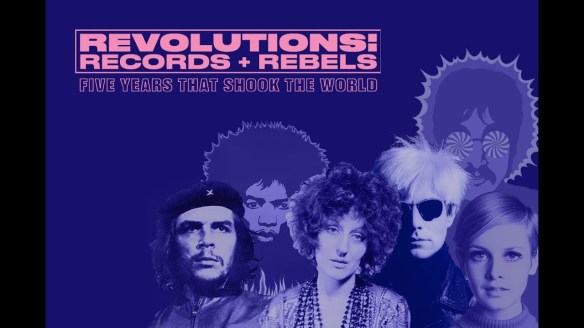
In terms of popular music and the “revolutionary” counter-culture, the Hippie Dream was born during the Summer of Love in 1967 (Haight-Ashbury to be precise) and died in December 1969 (The Rolling Stones’ concert at Altamont). The tipping point was probably The Beatles’ “White Album” released in 1968, featuring “Helter Skelter” and “Revolution 9”. Along the way, we had the “14 Hour Technicolour Dream (April 1967); the Monterey Pop Festival (June 1967); the first Isle of Wight Festival (August 1968); the Miami Pop Festivals (May and December 1968); Stones In The Park (July 1969); oh, and Woodstock (August 1969). From visiting the current “Revolutions: Records + Rebels” exhibition at Melbourne Musuem, the most significant outcome from this era was Woodstock, even though it came close to being a self-inflicted human, environmental and logistical disaster. It was only saved by a combination of the emergency services, the military, local residents – and sheer luck.

This ambitious and uneven exhibition spans the years from 1966 (The Beatles’ “Revolver”, The Beach Boys’ “Pet Sounds”, and Bob Dylan’s “Blonde on Blonde”) to 1970 (Deep Purple’s “Deep Purple in Rock”, Black Sabbath’s “Paranoid”, and The Stooges’ “Fun House”). Despite covering the peak psychedelic era of “Sergeant Pepper”, “Their Satanic Majesties Request” and “The Piper At The Gates Of Dawn”, the exhibition leaves you with the impression that Woodstock is the only enduring musical or cultural event from this time. Yet, the music portrayed in Woodstock is far from revolutionary – being mostly a bland collection of highly-derivative (and by then, almost passé) rock, blues and folk.

It almost feels like the curators of this exhibition set themselves up for failure. By trying to cover such a broad spectrum of political, social, economic and cultural themes, and then view them primarily through the rather narrow lens of popular music, the net effect is a grab bag of museum artifacts assembled with little coherence, all accompanied by a rather insipid soundtrack selection.

I’m not doubting the importance and lasting significance of the topics included (civil rights, peace movement, feminism, class war and gay liberation) – but the attempt to tack on some Australian relevance almost backfires. Let’s not forget that homosexuality was not decriminalised in Tasmania until 1997, and abortion is still not decriminalised in NSW. In fact, Australia was possibly more progressive on some issues in the early 1970s (anti-Vietnam War, ecology, feminism) than it is today with the current resurgence of populism, nationalism and religious conservatism.

Anyway, back to those “Records + Rebels”. I was surprised there was nothing about the radical developments in jazz or improvised music by the likes of Miles Davis (“In A Silent Way, “Bitches Brew”), The Art Ensemble of Chicago and Ornette Coleman, or labels like ESP, BYG and ECM. Absent also was any reference to the mod and early skinhead movements that were the antidote to hippiedom, embracing soul, r’n’b and reggae music. No mention of Soft Machine (who were contemporaries and colleagues of both Pink Floyd and Jimi Hendrix). Very little significance given to The Velvet Underground (probably the most influential band of the era in terms of inspiring the music that came after the hippie dream dissipated). And where were the likes of Can, Tangerine Dream, and Kraftwerk (their first album came out in 1970….) to represent the German rejection of traditional Anglo-American rock and roll?

On a somewhat depressing note, apart from Woodstock, two of the other enduring “brands” of this era that were on display were Richard Branson’s Virgin empire, and Time Out magazine…. So much for the Children of the Revolution.

Next week: Top 10 Gigs – revisited.


My Top Ten Concerts of All Time

Yet another musical interlude this week….

Reflecting on last week’s blog, I attempted to compile a list of my Top Ten concerts of all time – no mean feat, given 40+ years of attending gigs. And like any such list, if you ask me next year, or even next week, the choices would be different. So, here they are.

Image sourced from Songs Smiths

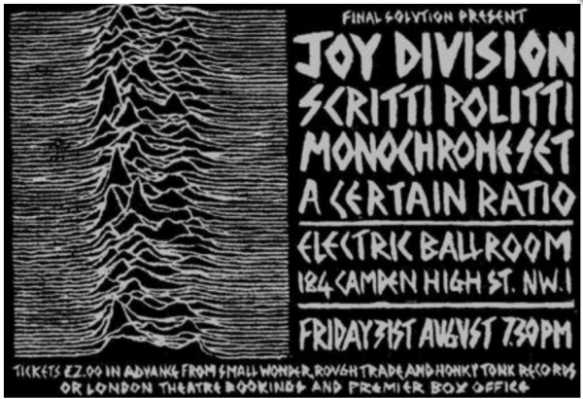
#1: Joy Division, Electric Ballroom, London, August 1979

Not the best gig I saw them play (that was at The Lyceum in February 1980, where they previewed “Love Will Tear Us Apart”), but my first live encounter with Joy Division. It’s now 40 years after the release of their debut album, “Unknown Pleasures” (one of the most influential albums from the post-punk era), but I can still recall the power of this particular performance. (It was also the first time I had seen any of the support acts – see poster, above – all of which have continued to be part of my chosen listening.)

#2: Talking Heads, Electric Ballroom, London, December 1979

The tail end of the “Fear of Music” tour (one of my favourite albums of the ’70s), and also one of their last performances as a 4-piece band. Captured for posterity via a mixing desk recording, the concert was also notable for an early performance by a relatively unknown U2, with additional support by the 2-piece OMD (plus Winston, the reel-to-reel tape recorder).

#3: Pixies, Mean Fiddler, London, April 1988

Incredible, visceral performance, and their first gig outside the USA. It felt like the cream of London’s independent music scene turned up, scarcely imagining they would witness a piece of rock history. Finishing with their version of David Lynch’s “In Heaven (Lady in the Radiator Song)” from “Eraserhead” was a nice touch after the intensity of the previous hour. (A live version recorded a few weeks later on that same tour was released as part of their first EP.)

#4: New Order, Glastonbury, June 1987

My first (and last?) time at Glastonbury. Typical of an English summer, it had rained for days before the event, turning the festival site into a mud bath. There was even a temporary lake, where the anarcho-hippy-punks took pleasure in creating sculptures out of abandoned vehicles, and then setting fire to them, as a tribute to The Wicker Man… Into the midst of these night-time neo-pagan ceremonies appear New Order, at the height of their electronic powers, complete with laser show. Also captured on album (without the lasers).

#5: Elvis Costello, Glastonbury, June 1987

Glastonbury that year was also the setting for a captivating performance by Elvis Costello & The Attractions, who were at their peak after a 10-year run of (mostly) classic albums. After testing the patience of even his long-term fans with a lengthy solo set (including a particularly overwrought version of “I Want You”), Costello pulls off a major coup by whipping off the stage backcloth, revealing the waiting Attractions, and leading them into a storming version of “I Hope You’re Happy Now”, followed by a cover of Abba’s “Knowing Me, Knowing You”.

#6: Bjork, Queen Elizabeth Stadium, Hong Kong, February 1996

I’d seen The Sugarcubes in the wake of their minor hit, “Birthday”, but soon lost interest in their music after that. Bjork as a solo act was a whole different phenomenon. On this tour, she pushed the electronic side of her music, as featured on her second album “Post”. If there was any doubt about her status as a global star, towards the end of this concert she was joined on stage by Goldie who presented her with the Brit Award for Best International Female Artist, which she had won for the second time.

#7: Kraftwerk, Metro Nightclub, Melbourne, January 2003

Ahead of their first new album in 12 years (17 years, if you exclude “The Mix” re-workings), in January 2003 Kraftwerk began touring again, after a hiatus since the late ’90s. As part of the warm-up for their Australian summer festival shows, they made this one-off club appearance, complete with their new stage design. This tour led to the spectacular “Minimum-Maximum” live album and DVD.

#8: R.E.M, Hammersmith Palais, London, October 1985

Three albums into their career, and R.E.M were still treating audiences to a wealth of carefully curated cover versions, revealing their influences and their personal tastes. This concert was no different, including tributes to Marlene Dietrich, Aerosmith and Television (although I wish I’d also seen the previous night’s gig with covers of Tom Jones, Creedance Clearweater Revival and Golden Earring).

#9: Tindersticks, Corner Hotel, Melbourne, November 2002

Tindersticks are a sublime live experience, as evidenced on their numerous concert recordings. I’d managed to see them early on in their career while I was still living in London, so it was a pleasure to experience them in the relative intimacy of my local pub, the Corner Hotel in Richmond, on what was possibly their first Australian tour. (If anyone knows of a recording of this gig, please let me know….)

#10: Low, Corner Hotel, Melbourne, June 2006

Low were a band I stumbled on by accident, when I bought a copy of their first album shortly after I moved to Hong Kong at the end of 1994 – I didn’t have any music with me while my stuff was in transit (and I was having withdrawal symptoms), and the album sleeve looked intriguing. It’s still one of my favourites in their catalogue. I recall they played a stunning version of “Monkey”.

Next week: Startup Victoria – Best of the Startup State Pitch Night


The Pleasures of Melbourne Recital Hall

Another musical interlude this week.

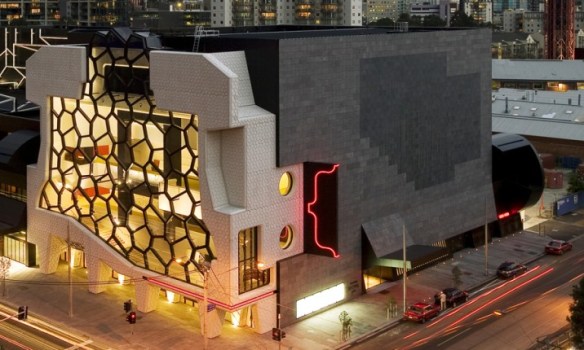
This year marks the 10th anniversary of the Melbourne Recital Hall, one of the best venues for live music, thanks to its acoustic design and sonic ambience. I have seen a number of events there – chamber music, jazz, vocal, electronic, avant garde and contemporary classical – and the sound quality is invariably superb. Not all the programming works (a few of the support acts I have seen feel like they are trying too hard – maybe the sense of occasion has overwhelmed them?), but it’s a valuable addition to Melbourne’s cultural landscape. In recent months, I have seen a number of singularly powerful concerts, but each of them very different.

First was Julia Holter, who for me is one of the most interesting and more compelling singer-songwriters of the current era. I had seen her on her previous Australian tour (at a club venue), but I was still unprepared for her latest performance at the Recital Centre. Although she composes and writes all her own songs, Holter relies on the interplay between her close-knit band of backing musicians to give dynamic life to her music, as she leads and plays keyboards from the front. Her singing voice is a particularly striking instrument, and unlike many of her contemporaries she doesn’t “over sing”. She avoids the annoying habits of histrionics and over emoting, or resorting to vocal gymnastics and sterile vocalisations that many singers deploy to compensate for a lack of depth, warmth or soul. Rather she lets her natural and sometimes low-key voice stand in its own right, and when unleashed in the space of the Recital Centre, it really fell like she was “playing” the venue, as an extension of herself. At one point, just as the band launched into another song, Holter stopped abruptly – turned to the double-bass player and asked, “Wait, was that really the F?” because she thought he had come in on the wrong note. Despite being a seasoned performer, it seemed that she had never really “heard” her own music that way. It was clear that this experience inspired her to go even further, but there was nothing forced, contrived or artificial about her performance.

Next came Grouper, probably the most introverted live performer I have ever seen. As a solo artist, Grouper clearly does not fully relish being the centre of attention. The stage was already very dimly lit as she come out to perform, but she immediately asked for the lights to be dimmed even further. Using piano, guitar, electronics and effects Grouper proceeded to play a continuous series of mainly instrumental pieces, with no audience interaction or between-song patter. This was live music as pure performance. It was also incredibly soporific – OK, so I was a bit jet-lagged, but it was like listening to music designed to put you to sleep, and I’m sure I was not alone in the audience in drifting off. There was a palpable stillness in the auditorium that we rarely experience in our “always on” and digitally intermediated world. It was also (ironic?) confirmation that we need these sorts of experiences to recharge our own batteries.

Finally, Hauschka played a non-stop sequence of pieces for prepared piano and electronics – for around 80 minutes, despite suffering his own jet-lag, he mesmerised with the intense but fluid dynamics of his playing style, complemented by some simple but highly effective lighting design. In complete contrast to Grouper, he prefaced his performance with a 10-minute spoken introduction, where he commented on the ways he deals with life on the road as a musician (including the jet-lag), the context for his recent work, and his gratitude that on a previous visit to Melbourne, he made a chance encounter that changed his life for ever, as it launched his career as a soundtrack composer – and in that regard, putting him on a par with Max Richter and Ryuichi Sakamoto. But what is also appealing about his performance is that, notwithstanding its impact, it is modest, understated, and above all authentic – with none of the faux-authenticity that many folk, rock and soul performers have to seem to resort to.

The Melbourne Recital Centre has the ability to reveal the “true” performer, while giving rise to a type of performance that only succeeds when it is natural, honest and not contrived, forced or inauthentic.

Next week: My Top Ten Concerts of All Time