Same old economic crises?

Amid the current turmoil surrounding tariffs and trade wars, I have been re-reading “Economics: The User’s Guide” by Ha-Joon Chang.

First published in 2014, this highly accessible introduction to economic theory and practice was written in the wake of the GFC, and the fallout that ensued from the US housing bubble and the consequential collapse (and public bailout) of major banks and financial institutions. The US bubble was largely caused by an imbalance in housing supply, poor lending standards, and over-engineering of mortgage-backed securities that quickly unraveled when banks lost confidence in each other, causing a major credit crunch and a lack of market liquidity.

Chang couldn’t have foreseen COVID and the knock-on effect on global supply chains and the impact of lock-down policies on overall productivity. He overlooks (ignores?) Bitcoin, a key ideological and technological response to the GFC, and he downplays the role of innovation in economic growth. However, his historical survey, his analysis of major economic theories (or “schools”) and his explanation of the roles that governments and the private sector play are all spot on and serve as a great resource for anyone wanting to try and make sense of the world.

Given the credit crunch at the heart of the GFC, the recent sell-off in the US bond markets reminds us that:

1. History repeats itself time and time again (albeit for different reasons)

2. Global markets are deeply interconnected, despite various attempts at de-coupling and policies designed to challenge globalisation and bring about increased protectionism

3. The US housing market is heavily reliant upon foreign investors since US treasuries both create market liquidity for new mortgage lending, and set key interest rates for borrowers – and major holders of US treasuries are foreign governments and institutional investors

The US mortgage market is underpinned by a near-socialist funding model (in the form of Fannie Mae and Freddie Mac), a propensity for long-term fixed rate loans, and a significant volume of non-recourse mortgages.

If a global trade war results in higher cost of goods for US consumers, and a bond sell-off results in higher interest rates, could we see a repeat of the GFC but driven by different causes?

Intersekt FinTech Pitch Night

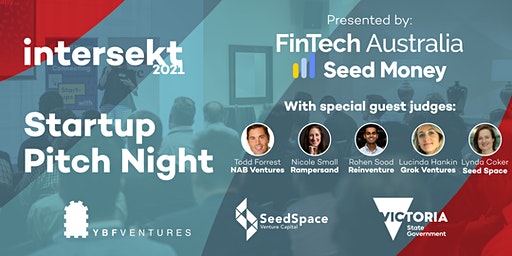
The opening event of the Intersekt 2021 Australian FinTech Conference was a startup pitch night, organised by FinTech Australia, hosted by YBF Ventures, and sponsored by Seed Money. The esteemed judging panel was drawn from a range of VC funds: Todd Forest (NAB Ventures), Nicole Small (Rampersand), Rohen Sood (Reinventure), Lynda Coker (SpeedSpace) and Lucinda Hankin (Grok Ventures).

The pitches in order of presentation (links are in the names):

Boulevard

A cloud-based share registry management platform for startups, founders and their employees. Designed to to be an exchange for unlisted securities, the platform also offers Investor Relations support and automated compliance solutions. Using Distributed Ledger Technology (which underpins Blockchain), the team are working with ASX DLT Solutions (responsible for the CHESS replacement) and deploying DAML, the programming language for modelling digital assets. They have also developed ASICLink, to automate company filings with the corporate regulator, plan to support corporate actions (including the verification of company financials), and are working with equity crowdfunding platforms. Boulevard has already on-boarded 30 companies, comprising 4,000 shareholders.

COGSflow

Describing itself as “Performance based finance”, this is essentially a merchant service offering cash-flow funding solutions for physical goods. This involves purchasing client inventory, and getting repaid on the sales performance. Using a funding ratio calculation as the basis of its credit risk model, the COGSflow will track sales data from the likes of eBay and Amazon (although both of these platforms, like PayPal, Alibaba etc. already offer SME financing of various forms). COGSflow will also analyze variable marketing and customer acquisition costs as inputs to its lending model, and plans to become a member of the Personal Property Securities Register (PPSR), as well as seeking B Corp certification.

Archa

Archa is solving the challenges many SMEs face when trying to access corporate credit cards – banks generally demand personal guarantees from owners or directors before they issue cards, and when they do the “product is awful”. As the pitch described it, many bank-issued corporate cards are really designed as “a line of credit to acquire air miles”. With a mobile app already in the market, Archa incorporates an administration and expense management solution. A major bug bear for many companies is managing corporate subscriptions – all those SaaS apps that are tied to individual employee cards; consolidating, renewing and cancelling those services can be time-consuming and painful. The account administrator can also manage each card’s credit limit. Archa itself has principal issuer membership with MasterCard. In addition to an equity raise, the team is seeking debt funding to offer lines of credit. Channels to market will include SME lenders, accountants and lawyers.

Sherlok

According to the founders, most people paying too much on their mortgages – based on their home loan rate. Because mortgage brokers have 60% of the market, and rely on trailing commissions, there is little incentive for brokers to help their clients find a better rate or provider. However, 15% of brokers’ clients are leaving each year. Sherlok is an SaaS platform that uses AI to help brokers reprice and refinance their existing mortgage book. Using a broker subscription model, Sherlok is aiming to offer “single click refinancing”, although there was some equivocation about becoming a virtual brokerage itself. The founders feel that mortgage broking is still a relationship based business, and requires a human touch.

Axichain

Axichain is building a blockchain-based agricultural supply chain – a digital trading solution for cross-border commodities trading, with an initial focus on red meat. The founders are addressing three main supply chain pain points – market access, paperwork and payment.
Axichain combines smart contracts, an escrow solution and traceability linked to legal processes. Overall, the platform envisages multiple products and revenue streams. The team are seeking both equity and debt funding, the latter to provide lines of credit lines.

Parpera

The meaning of “Parpera” is “fair wallet”. By that, the founders mean they want to offer a range of banking and related services aimed at SME owners, sole traders and freelances. This could include business registration and set-up, better financial insights, and access to smarter banking products etc. It will include card services, payments and invoicing. The plan is to target customers who are about to set up a business, and to promote the service at the start/end of the financial year, hence the intention to use accountants as a channel to market.

Next week: Monash University Virtual Demo Day
FinTech Australia Road Show

This week I had hoped to blog about the latest FinTech Australia Road Show in Melbourne – unfortunately, COVID-19 intervened, and the event has been postponed.

So instead, here is my personal quick take on recent developments in the local FinTech scene:

A tale of 2 neobanks

Maybe Australia isn’t ready for challenger banks, despite the early interest and apparent market demand. Xinja* has decided to give back its banking license, having spent a ton of money on obtaining it in the first place. It couldn’t sustain savings and deposit accounts (even in a low-interest rate environment) without sufficient regulatory capital, the funding for which has failed to materialise; and without deposits, Xinja couldn’t offer loans. There is talk of launching a US share-trading app instead (à la Robinhood) but given the recent shenanigans with Wall Street Bets, Reddit, hedge funds and GameStop day traders I don’t suppose the regulatory path to market will be that easy. Xinja looks like it’s done.

Meanwhile, NAB has just announced that it is acquiring the shares in 86 400 that it does not already own, in order to merge it with NAB’s digital brand, Ubank. Which further suggests neobanks can’t survive on their own in the Australian market, with the dominant and regulatory protected cartel of the Big 4. (My good friend Alan Tsen has described this latest transaction as a turducken….)

Other challenger brands in Australia are having to take different approaches: Up is piggybacking off Bendigo and Adelaide Bank’s ADI license; Volt describes itself as a BaaS provider (“banking as a service”); Judo is focused on business banking; and the UK’s Revolut is bringing a mix of credit cards, payment solutions and forex services (including crypto), rather than transaction banking. Meanwhile, another BaaS from the UK, Railsbank is currently recruiting locally for a GM to leads its Australian roll-out.

Finally, despite some concerns about the BNPL sector (“buy now, pay later”), Afterpay is partnering with Westpac‘s BaaS platform to offer banking services to its customers.

Whither the Big 4?

Speaking of which, what are the Big 4 doing in the broader sphere of FinTech?

Despite (or because of?) buying a neobank, NAB has apparently closed down the Labs part of NAB Ventures, the often-mentioned, but largely silent startup incubator. CBA has created X15, a similar FinTech ventures platform with the ambitious goal of launching 25 businesses in 5 years (I seem to recall NAB Ventures once had a similar mandate?). Westpac‘s own FinTech fund, Reinventure is expected to do well out of the forthcoming Coinbase IPO; so much so that Reinventure is planning to decouple from Westpac, and launch a new fund focused on DeFi opportunities. ANZ has been putting out some commentary on its ANZi platform for FinTech innovation and partnerships – but its remit is limited to trade finance, home ownership and open data, and it is being very coy as to what specific bets they are making. Ho hum.

Did somebody mention crypto?

In case you hadn’t realised, we are experiencing something of a bull market in crypto.

Coinspot just announced they have 1,000,000 customers. Raiz Invest has launched its retail savings portfolio product with a 5% allocation to Bitcoin. Other funds like Every Capital are planning similar retail offerings. Luno is advertising on Melbourne’s tram shelters. And the Australian division of eToro is talking up DeFi. Game on!

Next week: Transition – post-pandemic career moves

* Declaration of interest – the author participated in the Xinja equity crowd-sale a few years ago

The Finnies

The third annual FinTech Australia awards were celebrated in Melbourne last week, following the organisation’s relocation from Sydney during the past 12 months. Any concerns the organisers and sponsors may have harboured (given the switch in geography) were easily allayed, as the event was sold out, with over 300 guests in attendance.

The overall winners were definitely B2C brands – challenger banks, consumer lenders, payment providers – with Airwallex, Afterpay (which despite some recent negative press was named the FinTech of the year for the third time) and Up Bank taking out more than a third of the awards between them.

Despite the 30 per cent increase in the number of entries (over 230 in all), it did feel like the Fintech community is still something of a village, as several award presenters were themselves presented with awards. Maybe something for the organisers to think about for next time, as it’s not always a good look when winners end up presenting to each other.

On the other hand, the organisers are to be commended for the running order – unlike some industry events, the awards were all presented in a single session, and not dragged out from soup to nuts. It was also a great decision to use the Victorian Innovation Hub as the venue, as well as have grazing-style catering instead of a sit-down dinner. And the choice of live band was excellent, as past, current and future bankers cut a rug.

Next week: Brexit Blues