Publishers’ Choice: Be a Victim, or Join the Vanguard?

I recently posted a blog about saving the Australian publishing industry, prompted by some research I was doing on government-sponsored initiatives, notably EPICS and BISG. This generated a couple of (indirect) responses, one from the Department of Industry itself, the other from a long-time colleague in the industry. More on these later.
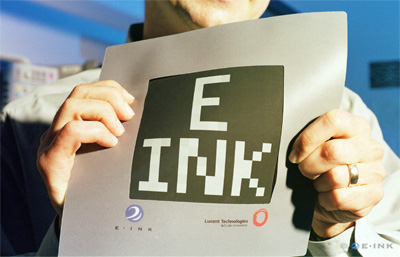
The future of publishing - circa 2000....

The future of publishing – circa 2000….

But first, some more industrial archeology, by way of demonstrating that book publishers are not shy about new technology – remember the first electronic ink? When I was working at the Thomson Corporation in the late 1990s, we were given access to a prototype version of what we would now recognise as an e-reader. It was about the size and thickness of a mouse pad but less flexible, and could only hold a small amount of data in its memory (content was uploaded via an ethernet cable). It was described as the future of book publishing, and was predicated on the idea of portability (it could be rolled up like a newspaper if the screen was thin and pliable enough), and updating it with new content whenever it was (physically) connected to a computer or the internet.

However, whatever their apparent appetite for new technology, publishers struggle to adapt their business models accordingly, or they are fixated on “old” ways of monetizing content, and locked into traditional supply chains, archaic market territories (geo-blocking), restrictive copyright practices and arcane licensing agreements; and unlike other content providers (notably music, TV and newspapers which have shifted their thinking, albeit reluctantly) the transition to digital is still tied to specific platforms and devices, unit-based pricing and margins, and territorial restrictions.

Anyway, back to the future. In response to my enquiry about the outcome of the BISG initiative, and the creation of the Book Industry Collaborative Council (BICC), the Department of Industry offered the following:

“A key outcome of the BICC process was to have been the establishment of a Book Industry Council of Australia, an industry-led body based on the residual BICC membership that would come to be a single point of policy communication with government, though following its own reform agenda in the identified areas and unsupported by any taxpayer funding. Terms of Reference and so forth were drawn up but as nearly as we can ascertain from media monitoring and contacts, the BICA was never formed. It appears the industry is waiting to ascertain what the current government’s policy priorities might be, as expressed in the outcomes of the current Commission of Audit and Budget, before possibly resurrecting the BICA concept and/or the policy issues identified in the BICC report.” (emphasis added)

My read on this is that the industry won’t take any initiatives itself until it knows what the government might do (i.e., let’s wait to see if there are any handouts, and if not, we can plead a special case about the lack of subsidies/protection and the threat of extinction…).

This defeatist attitude is not just confined to Australia – my former colleague recently attended the 2014 Digital Book World Conference in New York. He commented:

“I was disappointed to see the general negativity of the publishing industry and the “victim” like mentality – also the focus on the arch-enemy – AMAZON! I see great opportunities for content – but companies have to get their head around smaller micro transactions and a freemium model. Big publishers are “holding on” to margins – it’s a recipe for disaster – [but] I think we can become small giants these days.”

There are some signs that the industry is taking the initiative, and even grounds for optimism such as embracing digital distribution in Australia, moving to a direct-to-consumer (“D2C”) model in the USA, and new approaches to copyright and licensing in the UK.

The choice facing the publishing industry is clear: continue to see itself as a victim (leading to a self-fulfilling prophecy of doom and extinction), or become part of the vanguard in developing leading-edge products and services for the digital age.

Dawn of the neo-meta-banks

Digital is redefining the way we interact with money. While online banking is nothing new, virtual currencies are getting big enough to attract the attention of regulators. Mobile phones are becoming payment gateways and POS terminals; meanwhile, stored value and pre-paid debit cards are more ubiquitous than cheque accounts. (In Hong Kong, the Octopus card originally introduced as a payment system for public transport, then extended to small purchases like coffee and newspapers, has now launched a dedicated mobile SIM card.)

Last year, Wired magazine predicted that tomorrow’s banks will resemble Facebook, Google or Apple. And of course, PayPal is owned by eBay, so it sort of makes sense that tech giants with huge customer bases conducting millions of online and mobile transactions would be the source of new banking services. For example, earlier this month, online banking start-up, Simple was sold to a Spanish bank for $130m, even though it is not really a “proper” bank – more a banking services provider – because it had managed to attract customers who don’t want to deal with a “traditional” bank.

But where are the non-traditional banks and virtual financial services providers of the future actually going to come from?

The answer could be the People’s Republic of China.

Last week, it was reported that local tech companies Alibaba and Tencent will be included in a pilot scheme to establish private banks in China. The news should not be that surprising – Alibaba, for example, has already been using its experience and knowledge as a trading and sourcing platform to provide small-scale loans and export financing to Chinese manufacturers, funding production to fulfil customer orders. A few years ago I had the opportunity to visit Alibaba’s headquarters in Hangzhou, where I met with a team working on credit analysis and risk management for this micro-financing business, drawing on data insights from the payment history and transactional activity of their SME clients. It was certainly impressive, and my colleagues and I were left in no doubt that there was every intention to take this expertise into a full-blown banking vehicle.

However, this being China, it’s not quite as straightforward as it seems. Just a few days after the private bank pilot was announced, the People’s Bank of China suspended a mobile payments system used by Alibaba and Tencent.

Has streaming killed the video store?

In the era of Quickflix and internet TV services, why would anyone continue to patronise a bricks and mortar DVD shop? Well I, for one, am a  regular customer of my local independent video store, and here’s why:

First, choice. Clearly, they don’t have every film or TV series ever made, but there’s more than enough to discover during my lifetime. And they stock loads of titles not yet available to stream or download in Australia. (See previous blog on geo-blocking – and at the time of writing, Netflix is not available in Australia.)

Second, they have a great international selection, and their catalogue is not dominated by the latest Hollywood blockbusters. They have a particularly good section of art-house titles, as well as all-time classics, mainstream comedy and big-name dramas.

Third, it’s cheaper. There’s a minimal sign-up cost, no monthly subscription fees, and on average, the nightly cost of a DVD rental can be far less than alternative services. Plus, with most of their DVD’s, you get the bonus material not always available via streaming.

Fourth, it’s quicker. I know this sounds counter-intuitive, but with the slow internet speeds in Australia, it actually takes me less time to walk the few blocks to the video store and back than it does to download a full-length film.

Fifth, the staff make informed recommendations. OK, recommender engines are getting more and more sophisticated, but many still seem to be based on what people bought/downloaded, and not so much on what they actually watched, and really liked. But the video store staff are very knowledgeable about films, and having watched a lot, they can usually offer some personal suggestions based on what I have previously enjoyed.

Finally, the local DVD store is something of a community service, and for that alone I will continue to support it.

New Year Wishes: What I hope for in 2014

A new year normally brings with it the usual predictions for the 12 months ahead. Sometimes, as with political elections, the World Cup, fiscal budgets and the Oscars, most informed commentators can usually hope to get at least one or two things right. But as a former colleague once wrote, anticipating new developments in technology is like “trying to predict the unpredictable”.*

Rather than attempting to gaze into a crystal ball, here are a few of my personal wishes** for 2014

Politics

I think it’s interesting that in 2013, two of the political leaders that generated most of the news were Margaret Thatcher and Nelson Mandela – and in both cases, it was their passing that dominated the headlines. Neither had been in power for many years, yet in death they were more noteworthy than most of today’s world leaders. Why? Well, a lack of truly charismatic politicians could explain it. But I rather think the lure of holding political office has been undermined by the need to micromanage the machinery of government – so rather than attracting visionary leaders capable of projecting big picture thinking, we mostly get a collective mediocrity blinkered by the spin doctors and party pollsters, and rarely willing to tell the public what they actually think or what they personally believe in, for fear of offending voters in marginal electorates. Whether or not you agreed with or liked their particular brands of politics, it was pretty clear that both Thatcher or Mandela actually believed what they were saying when addressing parliament, giving interviews, or delivering campaign speeches.

In 2014 it would be wonderful to see the return of political leaders who were not simply trying to avoid defeat at the next election. Even better, wouldn’t it be wonderfully refreshing to hear politicians willing to amend their policies because they have been persuaded by informed argument, prepared to admit that they might have got it wrong, and able to speak their mind without being accused of knee-jerk reactions or heretical u-turns; situations change, so shouldn’t our politicians be entitled to adapt and clarify their thinking accordingly?

Leadership

Which brings me to my next wish – a willingness to openly embrace situational leadership. Yes, organisations should have a clear purpose, stated objectives and well-articulated means for achieving them, but there also needs to be flexibility and the ability to adapt and evolve based on changing circumstances.

We hear a great deal about the need for diversity on boards, among executive teams and across the workplace generally. Much of the diversity debate centres on gender and ethnicity – which is fine, but we require organisations with greater cognitive diversity. Such diversity could help avoid group-think, constructively challenge the status quo and counter the underlying causes of institutionalised inertia.

Business

Unless you are a single-product company, with a unique and proprietary production process, a guaranteed market monopoly, and an endless supply of materials and customers, your business cannot afford to exclude alternative thinking or ignore external perspectives on your industry, your markets or your products and services.

Equally, in a low-growth/no-growth market environment, companies have to develop or acquire better strategic growth skills. Expansion via capturing market share (usually achieved by competing on price, and resulting in lower margins) will be hard to sustain, and will likely result in a race to the bottom.

My big wish for 2014 is that businesses in general, and service industries in particular, will recognize what their true value proposition is, and build strategies for competing on quality (not just on quantity). For example, unless you understand your cost structures, and can relate those to your customers’ perceptions of what they are paying for, you will either waste resources on stuff customers don’t value, or miss opportunities for serving them better.

Technology and the Internet

It’s hard to think of any significant developments in popular technology or on the Internet during 2013. Sure, there was some consolidation among social media platforms, and product rationalisation at Yahoo! and elsewhere; but apart from launching iOS7 and the iPhone 5, Apple did not bring any major new products to market. Although Apple’s global share of smart phone sales may be declining, it may simply be market maturation rather than any product advances from its competitors. (There is also evidence that in key markets, iPhone 5 has boosted Apple’s smart phone sales, and the iPhone 5 itself lays claim to being the most popular model.)

The Internet continues to grow exponentially, largely driven by social media and user-contributed content. But I’m not sure that our collective knowledge and wisdom have improved at a corresponding rate. (Plus, targeted and streamed advertising means it takes much longer to watch YouTube clips, resulting in a lower return on the time we invest in consuming content.)

I’m hoping that 2014 will herald the launch of Internet 3.0 – an on-line environment that is more informative, more insightful and more interactive, and which connects more intuitively between my desktop and mobile devices. (For example, various upgrades to iOS and their associated back-ups forced me to transfer manually a large archive of Notes from my iPhone 4 to my iCloud account, simply because Apple unilaterally changed the way legacy content was “recognized” between my iPhone and my iMac.)

Culture

Perhaps we should also wish for a slightly kinder and more caring social media environment in 2014 – and as I heard one media commentator observe this week, professional sports people and other celebrities should probably refrain from using social media after 11pm, even if they are only slightly inebriated. Anyway, at the risk of revealing some of my own prejudices and preferences, this is what I expect from 2014 in Culture.

First up, I don’t want to see any more of the following categories of movie: sequels, prequels, comic-strip franchises, CGI extravaganzas or anything containing anthropomorphism (unless it’s a Director’s Cut of “Animal Farm”).

Second, I eagerly await the end of geo-blocking for digital content – copyright owners, music labels, publishers, licensors/licensees, distributors and on-line retailers please get your act together, and don’t make it unnecessarily difficult for me to buy your content just because of where I happen to live.

Third, I’d like to advocate a special tax on reality TV shows – the proceeds of which will be directed towards alleviating human suffering, solving important world issues, or nurturing genuine artistic/culinary/terpsichorean talent.

Finally, I hope that David Bowie’s return to form with 2013’s “The Next Day” was not a fleeting reminder of past glories….

NOTES:

* Anthony Kinahan in his introduction to “Now and Then 1974-2024: A Celebration of the Bicentenary of Sweet & Maxwell” (1999) a collection of essays on the future of legal publishing

** Aside from, of course world peace, the end of poverty and a global commitment to address the negative impacts of climate change