Notes from Hong Kong

My personal relationship with Hong Kong stretches back 30 years – to the time I moved there from London in 1994. I arrived on a 1-2 year contract, and ended up living in the city for 6 years. Since then, I have continued to visit at least once a year, and my latest trip earlier this month was the fifth since hotel quarantine was lifted in October 2022, following the global pandemic.

Despite the significant political, demographic, social and economic upheavals of recent years, in many ways Hong Kong remains the same. It still acts as a fulcrum between East and West, and an important trading entrepôt for mainland China and the rest of the world. There are still the evident paradoxes represented by Hong Kong’s ancient traditions and modern values, combining spiritual beliefs with materialistic tastes, and vertiginous high-rises set against mountainous backdrops and waterfront vistas.

From an economic standpoint, Hong Kong remains in something of a lull. People I spoke to commented that the SAR government needs to find new sources of income, especially as the property market (a cornerstone of the local stock exchange) remains patchy, and visitor numbers are only about 50% of pre-pandemic levels.

As I have mentioned in a previous blog, Hong Kong is usually resilient and adept at reinventing its financial fortunes.

For these reasons, the Hong Kong administration is pursuing a fairly aggressive policy of promoting itself as an attractive global venue for the digital asset industry in part to reinvigorate the local capital markets, in part to outpace its regional neighbour and rival, Singapore. (Plus, the SAR acts as something of a test bed for the rest of the PRC.) According to people I spoke with, there is some difference of opinion as to how many digital asset exchanges are actively pursuing a Virtual Asset Service Provider (VASP) license, given that only two licenses have been granted so far, while a number of applications have been withdrawn, refused or rejected for being incomplete.

During my visit, I was granted a 1:1 interview for Brave New Coin with Yat Siu, co-founder and Chairman of Animoca Brands, a leading player in web3.0, NFTs, the metaverse and, potentially, stablecoin issuance. A major advocate of digital property rights, Siu is a very influential figure within the fintech scene, and I expect to see many more announcements from his company leading up to, and during, major events such as Token2049 and Hong Kong Fintech Week. I also met with clients and contacts across crypto exchanges, hedge funds, VCs, brokers and tech providers. All remain suitably bullish on the digital asset sector, although some considered that there needs to be some industry consolidation, to soak up excess infrastructure and to stabilise the entry of institutional fund managers.

Finaly, I found time for some contemporary art exhibitions, confirming that Hong Kong continues to establish its profile in the arena of global culture. There was Bruce Nauman at the JC Contemporary in Tai Kwun, I.M.Pei and Henry Steiner at M+, and even Banksy and Damien Hirst at Sotheby’s Maison at Chater House. Of course, this being Hong Kong, the displays in Sotheby’s showrooms are not too dissimilar to the luxury goods on sale in the surrounding malls.

Next week: Postcript on Tarantino vs Ritchie
 

Hong Kong – Then and Now

I’ve visited Hong Kong twice in the last 6 months, and what a difference half a year can make.

Back in October, the Covid hotel quarantine programme for visitors and returning residents had just ended (which largely prompted my visit). I still had to undergo a PCR test on arrival, plus regular testing for the first 7 days of my stay. In addition, for the first 3 days I was unable to dine-in at cafes, restaurants and bars, or visit public places (museums, cinemas, gyms, etc.), until I had a blue “all clear” QR code on a tracking app. Masks were still mandatory for everyone, indoors and outside, but the QR check-in system was only sporadically enforced.

Of course, this being Hong Kong, the 3-day ban did not prevent me from taking taxis or public transport, going to work, or shopping. So, earn, spend, travel!

Compared to my previous visit in August 2019, there were no signs of any public protests (thanks to ongoing legal and political measures), nor many visitors from mainland China or overseas. The number of expats out and about in Central was well down (although I suspect a lot of people were still working from home), and I don’t recall there being many crowds even during peak shopping and business hours in the CBD.

I visited M+, the amazing new art museum in the West Kowloon Cultural District – which was probably the most popular location I saw during my stay, in part because admission was still free. There was a really interesting and charming exhibition of art and design in Hong Kong since 1945, from the context of cultural, social, commercial, industrial and political developments.

On a past visit, the ground had not yet been broken on the Cultural precinct, and the only art exhibition on show was a series of pop-up installations housed in re-purposed shipping containers (a link to Hong Kong’s important role as an entrepôt?).

Staying near Clearwater Bay also meant being among fewer people, and even gave an opportunity to visit a beach I had never seen before – where local residents had posted signs to encourage visitors not to despoil this small and natural idyll amid Hong Kong’s ever-expanding reclaimed land development.

Talking to some local contacts, there was a suggestion that the key motivation for scrapping the hotel quarantine programme in October was due to the Hong Kong FinTech Week being held the following month along with the much-postponed Hong Kong Rugby Sevens tournament (both expected to attract lots of bankers, brokers, traders and investors…). Yes, in Hong Kong, money still talks.

Fast forward to March, and my latest visit was a stark contrast. Not only were airfares much more expensive than late last year, but the number of visitors (especially from the Mainland) had also boomed. Now that there were no PCR tests or mask mandates, and as domestic tourism has opened up, it seems everyone was desperate to get to Hong Kong. Apparently, in the 30 days since the mask mandate was lifted, 1.5 million people had entered the Special Administrative Region, compared to the few thousand monthly visitors in previous months.

During March alone, Hong Kong hosted the Clockenflap festival, Art Basel Hong Kong, Art Central, a major golf tournament and the WOW Web3 Summit, as well as the Hong Kong Rugby Sevens restored its regular (and rightful) spot on the international sporting calendar.

Out and about in Central on a Friday night at the Tai Kwun art and entertainment precinct almost felt like old times, with people competing for taxis along Hollywood Road. I also got my fill of art – Joan Miró at the HK Museum of Art, Yayoi Kusama at M+, modern Chinese art at the JC Contemporary, and installations and pop-up shows at the K11 and Landmark malls.

From a business perspective, most of my meetings centred on the recent consultation process for Hong Kong’s proposed regulations on Virtual Assets, due to come into effect in June this year. It’s expected to boost the number of licensed crypto exchanges and brokerages operating in Hong Kong, and is a significant leap forward compared to past conversations I have had on the topic, where there was a general reluctance to engage in any meaningful discussions. Now it seems, whether encouraged by Beijing, or seeing the regulatory push back on crypto in the USA, Hong Kong is seeking to become a regional and global hub for all things web3, DeFi, tokenisation and digital currencies. (Not content with the WOW Web3 Summit in March, Hong Kong hosted the Web3 Festival earlier in April.)

Hong Kong is usually very good at reinventing its economic profile following business downturns and market setbacks – especially in the areas of trade, technology, commerce and finance. Perhaps the shift towards embracing virtual assets is simply a pragmatic move. While a large part of GDP is still driven by property and traditional finance, there is a recognition among some that the future is digital…

As much as things change in Hong Kong, they also largely stay the same. Back in October, there was 100% compliance with the mask mandate – but the vast majority of passengers ignored the compulsory seat belt regulation on buses. A breach of the former would have attracted a HK$1,000 fine; the latter, HK$5,000 and 3 months’ imprisonment.

Finally, talking of masks, it’s not that long ago that masked protestors on the streets of Hong Kong were a major legal and political issue. Since then, wearing any sort of mask on a public march or demonstration has been illegal. While I was in Hong Kong last month, the city witnessed its first authorised protest march in several years (about the environmental impact of land reclamation). In a new twist on the right of assembly, march numbers were strictly limited, and all demonstrators had to wear a visible number to identify them. From the TV coverage I watched, the march stewards contained the moving protest behind a rope cordon – so that participants did not literally step out of line.

(On this last trip, I also took a side-trip to Macau – more on that next time.)

Next week: Revisiting Macau – Asia’s Casino Theme Park


Notes from Phuket

Last week I was privileged to spend a few days in Phuket, for a wedding. The last time I was there (in early 2011, and for another wedding), I noticed the number of bars and shops that had added Russian to the list of languages on their signage and menus. This time, in the area where I was staying, all of the hoardings around the real estate developments were only written in English, Chinese and Russian – clearly a targeted marketing strategy for the new apartment blocks and resorts currently being built, and further evidence that the island is at something of an international cross-road, if not actual destination.

The wedding party itself was an international affair – guests had travelled from Hong Kong, Singapore, Malaysia, Europe, US, Australia, Japan and Thailand itself. Moreover, the demographic was decidedly multicultural, and comprising mainly multiracial and inter-faith couples and families. Not surprising given that nearly all the guests were expats, most of whom had met while we were working in Hong Kong.

The truth is, all of us who were there are beneficiaries of globalisation – choosing to move around the world for work (and for love). Just the sort of gathering that would incur the disapproval and wrath of anti-globalists, racial purists, and religious fundamentalists. Most of them would hate the idea of such a global affair, given the current environment of nationalist, protectionist and segregationist politics that pervades much of the world (Brexit, Trump, Middle East…).

Although the prospect of Brexit was largely lamented by those in attendance, the bigger concern was of course about Hong Kong. While the latest and most dramatic phase of the popular protests there seems to have abated, and although the pro-democracy candidates dominated the recent local elections, there seems to a complete absence of political dialogue between the Hong Kong government and the protest movement.

One school of thought is that the Hong Kong government took it for granted that it could enact the proposed (and highly controversial) extradition Bill. It may have even convinced the Central Government in Beijing that the Bill could pass into Legislation unopposed. If so, that suggests a huge misjudgment and a lack of communication and consultation on all sides.

Of course, should the major experiment in political, economic and social integration (one country, two systems) that is the Hong Kong SAR fail, it will be a major obstacle to resolving the issue of Taiwan (for which it is supposed to have been designed). It would also represent a setback to the concepts of international co-operation, free trade and self-determination, within a framework of mutually recognised and respected co-existence between sovereign states.

Meanwhile, back in Phuket, it was great to sample some authentic Thai food, enjoy the glorious sunsets and embrace island time. Re-visiting Patong after more than 20 years revealed just how industrialised the island’s so-called entertainment area has become – but in the spirit of globalisation, multiculturalism and international trade, at least it doesn’t discriminate: everyone (and their money) is more than welcome!

Next week: The State of PropTech


Recent Notes from Hong Kong

Earlier this month I spent a few days in Hong Kong, on my way back from Europe. Hong Kong was my home for 6 years – before, during and after the 1997 Handover – and I have continued to visit on a regular basis ever since. While I didn’t directly witness any of the latest clashes between pro-democracy campaigners and the police, I did see (and hear) the knock-on effects of the past 6 months. I also spoke to a range of people living and working in the city – from local residents to long-term expats; from small business owners to entrepreneurs; from corporate employees to public servants; from teenagers to senior citizens. Whatever their particular views on recent events, their one common hope is that the situation can be resolved peacefully, and soon.

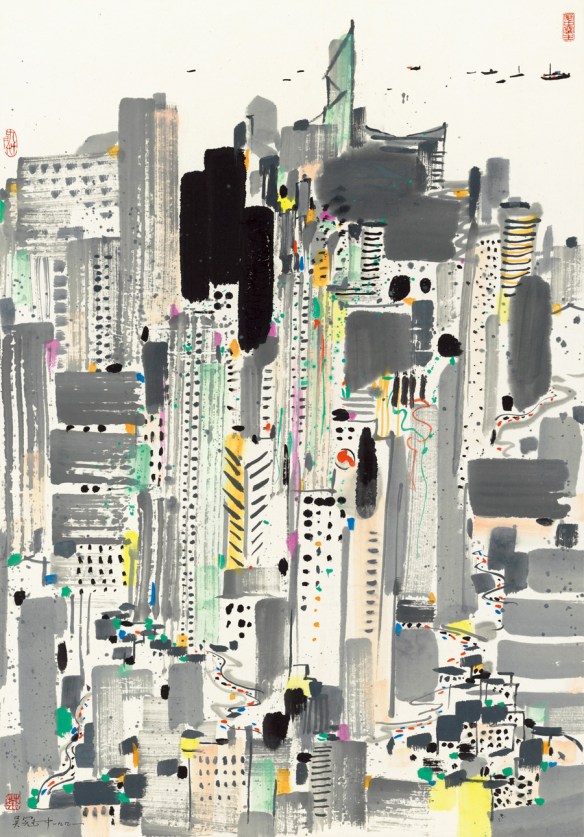
“Maze of Today” by Wu Guanzhong (2007) – Image sourced from China Online Museum website*

The trigger for the current protests was a proposed extradition law between the Hong Kong SAR and the rest of the PRC (as well as Taiwan and Macau). The bill was highly contentious, given the very different legal systems between Hong Kong and the Mainland. Serious concerns were expressed by the business sector, the legal profession and the general public. These concerns were given wider voice by the hundreds of thousands of ordinary people who joined the first of the peaceful mass marches at the start of the summer. Since then, nearly every weekend (and at times during the week) there has been direct action in the form of marches, strikes and occupations – sometimes leading to street battles between police and protestors, images of which have been seen around the world. These events have been accompanied by allegations of police brutality, the alleged use of agents provocateurs, and suggestions that the protestors are either terrorists, traitors or a threat to society.

On one level, Hong Kong continues to operate normally (although getting into the international airport is a little trickier since it was the target of so-called “stress testing” of the public roads and transport system). On the other hand, it certainly feels quieter than normal, and visitor numbers are down – as much as 40% overall on one measure, with a 90% decline in visitors from the Mainland. (My flight from Europe was barely half full.)

With the increased protest activity at weekends, public transport can be tricky. Some subway stations are suddenly closed without much warning from Friday evenings onward, and the express train from Central to the airport bi-passes the usual intermediate stops. On the Sunday I was there, there had been a mass gathering in Central, and access to the nearest subway station (for the local train service back to Kowloon) was closed, so there was an orderly queue of several hundred metres as people waited for the Star Ferry – many of the passengers dressed in black t-shirts, the unofficial uniform of the protest movement.

Given the recent bans on marches and gatherings in public places (notwithstanding Hong Kong’s right to peaceful assembly) a strange phenomenon has emerged. Each night, at around 10.30pm, local residents open their apartment windows and start chanting slogans associated with the pro-democracy movement. It is both eerie and extremely moving.

This nightly display certainly evokes the sense that no-one wants to see complete chaos or a violent end to the protests, so they chant in hope that a peaceful solution can be found. Otherwise, hope will give rise to despair, and with it the slow, painful decline of Hong Kong as a global city – a multi-cultural, international hub for trade, commerce, finance, ideas and innovation that combines notions of east and west, new and old, pragmatism and spiritualism.

The protestors have issued a set of five key demands. One relates to scrapping the extradition bill, which has now been withdrawn by the Hong Kong Chief Executive. Three relate to the protests themselves – removal of the term “rioters” to label the protestors; an independent investigation into the police response and alleged brutality (and even into police in-action when protestors were attacked by counter-demonstrators with seeming impunity); and an amnesty for all protestors who have been arrested to date.

The fifth demand, Universal Suffrage in direct elections for both the Legislative Council (Hong Kong’s Parliament) and the Chief Executive, is a lingering issue from the Umbrella campaign of 2014 (when large parts of the city were occupied in protest at Beijing’s decision to “defer” one person one vote). It’s probably even more contentious than the withdrawal of the extradition bill. To summarise: the Basic Law is Hong Kong’s Constitution. It is supposed to enshrine the city’s pre-existing common law systems for a minimum of 50 years after the Handover. Under the “One Country, Two Systems” regime, designed to govern Hong Kong’s legal, political and economic relationships with the Mainland, the people of Hong Kong were assured that their way of life would continue as before after 1997.

Article 45 of the Basic Law, states that:

“The ultimate aim is the selection of the Chief Executive by universal suffrage upon nomination by a broadly representative nominating committee in accordance with democratic procedures.”

The above has to be read in conjunction with Article 15 (Beijing directly appoints the Chief Executive), and Annex 1 (defines the candidate selection and election process – which has been revised in recent years).

The challenge is that the Central government believes it has to keep control over both the candidate nomination process, and the membership of the Election Committee (election college). On current evidence, the people of Hong Kong are unlikely to get to directly elect their own Chief Executive, nor nominate the candidates of their own choosing. (And the Legislative Council will continue to comprise members who represent “functional constituencies” – elected representatives voted in by their peer groups from various vested interests.) Even if they did directly vote for the Chief Executive of their choosing, Beijing would reserve the right not to confirm them in office, and would appoint their own candidate instead.

Of course, it’s not that Hong Kong was particularly democratic under colonial rule – the Governor was technically appointed by the British Monarch (on the advice and recommendation of the British Foreign Secretary), and acted as the Crown’s direct representative.

On another level, the model for the Election Committee is something like the US Electoral College that formally elects the President, based on the delegates elected by each State. This process was seen as “a compromise between election of the President by a vote in Congress and election of the President by a popular vote of qualified citizens”.

Finally, I was given an interesting interpretation of “One Country, Two Systems” by an elderly gentleman I spoke to on the MTR one day. “Where are you from?” he asked. “Australia” I replied. “Ah, near New Zealand. Same country.”

* My reason for choosing the above picture of Hong Kong by Wu Guanzhong to illustrate this blog is two-fold:

First, the painting is called “Maze of Today”, rather an apt title for the current state of affairs. Second, while I was working as a publisher in Hong Kong in the 1990s, my company licensed another Hong Kong picture by Wu for the cover of an introductory book on the law of the Hong Kong SAR. The first edition was issued in 1996, with a second edition in 2001 – and it still appears to be on the Hong Kong University reading list for law students, and cited in other law books as recently as this year.

Next week: Startup Vic’s Impact Pitch Night