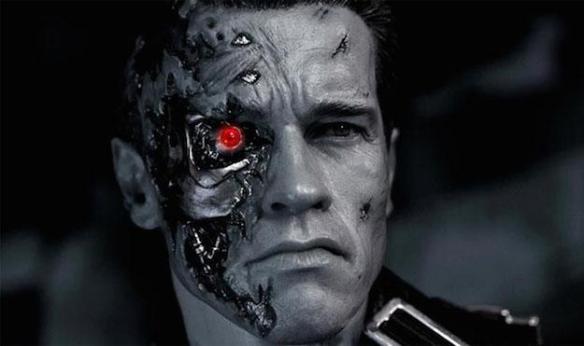
“I’m old, not obsolete”

In the recent “Terminator” sequel, Arnold Schwarzenegger coins a new catchphrase: “I’m old, but I’m not obsolete”. He may not be the latest android, but he has learned to adapt, he is still relevant and his purpose remains consistent. A bit like older workers, then: not ready to be consigned to the scrap-heap, consistent and reliable, and even capable of being upgraded (as Arnie is towards the end of the film).

Terminator Genisys

Remaining relevant is tough, even for a Terminator….  (Copyright 2015 Paramount Pictures)

A great deal of the discussion on employee engagement, business productivity, workplace flexibility and career transition talks about what we do with older employees, particularly those in their 50’s, who often struggle to find comparable work when they are retrenched or “restructured”.

Many 50-somethings can vouch for the fact that making a career transition into another full-time role can be extremely difficult. In my own case, I left my last corporate position just after I turned 50, and I soon realised it would be virtually impossible to find the exact same or similar permanent role elsewhere. So I embarked on a portfolio of interests (non-executive board positions, consulting work, contract roles and entrepreneurship) in order to remain “economically active”.

Over the past four years, in order to remain active, retrain and build my professional networks, I have:

  • completed the AICD Company Director course
  • served on a number of advisory and pop-up boards
  • launched this weekly blog, and written for 3rd party sites
  • coached business owners and entrepreneurs
  • competed in a FinTech hackathon and a MedTech startup competition
  • consulted in the education, public, NFP, publishing, manufacturing, technology and professional services sectors
  • joined numerous MeetUp and networking groups
  • participated in the Lightning Conference on Victoria’s StartUp Future
  • developed a new app for employee performance management,
  • trained as a presenter on community radio, and
  • become a participant and adviser at the Slow School of Business.

As part of my plan to become familiar with new technology, I have also built a side-project to record and release my own music via Bandcamp and Soundcloud, incorporating many iOS apps for which I am a beta-tester.

Not all of this activity is remunerated, yet the people I work with all tell me how much they value my unique input and original insight, and so I keep on doing it. Given the need/expectation to work longer, and the continued tinkering with tax, super and income rules and policies, I’m not sure many of us can ever think about full-time “retirement” (whatever that now means).

I’m aware that there are some ad hoc initiatives to engage older workers as mentors for new entrants to the workplace. While such projects are well-meaning, and may have some desirable benefits, they are not yet financially sustainable, and don’t address the core issue that the expectation of full-time, permanent, lifelong employment is no longer realistic, and we will all have to adapt to these new circumstances.

On the few occasions I have considered full-time roles, I am staggered that so many prospective employers seem incapable of thinking outside the box: on the one hand, they say they want diversity and fresh thinking; but on the other, they resort to the habit of appointing square pegs for square holes.

There is a real sense among many of my peers that their age counts against them, because either employers don’t believe they can learn new technology or processes, or that their previous seniority means they are only interested in roles where they can wait out their retirement, or simply “direct traffic”, rather than getting their hands dirty. Which is both insulting and demoralising. I recall one early discussion where the recruitment consultant said, “despite what the ad says, the business just wants a safe pair of hands – someone who has done the exact same role in a similar organisation for the past 20 years”. How does that support diversity, in particular, cognitive diversity?

So, my question to employers, hiring managers, industry bodies and policy-makers is: when will you truly embrace the challenge of (and opportunity for) change in your hiring and employment practices, and how do older age workers fit into your thinking (if at all)?

Next week: Startups, VC’s and Entrepreneurs

Who needs banks? My experience of “We R One World”

This past weekend, I participated in the “We R One World” game hosted by Carolyn Tate on behalf of the Slow School of Business, and facilitated by Ron Laurie from MetaIntegral. The game is an immersive learning experience in the form of a simulated global strategy workshop, based on the work of Buckminster Fuller. I joined a team whose role was to represent the interests of the commercial banks. It was a rather sobering experience, because as the workshop unfolded, it soon became clear that in the context of the game the banks were almost redundant – which partly reflects what is going on in the real world, as banks face increased disintermediation and disruption by FinTech, crowdfunding and the shared economy.
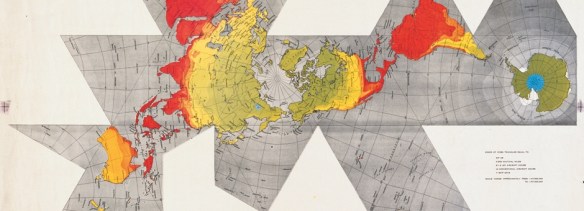
The Fuller Projection or Dymaxion Map

The Fuller Projection or Dymaxion Map

The Premise – Earth as Spaceship

Without going into too much detail, “We R One World” mimics elements of the board games “Risk” and “Monopoly”, and takes the form of a narrative-based hackathon, combined with a meetup and an unconference. Played out on a floor-size version of the dymaxion map, the game also draws on Fuller’s concept that the Earth is a spaceship, of which the players are the crew, and the “fuel” is the inventory of global resources at the crew’s disposal, including people, technology, capital, food, energy, munitions, water, etc. The participants form teams to represent various geo-political regions, supranational NGOs, multinational corporations and banks. The goal is to achieve (through trade negotiations), the best socio-economic outcomes for everyone, with a few surprises along the way!

There is a lot of information to absorb, as well as the structure of the game. One challenge for the players is to not get hung up on the presented “data” (which is more representative, rather than precisely factual). Even though we live with access to real-time, on-line statistics and research, and despite the Internet and search engines, in real life we still experience considerable information asymmetry.

The Prelude – We Are Star Dust

As a prelude, we were shown the documentary “The Overview Effect”, which includes the comment by former Apollo astronaut Edgar Mitchell that we are made of star dust (a now common concept echoed in various songs such as Moby’s “We Are All Made of Stars” or Joni Mitchell’s “Woodstock”, depending on your musical taste/cultural perspective).

It was also a timely connection, given the increased media coverage of space exploration, and Hollywood’s renewed interest in space travel. The recurring theme (in reality as much as in fiction) is that human survival will depend on relocating to, or harnessing other planets.

As examples, in the real world, we have the latest discovery of an Earth-like planet, tweets from Philae on a frozen comet, and the remarkable images from Pluto. While the entertainment world is enjoying critical and popular success with films such as “Moon”, “Gravity”, “Elysium” and “Interstellar” (plus the forthcoming “The Martian”). Even veteran Sci-Fi writer Brain Aldiss has bowed out with his final space novel, “The Finches of Mars”.

The Banks – Increasingly dispensable

But back to the game, and what we might conclude from the outcomes.

From the start, in the role of the banks we had a strategy for encouraging “good” behaviour, and punishing the “bad”. We had a catalogue of regional problems, and a set of possible solutions. “Good” behaviour was predicated on regions finding creating solutions to their problems, based on partnering, prioritization, planning and promotion. “Bad” behaviour might include late or failed interest repayments, misuse of funds (e.g., deploying more military hardware ahead of feeding their population), or actions that led to worsening conditions (increased poverty, hunger and illiteracy, or depleted natural resources).

At the outset, the banks’ role was to manage existing loans (by collecting interest due), and to originate new loans for development and commercial projects. In the initial stages, despite Japan’s attempt to renegotiate its existing repayment terms on the fly, the commercial banks managed to collect all interest due, on time and in full (with a small surplus, thanks to some regions’ lax monetary management). One region paid up without much prompting, cheerfully (or ironically?) commenting that “we must keep the banks happy!”.

However, as the game progressed, the banks were basically ignored, as regions switched their focus to responding to new circumstances, such that the consequences of not servicing their debts seemed irrelevant. Even the risk/threat of bankruptcy did not carry much persuasion, as regions were more willing to find new ways to trade with each other, less reliant on bank capital, and more focussed on alternative value exchanges (part of the game’s secret sauce).

For example, we received only two loan applications throughout the game: one was for a worthy but ambitious development project, but when asked to resubmit the request with some further information, the loan did not materialise; and the other was more in the way of a short-term deposit with the bank, to generate interest income to buy food. Given that deposit rates are low, our response was to suggest using the capital (with additional bank funding) to increase food production, but our offer was declined, maybe because of the need to trade out of a short-term food shortage rather than investing in long-term supply.

Towards the end, the banks were almost mere spectators in the game, and were reduced to protecting their self-interests: namely their capital, and their stalled/stagnant loan assets. If borrowers don’t want the banks’ money, where and what will the banks invest in order to generate depositor, investor and shareholder returns? As one regional participant commented, “we are all bank shareholders”. Just as in real life, we deposit money with the banks, we invest in their financial products (especially through our superannuation and pension funds), and we may even buy their shares and bonds. And of course, following the GFC, many taxpayers found themselves indirect shareholders of banks that were bailed out by their respective governments.

The Conclusion – An alternative approach?

I’m not going to give the game away (you can experience it for yourself in September) but the conclusion and outcome reinforce the view that in order to tackle the world’s problems, we all have to take a different perspective – whether that is challenging existing structures, subverting traditional business models, or questioning our personal motives and objectives. For myself, I recognise that this means an increased awareness of “living lean” (mostly around personal preferences and lifestyle choices), and (multi-)lateral thinking.

For institutions like banks (as well as governments, corporations and NGOs) this alternative approach means re-assessing their roles and contribution (which can also be framed as re-connecting with their “purpose”), remodelling their processes and systems, and redefining the measures of their success. As my team member concluded, “the other players only see the banks as a source of capital, rather than a resource for knowledge, expertise and networks”.

Footnote

Declaration of interest: I participated in the game at the kind invitation of the Slow School of Business.

Next week: “I’m old, not obsolete”



Change Management for Successful Product Development

Recently, there have been a number of commentaries on the current trend/fad for applying Agile and Lean product development methodologies to corporate management. I’ve also noticed an increasing focus on “Product Management” as a formal discipline by training and professional development providers. Consequently, I’ve been revisiting some work I did many years as part of a Change Management Diploma.

Situational Leadership

My thesis is that different Change Theories of Management can be applied to each stage in the Product Development Cycle*, to ensure that the organisation is aligned with the business needs as they relate to strategy, capabilities, capacity and execution. This is also the context in which organisations use Situational Leadership techniques to cope with constant change in technological, social, economic and environmental forces.

(*This work was based on a reading of Theories of Organisational Change as Models for Intervention by Dunphy & Griffiths (published by Australian Graduate School of Management – Centre for Corporate Change, University of New South Wales, 1994). For a copy of my model, please contact me: rory_manchee@yahoo.com.au)

1. Fit for Purpose

Various skill sets are needed along the journey from ideation to production, and management has to harness appropriate resources to increase the potential for success. Organisations may need to consider restructuring to maximise their ability to develop sustainable product development systems that incorporate continuous improvement, feedback loops and market responsiveness.

For example, moving from annual software updates to quarterly releases might simply suggest some production rescheduling, but it may also mean changes to documenting user requirements, customer billing systems and client support tools.

2. Playing to Our Strengths

The person who is great at capturing the design specs may not be the best person to undertake market testing with beta users. And it’s generally accepted that someone who is adept at working in a production or QA role on an established product may need some re-training before they get to work on building a prototype.

3. The Model Approach

In conclusion, my analysis reveals that at each stage in the Product Development Cycle, there is a need to review the relevant Business Challenges, address the corresponding Change Issues, and apply appropriate Change Management models or techniques.


Update on Perspective – Introducing the “We R One World  Game”

In a recent post on “Perspective”, I commented on the value of stepping back and taking a different look at current ways of doing things. For an immersive, interactive and experiential learning opportunity on how to gain a new perspective on problem solving and how we might address global challenges, the Slow School of Business is running the “We R One World Game” on Saturday, July 25 in Melbourne

Dymaxion_map_ocean2

The Dymaxion or Fuller projection is a world map, which can be rendered in 2-D.

Facilitated by Ron Laurie, and based on the pioneering work of Buckminster Fuller, this event promises to combine a hackathon, a meetup and an unconference all in one! Tickets available here.

Next week: Who needs banks?

Getting Stuck – and how to deal with it

We’ve all witnessed (or even experienced) those moments when a speaker or presenter gets stuck. They stumble over their material, they offer an inappropriate response to a tricky question, or they simply go off topic and stray into verbal quicksand. And although they realise they are in difficulty, they carry on regardless, only to wade deeper and deeper into the mire. Some of our current political leaders know exactly how that feels…

Photo by Mark Roy - Licensed under Creative Commons

Photo by Mark Roy – Licensed under Creative Commons

In my experience, many small business owners do the same thing when they get stuck. They carry on doing the same as they’ve always done, even though they know they need to change course, take another approach, or try a different tactic. Which is where someone like me comes to the rescue. As a consultant, I can bring an objective, external and independent perspective that can help clients navigate away from the problem, and steer them back onto the right track.

The Inflexion Point

The typical scenario is that the business is faltering. Most often it’s about sales and business development – either not enough new customers, or too few of the “right” customers (and too many of the “wrong” ones). Sometimes it’s about an aspect of their strategy that isn’t working. It could be a problem with their operations, such as workflow, resourcing or IT systems. Or it might be that they have lost their way and are facing some sort of external challenge. Or maybe there is a disconnect between the products and services that they offer, and what their customers actually need. Or it could be a need to recast their financial information to get a better idea of how the business is really tracking.

Whatever the issue, the common feature is a point of inflexion – the business is either stuck, has hit a plateau, or come to a fork in the road.

So, how do they get help?

The 3-Step Recovery Program

First, the client has to realise that doing the same thing won’t work, doing nothing is not an option, and they have to be open to the idea of change. They recognise that bringing in some external help will relieve the log jam (even though at this stage, they don’t know what form that help will take, or where it will come from).

Second, they do some basic research, or get a referral from their networks, on where they can get help. Much of my work comes via word-of-mouth and personal contacts, and in large part this is due to the need for trust in any consulting relationship. Sometimes, a prospective client has liked something they read in my blog, or heard something in our conversation that has clicked with their own needs. There has to be a connection or match with what the business needs, and what someone like me can offer. It’s a bit like finding a GP, financial planner or personal trainer – there has to be a fit.

Third, they are able to define a specific problem that needs addressing, or at least prioritize the issues. This requires some reflection, self-awareness, and willingness to have their assumptions challenged. There is a need for honesty, and even vulnerability, if the intervention is going to succeed.

Helping clients get back on track

I will say upfront that my services are not suited to everyone. If your business is running like a well-oiled machine, I probably can’t add much value, unless you are looking to improve an area of your operations, or embark on a new initiative where you need help in getting it off the ground. Alternatively, I may be able to help if you simply want to tap into some external perspectives to challenge your current thinking, or if you require some specific expertise that draws on my knowledge and experience. Otherwise, my role is to help clients get free of what is bogging them down.

One of my clients recently said that working with me felt like “keyhole” surgery, rather than undergoing open heart surgery. I think I know what he means, and that he meant it as a compliment….. In my experience tackling “the whole” is not always practical. Rather, zooming in on a particular aspect of the business allows for incremental change, that if applied appropriately, can have a multiplier effect. Such an approach is hopefully less disruptive, and therefore less threatening, to the existing business.

As part of my consulting work, I tend to break the business down into its component parts, look at the business model, review the revenue streams, and analyse the workflow, both internal operations and customer-facing services. For example, clients often have a slightly misplaced perception of where/how they add customer value – so, if they spend a lot of time on a particular task or activity, they naturally assume that this should form the greater part of what their customers pay for. Whereas in reality, the customers may value something else the business does, but the business has not realised that value.

It’s always important to encourage clients to develop an action plan, with specific goals, responsibilities and timelines. I’m not talking about a 50-page business plan, but a more manageable working document for the next 6, 12 or 18 months (depending on their circumstances). A key outcome of this is a list of priorities, plus agreement on which activities to wind-down or discontinue. Despite limited resources, businesses often make the mistake of trying to continue doing everything they’ve always done, plus all the new stuff – the law of physics suggests that something has to give, so they need to stop doing things that are no longer relevant, or are no longer working.

Making a Difference

When it comes to more direct business coaching, I know from the client feedback I receive that the insights I offer and the way I reframe their situation are as valuable as a re-engineered business plan. By analysing the problem, taking it apart and putting it back together again, it allows me to share my observations and offer fresh thinking – which is sometimes all the client may need to get back on track.

If you feel your own business could use some external assistance in getting back on track, or if you think you may be stuck as to what to do next, please get in touch via this blog.

Next week: The David and Goliath of #Startup #Pitching