Seeing Japan with #Airbnb

Hotels in Japan can be very expensive, and despite the fact that the shared economy operates in something of a regulatory grey area, I am pleased to say that the experience of using Airbnb throughout my recent visit was a great success. Luckily, my travelling partner had done extensive advance research, so there were very few hitches.
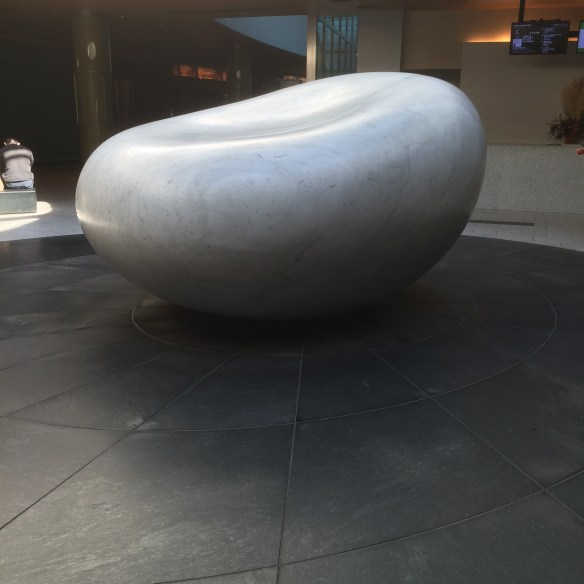
Kan Yasuda: “Shape of Mind” (2006) Photo © Rory Manchee – all rights reserved

Whether innovation is on the rise in Japan, or whether the “illicit” sharing economy is gaining traction, it seems that Airbnb in particular appeals to certain enterprising and entrepreneurial types who see an opportunity in the current market. The various hosts comprised an agent managing several properties on behalf of the owners, professional couples renting out an investment or spare apartment, and a self-motivated entrepreneur also building social enterprises.

I won’t specify the apartments I stayed in, partly because these particular hosts in Tokyo, Kobe and Kyoto are proving very popular (especially over the upcoming holiday season), and partly to avoid any potential “regulatory” hassles. But hopefully the following insights will be helpful in planning your own trip.

First, the bookings were all for self-contained apartments (usually a studio dwelling, close to public transport), and selected based on previous positive feedback. In each case, the accommodation was situated in older, low-rise developments, located in mainly residential neighbourhoods. In one case, it was a traditional apartment, complete with tatami mats, sliding doors/room dividers, and an older style wet-room bath and shower.

Second, the “hosts” were all very helpful in giving travel directions, offering suggestions on where to eat nearby, and/or providing local guides and maps. One had even posted a self-made YouTube video showing the walk from the train station to the front door. Obviously, the fact that they were happy to take bookings from foreign visitors meant that all of the communication was conducted in English.

Third, for the most part decor was simple but comfortable, but some of the beds were on the small side. And one apartment was owned by a fan of a certain cartoon character, with furnishings to match, which was quite surreal.

Fourth, due to the apparent semi-legal nature of Airbnb in Japan, the hosts were keen to make sure that not only did their guests not make any noise or disturb the neighbours, they did not want guests either to talk to or to answer the door to strangers. One host even suggested that if guests put rubbish in the wrong place for collection, they would be extorted by the local Yakuza.

Lastly, although the basics were consistent (bedding, towels, soap, shampoo, hairdryer, cutlery, crockery), there were some significant differences in what other facilities were provided, as follows:

Apartment 1

Location: Close to the Metro, convenience stores, restaurants, bars and a shopping mall. Also, in the vicinity of museums, galleries and other cultural attractions.

Accommodation: Studio apartment, with own bathroom and kitchenette.

Amenities: No TV, but free WiFi, kettle, microwave, single-burner stove, fridge, washing machine.

Apartment 2

Location: Reasonably close to the local private railway station, supermarkets nearby, and a couple of small shops in the area. No bars or restaurants in the immediate neighbourhood, which was mostly residential, but there were the ubiquitous vending machines. More choices in the nearby suburbs.

Accommodation: 3-bedroom traditional apartment (tatami mats, futons), with own bathroom and kitchen/diner. Very spacious.

Amenities: No WiFi and no washing machine, but free-to-air TV, kettle, microwave, single-burner stove, fridge. And no knives. Of any kind.

Apartment 3

Location: Very near to a large JR station and major bus routes, with a supermarket and a couple of convenience stores on the same street, and several small bars and restaurants close by. Mixed residential, commercial and light-industrial area.

Accommodation: Studio apartment, with own bathroom and kitchenette.

Amenities: Free portable WiFi, free-to-air TV, kettle, single-burner stove, fridge, washing machine. But no microwave.

Apartment 4

Location: Few hundred meters from a major interchange station, and very close to several convenience stores, bars, restaurants and a decent coffee shop. Adjacent to a very popular shopping, eating and entertainment precinct, getting very trendy with the hipster brigade (even some co-working spaces in the neighbourhood!).

Accommodation: Studio apartment, with own bathroom and kitchen/diner.

Amenities: No microwave, no stove and no TV. But free WiFi, hot-water urn, fridge, and washing machine.

Finally, the only major criticism I have is that the Airbnb app itself was not that easy to use while travelling, so messages to/from hosts were often delayed. (More on Japan in coming weeks….)

Next week: navigating #MedTech
Japan – renewing my long-standing relationship

I’ve just spent three weeks in Japan, travelling around by train, staying in Airbnb accommodation, and soaking up the art, architecture, design, food, beer and general culture. It was the longest time I have spent in Japan, and several years since my last trip in 2010. But given I have been to Japan more than 25 times in the past 20 years, it was like renewing an old friendship.

Image © Rory Manchee - all rights reserved

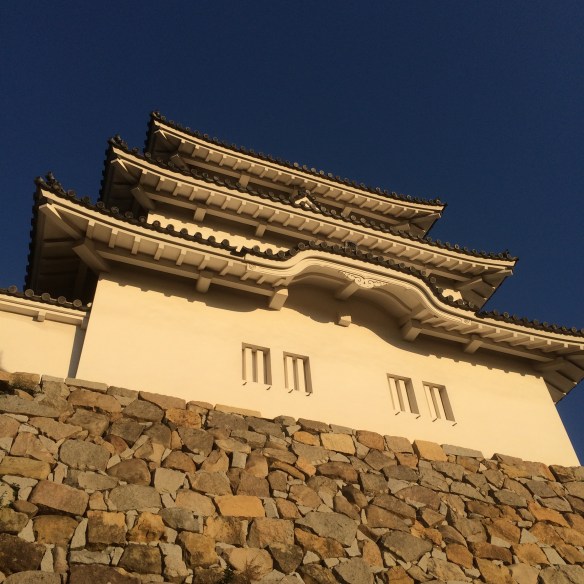
Akashi Castle – Photo © Rory Manchee – all rights reserved

My earliest visit to Tokyo, back in 1995, was to spend a few days with a friend from London who was managing a now-forgotten Britpop band on their debut tour of Japan. After attending a couple of their concerts, being entertained by their Japanese record company, visiting a few tourist spots and hanging out in a number of Tokyo nightclubs, it was a very limited/skewed introduction to the country.

My next visit the following year was even shorter, and even more skewed. Another friend from London (now a well-known writer and broadcaster) was supposed to be covering yet another Britpop band on their Japanese tour, on behalf of a British magazine. Instead, we scored some free tickets to see the Sex Pistols at Budokan (it was their infamous Filthy Lucre tour), and my one night in Tokyo was spent drinking with the band after the gig, in a bizarre subterranean bar. But that’s another story.

Most of my trips to Japan have been for business, and only to Tokyo. So this latest visit was an ideal opportunity to stretch out and explore in more depth. Over the next few posts, I’ll be commenting on my experiences, across such topics as coffee, AirBnB, art & architecture, crate digging and some navigational issues.

First, here are just a few of the reasons why I appreciate Japan:

  • The love of good design
  • Hardly any graffiti, virtually no petty vandalism, and scarcely any litter
  • The food
  • People rarely talk on their mobile phones on the train or in public places
  • The service culture and overall politeness
  • Trains run on time
  • The convenience stores
  • IC cards (take note, Myki…)

Of course, nothing’s perfect: Japanese TV is mostly awful; good espresso coffee is in short supply; everything comes over-packaged; and in many situations, it’s still a cash-only economy. I also appreciate that it’s a complicated society, often seen as repressed, and difficult for outsiders to understand.

But for all its challenges, Japan must be doing something right, as in-bound tourism numbers (especially from Greater China) are at record-breaking levels.

Next week: Seeing Japan with #Airbnb


Tourism: Time to Get #Digital

In the latest State of the Nation report, Roy Morgan Research shone a spotlight on Australian tourism, an industry which has the potential to make a larger contribution to national GDP following the commodities boom. But the industry needs to get smarter at leveraging digital technology and embracing disruptive business models to ensure sustainable growth.

Melbourne's White Night Festival (Photo: Paul Jeffers for The Guardian)

Melbourne’s White Night Festival (Photo: Paul Jeffers for The Guardian)

As the report highlights, digital is disrupting traditional operators through “automation and variable pricing of everything from hotel rooms to airline seats”, which combined with huge changes in media consumption “is impacting the very essence of the industry”.

What does this mean for the industry, and how should it respond? Here is a quick overview:

1. Tourism is a major contributor to exports and to GDP

According to data from the Department of Foreign Affairs and Trade, tourism generated over $14bn in exports in 2014, and is #5 after iron ore, coal, natural gas and education.

In particular, revenue from Chinese tourists, especially “Free and Independent Travellers” (FIT), grew 19% in 2014, and now accounts for around one-third of in-bound tourism revenue.

With an increasing proportion of Australia’s population born overseas (in large part driven by people coming here to study or to work from China, India and South East Asia), it’s only natural that their friends and family will come to visit them for holidays. And since they are likely to be more affluent visitors, they can afford to curate their own itineraries, rather than be locked into package tours.

2. Great attractions need even better infrastructure and UX

It’s no longer enough that Australia can boast many of the best natural, cultural and lifestyle tourism attractions in the world. Increasingly, catering for the “visitor experience” means that travel operators, hotels, resorts, attractions and destinations need to consider things like:

  • Multilingual and multicultural capabilities
  • Internet & WiFi access
  • Smartphone compatibility
  • Signage and navigation aids
  • Integrated services (e.g., transportation and visitor attractions)
  • Content and interpretive tools

3. Market and digital disruption means more choice for travellers

Disruptive market forces mean that tourists have more choice, and can access the sharing/informal economy, such as Uber and AirBnB.

Digital disruption also means a myriad of ways to discover, book and pay for transport, accommodation and services, aided by numerous apps that can bypass official travel and tourism services.

Visitors not only have more choice, they are more likely to be well-informed, having done their research before they arrive, aided by social platforms that offer personal reviews and recommendations.

4. What are the reasons tourists come to Australia (and what do we do with them once they are here)?

I don’t have any official data, but anecdotally, tourists come to Australia because in general they believe it’s safe (notwithstanding shark attacks and venomous insects), it’s clean, it’s unique, it has variety, and for some the language is also a convenience.

Whether it’s natural scenery, food and wine, cultural events, sport, historical sites, gambling, surfing, trekking, arts festivals, fashion weeks, galleries, museums, beaches, or just hanging out in coffee shops, Australia has a lot to offer.

I’m obviously biased, but Melbourne alone hosts a full calendar of cultural, sporting, culinary and commercial events – there’s something significant happening every month of the year:

  • Major Festivals – Jazz, Comedy, Film, Arts, Fringe and Cabaret (plus the Laneways Festival)
  • Special Events – White Night, SuperSense, Winter Masterpieces, Gertrude Street Projection Festival
  • Sport – Tennis, Spring Racing Carnival, AFL Grand Final, F1 Grand Prix, Boxing Day Test
  • Commercial – Food & Wine Festival, Design Week, Fashion Week, Art Fair, Trade Expos, Professional and Industry Conferences

And did I mention the coffee shops???

5. Some further opportunities?

Digital won’t displace these attractions; in fact it should make it much easier for tourists to discover, connect to and interact with them before, during and after their visit.

Digital can also help curate the whole end-to-end experience, from suggesting thematic itineraries, managing personalised bookings and organising customised events, to providing travel information and advice in advance, updating information throughout their stay, and keeping in contact with visitors once they leave.

And a personal plea – can Melbourne’s trendy restaurateurs that don’t accept bookings offer an app to let customers know when their table comes up on the waitlist?

Declaration of interest: The author currently consults to Roy Morgan Research. These comments are made in a personal capacity.

Next week: Update on AngelCube