101 #Startup Pitches – What have we learned?

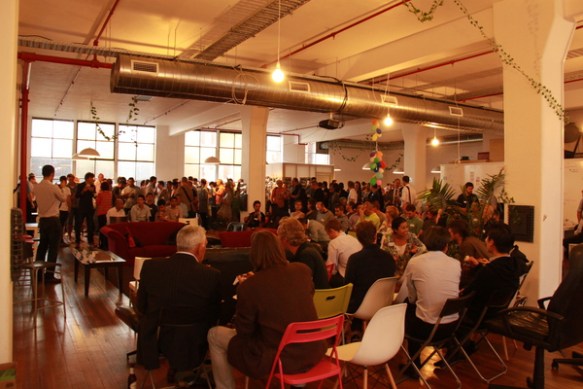
During the past 3 years of writing this blog, I have probably heard more than 100 startup founders pitch, present or share their insights. Most of these pitch nights have been hosted by Startup Victoria, with a few on the side run by the Melbourne FinTech Meetup and elsewhere.
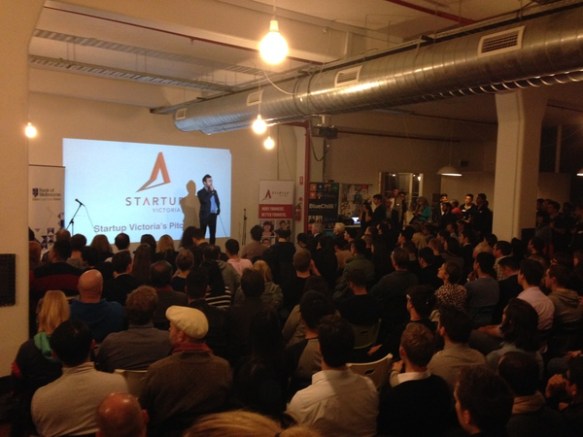
Image sourced from Startup Victoria Meetup

Image sourced from Startup Victoria Meetup

Based on all these presentations, I have collated a simple directory of each startup or pitch event I have covered or mentioned in this blog, as well as a few key accelerators and crowdfunding platforms.

What have we learned over that time?

First, apart from the constant stream of new startups pitching each month, it’s been impressive to witness the Melbourne startup community collaborate and support one another.

Second, some of the international founders who have spoken are among the rock stars of startups – and we are fortunate that they have been willing to spend time in Melbourne.

Third, a number of the local startups who have pitched during this time have become well-established and well-known businesses in their own right.

This all means that besides creating great products and services, and being willing to share their experiences, the founders have helped aspiring founders and entrepreneurs to appreciate the importance of:

  • product-market fit;
  • working with agile processes and lean startup models;
  • tackling prototyping and launching MVPs;
  • learning what to measure via key metrics;
  • figuring out funding; and
  • knowing when to pivot or fold.

Looking at the cross section of pitch nights, panel discussions and guest speakers, there are some significant trends and notable startups to have emerged:

Industry focus: Not surprisingly, the pitches are heavily biased towards FinTech, MedTech, Education, Digital Media, Enterprise Services and Consumer Services. There are a some key startups focused on devices (e.g., SwatchMate and LIFX); a smattering in recruitment, fashion, gaming, health and well-being, property services, social media and even logistics. But there are surprisingly few in environmental technology or services.

Business models: Two-sided market places abound, as do customer aggregators, sharing platforms (“the Uber for X”, or “the AirbnB of Y”), freemium apps and subscription services (as opposed to purely transactional businesses). There are also some great social enterprise startups, but surprisingly no co-operative models (apart from THINC).

Emerging stars:  Looking through the directory of startups, some of the star names to have come through during this time, based on their public profile, funding success, awards (and ubiquity at startup events….) include:

CoinJar, LIFX, Tablo, SwatchMate, etaskr, DragonBill, Culture Amp, Eyenaemia, Timelio, Moula, nuraloop,  Konnective, OutTrippin and SweetHawk.

Acknowledgments: Some of the startups and pitches in the list are just ideas, some don’t even have a website, and some didn’t get any further than a landing page. However, I have not been able to include all the startups that turned up at Startup Alley, nor the many more startup founders I have met through these events (but whom I didn’t get to see pitch or present), nor the startup ideas that were hatched during the hackathons I have participated in. And there are a few startups that I could not include because I heard them pitch at closed investor events. Finally, I am and have been very fortunate to work with a number of the startups listed, in various capacities: Brave New Coin, Ebla, Re-Imagi, Slow School of Business and Timelio. To these startups and their founders, I am extremely grateful for the opportunities they have given me.

Next week: Putting a Price on Value


The latest installment of Startup Victoria #pitch night

The numbers were out in force for the August edition of Startup Victoria‘s monthly pitch night. A full house (no doubt helped by a new beverage sponsor…) heard from another batch of startup hopefuls, operating in very different sectors: medtech, recruitment, food logistics and domestic services. Despite some AV issues, this event showcased some interesting businesses, all of them demonstrating some impressive early stage traction.

In order of appearance, the night’s pitches came from:

VideoMyJob

Launched in April 2016, this online tool allows recruiters and hiring managers to film, edit and share their job ads. The business already boasts more than 60 clients (some of them very high-profile), with the data suggesting an 82% higher success rate in hiring outcomes. This performance is largely attributed to the simple fact that candidates spend up to 4 minutes watching a video ad, rather than the average 12 seconds candidates spend reading a text-based ad before they submit an application.

The tool, which runs on a mobile device, includes a tele-prompt feature, in-app editing functions, a one-step process to publish to social, plus e-mail. Customer pricing is based on a $79 monthly subscription to place unlimited video ads. One reported benefit for clients is much stronger candidate short lists.

Given the changing dynamics in the recruitment market, where companies are finding themselves competing for talent and striving to become employers of choice, any new hiring solution has the potential to be a game-changer. Which is what the founders are probably banking on as their exit strategy, with a likely trade sale to a complementary recruitment platform.

PredictBGL

This medtech startup (previously known as ManageBGL) offers an app-based solution to help diabetes patients manage, monitor and predict their blood glucose levels. Despite regular patient testing, according to the founders, 80% of the data is actually ignored.

Able to offer more “real-time” testing, the app claims to fix wrong insulin doses within 3 hours (not the usual 14 days with traditional clinic-based testing), offers more precision dosing, and predicts patient levels up to 8 hours ahead.

It also has the option to incorporate live exercise data (from wearables), and serve patients who can’t afford expensive insulin pumps. As well as paying a monthly subscription, patients are also paying for insights based on the data. With a $10 per month fee, over 80% customer retention rates, and around 600 sign-ups per month, the app is breaking into the US market.

Asked about potential risk factors and the margin for error in patient testing, the founders explained that the user results are somewhat conservative, so they are embarking on clinical trials to refine the analytics.

Jarvis

Billed as “your very own personal butler”, Jarvis is one of a number personal concierge services, catering to the time-poor, inner-city residents who want to outsource domestic chores and errands.

From $33 per week (and an average of $55), Jarvis differentiates itself by offering a more personal touch, because the business hires and trains employees, rather than using freelancers or contractors.

Launched in January 2016, Jarvis is experiencing 20% growth per week, 90% customer retention, high referral rates and generating 10-15% margins. The founders are working on their logistical efficiency – routing, grouping – and deploying scalable technology – such as cluster algorithms. Pat of the attraction for clients is the fact that Jarvis does not see itself as a transactional service like some freelance and task-based apps and platforms.

The panel of judges asked about the risk of being disintermediated (by their own employees going direct to client). Jarvis claims that their key defense is the proprietary Butler app for employees.

Pantreeco

Last up was Pantreeco, which was established in 2014, with the goal of building “productive partnerships in food” by streamlining the logistics and supply chain communications between food suppliers and buyers.

A self-styled “co-commerce” solution, Pantreeco includes a messaging tool between producers, wholesalers, distributors, restaurants, cafes, grocers and providores.

Offering a freemium SaaS model (based on a per customer per channel basis plus commission), Pantreeco is in the process of taking its model to overseas markets via some major international expansion.

Asked by the judges about the competition, such as TradeGecko and Unleashed, the founders stress that they are not simply an e-commerce or inventory management solution. Instead, Pantreeco developing a range of integration services in response to customer demand – e.g., invoicing, accounting, communications as well as inventory management with 3rd party platforms such as Xero, ZenDesk and SalesForce. They also have plans to on-board major enterprise clients in the food and beverage industry.

Based on the audience voting, Pantreeco took out the honours on the night.

Next week: When robots say “Humans do not compute…”

Startup Victoria’s #Pitch Night for #Startup Week

The grand finale of Melbourne Startup Week was Startup Victoria‘s regular pitch night held at inspire9. Six months in, and this new monthly format has become a major fixture on the startup calendar, judging by the audience size, and the range of startups applying to pitch. There are still a few teething problems (the AV quality is a bit variable, and some of the judging panels are probably too “soft”…), but it’s established something of a benchmark against which other pitch nights might be compared. This month’s cohort covered medtech, wellness and the greetings industry.

StartUp Vic 240616

Cardly

Cardly is an online service that allows users to send personalized greetings cards to friends and loved ones. Under the banner of “you write, we post”, customers can choose from a range of artist-designed cards, add their own message, and Cardly will then print and send the card from a location as close as possible to the recipient (currently London, Sydney and New York).

A variant on the familiar 2-sided market model, Cardly has built a community of independent artists who supply the card designs. Artists are charged a sales commission on each order, and they get their own store front on Cardly. And for anyone struggling for words, there’s a range of predefined texts and doodles.

Because this is a print-on-demand model, using digital printing, there is zero wastage (unlike the traditional greeting card industry where over-production and limited distribution are commercial headaches). However, even with some “handwriting” fonts, there are some design and user limitations, which something like the Sensel Morph touch-sensitive track-pad may be able to address?

Cardly is aiming to take a chunk of the retail market and disrupt the global greetings card industry. The judges took a slightly different view. Based on the founders’ own data, consumer customers will probably send an average of 12 cards per annum, and at $6.45 per card, it’s a tough sell. However, by looking at a lower cost per acquisition, addressing the corporate market and offering a white label solution, the business would be in a better position to scale. There was also a suggestion for an engineered viral solution to drive traction through collaborative cards, and other ideas for partnerships (e.g., gift buying services and gift cards).

Cardihab

Cardihab (“Get Back To Life”) has appeared in this blog before, and is a CSIRO spin-out that has developed a mobile support solution for cardiac patients via an app and a patient/GP portal. As someone whose father is recovering from major heart surgery, this pitch got my personal vote!

The success rate is staggering – patients using the app are 70% more likely to complete rehab. So far, four hospitals have signed up, with three more in the pipeline. As well publishing their research, the founders see Cardihab as being a broader platform for managing chronic illnesses.

Currently in the process of getting investor ready, the proposed business model will charge an annual license for hospitals, plus a per patient fee.

The judges had some questions about the potential market (“Anyone with heart disease”) and wanted to know a bit more about the bench strength of the team.

Black

Staying with the medtech and after-care theme, Black‘s modest goal is to “revolutionise healthcare”, via an in-home observation solution that scans patient movement and analyses interaction with their helpers. The scanner strips out personal data (features, attire) using skeleton tracking to monitor movement and falls, while learning from patient gestures. It can use real-time alerts to contact helpers, carers and emergency services.

The scanning software is currently trialing in casinos to refine the machine-learning algorithms, and all trials are subject to ethical approval.

Although still at a conceptual stage (in terms of health care applications), and notwithstanding privacy concerns, this project demonstrates that predictive tools will be vital to helping the elderly and the infirm to continue living independently in their own homes, which will have significant advantages to the cost of long-term care, preventative health services, patient rehabilitation and after-care services. There are doubtless other, similar solutions in development, and the outcome will likely be a mix of blended services based on ease of use, cost of roll-out, system interoperability and patient efficacy.

Honee

Last to present was the team from Honee which is bringing digital connectivity to the wellness, fitness and beauty industry. The solution they offer is designed to make it easier to discover and book an appointment for a treatment, consultation or workout session, by connecting merchants and users.

With previous international experience at Delivery Hero, Quandoo and Zomato, the founders have strong startup business credentials in adjacent markets – connecting consumers to service providers via search discovery, customer reviews, personal recommendations and proximity.  Of particular interest in this sector is the growing “wellness travel market”.

There are undoubtedly competitors already working on similar solutions; and it may just be that I’ve seen far too many pitches in the past few years, but I’m sure there was a startup out there offering a “just in time” service to help find and book appointments for personal services – Fit Me In? – and I recall another comparable startup idea for restaurants to offer last-minute menu specials via a location-based app.

Nevertheless, as we know, execution is key, and the judges asked about the huge cost to build a consumer brand – hence Honee is focusing on service providers to get their brands on line. There is an MVP in pre-launch, and Honee has built a mobile responsive website, with a grant from the Melbourne Accelerator Program.

After the vote (and thanks to technology, the results of which were available in minutes….) Cardly was declared the night’s winner.

Next week: Moving #innovation from “permitted” to “possible”

Level 3’s Enterprise #Pitch night

As part of the recent Melbourne #Startup Week, IT consulting firm, Versent hosted a B2B pitch event at their product development lab, Level 3. Introduced by Thor Essman, the judges for the evening were Grant Thomson from York Butter Factory, Paul Naphtali of VC fund Rampersand, and Carl Rigoni, Head of Digital at Australia Post. It presented a very focussed cohort of enterprise solutions, that covered employee comms and engagement, design thinking and cybersecurity.

Screen Shot 2016-07-03 at 2.14.42 PMPax Republic

Pax Republic is positioned as an employee engagement platform that grew out of the founders’ background in mediation. Recognizing that organisational change programs have a high failure rate, the founders explained that lack of project or employee data isn’t the problem; it’s a shortage of actionable insights and recommendations.

The solution offers text-based content and scripted dialogue combined with AI and online facilitators. Many traditional enterprise tools don’t work, either because they don’t reduce time and cost, or they can’t scale.

When asked if AI can measure sentiment or mood, the founders explained that the system makes use of emoticons to capture employee feedback plus keystroke analysis. In terms of a commercial model, the goal is to train up internal facilitators to deliver the service, rather than getting involved with specific change management projects.

The judges felt that the pitch needed to refine the problem statement and the solution proof points, as well as explain what makes this solution different. In particular, who is the buyer? It’s also important to tell the sales story, and expand on the risk transfer and pricing benefits.

Forticode

Forticode has developed an elegant and deceptively simple password protection solution, to remove the risk and costs of password resets for their corporate clients. Basically, it can support multi-factor authentication using colour coding and a randomized keypad, incorporating character sets as well as emojis.

It can provide context aware authentication, and native protection from endpoint hacking attacks, via a plug-in architecture and 3-factor authentication, using patented technology.
According to the founders, finger prints are immutable, but still do not provide 100% identity confirmation on touch screen devices.

There were questions from the judges and the audience about alternative solutions. Compared to an IPA gateway for trust and authentication or password aggregators, Forticode offers a much more robust solution and can support machine-to-machine verification.

The sales model is to target security teams within risk and compliance departments, and price on a per user per month basis. Importantly, there is no third-party software in the stack. And, there was even an offer to introduce the founders to Auspost….

Naked Ambition

With the tag line of “Always Be Creating”, Naked Ambition is a consultancy for innovation and design thinking. Their process is to focus on future needs, help clients get closer to their customers, and in doing so, help employees to leverage customer insights. The ultimate goal is to make design thinking skills ubiquitous. Naked Ambition’s aim is to embed the teaching in the organisations they work with.

The judges questioned who exactly is the customer, and what segments do they work in? There was also some discussion whether the service was more about personal branding and intrapreneurship, rather than pure solution design.

In particular, the judges wanted to know what gives Naked Ambition the “license” to offer their services? Despite hiring a leading design thinking expert from IBM, there was a sense that there is an oversupply of similar services, and that clients are not looking for yet another program. Instead, they are thinking about “buying units of innovation” for specific projects, as and when they need them.

Konnective

Last to present was Konnective, a business I have blogged about before. In short, this is an employee messaging app for frontline staff, many of whom do not have corporate e-mail addresses, let alone access to a their own desktop computer.

As part of the product development, Konnective now offers Groups, dashboards, analysis of what’s working and employee reach. Charging a basic annual fee per employee, Konnective has clients in mining, healthcare and manufacturing. The platform supports OH&S comms, promotes shift availability that can reduce agency hiring fees, and help reach hourly employees who don’t access corporate e-mail.

The judges asked about BYOD, and the risk of/resistance to having organisational data on personal mobile phones. Plus, why Konnective and not, say Yammer or Slack? These are answers that need to be made more explicit. Finally, Konnective is still working on data analytics, and there was a suggestion of opportunities among travel companies and tour guides, but that would require some multilingual capabilities.

On the night, Forticode won the judges over and took out first prize. This was the second of these events, and I look forward to attending more in future.

Next week: Startup Victoria’s #Pitch Night for #Startup Week