“The Digital Director”

Last year, the Australian Institute of Company Directors (AICD) ran a series of 10 webinars under the umbrella of “The Digital Director”. Despite the title, there was very little exploration of “digital” technology itself, but a great deal of discussion on how to manage IT within the traditional corporate structure – as between the board of directors, the management, and the workforce.

There was a great deal of debate on things like “digital mindset”, “digital adaption and adoption”, and “digital innovation and evolution”. During one webinar, the audience were encouraged to avoid using the term “digital transformation” (instead, think “digital economy”) – yet 2 of the 10 sessions had “digital transformation” in the title.

Specific technical topics were mainly confined to AI, data privacy, data governance and cyber security. It was acknowledged that while corporate Australia has widely adopted SaaS solutions, it lacks depth in digital skills; and the percentage of the ASX market capitalisation attributable to IP assets shows we are “30 years behind the USA”. There was specific mention of blockchain technology, but the two examples given are already obsolete (the ASX’s abandoned project to replace the CHESS system, and CBA’s indefinitely deferred roll-out of crypto assets on their mobile banking app).

Often, the discussion was more about change management, and dealing with the demands of “modern work” from a workforce whose expectations have changed greatly in recent years, thanks to the pandemic, remote working, and access to new technology. Yet, these are themes that have been with us ever since the first office productivity tools, the arrival of the internet, and the proliferation of mobile devices that blur the boundary between “work” and “personal”.

The series missed an opportunity to explore the impact of new technology on boards themselves, especially their decision-making processes. We have seen how the ICO (initial coin offering) phase of cryptocurrency markets in 2017-19 presented a wholly new dimension to the funding of start-up ventures; and how blockchain technology and smart contracts heralded a new form of corporate entity, the DAO (decentralised autonomous organisation).

Together, these innovations mean the formation and governance of companies will no longer rely on the traditional structure of shareholders, directors and executives – and as a consequence, board decision-making will also take a different format. Imagine being able to use AI tools to support strategic planning, or proof-of-stake to vote on board resolutions, and consensus mechanisms to determine AGMs.

As of now, “Digital Directors” need to understand how these emerging technologies will disrupt the boardroom itself, as well as the very corporate structures and governance frameworks that have been in place for over 400 years.

Next week: Back in the USA


Goodbye 2020

Just when we thought it was safe to go out and about, Covid19 has once again put much of Australia on high alert, following the latest virus outbreak in New South Wales. And with impeccable timing, this cluster has emerged only a few days before the Christmas holidays – peak super-spreader season. On top of the months of lock-down, working from home, toilet paper shortages, job losses, food deliveries, economic disruption, closed borders, non-stop streaming, social distancing, restricted movements, panic buying, mask wearing, night-time curfews, Zoom calls, on-line shopping, cancelled events and home-made entertainment, we now have the prospect of a muted festive period. Like most people, I will be glad to see the back of 2020 – not that 2021 will necessarily be a whole lot better, given the ongoing rates of infection around the world, and the other knock-on effects of the pandemic.

My holiday plans are all mapped out….

Overall, I can count myself fortunate to have had a “good pandemic” – I managed to keep working from home, I don’t work in any of the front line sectors (health, education, hospitality, logistics, tourism), I live close to public parks and open spaces for daily exercise, and none of my immediate family or circle of friends caught the virus (although I have spoken to a number of people who were not so lucky). However, my travel plans were severely disrupted, so I have been unable to see any of my family overseas, and the prospect of visiting them in 2021 still looks remote.

As I write, the Report into Victoria’s failed Hotel Quarantine Program has just been released. The findings conclude that no single person was responsible for the ill-fated decision to engage private security firms to enforce the quarantine restrictions (which in turn led to Victoria’s second wave and Stage 4 lock-down for over 100 days). Instead, the Report underscores the notion of “acquiescence” (and “creeping assumptions“) – and of course, the failure of governance and proper decision-making.

The significance of this Report is now being brought into stark relief in light of the latest NSW outbreak – which appears to be as a result of a breach in hotel quarantine measures. Having read the Executive Summary, it’s clear that respective Victorian government departments and agencies charged with implementing and managing the HQP did not understand their specific roles and responsibilities. Regardless of the decision to engage private security firms, it seems that the procurement process was seriously flawed; and even if the Department of Jobs, Precincts and Resources was not at fault in how it hired certain private-sector security firms, it’s a serious oversight (and failure of process) that neither it nor the Department of Health and Human Services were fully aware of who was accountable for monitoring these contractors.

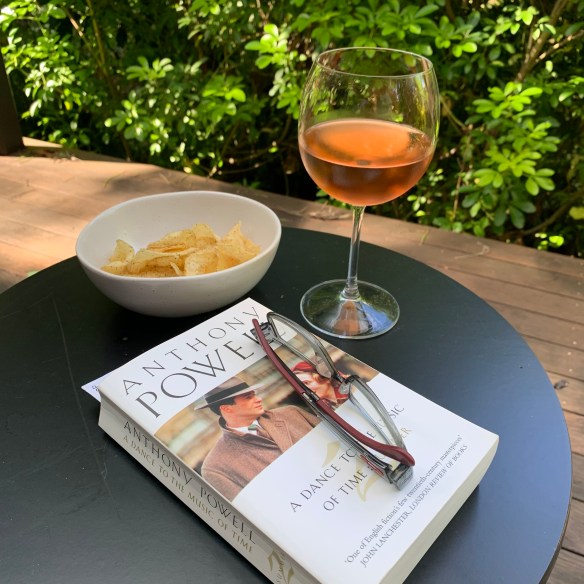
Of course, the ramifications of the US Presidential Election and a no-deal Brexit are still playing out – and the New Year is unlikely to bring immediate closure. For myself, I am lying low and staying close to home during the Saturnalia celebrations. As the above photo suggests, my plans involve nothing much more than catching up on my reading, and exploring my wine collection. Consequently, this blog will be taking a break for a few weeks, but I trust that this holiday season will bring a welcome respite from the events of 2020 for you and yours. Thanks for reading.

Next: The NGV Triennial


Making Creeping Assumptions

Even if the recent Board of Inquiry into Victorian Hotel Quarantine Program does not reveal who actually made the now fatal decision to engage private security companies, it will have at least added a new phrase to the lexicon of public discourse – the notion of “creeping assumptions”.

To recap, based on the evidence presented during the public hearings, we have been led to believe that no single person, department or government agency made the all-important decision. Instead, we are left to conclude that this was a decision made by default, based on a series of “creeping assumptions”.

What this suggests is that rather than a conscious or affirmative decision, the parties relied on their own interpretation of unfolding events and information flows to conclude that someone else had made the call to outsource hotel security, and as a consequence everyone involved simply went along with it. As I have pointed out before, the decision to engage private contractors is not the issue. But it does beggar belief that even if nobody could recall who made the decision, they could not point to the information that informed their assumptions, nor could they specify who instructed the drawing up of the commercial contracts. As a result, the Victorian Government has spent $6m to find out who signed off on $30m of expenditure.

Anyway, one of the consequences of these so-called creeping assumptions is that the decision-making was deeply flawed because it lacked process, scrutiny and accountability:

  • Process was clearly missing (unless the Inquiry finds otherwise), because of the absence of documented minutes or formal note-taking.
  • There was no scrutiny of the “decision”, to confirm the various dependencies and delegated authorities that initiated the contracts issued to private contractors.
  • And the fact that no-one can be identified as being responsible for the decision, could mean that no-one can be held accountable.

If nothing else, this will become a case study for students of politics, public administration, and corporate governance.

Next week: Bread & Circuses

Three Wise Monkeys

At the time of writing, Melbourne is poised to move out of Stage 4 lock-down – but don’t hold your breath in anticipation: we have become used to the drip feed of information, contradictory policy narratives, and the political process of softening up the public not to expect too much too soon.

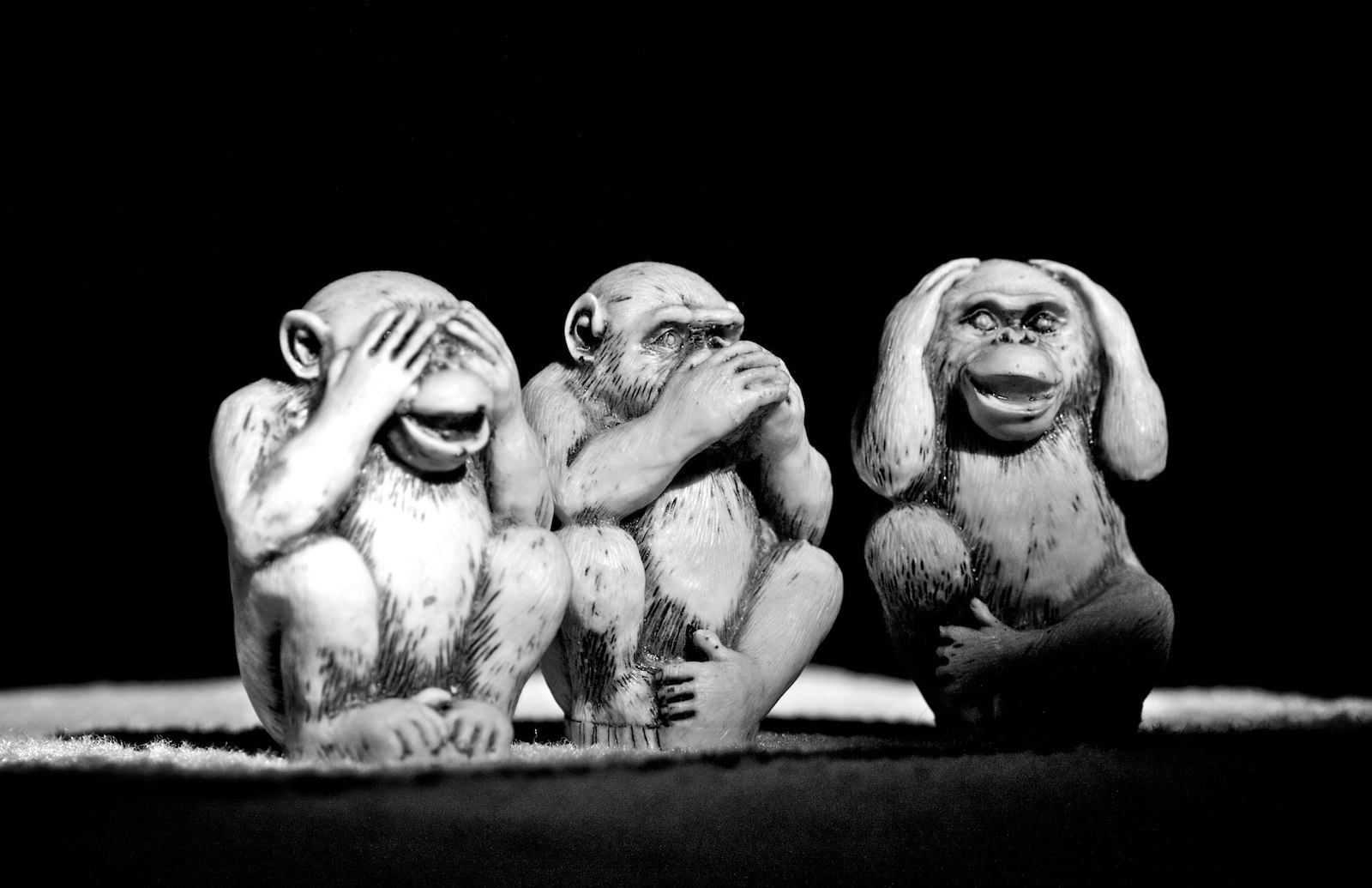
Three Wise Monkeys – Image by Anderson Mancini, sourced from Flickr

Meanwhile, the Public Inquiry into the failure of the Hotel Quarantine Programme will this week feature three key political witnesses, namely the State Premier and his Ministers for Health and Jobs respectively. Based on the evidence given to the Inquiry so far, plus the Premier’s daily press briefings, it’s clear that no-one in public office or in a position of authority can say specifically who, how and when the decision was made to engage private security firms to implement the hotel quarantine arrangements.

Of itself, the decision to outsource the hotel security should not have been an issue – after all, the State Government engages private security firms all the time. However, it has now been established that nearly 100% of the community transmission of Covid19 during Victoria’s second wave of infections can be traced back to returning travellers who were in hotel quarantine. On top of that, the Inquiry has seen evidence of people breaching the terms of their quarantine, and has heard a litany of errors and mismanagement at every level of administration.

Although the Premier as leader of the Government has claimed overall responsibility for the quarantine debacle (and which led to him imposing the Stage 4 lock-down), it’s worrying that no-one in his administration (himself included) can recall the details of the fateful decision. Pending the outcome of the Inquiry (and the result of the next State Election), it remains to be seen whether the Premier or anyone else is actually going to be held directly accountable for the blatant quarantine failures.

Not only that, but Ministers, their senior civil servants and key State Administrators all seem to be denying responsibility for making any concrete decisions on the hotel quarantine security arrangements, let alone to knowing who did, when or how. It’s like a bizarre remake of the Three Wise Monkeys, in triplicate: first, we have the Premier and his two key Ministers; then you have their respective Departmental Secretaries; finally there is the Chief Health Officer, the Chief Commissioner of Police and the Emergency Management Commissioner.

Instead of “see no evil, speak no evil, hear no evil” it’s more a case of: “I didn’t see who made the decision, I didn’t speak to anyone who made the decision, and I certainly didn’t hear from anyone who did make the decision“. In exchanges with the media and at the Inquiry, some of the players have even tried to deflect responsibility onto their counterparts, along the lines of, “I assumed X had made that decision”, or “the decision had been made before I got to the meeting”.

Yet, somehow, a decision was made.

So was the decision taken telepathically, organically or via a process of osmosis – the people involved simply “knew” or “sensed” that a decision had been made?

In case anyone think I am being unfair or I am deliberately misconstruing the situation, let’s follow the logic of what we are being told, and as a consequence, what we are being asked to believe. Earlier this month the Hotel Quarantine Inquiry heard evidence about an apparent administrative “decision” to exclude the Chief Health Officer “from taking control of the state’s coronavirus response against his wishes and in contradiction to the state’s own pandemic plan”.

A few weeks prior, the Premier was reported as saying:

I wouldn’t want anyone to assume that anyone had made an active decision that [the Chief Health Officer] should be doing certain things.”

And there is the nub of the issue – as voters and tax payers, we are expected to believe that none of our elected representatives, civil servants or public officers have made specific decisions about key aspects of the public health response to the pandemic.

In his evidence to the Hotel Quarantine Inquiry, the Secretary to the Department of Premier and Cabinet gave further insight into the decision-making processes. Like his colleagues and counterparts, he was “unaware” who ultimately made the decision to use private security firms. Instead, he suggested that decision-making was shared among key experts:

“I have a strong view that the concept of collective governance where you’re bringing together the special skills of different actors to deal with complex problems is an important part of how we operate,” he said. “So you’ve asked for my response, as the head of the public service, I can see some legitimacy in the idea of there being collective governance around an area such as this.”

So does “collective governance” mean that no single person is responsible for decision-making (and as such, no individual can take the credit or be blamed for a specific decision)? Or does it mean that everyone involved is responsible, and as such they are all accountable for the decisions made by the “collective”, or which are made in their name or on their behalf? In which case, if the decision to engage private security firms was the root cause of the second wave and the Stage 4 lock-down (and all its consequential social and economic damage) should the “collective” all fall on their swords?

As the Guardian commented last week:

“The hearings have been running for several weeks now, and no one has yet claimed personal responsibility for the decision to use private security guards in hotel quarantine. The murkiness around this decision […] has become almost more significant than the decision [itself]. In inquiries like these, being unable to elicit a clear answer to such a key and really simple question is usually not a good indicator of the underlying governance protocols in place.”

Having once worked in the public sector for five years, I know that there are basically four types of decision-making outcomes in Public Administration:

  1. A good decision made well (due process was followed, and the outcome was positive and in accordance with reasonable expectations – job done)
  2. A poor decision made properly (the due process was followed, but unfortunately it turned out badly – shit happens)
  3. A good decision made poorly (we stuffed it up, but sometimes the end justifies the means – high-fives all round)
  4. A poor decision made poorly (no-one in their right minds would have come to that conclusion, and the results speak for themselves – we’re toast)

Subject to the evidence to be presented to the Inquiry this week (and depending on how the transition out of Stage 4 lock-down goes), I fear that in the case of the decision to outsource hotel quarantine security, it sits squarely in category #4.

I can almost imagine the scenario when the “decision” to hire private security guards was communicated to the various Ministers, Civil Servants and Public Officers:

Member of the Collective #1: “OK, the State Government has been asked to implement the Hotel Quarantine programme on behalf of the Commonwealth, so we need you, you and you to organise the security hiring arrangements. We don’t care how you do it, or who you use, but just get it done, and make sure that any poor outcomes can’t be attributed to any of us.”

Member of the Collective #2: “Can we take up the offer of assistance from the ADF?”

Member of the Collective #1: “Don’t ask. (Don’t get.)”

Member of the Collective #2: “Oh, so we’re working under a policy of plausible deniability?”

Member of the Collective #1: “You didn’t hear that from me.”

Member of the Collective #3: “Is so-and-so aware of this decision?”

Member of the Collective #1: “I don’t know, and you don’t need to know either.”

Member of the Collective #4: “Got it. Didn’t see it, didn’t say it, didn’t sort it.”

Of course, this dialogue is pure conjecture on my part, but I think we’ve all seen enough episodes of “Yes Minister”, “The Hollowmen” and “The Thick of It” to know how these things play out….

Next week: The Age of Responsibility