All that jazz!

I’d be the first to admit I’m a music snob. Not that I think my tastes are better than anyone else, just that they are very particular. I like to think I have an informed opinion about the listening choices I make.

When I went to university, I was asked if I had any preferences about whom I shared student accommodation with. “No heavy metal freaks or jazz buffs”. I’ve still not changed my opinion of heavy metal, but my attitude towards jazz, like my appreciation for red wine, has only improved with age.

Not all, jazz, mind. Two words that strike dread in me are “gypsy jazz” – along with trad, dixieland and rag time, I find it most of it too fiddly, over-ornate, bordering on cheesiness. Similarly, for me, listening to “smooth” artists like Kenny G is akin to wading through treacle. There are certain instruments that I find very difficult to stomach in a jazz context – trombone, soprano saxophone, violin and acoustic guitar. And the big band sound is something I can only endure very selectively. Much of what is labelled fusion also leaves me cold, although I do make an exception for Soft Machine.

I suppose my point of entry is post bop, along with modal and free jazz. And while cool jazz can take itself far too seriously, at least it generally doesn’t fall into the trap of virtuosity for its own sake. (I’m always reminded of the criticism of Mozart attributed to Emperor Joseph II – “too many notes!” – when it comes to the noodly end of the jazz spectrum.)

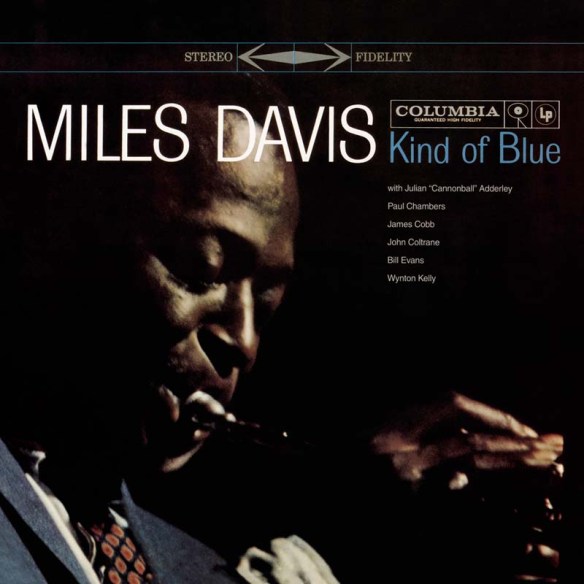
Like many people, one of my first real engagements with jazz was Miles Davis’s “Kind of Blue”. As a self-contained statement on “modern” jazz, it still astonishes with each listen. Despite its ubiquity, I never tire of hearing it. (In point of fact, the first Davis album I sought out was “In A Silent Way”, after it was used as a reference point in a review of A Certain Ratio’s debut album. Strange but true.) I’ve since come to appreciate the full canon of Davis’s work, although I have never warmed to his final records, recorded for the Warner Brothers label. His albums are often grouped into specific periods, rather like Picasso’s art, which only adds to his status and legacy.

At various times, my personal journey (and at specific stages in their careers) has encompassed Thelonious Monk, Modern Jazz Quartet, John Coltrane, Oscar Peterson, Ornette Coleman, Herbie Hancock, Pharoah Sanders, Alice Coltrane, Nina Simone, Stan Getz, Keith Jarrett, Freddie Hubbard, Wayne Shorter, Ahmad Jamal, Mulatu Astatke, Sun Ra, Chet Baker, Antonio Carlos Jobim, McCoy Tyner, Eric Dolphy, Hank Mobley, Joe Henderson, Cecil Taylor, Marion Brown and Albert Ayler.

In terms of newer and contemporary artists, the only one who has managed to sustain my interest is Brad Mehldau, in particular his live solo performances – where he seems to have picked up from where Keith Jarrett left off in the 1990s.

And as I get older, I find that the only music radio station I can listen to is ABC Jazz….

Next week: Wholesale Investor’s Crypto Convention 

MoMA comes to Melbourne

For its current “Winter Masterpieces”, Melbourne’s NGV International gallery is displaying around 200 works from MoMA’s permanent collection. And a finely selected, and well-curated exhibition it is. But this focus on the received canon of mainly 20th century European art has the inevitable effect of sidelining other eras/schools – and perhaps overlooks the importance of Australia’s own art movements.

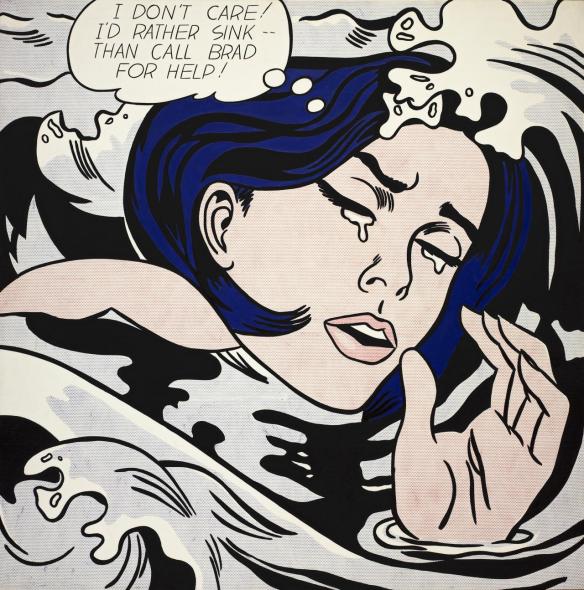
Roy Lichtenstein (American 1923–97): “Drowning girl” (1963 – oil and synthetic polymer paint on canvas, 171.6 x 169.5 cm); The Museum of Modern Art, New York – Philip Johnson Fund (by exchange) and gift of Mr. and Mrs. Bagley Wright, 1971
© Estate of Roy Lichtenstein/Licensed by Copyright Agency, 2018

The NGV International display presents the work in a broad chronological sequence, but specifically collated by reference to key movements, themes and styles. It also takes in print-making, photography, industrial design, graphics and illustration, not just painting and sculpture.

Even though I have visited MoMA many times, and seen the bulk of these works in their usual setting (as well as when they have been on loan to other galleries), there were still some surprises – like Meret Oppenheim’s “Red Head, Blue Body”, which I don’t recall seeing before. And Salvador Dali’s “The Persistence of Memory” always feels like it is much smaller than the ubiquitous reproductions and posters imply.

Of course, one of the benefits of presenting a survey of modern art like this is that it affords us the opportunity to re-assess and re-calibrate the works within a contemporary context. Both to find new meaning, and to compensate for the over-familiarity that many of these images convey. While at times, we have to separate the artists’ lives and times from the legacy of their work – the changing conventions and social mores of our contemporary society cannot always be used to judge the behaviours, values or common prejudices that were acceptable 100, 50 or even 25 years ago.

Meanwhile, over at NGV Australia, there is a reconstruction of the exhibition that marked the opening of the gallery’s new building in 1968. In “The Field Revisited”, we have a fascinating opportunity to experience a slice of Australian art that feels over-looked and under-appreciated – ironic, given that at the time, this exhibition revealed the cutting-edge nature of young artists working in Australia, and divided opinion among established artists and the art establishment. “Where are the gum trees, where are the shearers, where are the landscapes, where are the figurative images?” might have been the refrain in response to this startling collection of bold colours, geometric designs, psychedelic undertones, modern materials, and unorthodox framing.

The fact that far more people are flocking to see the MoMA collection (and it is worth seeing), than are visiting the re-casting of The Field sadly confirms that Australia’s cultural cringe is alive and well….

Next week: Modern travel is not quite rubbish, but….


Bad sports

This past weekend saw the culmination of two major sporting events – the Wimbledon Championships and the FIFA World Cup. Both tournaments featured some amazing matches and some outstanding results. They also were largely free of the player tantrums and unprofessional conduct that often besmirch these occasions. In fact, the number of red cards issued at Russia 2018 was the fewest for 40 years. At the risk of ruffling a few feathers, it feels such a shame that much of Australian professional sport appears to be out of step with this broader mood.

Australian sporting prowess is something of a national (if not economic) obsession. After every Olympics, there is a post mortem on how many (or few) gold medals Australia wins compared to the amount of tax payer money invested in elite athletes. (It is sometimes said that the job of Prime Minister competes for importance with that of captaining the Australian cricket team.)

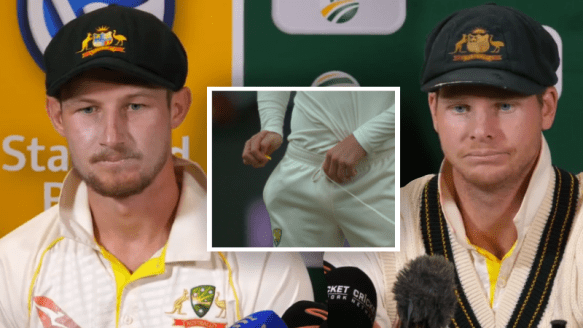
Sadly, the desire to win at any cost, or to do whatever it takes to succeed, has had some serious and negative consequences in recent times. Whether it’s the Australian cricket team (playing the game their way – by “headbutting the line”…), certain Australian tennis players (competing only when and if it suits them), or the national basketball team (taking matters into their own hands….), there is an uncomfortable sense of entitlement among some sports professionals.

In the wake of the Test Match ball tampering incident, there was a considerable amount of Schadenfreude – as if the Australian cricket team had got their comeuppance. If the history of on-field sledging and the boorishness of their coach had not been enough to tarnish the reputation of the national side, “tampergate” was the final straw.

My own first exposure to a key part of Australian sporting culture was age 10. I had recently moved here from the UK, and the English cricket team had just won the Ashes, the first time for many years (a familiar pattern for their long-suffering supporters). Such was the impact of this apparent shock to the Australian psyche that at school, I was called a “Pommy bastard”. The irony is that up until that point, I had no interest in the Ashes – thereafter, I resolved to support England ….and any team playing Australia.

Next week: MoMA comes to Melbourne


The first of three musical interludes….The Album Trilogy

Content in Context is on the road again, so over the next three weeks, instead of the usual stuff, please enjoy a series of musical interludes. And in keeping with that trio theme, the first addresses the the notion of “the album trilogy”.
Images sources from various public websites

I don’t mean triple albums (i.e., no bloated live collections, or multi-disc greatest hits…) but three individual studio albums, released sequentially, by a single artist or band. They weren’t necessarily conceived as a trilogy, but somehow they have come to form a self-contained, mini-canon. Either they reflect a key period in the artist’s career, and/or they represent a significant shift in style and content.

Few artists are capable of sustaining seismic shifts in their output. Sure, plenty of artists can turn out reasonable runs of “consistent” albums (read: same again, or “why mess with a winning formula?), but few have created a truly unique and memorable sequence of three albums, that can also each individually hold their own in lists of all-time great records.

Even a band like the Beatles failed to create such a trilogy: yes, Sergeant Pepper and Abbey Road are both great albums, but however you cut it, the albums either side of those releases were either patchy (inside the double White Album lies an amazing single album…), compilations (Magical Mystery Tour, Yellow Submarine), or released out of sequence (Let It Be). And their contemporaries and friendly rivals, the Beach Boys, could not match the genius of Pet Sounds – neither Wild Honey nor Smiley Smile (as good as they may be in parts) managed to sustain that level of quality, especially in light of the subsequent reworked/reissued “lost” albums that lurked within their 1967-1968 recording sessions.

So, with no other criteria, here is a list of my favourite album trilogies (and like any other music list, the selections are highly subjective):

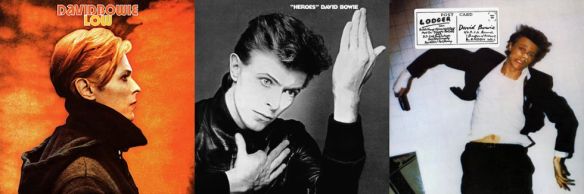
David Bowie: Low, “Heroes”, Lodger (The Berlin Trilogy) – A pivotal time in Bowie’s career, reflecting his European exile (following his US meltdown), helped by Brian Eno, and largely inspired by the city it references (where much of the material was produced). Plus, after his folk, glam and plastic soul periods, these albums include some of his most enduring songs. Aside from 1980’s Scary Monsters (something of a related coda to the Berlin albums), Bowie would never quite reach the same critical success until his final two albums, The Next Day and Black Star.

Talking Heads: More Songs About Buildings and Food, Fear of Music, Remain in Light – also helped by Eno, these albums showed the band shift in style, sentiment and subject matter. The albums that followed featured a few great songs, but nothing of the sustained output of the trilogy.

Bob Dylan: Highway 61 Revisited, Bringing It All Back Home, Blonde on Blonde – Dylan goes electric, finds his groove, and writes some of his best material, before going “country”…. He could have had a further trilogy incorporating Blood on the Tracks and Desire, but the previous album, Planet Waves is a poor effort, and after Desire, Dylan found sanctimony, religion and reggae.

Wire: Pink Flag, Chairs Missing, 154 – Rather like the punk era they emerged from, Wire’s first three albums are a 1,2,3 assault on your musical senses. Despite being closely identified with punk, taken together these albums totally outclassed most of their contemporaries.

Magazine: Real Life, Secondhand Daylight, The Correct Use of Soap – Like Wire, Magazine emerged from the ashes of punk, and like Wire, with their first three albums, they defined much of what has become to be known as post-punk (and also transcended most of their contemporaries). Plus, they came from Manchester.

Bjork: Debut, Post, Homogenic – Across her first three solo releases, Bjork established and defined a musical individuality that continues to this day: choosing to work with interesting combinations of producers and musicians, exploring different song-writing and composition styles, and developing a distinct narrative arc across each album.

Madonna: Bedtime Stories, Ray of Light, Music – This sequence of albums probably represents Madonna’s critical peak (not necessarily the height of her commercial success). Certainly they present a more mature and sophisticated sound, and draw on Madonna’s knack for choosing songwriters and producers that are in tune with (and even define) the zeitgeist – a trait she shares with Bjork.

Dusty Springfield: Where Am I Going, Dusty … Definitely, Dusty in Memphis – I’m not sure if this classifies as a guilty pleasure, but this sequence of late ’60s releases saw Dusty Springfield transition from her previous albums of pop, standards and show-tunes to more focused, classic soul and r’n’b – but still including her choice of key ballads by Bacharach & David (a constant factor in her repertoire).

Kraftwerk: Trans-Europe Express, Man Machine, Computer World – The albums that defined electronica and modern dance music. Sure, Autobahn was a breakthrough album, but compared to that huge success, Radioactivity was something of a curious follow-up (although it seems to have gotten better with time). And afterwards, it largely seems that Kraftwerk have been content to keep re-cycling/re-working/re-visiting their earlier work.

Massive Attack: Blue Lines, Protection, Mezzanine – The “Sound of Bristol”, that helped trigger the genre known as trip-hop (now something of blighted category). OK, purists may argue that No Protection came between Protection and Mezzanine, but I see it as a remix album (albeit a very good one). Each album is also built around key female guest vocalists, that unlike many other “featuring” collaborations do not feel like gimmicks or marketing ploys.

Nick Drake: Five Leaves Left, Bryter Later, Pink Moon – By sad fate, this is the entire output of Nick Drake’s short recording career. Not much more I can say, other than he achieved far more with these three albums than most singer-songwriters have managed with much larger output. Less is definitely more.

Close calls: Other artists that nearly made the cult of the trilogy include: Elvis Costello, Flaming Lips, OMD, John Cale, Radiohead, Brian Eno, Pink Floyd, New Order, Beck, Cocteau Twins, Sonic Youth, Echo & the Bunnymen…

Next week: The Soundtracks of My Life…