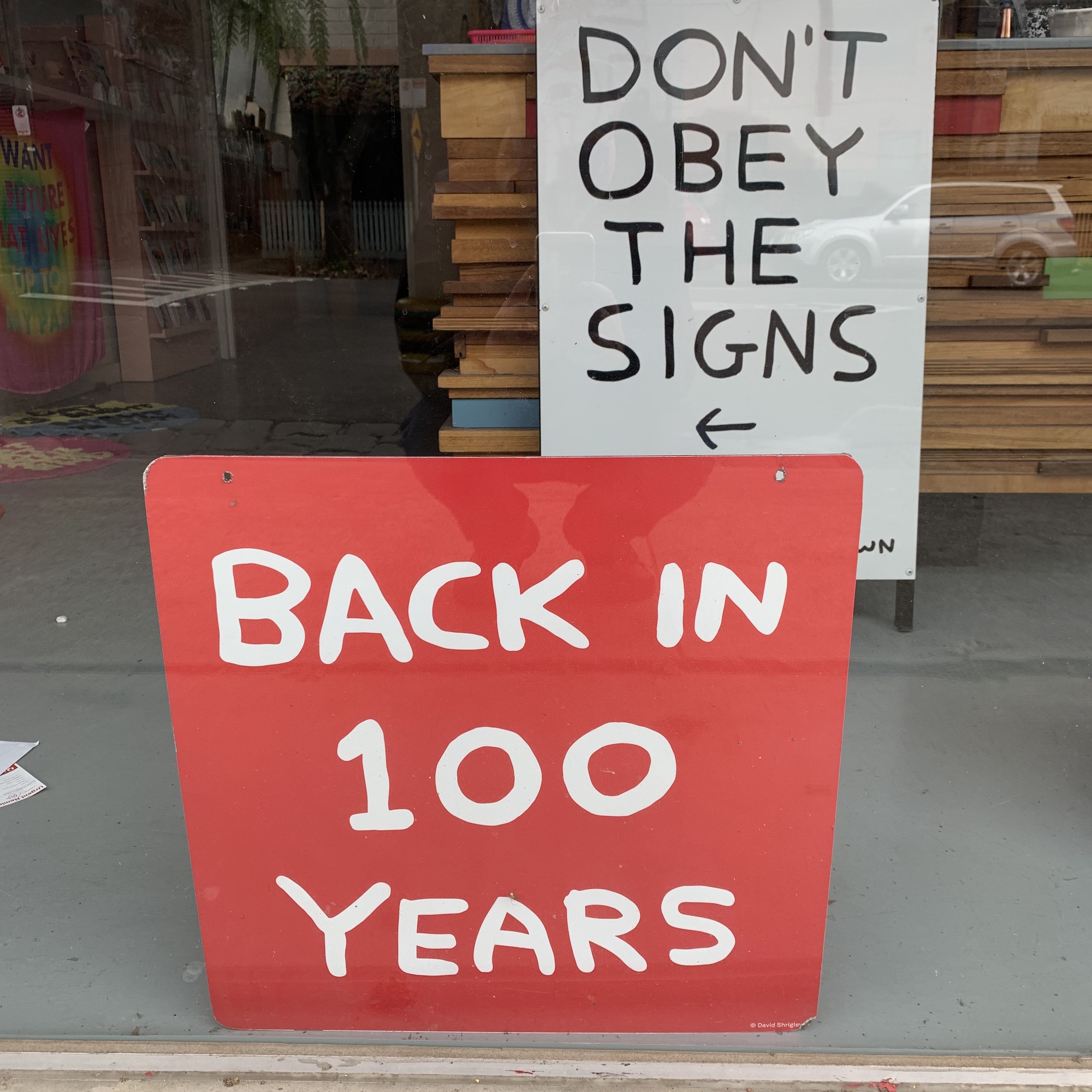
Expats vs Ingrates?

Just as we were starting to think that Australia has largely beaten Covid, the past few weeks has seen the topic heat up again on a number of fronts, especially the thorny issue of border control.

First, a series of community outbreaks in and around Brisbane, Sydney and Melbourne were all traced back directly or indirectly to returning overseas travellers. This again brought the hotel quarantine programme into the spotlight – and given the poor record of Victoria’s HQP management (which led to the Stage 4 lock-down for much of last year, as well as causing several hundred deaths among aged care residents), State Governments are under increased scrutiny not to stuff it up (again).

Second, there are something like 35,000 Australian citizens living and working overseas who are still trying to get home. Since many of them are based in countries with escalating infection rates (and extra-contagious strains of Coronavirus), it’s no wonder there is a lot of circumspection about bringing them back in a hurry. While I have a lot of sympathy for those expats who are stranded overseas, at the same time, they went abroad by choice. There is always a risk that international travel can be disrupted, as we have witnessed with increased regularity over the past 20 years, thanks to terrorism, volcanoes, tsunamis and geopolitical events. However, this has not stopped some expats complaining that their fellow Australians don’t want them back; some have been highly critical of this “smug” attitude: “we’re all right, but you can stay away and fend for yourselves”.

Third, the latest domestic border closures left numerous Victorian residents stuck in NSW. Many of them had only recently managed to travel interstate for the holidays, having just emerged from months of local lock-down. No doubt some of those affected may have a bit more sympathy for those Australians stranded abroad?

Of course, all these border restrictions might not be so hard to stomach if we didn’t have the spectacle of professional sports players being flown in (specially from overseas) to hit a few balls around. The fact that one cohort of these international visitors has managed to bring Covid back into the country is not helping. Nor the fact that a few of these over-paid sports “stars” and their partners appear to be acting like spoiled brats as they endure quarantine in 5-star hotels…..

Talk about being ungrateful.

Next week: The Day That Can’t Be Named…
Goodbye 2020

Just when we thought it was safe to go out and about, Covid19 has once again put much of Australia on high alert, following the latest virus outbreak in New South Wales. And with impeccable timing, this cluster has emerged only a few days before the Christmas holidays – peak super-spreader season. On top of the months of lock-down, working from home, toilet paper shortages, job losses, food deliveries, economic disruption, closed borders, non-stop streaming, social distancing, restricted movements, panic buying, mask wearing, night-time curfews, Zoom calls, on-line shopping, cancelled events and home-made entertainment, we now have the prospect of a muted festive period. Like most people, I will be glad to see the back of 2020 – not that 2021 will necessarily be a whole lot better, given the ongoing rates of infection around the world, and the other knock-on effects of the pandemic.

My holiday plans are all mapped out….

Overall, I can count myself fortunate to have had a “good pandemic” – I managed to keep working from home, I don’t work in any of the front line sectors (health, education, hospitality, logistics, tourism), I live close to public parks and open spaces for daily exercise, and none of my immediate family or circle of friends caught the virus (although I have spoken to a number of people who were not so lucky). However, my travel plans were severely disrupted, so I have been unable to see any of my family overseas, and the prospect of visiting them in 2021 still looks remote.

As I write, the Report into Victoria’s failed Hotel Quarantine Program has just been released. The findings conclude that no single person was responsible for the ill-fated decision to engage private security firms to enforce the quarantine restrictions (which in turn led to Victoria’s second wave and Stage 4 lock-down for over 100 days). Instead, the Report underscores the notion of “acquiescence” (and “creeping assumptions“) – and of course, the failure of governance and proper decision-making.

The significance of this Report is now being brought into stark relief in light of the latest NSW outbreak – which appears to be as a result of a breach in hotel quarantine measures. Having read the Executive Summary, it’s clear that respective Victorian government departments and agencies charged with implementing and managing the HQP did not understand their specific roles and responsibilities. Regardless of the decision to engage private security firms, it seems that the procurement process was seriously flawed; and even if the Department of Jobs, Precincts and Resources was not at fault in how it hired certain private-sector security firms, it’s a serious oversight (and failure of process) that neither it nor the Department of Health and Human Services were fully aware of who was accountable for monitoring these contractors.

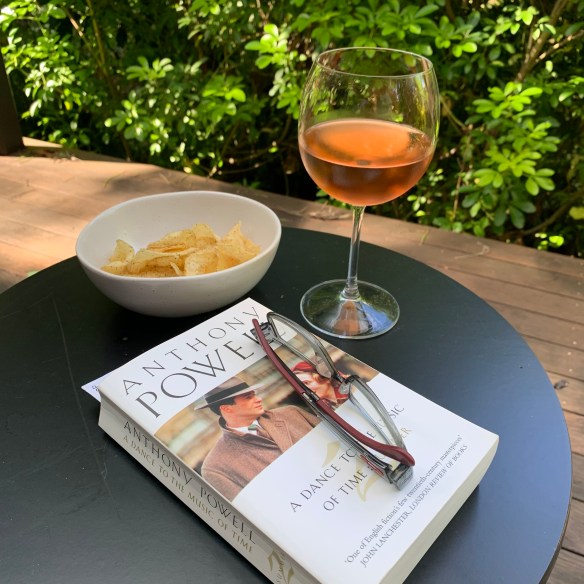
Of course, the ramifications of the US Presidential Election and a no-deal Brexit are still playing out – and the New Year is unlikely to bring immediate closure. For myself, I am lying low and staying close to home during the Saturnalia celebrations. As the above photo suggests, my plans involve nothing much more than catching up on my reading, and exploring my wine collection. Consequently, this blog will be taking a break for a few weeks, but I trust that this holiday season will bring a welcome respite from the events of 2020 for you and yours. Thanks for reading.

Next: The NGV Triennial


Coming out of our shells

As we gradually emerge from 3 months of lock-down in Melbourne, there is a noticeable level of unease and anxiety about going shopping, sitting in cafes and restaurants, joining outdoor gatherings, and simply being out and about again. Many people are understandably exercising a degree of caution when it comes to interacting with members of the public. One of my friends describes this as “FOGO” – Fear Of Going Out.

The need for the Stage 4 lock-down (one of the longest and severest in the world) was largely the result of failures in the local hotel quarantine programme, and the consequent community transmission. It has been a long journey back to opening up, with a few speed humps along the way. Apart from a few objectors and dissenters, Melburnians by and large were happy to comply with the lock-down regulations, given their undoubted success in reducing the number of new cases. This was especially so when comparing our local situation with the second and third waves in other parts of the world.

I must admit to being wary when I see people not wearing masks in public, given that this measure (which I believe should have been introduced during the first wave back in March) has been a significant factor in reducing the rate of transmission. Even though, as from this week, masks are no longer mandatory outdoors (but will continue to be required indoors (shops, cinemas, etc.) and on public transport, I will continue to be on my guard. If people get offended at that, then all I can say is they don’t know where I have been, and I don’t know where they have been – I’m not yet willing to trust everyone on face value. (Reference the recent problems of people lying about their exact whereabouts during contact tracing.)

The general willingness to comply with the lock-down measures, and the resulting public wariness about opening up again, prompted my significant other to describe this as a form of Stockholm Syndrome. We have become conditioned to our circumstances, even against our own will or inclinations, and continue to act in lock-down mode (social distancing, self-isolating, avoiding public gatherings) despite the lifting of restrictions. I know from the few social engagements I have had over the past couple of weeks, including with family members and long-standing friends, there is some awkwardness in greetings and face to face interactions as we become accustomed to COVID-Safe etiquette.

There is also the challenge of re-entry as we emerge from lock-down. When the first lock-down was eased in June, notwithstanding the partial relaxation, I continued to maintain my distance. I anticipated that some people would over-compensate and even go overboard in their rush to “get back on the beers”, and start socialising again in large numbers. It felt like people forgot that as with deep-sea diving, if you don’t decompress gradually, you can get the bends. That’s what appears to have happened in a number of the hot-spots which led to the second wave, as evidenced by significant transmission rates in domestic settings.

One podcast I heard recently was recorded by an academic who studies people working in long periods of isolation (Antarctica, Space Station). A key part of her research is in helping them to re-adjust to their new environment as they emerge back into the community. So we in Melbourne will need to keep re-calibrating over the coming months as we establish a balance between comfort and caution.

As we head into the summer holidays, the next challenge for many employers and their staff will be in going back to the office, once the “work from home directive” is lifted.

Next week: Antler Virtual Demo Day

Is the Party over?

In the wake of allegations and revelations concerning election shenanigans, branch stacking, dodgy donations, and other improper behaviour by MPs, our trust in the democratic process is being severely challenged.

At the heart of the democratic process are the core principles of universal suffrage, and the open nomination and free election of individual candidates. However, in reality, it’s the party system that gets people elected, even though political parties are not mentioned in the Australian Constitution.

Thanks to factional disputes, evidence of corruption and general party machinations, I don’t believe voters are being well-served by their elected representatives. The highly partisan nature of party politics is making it increasingly difficult to build consensus or build inclusive, progressive and sustainable policy outcomes – even within the same party!

At the risk of making a huge generalisation, the problem I have with most politicians is that they have to play the party game in order to get selected, elected and re-elected. Thus they are overly beholden to the party that “backs” them (factional elements and all) rather than the electorates they purport to represent.

Look what happened to both Kevin Rudd and Malcolm Turnbull during their (brief) terms as Prime Minister: neither had a sufficient power base in their respective parties that they could rely on for support. (Both essentially came unstuck on energy and climate policies. And interesting to note that despite their differences whilst in office, they seem to have found a modicum of mutuality around media ownership – and I’m sure they agree on a whole lot more, they just aren’t allowed to admit it in public.)

Also, it’s a paradox that once elected (especially to leadership roles) most politicians seem to lose the power of natural speech. Instead, they feel compelled to use tortuous and convoluted verbiage to avoid saying what they actually think, because the internal logic and policy constraints of party-think over-rules common sense.

Over the years, I’ve heard various politicians speaking at first hand at non-party and non-Parliamentary events, including Keating, Hockey, Tanner, Turnbull, and Morrison. As a general observation, they are far more engaging, authentic and sincere when they are away from the hustings, pressers or dispatch boxes. It seems as if they all appear to lose a huge part of their humanity as a result of elected office, and the strictures of the party machine.

So has the political party had its day? Increasingly, that feels to be the case. Which is a dangerous thought, given the fundamental requirement to build policy platforms to take to the electorate, and the essential nature of Parliamentary democracy to have a functioning opposition to hold the Government accountable. Plus, we need a healthy democracy to ensure a pluralistic, inclusive, secular and liberal (small ‘L’) society. Dictatorships thrive in one party states, theocracies and autocracies alike.

Unfortunately, the media finds itself having to pander to the increasingly shrill, strident and destructive discourse of party politics. The press has to play along with “gallery briefings” and “doorstops” (i.e., selected disclosure at best, selected leaking at worst). I also hate the whole process of policy testing via party focus group soundbites rather than considered debate in Parliament.

I have seen some recent suggestions that political parties should be banned (dangerous precedents there…) or that election candidates shouldn’t reveal in advance their party affiliation. Whilst the latter idea has some appeal, how would we know where their backing comes from if they don’t disclose their party membership? Perhaps we should also ban all political donations, campaign funding and paid-for ads (and/or introduce stringent “truth in advertising” laws). Or, what if every candidate can only spend an equal amount, whose budget is drawn from Government funds, and only once they have secured the minimum amount of voter support to stand for election in the first place?

I don’t have the answers, and even with “non-party affiliation”, candidates would self-identify or be tagged as belonging to a particular vested interest. But the party system looks increasingly broken, and the nature of binary politics is not helping us to address or solve the enduring problems of our age.

Next week: Coming out of our shells