Brexit Blues

Reading the latest coverage of the Brexit farce combined with the inter-related Conservative leadership contest, I am reminded of Oscar Wilde’s description of fox hunting:

“The unspeakable in pursuit of the uneatable”

Whichever candidate wins the Tory leadership race and, as a consequence, becomes the next UK Prime Minister, they will inevitably fail to deliver a satisfactory Brexit solution, simply because there is no consensus position.

But the underlying cause for this impasse is a series of flawed processes:

First, the promise made by previous Prime Minister David Cameron to hold a referendum on EU membership was flawed, if not highly disingenuous – because from the start, there were no terms of reference. Cameron chose to make it part of his manifesto pledge ahead of the 2015 general election campaign. Even at the time it felt like a desperate ploy to appease the mainly right-wing and Eurosceptic faction of the Conservative party. Despite being generally in favour of the UK remaining within the EU (but with “looser ties”), Cameron probably never expected that he would have to deliver on his referendum promise let alone lead the Brexit negotiations. Behind in the polls, the Tories were expected to lose the election. Instead, they won, but with a much reduced majority – which should have been the first warning sign that all was not going to be plain sailing with Cameron’s EU referendum pledge.

Second, the referendum question put to the electorate in 2016 was itself flawed. Cameron had originally talked about renegotiating the UK’s terms of EU membership, much like Margaret Thatcher had done with some considerable success in the 1980s. There was certainly no mention at all in Cameron’s January 2013 speech of a “No-deal Brexit”. However, the referendum question put to the voters was a stark, binary choice between “Remain” or “Leave”. As some have argued, the design of the referendum should have been enough to render it invalid: both because the voters were not given enough reliable data upon which to make an informed decision; and because there was no explanation or guidance as to what type of “Leave” (or “Remain”) outcome the government and Parliament would be obliged or expected to negotiate and implement. Simply put, the people did not and could not know what they were actually voting for (or against). I am not suggesting that the voters were ignorant, rather they were largely ill- or under-informed (although some would argue they were actually misinformed).

Third, the respective Leave and Remain campaigns in the 2016 referendum were both equally flawed. The Leave campaign was totally silent on their proposed terms of withdrawal (I certainly don’t recall the terms “Hard Brexit” or “No-deal Brexit” being used), and their “policy” was predicated on the magic number of “£350m a week“. And the Remain campaign failed to galvanize bipartisan support, and was totally hindered by the Labour leadership’s equivocation and ambivalence towards the EU (which has only deepened as Jeremy Corbyn refuses to confirm what his policy actually is).

Finally, the Parliamentary process to implement Brexit was flawed from the start. Cameron jumped ship and ending up passing the poisoned chalice to Theresa May. The latter had supported Remain, but now had to lead the UK’s withdrawal from the EU. However, rather than trying to build consensus and broker a truly bipartisan solution (this is not, after all, a simple, one-dimensional party political issue), May proved to be a stubborn, inflexible and thick-skinned operator. Now, there are threats to prorogue Parliament in the event that MPs vote against a No-Deal or Hard Brexit, if a negotiated agreement cannot be achieved by the October 31 deadline. May’s negotiation tactics have only resulted in deeply entrenched and highly polarised positions, while she ended up painting herself into a corner. Good luck to her successor, because if nothing else, Brexit is casting division and national malaise across the UK.

Next week: Pitch X’s Winter Solstice
 

Pre-election Musings

At the time of publication, Australia is four days out from a General Election. At the time of writing, I have submitted my postal vote, as I will be overseas on polling day (May 18). I am certainly not going to call the result or predict the outcome, except to say it will probably be far closer than most people would have expected, maybe even a hung Parliament, with an even more fractious Senate. But I have to say that this has probably been the most difficult ballot I have had to complete.

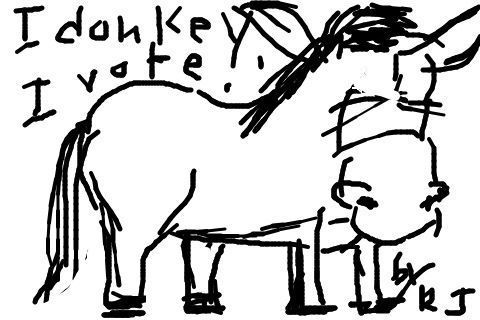
Image sourced from The Donkey Vote

For one thing, I can’t see why either of the major parties deserve my vote. Plus, in my own constituency for the lower house, the ALP candidate has been disendorsed, so as a result, I have been denied the option of voting for the official opposition. (More on this disendorsement later.) (Meanwhile the only Green Party MP who sits in the lower house and who represents my constituency, labelled himself an “independent voice”. Does that mean he no longer represents the views of the Green Party?)

Why do I feel this way about the two major parties?

First, neither party leader inspires me – they are purely products of their political organisations and their respective factions, and display very few leadership qualities other than they probably know how to stitch together half-baked policy deals in their party meeting back rooms. I doubt they have ever had an original idea, and certainly not since they became the leaders of their particular factions, let alone leaders of their parties.

Second, both parties have simply been sloshing around tax payers’ cash – funding here, pork barrels there, sleights of hand all over the place. I agree that most areas of public services and infrastructure demand a rethink on their current funding models, and some deserve more money. But from what I have been able to glean so far, most of these funding commitments and/or budget re-allocations are mostly about headline amounts, and not measurable outcomes, assuming they have been properly costed in the first place.

Third, despite all the money on offer, there have been few, if any, announcements on more fundamental issues of economic and structural reform such as competition policy, productivity measures, innovation, startups, etc. Yes, there have been some financial and tax incentives thrown out to small businesses who take on more staff, or who invest in new equipment, but these are just the usual tweaks. And there has been very little debate about the need to review the design, delivery, quality and accountability of public sector services.

Fourth, and the one main thing that the major parties have in common, is that the only policy levers they seem willing to push/pull are continued fiddling about with tax rates, superannuation and industrial relations. All of which is counterproductive, as it just means the focus is on winners and losers, and the resulting class-war based “politics of envy” and crass take-downs of the “big end of town”.

So let’s talk about jobs.

Much of the money ear-marked for particular industries or service sectors is intended to support job creation. Where are most people employed in Australia? By industry category, the top sectors are: Health Care; Retail; Construction; Professional, Scientific and Technical Services; and Education. Most of which are destined to be the recipients of tax payer-funded largesse after the election. And while I agree that Health, Education and Public Infrastructure need to be adequately and properly resourced, innovation and the high-tech jobs of the future will more likely come from the Professional, Scientific and Technical Services sector. (And $3m for a “Blockchain Academy” is woefully inadequate for long-term thinking and vision.)

But as should be obvious to anyone, industries don’t create jobs, companies do. And most people in Australia (70% of the working population) are employed by small to medium-sized businesses. Of the nearly 2.2m registered businesses, 60% have zero employees (mostly they are owner-operated sole traders, including self-employed tradespeople), more than a quarter of businesses employ fewer than 5 people, nearly 10% of businesses employ between 5 and 20 people, 2.4% employ between 20 and 200 people, and only 0.2% of businesses (c. 3,800 companies) employ more than 200 people. In addition, only 100,000 businesses have an annual turnover of $2m or more. Welcome to the long tail of the Australian economy.

As for the election outcome itself, it will largely be determined by swing voters in marginal seats. Five of the 10 most marginal seats are in Queensland. And with the Adani mine project being such a divisive topic, this one item could determine who takes government. And even if Labor wins a majority in the House of Representatives, the Senate will be even more split between minor parties, and whoever wins government will find it difficult to navigate the upper chamber. In my own state of Victoria, there are something like 30 party groupings and around 80 individual candidates standing for just 6 seats. Trying to research the minor parties and their candidates or their labyrinthine preference deals is virtually impossible, which cannot be healthy for the democratic process under the proportional representation system of the single transferable vote model.

The real issue, though, is that with 3-year Federal Parliaments, parties are in perpetual campaigning mode. There is very little long-term thinking or vision, while short-term compromises are the order of the day. All of which results in either total inertia when it comes to making any real structural change, or constant policy tweaking to keep ahead in the polls. All hot air and no momentum.

Finally, coming back to the disendorsed Labor candidate for the lower house in my constituency of Melbourne. The party was forced to act (albeit somewhat reluctantly and almost equivocally) when the candidate’s social media past caught up with him. At first, the party and its Leadership suggested that the 29-year old candidate should be forgiven his indiscretions because he was “only” 22 at the time said offensive remarks were posted. I think that argument is total hogwash. If you are not going to be held responsible or accountable for the consequences of your actions at the age of 22, then you should not have the right to vote, get married, have children, stand for election, serve on a jury, sign a contract or take out a mortgage because clearly you have not fully developed as a mature adult, and your capacity to think and make important decisions is obviously impaired, such that you cannot be relied upon to exercise reasonable judgement.

Next week: Trends in LegalTech


Life After the Royal Commission – Be Careful What You Wish For….

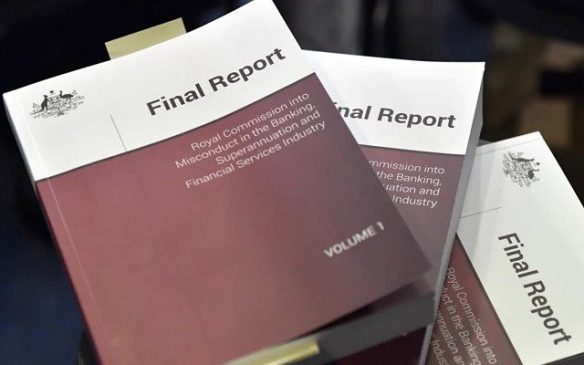
In the wake of the recommendations from the Royal Commission into Misconduct in the Financial Services Industry (aka the Hayne Report), one of the four major banks announced that it would be removing bonus payments for its front line tellers. This was supposedly in line with Hayne’s proposal that performance-linked remuneration, financial incentives and sales commissions in the financial services industry need to be restructured.

Image sourced from Small Caps

This prompted a mixed reaction among the public, based on some of the comments I have read on social media. Some felt that the tellers were being made scapegoats for the banks’ bigger failings – others felt that this was an inevitable outcome from the banking backlash.

Personally, I believe the announcement is potentially just one of the many likely “unforeseen consequences” to come out of the Royal Commission – I’m not saying this particular decision is good or bad, just that we need to be aware of what’s likely to happen based on Hayne’s key recommendations. Be careful what you wish for. And, as an underlying theme to this whole debate, let’s not forget that most Australians are shareholders (directly or indirectly via their Super) of the Four Pillar Banks (one of the greatest government-endorsed and legislatively protected market oligopolies around which also helped steer us through the GFC relatively unscathed….).

So, what else might we see?

First, as with financial advice, residential mortgages will move to a “buyer pays” model. Brokers would not be able to receive commissions from mortgage providers or other intermediaries based on the products they sell, recommend or refer – instead, mortgage applicants will be expected to pay for the services of a broker, who will therefore be under an obligation to find the best product for their client. But removing trailing commissions and other conflicted remuneration may also mean that brokers could seek to earn additional fees from their mortgage clients by re-contacting them a year or so later (with permission, of course) to inform them of a better deal. (Even now, lenders are not explicitly obliged to let existing customers know if they have a newer product that may be better for them). Some estimates suggest that fee-for-service will add about $3,000 to the initial cost of applying for a mortgage. Whether this will also lead to more competition among mortgage providers (who will no longer have to pay broker commissions) is not clear.

Second, the increased focus on acting in the best interests of the customer may result in placing all financial planners, brokers, advisors, insurers, and banks (and their officers, agents and employees) under a fiduciary duty of care to their clients – even if they are not directly managing specific assets, selling a specific product or advising on specific services or financial strategies. In other words, advisors etc. will be deemed to have taken ALL of a client’s needs and circumstances into account. (This is largely the result of the miss-selling of financial products, and the charging of fees for “no service”, by banks and their retail wealth management arms.)

Third, the increased cost of compliance will disproportionately impact smaller financial institutions such as credit unions, member-owned banks and other mutual societies, who came through the Royal Commission pretty much unscathed. Those costs will need to be passed on, to customers and members. Of course, there has also been some political debate around the need for some sort of banking levy – which will ultimately be passed on to shareholders or customers (who are often the same people…).

Fourth, and related to the above, the separation of roles between those superannuation trustees who act as both fund trustees and as responsible entities of managed investment schemes will have a knock-on effect in terms of operating and compliance costs. Such dual-regulated entities will have to decide whether to focus on their trustee role, or appoint a separate and independent responsible entity in respect of the asset management.

Fifth, the higher compliance and regulatory obligations may deter or inhibit more competition – either from new market entrants from overseas, or from local start-ups. The recent restricted ADI model (aimed at enabling challenger or neo-bank brands) has not exactly seen a raft of applications, and off-shore banks tend to come and go in successive waves, largely driven by market conditions. If lending standards are further tightened, it may be less attractive for foreign firms to set up local operations. In fact, there have been calls to force some smaller superannuation funds to merge with larger funds, or exit altogether for reasons of scale and efficiency – potentially taking out some of the competition in that sector. And if mortgage brokers have to move to a fee-for-service model, it will likely force some providers to exit the industry, as happened with the FOFA reforms in financial planning and wealth management.

Sixth, at the level of corporate governance, boards of financial services providers will need to be mindful of their duty to act in the best interests of the company – which has traditionally meant the share holders – and the increased duty of care towards their customers, which may at times be at complete odds. Non-executive directors willing to serve on the boards of banks and insurers may also be harder to find, at a time when there is already a high concentration of directors who sit on multiple boards across Australia’s biggest companies. So, board diversity may be even harder to achieve, especially if non-executive directorships become subject to even greater formal qualification, to ensure board members have appropriate professional experience, industry knowledge and technical expertise, as well as financial competence and risk management skills.

Finally, all this is happening as we face something of a credit squeeze (thanks to increased lending standards and greater provisioning for risk-weighted assets) heightened economic uncertainty (slowing GDP growth, lower productivity, wage stagnation, falling property prices), and an upcoming General Election campaign during which the Hayne Report will be held up as a key reason for why “things have to change”. The irony being that, except in a few areas, the complaints aired and wrong-doing uncovered during the Royal Commission could have been addressed by the regulators and enforcement agencies via existing laws on financial services, prudential standards, and general consumer protection (unfair contract terms, unconscionable conduct, deceptive and misleading behaviour). Plus, the Australian Financial Complaints Authority (which combines the remit of the former Financial Ombudsman Service, the Credit and Investments Ombudsman and the Superannuation Complaints Tribunal) has a wide jurisdiction over consumer complaints relating to Credit, Finance and Loans, Insurance, Banking Deposits and Payments, Investments and Financial Advice, and Superannuation. And as with most External Dispute Resolution agencies, AFCA and its predecessors have an obligation to report on systemic issues within their industry.

Next week: Pitch X

Culture Washing

Banks, Parliament, Cricket Australia, Political Parties, religious bodies, the ABC – the list of national institutions that have come under fire for failed governance and even worse behaviour continues to grow. Commentators are blaming a lack of “culture” within these organisations.

Some Boards end up washing their dirty laundry in public….. Image Source: Max Pixel

Already we are seeing a “culture” movement, which will inevitably lead to “culture washing”, akin to “green washing”, and other examples of lip service being paid to stakeholder issues.

Just this past week, the interim report of the Banking Royal Commission prompted the Federal Treasurer to say that banks need a “culture of enforcement and a culture of compliance”. I can already imagine the “culture checklists” and the “culture assessment” surveys and feedback forms….

There are consulting firms building “culture risk” assessment tools. There may even be some empirical evidence to suggest that companies with better employee engagement and “culture” can generate better share price performance. Even the AICD is getting in on the act with its upcoming directors’ update on how boards can gain “insights on culture”, and how to set the “tone from the top”.

(Actually, all any director needs to do to monitor the “culture” of their organisations is to track social media and sites such as Glassdoor, Whirlpool, Product Review, etc..)

But corporate and organisational “culture” is organic, and cannot be built by design. It is a combination of strong leadership and core values that everyone in the organisation is willing to commit to and adhere to. It also means ensuring that everyone knows what is expected of them, and the consequences of failing to meet those standards are clear.

As for employee engagement surveys, one of my colleagues likes to say, “The only question to ask is: ‘Would you recommend this organisation as a place to work, and if not, why not?’” Another colleague regularly says to his own teams, “If this is no longer a fun place to work, then let me know”.

Next week: Why don’t we feel well off?