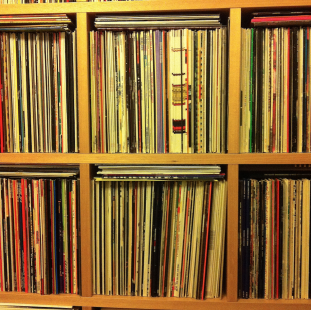
 Something a little less serious this week. Recently, I’ve been working with various clients across executive coaching, career development, talent management and psychometric testing. Given my former experience in music retailing (it was like Nick Hornby’s “High Fidelity” without the romantic interest….) and in deference to my own lifelong hobby of record collecting, I thought it would be amusing to classify people according to their collecting habits, as a way of helping HR managers and team leaders everywhere understand their colleagues.
So, in no particular order:*
1. Listomaniac – Always making lists of their favourite songs, and then constantly updating them. Whether it’s “Top 10 songs about ice-cream”, or “All-time Top 5 pop songs featuring saxophone”, or “10 Songs containing the word ‘toothbrush’ in the lyrics”, Listomaniacs love to demonstrate their arcane (but selective) musical knowledge, and are so absorbed with the process of list-making that they are incapable of committing to a final, definitive choice. Don’t expect the Listomaniacs on your team to make a decision, let alone stick to it. Definitely don’t give them too many choices or too much time to select the catering menu for the office party. (Cf. Mixologist)
2. Completist – More than a mere fan, the Completist is compelled to collect every record ever released by a particular artist (and some Completists are also driven to seek out unreleased recordings, including juvenilia, studio out-takes and rehearsals…). In more extreme examples, this form of OCD involves collecting the entire output of specific record labels or whole musical genres. While the Completist can demonstrate deep knowledge of their chosen subject, they can also get lost in the detail and don’t realise that not everyone shares their passion. When assigning roles to your team, make sure the Completist is in charge of their chosen specialist subject area, but set well-defined boundaries, and don’t let them near eBay. (Cf. Archivist)
3. Anthologist – The Anthologist doesn’t have time to read music reviews or even listen to anything that hasn’t been recommended to them or curated for them by someone else. In fact, the archetypal Anthologist relies on the end of year polls and critics’ lists to decide what music to buy. Now, of course, the Anthologist’s task is made even easier through music subscription services, podcasts, and personalised web-streaming. Although capable of making discerning choices and informed decisions, the Anthologist often lacks any original thought, and would be lost without apps like Spotify. On the other hand, the Anthologist can give you the low-down on the latest thinking around best practice in agile software development, productivity tools and structuring compensation packages (because they’ve read some blogs and a few trade newsletters).
4. Populist – Never one to let taste get in the way, the Populist knows that a song is good because it went to Number 1 in the charts. Those “Now That’s What I Call Music…” compilations are made to measure for the Populist, who simply wants to buy the biggest-selling hits of the year all in one go. While many Populists might include a few “Greatest Hits” and “Best Of” albums in their collections, the more adventurous types have been known to buy a “proper” studio album (as long as it has at least 4 top 10 singles on it). On a positive note, the Populist will likely be happy working with numbers or in customer service, as they don’t need to exercise personal discretion, and because the data never lies.
5. Audiophile – The Audiophile has to have the latest and most expensive music hardware, with full 7.1 surround sound, if only to play Dire Straits. (I’m pretty certain that every hi-fi shop in the world only has one customer demonstration CD, namely “Brothers in Arms”.) Some would say that it’s the software not the hardware that matters, but the Audiophile knows the price of everything and the value of nothing. History is littered with music technology that promised the world, but failed to deliver – 8-track cartridge, Quadraphonic, DDC, MiniDisc, DAT – so it may be unwise to let the Audiophile on your team manage any IT projects. Likewise, they may insist on having the most expensive laptop available, but if they only use it update their Facebook page, maybe you should be a bit concerned.
6. Archivist – Like the Completist, the Archivist is a fount of musical knowledge – but unlike their counterparts, Archivists know enough of the received musical canon to be able to differentiate the great from the merely ordinary, and they know that not every artist has an immaculate back-catalogue. The Archivist also understands why Big Star’s “Third/Sister Lovers” is rightly regarded as one of the best (if flawed) albums of all time. At the extreme end of the spectrum, the Archivist is a neo-Trainspotter, able to recall minutiae such as the album catalogue numbers, recording dates, orchestral arrangers and sleeve designers (and studio caterer) of every 5-star album since 1957. But on a good day, the Archivist will display great perseverance in pulling together internal knowledge, external data and other essential information to get the right answers.
7. Mixologist – Finally, the music collector who is so enthusiastic about their personal taste in music that they just have to share it with everyone else, via lovingly created mixtapes. Adept at making tapes for every occasion and at every significant stage in their lives (the break-up tape, the road trip mix, songs for a sunny day), the Mixologist will also have regard to and openly acknowledge their sources, influences and inspirations. Unlike the Listomaniac the Mixologist’s choices demonstrate exquisite musical taste and are backed by erudite concepts, connections, and cross-references – they are not simply motivated by the compilation process. True Mixologists are happy to allow their tapes to be circulated, to be copied, and even to spawn “response” tapes in return. As team players, Mixologists will be more than happy to share information, and they like nothing more than to see their ideas taken up and then built upon by the rest of the team.
*Note: This list does not claim to be exhaustive; and of course as with all profiling tools, music collectors may display two or more of the above traits, often at the same time. But they will likely demonstrate a leading preference for a particular style of collecting. As the music critic once observed, “a little knowledge can be dangerous – but too much can be deadly boring”.
 Content in Context