
The Music Collectors’ Guide to Personality Types

ShelvesSomething a little less serious this week. Recently, I’ve been working with various clients across executive coaching, career development, talent management and psychometric testing. Given my former experience in music retailing (it was like Nick Hornby’s “High Fidelity” without the romantic interest….) and in deference to my own lifelong hobby of record collecting, I thought it would be amusing to classify people according to their collecting habits, as a way of helping HR managers and team leaders everywhere understand their colleagues.

So, in no particular order:*

1. Listomaniac – Always making lists of their favourite songs, and then constantly updating them. Whether it’s “Top 10 songs about ice-cream”, or “All-time Top 5 pop songs featuring saxophone”, or “10 Songs containing the word ‘toothbrush’ in the lyrics”, Listomaniacs love to demonstrate their arcane (but selective) musical knowledge, and are so absorbed with the process of list-making that they are incapable of committing to a final, definitive choice. Don’t expect the Listomaniacs on your team to make a decision, let alone stick to it. Definitely don’t give them too many choices or too much time to select the catering menu for the office party. (Cf. Mixologist)

2. Completist – More than a mere fan, the Completist is compelled to collect every record ever released by a particular artist (and some Completists are also driven to seek out unreleased recordings, including juvenilia, studio out-takes and rehearsals…). In more extreme examples, this form of OCD involves collecting the entire output of specific record labels or whole musical genres. While the Completist can demonstrate deep knowledge of their chosen subject, they can also get lost in the detail and don’t realise that not everyone shares their passion. When assigning roles to your team, make sure the Completist is in charge of their chosen specialist subject area, but set well-defined boundaries, and don’t let them near eBay. (Cf. Archivist)

3. Anthologist  – The Anthologist doesn’t have time to read music reviews or even listen to anything that hasn’t been recommended to them or curated for them by someone else. In fact, the archetypal Anthologist relies on the end of year polls and critics’ lists to decide what music to buy. Now, of course, the Anthologist’s task is made even easier through music subscription services, podcasts, and personalised web-streaming. Although capable of making discerning choices and informed decisions, the Anthologist often lacks any original thought, and would be lost without apps like Spotify. On the other hand, the Anthologist can give you the low-down on the latest thinking around best practice in agile software development, productivity tools and structuring compensation packages (because they’ve read some blogs and a few trade newsletters).

4. Populist – Never one to let taste get in the way, the Populist knows that a song is good because it went to Number 1 in the charts. Those “Now That’s What I Call Music…” compilations are made to measure for the Populist, who simply wants to buy the biggest-selling hits of the year all in one go. While many Populists might include a few “Greatest Hits” and “Best Of” albums in their collections, the more adventurous types have been known to buy a “proper” studio album (as long as it has at least 4 top 10 singles on it). On a positive note, the Populist will likely be happy working with numbers or in customer service, as they don’t need to exercise personal discretion, and because the data never lies.

5. Audiophile – The Audiophile has to have the latest and most expensive music hardware, with full 7.1 surround sound, if only to play Dire Straits. (I’m pretty certain that every hi-fi shop in the world only has one customer demonstration CD, namely “Brothers in Arms”.) Some would say that it’s the software not the hardware that matters, but the Audiophile knows the price of everything and the value of nothing. History is littered with music technology that promised the world, but failed to deliver – 8-track cartridge, Quadraphonic, DDC, MiniDisc, DAT – so it may be unwise to let the Audiophile on your team manage any IT projects. Likewise, they may insist on having the most expensive laptop available, but if they only use it update their Facebook page, maybe you should be a bit concerned.

6. Archivist – Like the Completist, the Archivist is a fount of musical knowledge – but unlike their counterparts, Archivists know enough of the received musical canon to be able to differentiate the great from the merely ordinary, and they know that not every artist has an immaculate back-catalogue. The Archivist also understands why Big Star’s “Third/Sister Lovers” is rightly regarded as one of the best (if flawed) albums of all time. At the extreme end of the spectrum, the Archivist is a neo-Trainspotter, able to recall minutiae such as the album catalogue numbers, recording dates, orchestral arrangers and sleeve designers (and studio caterer) of every 5-star album since 1957. But on a good day, the Archivist will display great perseverance in pulling together internal knowledge, external data and other essential information to get the right answers.

7. Mixologist – Finally, the music collector who is so enthusiastic about their personal taste in music that they just have to share it with everyone else, via lovingly created mixtapes. Adept at making tapes for every occasion and at every significant stage in their lives (the break-up tape, the road trip mix, songs for a sunny day), the Mixologist will also have regard to and openly acknowledge their sources, influences and inspirations. Unlike the Listomaniac the Mixologist’s choices demonstrate exquisite musical taste and are backed by erudite concepts, connections, and cross-references – they are not simply motivated by the compilation process. True Mixologists are happy to allow their tapes to be circulated, to be copied, and even to spawn “response” tapes in return. As team players, Mixologists will be more than happy to share information, and they like nothing more than to see their ideas taken up and then built upon by the rest of the team.

*Note: This list does not claim to be exhaustive; and of course as with all profiling tools, music collectors may display two or more of the above traits, often at the same time. But they will likely demonstrate a leading preference for a particular style of collecting. As the music critic once observed, “a little knowledge can be dangerous – but too much can be deadly boring”.
10 Reasons why the Lean Startup Business Model is here to stay

Is the Lean Startup Business Model a passing fad, or the “new normal”?

Here are 10 reasons why I think the Lean Startup model is here to stay:

1. Technology – Everything’s social, mobile and cloud-based, meaning reduced establishment costs, enhanced flexibility, and easier scalability for startups.
2. Millennials – The younger generation have different work drivers, informed by their lifestyle ambitions, career aspirations and personal expectations. Startups may often meet their needs more easily than established businesses, and can therefore attract talent better-suited to their requirements.
3. Everyone is their own CEO“The Start-Up Of You” reinforced the idea that individuals are responsible for managing their own career, that they need to take control of their career decisions, and that a career does not always follow a continuously upward trajectory. Startups can allow people to make non-linear career moves.
4. Crowdsourcing – There’s no need to be an expert in everything – startups can outsource, collaborate, and rent rather than buy.
5. Crowdfunding – It’s no longer a pre-requisite to launch an IPO or negotiate an investment bank deal. The lean startup model has been key to the development of alternative funding models.
6. The waning fortunes of “big” corporates – With a few notable exceptions, large corporations can be slow to react to new market dynamics, and can miss out on new opportunities. The lean startup model is the antithesis to many traditional corporate ecosystems.
7. The post-industrial age – Before the industrial revolution and the arrival of factories, production lines and mass manufacturing, we had cottage industries – people working independently from home, in small-scale operations, often doing outsourced, piece-rate work, or bartering their skills. Startups are fostering a new era of cottage industries, where goods and services are traded through networks and peer-referrals.
8. Lessons from the dot.com boom & bust – We are wiser (after the event). Don’t assume the technology in itself is the solution or the product; don’t burn the cash and have nothing to show for it; start small but position to grow quickly through agile processes and nimble methodologies.
9. Flexibility is the key – Adapt and survive! This is the DNA of the Lean Startup Model.
10. Experience is sometimes better than a formal qualification – People are keen to learn and acquire new skills through direct exposure to interesting projects. Startups can offer this in abundance.

Acknowledgement: I am grateful to Brad Dunn of Nazori for triggering this blog.

Product Development 101: What we learned at Start-Up School

Lean Model 001

Another large turn-out last Monday evening for Melbourne Lean Start-Up’s monthly event, hosted by Inspire9 and supported by SmartStartCity, Kussowski Brothers, Blue Chilli and AlphaStation.

This month’s theme was “Validated Learning – what to do before you launch your start-up” or as I like to call it, “Product Development 101”.

The evening kicked off with a lightning talk video presentation by Ash Maurya discussing his lean canvas 1-page business model. Well worth investigating before you even start writing a single line of code!

Next up, Tweaky offered some insights on the value of using PPC (Pay Per Click) pre-launch analysis targeting Search Intent (Google) and Demographic Intent (Facebook) to generate interest in your new product.

GetViable followed up with a discussion of the old-age conundrum for any new product or business: “Have you built a solution in search of a problem?” And even if you have correctly identified the problem, is it actually worth solving? The bottom line was, talk to your customers, listen and learn about their problems, then figure out whether they are willing to pay for your solution (and how much).

Then Flippa talked about the value of “observing your customers in the wild” – to gain insights and identify opportunities. Again, talking to and engaging with customers is critical to the product development process.

Finally, Envato presented some models and processes for collaborative design, essentially taking a look at user-centred design within a lean start-up context.

It’s very easy to lose sight of fundamental product development principles in any business start-up, especially for tech-based projects. But what each presenter stressed was the need to do your homework, to apply a coherent and sequential methodology to your new product development, and to adopt a continuous feedback loop to capture market insights and embed customer learning into the process.

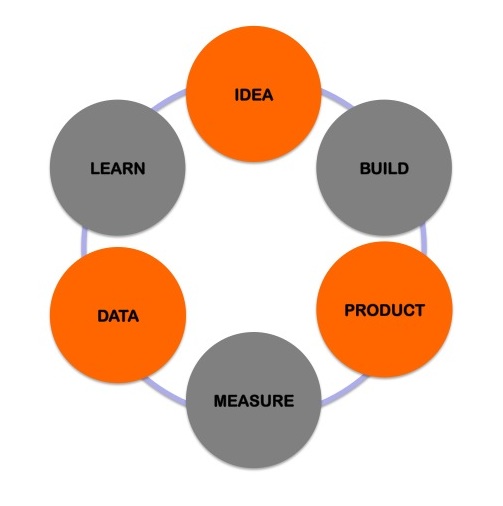
To summarise, here is a tried-and-tested Product Development Cycle I have used for many years:

  • Idea
  • Market Research
  • Design Specification
  • Business Case
  • Build
  • Pre-sell
  • Production
  • Launch
  • Evaluation

Repeat ad infinitum.

Disclosure: The author does not have any connection to or commercial relationship with the presenters or sponsors mentioned in this blog. He did manage to grab a couple of free beers.

Publishing is Dead – Long Live Publishing!

The name of this blog was inspired by a former colleague at The Thomson Corporation. As our team embarked on a major push into digital media in the mid-90s, he reminded us that the old publishing mantra “Content is King!” was being recast as “Content in Context”. Simply having loads of content was no longer enough to command a dominant or exclusive market position – publishers had to make sure their content was timely, relevant and easy to navigate. Ultimately, content has to help users find insights to their problems and solutions to their needs quickly and efficiently.

I was reminded of this recently when I heard some data storage experts talking about the challenges of what to do with all the data we are creating – especially at the rate we are going. According to latest analysis, 90% of all data was created in the last 2 years.

We keep being told that publishing is dead, but it is clear that we are producing more content than ever before – in which case, it’s great to be part of a dying industry! Sure, the business models are changing, and so is the technology; but there are still a number of core publishing disciplines that we risk losing sight of as we continue to develop boundless and limitless volumes of digital content.

There are several skills that publishers traditionally bring to any new content, print or on-line. And it’s not just about technology, SEO or the number of “Likes”. Any content owner seeking to engage vendors to develop their digital assets and manage their on-line presence would be well advised to ask potential suppliers about their experience, strengths and processes in each of the following areas:

  • Commissioning – having a nose for new authors, where to find them and how to nurture their talent
  • Editing – turning text and data into meaningful and coherent content, including length, structure, tone, clarity and access (tables of contents, indexing, cross-referencing, citations, footnotes, bibliographies, etc.)
  • Design – using appropriate formats, layout and fonts to suit the material and the readership
  • Customer Engagement – bringing the audience into the publishing process, through market research, pre-sales activity and user groups
  • Marketing – knowing how to distribute particular content or promote a particular writer
  • Content Management – analysing the usage data and capturing audience feedback, to understand the value of the publishing assets

Yes, these skills do exist in the digital realm, but increasingly the publishing process is being made subservient to the technology, often at the expense of meaning and comprehension. Doubtless this stems from the misconception that the speed and frequency of publication renders everything as mere ephemera – so why do we need to bother with such archaic ideas as an index?

An author acquaintance of mine recently lamented the response of his publishers who, when informed that his text-book needed an index before it could be distributed in schools, responded, “what a great idea – why don’t you send us one!” I can only assume that the publishers were so caught up in on-line media that they had forgotten how most readers navigate books or other content, especially when they are accessing them for the first time.

On-line developers do us a great disservice if they forget that digital content needs tools such as indexes and tables of content to aid user navigation and accessibility – text tagging and search functions are all very well, but they do not always return relevant or meaningful results, and they can create unintended or unforeseen linkages that may be completely out of context.

As a consequence of the exponential growth in on-line content, and our simultaneous interest for archive material (and the demand for data analytics), publishers are increasingly taking on a new and important role as curators – managing content assets, understanding how to present them, knowing the value of the material they are dealing with, and finding the right context in which to provide this content.

This shifting role of publishers is just confirmation that publishing is far from extinct.