New Year Wishes: What I hope for in 2014

A new year normally brings with it the usual predictions for the 12 months ahead. Sometimes, as with political elections, the World Cup, fiscal budgets and the Oscars, most informed commentators can usually hope to get at least one or two things right. But as a former colleague once wrote, anticipating new developments in technology is like “trying to predict the unpredictable”.*

Rather than attempting to gaze into a crystal ball, here are a few of my personal wishes** for 2014

Politics

I think it’s interesting that in 2013, two of the political leaders that generated most of the news were Margaret Thatcher and Nelson Mandela – and in both cases, it was their passing that dominated the headlines. Neither had been in power for many years, yet in death they were more noteworthy than most of today’s world leaders. Why? Well, a lack of truly charismatic politicians could explain it. But I rather think the lure of holding political office has been undermined by the need to micromanage the machinery of government – so rather than attracting visionary leaders capable of projecting big picture thinking, we mostly get a collective mediocrity blinkered by the spin doctors and party pollsters, and rarely willing to tell the public what they actually think or what they personally believe in, for fear of offending voters in marginal electorates. Whether or not you agreed with or liked their particular brands of politics, it was pretty clear that both Thatcher or Mandela actually believed what they were saying when addressing parliament, giving interviews, or delivering campaign speeches.

In 2014 it would be wonderful to see the return of political leaders who were not simply trying to avoid defeat at the next election. Even better, wouldn’t it be wonderfully refreshing to hear politicians willing to amend their policies because they have been persuaded by informed argument, prepared to admit that they might have got it wrong, and able to speak their mind without being accused of knee-jerk reactions or heretical u-turns; situations change, so shouldn’t our politicians be entitled to adapt and clarify their thinking accordingly?

Leadership

Which brings me to my next wish – a willingness to openly embrace situational leadership. Yes, organisations should have a clear purpose, stated objectives and well-articulated means for achieving them, but there also needs to be flexibility and the ability to adapt and evolve based on changing circumstances.

We hear a great deal about the need for diversity on boards, among executive teams and across the workplace generally. Much of the diversity debate centres on gender and ethnicity – which is fine, but we require organisations with greater cognitive diversity. Such diversity could help avoid group-think, constructively challenge the status quo and counter the underlying causes of institutionalised inertia.

Business

Unless you are a single-product company, with a unique and proprietary production process, a guaranteed market monopoly, and an endless supply of materials and customers, your business cannot afford to exclude alternative thinking or ignore external perspectives on your industry, your markets or your products and services.

Equally, in a low-growth/no-growth market environment, companies have to develop or acquire better strategic growth skills. Expansion via capturing market share (usually achieved by competing on price, and resulting in lower margins) will be hard to sustain, and will likely result in a race to the bottom.

My big wish for 2014 is that businesses in general, and service industries in particular, will recognize what their true value proposition is, and build strategies for competing on quality (not just on quantity). For example, unless you understand your cost structures, and can relate those to your customers’ perceptions of what they are paying for, you will either waste resources on stuff customers don’t value, or miss opportunities for serving them better.

Technology and the Internet

It’s hard to think of any significant developments in popular technology or on the Internet during 2013. Sure, there was some consolidation among social media platforms, and product rationalisation at Yahoo! and elsewhere; but apart from launching iOS7 and the iPhone 5, Apple did not bring any major new products to market. Although Apple’s global share of smart phone sales may be declining, it may simply be market maturation rather than any product advances from its competitors. (There is also evidence that in key markets, iPhone 5 has boosted Apple’s smart phone sales, and the iPhone 5 itself lays claim to being the most popular model.)

The Internet continues to grow exponentially, largely driven by social media and user-contributed content. But I’m not sure that our collective knowledge and wisdom have improved at a corresponding rate. (Plus, targeted and streamed advertising means it takes much longer to watch YouTube clips, resulting in a lower return on the time we invest in consuming content.)

I’m hoping that 2014 will herald the launch of Internet 3.0 – an on-line environment that is more informative, more insightful and more interactive, and which connects more intuitively between my desktop and mobile devices. (For example, various upgrades to iOS and their associated back-ups forced me to transfer manually a large archive of Notes from my iPhone 4 to my iCloud account, simply because Apple unilaterally changed the way legacy content was “recognized” between my iPhone and my iMac.)

Culture

Perhaps we should also wish for a slightly kinder and more caring social media environment in 2014 – and as I heard one media commentator observe this week, professional sports people and other celebrities should probably refrain from using social media after 11pm, even if they are only slightly inebriated. Anyway, at the risk of revealing some of my own prejudices and preferences, this is what I expect from 2014 in Culture.

First up, I don’t want to see any more of the following categories of movie: sequels, prequels, comic-strip franchises, CGI extravaganzas or anything containing anthropomorphism (unless it’s a Director’s Cut of “Animal Farm”).

Second, I eagerly await the end of geo-blocking for digital content – copyright owners, music labels, publishers, licensors/licensees, distributors and on-line retailers please get your act together, and don’t make it unnecessarily difficult for me to buy your content just because of where I happen to live.

Third, I’d like to advocate a special tax on reality TV shows – the proceeds of which will be directed towards alleviating human suffering, solving important world issues, or nurturing genuine artistic/culinary/terpsichorean talent.

Finally, I hope that David Bowie’s return to form with 2013’s “The Next Day” was not a fleeting reminder of past glories….

NOTES:

* Anthony Kinahan in his introduction to “Now and Then 1974-2024: A Celebration of the Bicentenary of Sweet & Maxwell” (1999) a collection of essays on the future of legal publishing

** Aside from, of course world peace, the end of poverty and a global commitment to address the negative impacts of climate change

Interlude: Looking for some design inspiration

I’m currently working on a start-up project in the area of performance management. Part of the challenge is designing a user interface that combines the visual language of iconography with universally appropriate contextual metaphors, without lapsing into mere skeumorphism.

Having read some of the criticisms of Apple’s iOS7 logos and user frustration with the “improved functionality” of Apple’s new operating system, I found myself turning to the design philosophy of Paul Rand, who created the famous IBM rebus – the genius of which lies in the way it deployed human and natural components to depict a major computer brand. Rand said that simplicity wasn’t his goal, more a result of the design process. He also said design is simple, which is why it is so complex, and that design is everything.

So, while I ponder the application of human factors to a new product design, and as I search for some inspiration, I came across this animated version of Rand’s logo by Chris Rush.

Defining the Prosumer product

This week, Do.com announced it will be closing down in January. It may simply be the latest in a string of social networking apps to call it quits, but it also highlights the difficulty in developing Prosumer products that generate market traction.

do-com-logoPositioned as a productivity solution, Do.Com was also viewed as an app that straddles the work/personal divide, to be a veritable Prosumer product.

The problem is, it did not have a clear vision of what defines the “Prosumer” market, and it did not adequately redefine workflow needs in a permeable environment that increasingly blurs the dividing line between the personal and the professional.

As a result, Do.com probably missed an opportunity to craft a new perspective on the elusive Prosumer demographic. For example, as a Prosumer, my primary need is to consolidate all the social networking and collaborative platforms I use. At the same time, I need to manage the different types of connections and co-ordinate the different degrees of sharing that these tools offer, but not based on “projects” or “transactions” – rather, based on “relationships” (which are not the same as “connections”).

Despite their attempts to capture “3-dimensional” linkages amongst my networks, most collaborative tools and social networking platforms are limited by their 2-dimensional perspective of linear connections, rather than multi-dimensional relationships.

Until tools like Do.com do a better job of managing the qualitative and contextual nature of professional and personal relationships (and offer better ways to manage the different facets of these connections), they will be interesting, but not essential.

POSTSCRIPT: Here’s why Facebook can never be taken seriously as a productivity or professional tool – when editing my “official” Facebook page the day, I was prompted to add my “likes” for music and films – why would I want to share that sort of information with my professional contacts (unless it was really relevant to our relationship – client karaoke night, perhaps?).

YouTube and guilty pleasures…

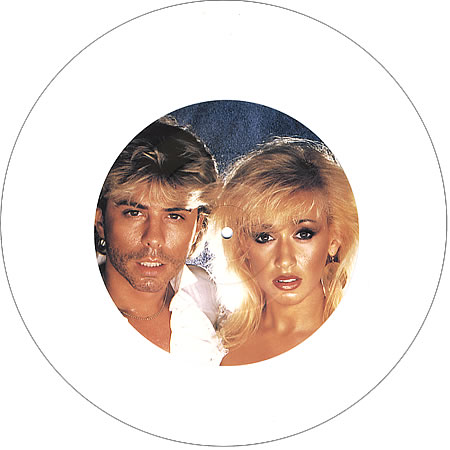
My local gym has recently installed new cardio equipment with touch screen monitors and internet access. So I find myself indulging in what some musicologists call “guilty pleasures” on YouTube – music that was so naff or cheesy when it first came out that no serious music lover would ever admit to liking it, but now it’s OK because retro is cool.*

Dollar-Hand-Held-In-Blac-116568

However, when I stumbled upon a couple of unauthorised YouTube posts featuring my own band, it got me thinking about all the “unofficial” uploads, and the impact that digital technology and social media are having through the increasing disregard for copyright and the rapid erosion of traditional business models by which content creators commercialize their intellectual property.

As more companies use digital media to support sales and marketing, brand management, customer engagement and market analysis, it becomes a valuable product or asset in its own right.

Even if you don’t believe your business is concerned with either content creation or commercializing intangible assets, there are implications for how you protect your business against commoditization or disintermediation.

What are the implications of new delivery channels for contemporary content creators, and what lessons does this offer to other businesses? 

For example, how can artists earn adequate fees from music streaming services? What do broadcasters gain from personalised radio apps? Who is making sure authors and publishers get their fair share of royalties from “curated” and aggregated content services?

The truth is, I don’t think anyone really knows the answers to these questions.

Some musicians may feel they are not adequately compensated by commercial streaming services; others recognise that the game has changed, that releasing recorded music is no longer enough to provide them with a living. In the past, musicians toured to promote their latest albums; now they release music to promote their next concert tour. They also know they must take more direct control over their income sources and revenue streams from music sales, live performance, merchandising and publishing.

For broadcasters, traditional content syndication models may no longer work if content can be disaggregated and re-aggregated without them really knowing about it. Internet streaming and web broadcasting are wonderful things, but how will advertisers react when broadcasters have limited ways of measuring the audience, because nobody knows where they are, or who they are, or when they are listening/watching?

Even authors and publishers, with a long and established history of licensing systems such as public lending rights, are wary of schemes to digitize their back catalogues. They are in a bind, because they know some income from these programs is better than none, but does it justify losing a high degree of control over the commercialisation and distribution of their copyright material?

Which brings me back to YouTube, one of the “best” examples of commercialised copyright infringement that the internet and social media have created. Even if file sharing services such as Megaupload are no longer with us, or controversial music re-sellers like LegalSounds have shut down, with very little effort anyone can extract content posted to YouTube, despite the fact that the latter does not actually support a download function.

For my part, I’ll happily admit to accessing YouTube content which is subject to copyright infringement – so much material on YouTube appears to have been posted without the prior consent (or knowledge) of the copyright holder. I’m actually very pleased that someone has posted it because I enjoy watching long-forgotten documentaries and TV interviews, out-of-print live recordings and broadcasts, and stuff that is unavailable commercially. But my consumption of this content is largely predicated on unauthorised uploading.

Although much of this “re-cycled” content is tagged with a “Standard YouTube License” (which simply means the viewer cannot record, download, monetize or claim ownership over the content), many people posting and uploading 3rd party content don’t have permission to do so in the first place. (Even a broad interpretation of “fair use” exemptions would not justify the wholesale uploading of complete albums which are still commercially available.)

I acknowledge that YouTube provides a copyright infringement process, and a Content ID system designed to help content owners assert copyright over material that has been unlawfully uploaded. But personally, I can’t help feeling that this is a rather disingenuous arrangement. YouTube stresses it is not in a position to determine copyright status – but it is more than happy to create opportunities for generating advertising revenue as part of the dispute resolution process (revenue which it presumably shares with the aggrieved copyright holder?).

YouTube started out as a platform for user-defined and user-contributed content. It does not create its own content – although it invests in original content for its “channels”,  and supports curated and personalised content (“recommendations”). This means YouTube attracts everything from amateur cat videos to professionally produced music promos, as well as highly original, creative and informative content uploaded by the independent musicians, artists, designers, educators and film-makers who create it and who choose to upload it.

And yet I keep coming back to the fact that YouTube is also full of “shared” content – content which is not owned by or licensed to the people uploading it. This is where the real commercial value of YouTube was always going to be found: in 3rd party content, however dodgy the provenance, because this reveals what might be popular and therefore, what can be monetized.

As a result, it could be argued that YouTube has been a considerable beneficiary of  copyright abuse – by using its analytics and other data mining, it can identify potential revenue “hotspots”, even if the content has not been legitimately uploaded in the first place.

So, while YouTube is very useful as an archive resource, its future is written in the terms of its commercial alliance with Vevo. This deal is designed to promote popular artists through the distribution of their music and video content via highly controlled sales and marketing channels.

On one level, it’s merely the latest attempt by major record labels to reclaim their market dominance over a music industry that is increasingly subject to vertical re-integration. On another, it will inevitably lead to an uneven playing field: some (a very few?) content producers will generate huge revenues from mobile and on-line platforms through their share of the advertising (rather than from traditional airtime and mechanical royalties); others (the majority?) will neither be able to collect royalties (because the model is broken), nor attract advertising (because they don’t have the marketing budgets to spend on buying an audience big enough to be of interest to advertisers).

What is happening in the content and media industries today will likely happen to other industries tomorrow, especially in the services sector; but we can already see that the development of domestic 3-D printers creates the possibility of “open source” designs for producing our own consumer products – so what impact will this have on manufacturing, for example?

*Confession: Yes, I admit that Dollar’s “Hand Held in Black and White” is one of the “guilty pleasures” in my record collection. It’s big on cheese and none of my friends would ever admit to liking it, but it features some classic ’80s synth arpeggios and electronic drum programming, and was produced by Trevor Horn as he transitioned from the bubblegum synth pop of the Buggles to the splendour that was Art Of Noise….