Talking Innovation with Dr Kate Cornick, CEO of LaunchVic

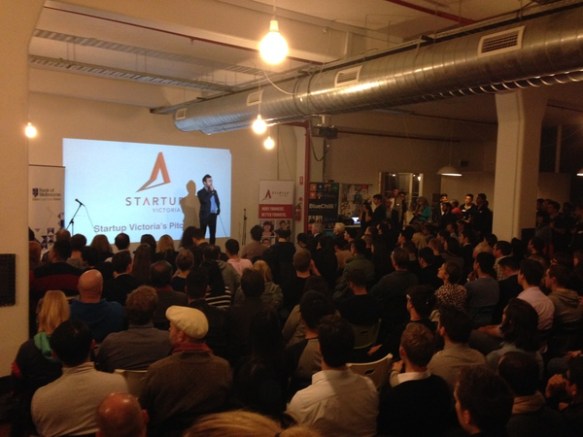
As a nice segue to last week’s blog on Techstars, I was fortunate to hear Dr Kate Cornick speak, just before the latest LaunchVic grants were announced. Organised by Innovation Bay, hosted by Deloitte, and facilitated by Ian Gardiner, the fireside chat plus Q&A was a useful insight on a key part of the Victorian Government’s innovation strategy.

launchviclogo innovationbay-feat-800x500At the outset, Dr Cornick stressed that LaunchVic is not an investment vehicle, and it doesn’t fund individual startups. Rather it seeks to support initiatives that help grow the local startup eco-system. (See also my blog on the consultation process that informed LaunchVic’s formation.)

Commenting on why Victoria (and Australia) has the potential to become a world-class centre for innovation, Dr Cornick pointed to a number of factors:

  • A collaborative culture
  • Positive economic conditions (comparatively speaking)
  • Governments (mostly) open to innovation
  • Strong research base

However, a few of the obstacles in our way include:

  • The notorious tall poppy syndrome, whereby Australians are suspicious, sceptical and even scathing of local success – except when it comes to sport and entertainment!
  • An inability to scale or capitalise on academic research
  • Insufficient entrepreneurial skills and experience to “get scrappy”
  • Lack of exposure for highly successful startups (c.$20m market cap) that can help attract more investment

From a startup perspective, Australia also has the wrong type of risk capital: institutional investors are more attuned to placing large bets on speculative mining assets, typically funded through public listings, and with very different financial profiles. (Or they prefer to invest in things they can see and touch – property, utilities, infrastructure, banks.)

So there is still a huge gap in investor education on startups and their requirements for early-stage funding. Part of LaunchVic’s remit is to market the local startup community, promote the success stories, and foster the right conditions to connect capital with ideas and innovation. After all, Australia does have one of the largest pool of pension fund assets in the world, and that money has to be put to work in creating economic growth opportunities.

As I have blogged before, we still see the “expensive boomerang”: Australian asset managers investing in Silicon Valley VCs, who then invest in Australian startups. Although when I raised a question about the investment preferences of our fund managers, Ian Gardiner did point out that a few enlightened institutions have invested in Australian VC funds such as SquarePeg Capital, H2 Ventures and Reinventure.

Dr Cornick also provided a reality check on startups, and added a note of caution to would-be founders:

First, it tends to be an over-glamourised sector. For one thing, founders under-estimate the relentless grind in making their business a success. And while eating pizza and pot noodles might sound like a lifestyle choice, it’s more of an economic necessity. Thus, it’s not for everyone (and not everyone should or needs to build a startup…), so aspiring entrepreneurs would be well-advised to do their homework.

Second, the success of any startup community will be reflected by industry demand. “Build it and they will come” is not a viable strategy. And I know from talking to those within the Victorian Government that unlike their inter-state counterparts, they are not willing (or able) to fund or invest in specific startups, nor in specific ventures such as a FinTech hub. Their position is that industry needs to put its money where its mouth is, and as and when that happens, the Government will look to see what support it can provide to foster and nurture such initiatives – particularly when it comes to facilitating between parties or filling in any gaps.

Third, don’t expect too many more unicorns, and don’t bank on coming up with simple but unique ideas that will conquer the world – meaning, new businesses like Facebook, Uber and Pinterest will be few and far between. Instead, drawing on her earlier comments about research, Dr Cornick predicts that it will be “back to the 90’s”, where innovation will come from “research-based, deep-tech solutions”.

If that’s the case, then the LaunchVic agenda (for the remaining 3 years of its current 4 year lifespan) will include:

  • Getting Victoria on the map, and positioning it as a global innovation hub
  • Raising the bar by educating startups and investors
  • Bringing more diversity to the startup sector, by providing greater access, striking better gender balance, and building a stronger entrepreneurial culture
  • Introducing a more transparent and interactive consultation process
  • Continuing to support the best accelerator programs that focus on startups
  • Making more frequent and smaller funding rounds, each with a specific focus

Asked what areas of innovation Victoria will be famous for, Dr Cornick’s number one pick was Healthcare, pointing to the strong research base coming out of both the Monash and Melbourne University medical precincts. Also in the running were Agriculture, and possibly Cyber-security. (Separately, there is a list of priority industries where the Government sees growth, employment and investment opportunities.)

If one of the biggest hurdles is commercializing research, Dr Cornick suggested that Universities have to re-think current IP practices, including ownership and licensing models, developing better career options in research, and doing more to re-calibrate the effort/reward equation in building research assets compared to building companies and commercial assets.

Finally, Dr Cornick offered an interesting metaphor to describe the current state of Victoria’s innovation potential:

“We have everything we need for baking a cake, but the missing ingredient is the baking powder to make it rise.”

Next week: Gigster is coming to town….



Life Lessons from the Techstars founders

Melbourne’s startup community is very fortunate to host some of the leading names in the startup world, who are more than willing to share their experiences and insights in front of packed, eager (even adulatory) audiences. The most recent visitors were Brad Feld and David Cohen, renowned entrepreneurs, and co-founders of the global Techstars accelerator and startup programmes. By the sounds of David’s recent blog, they really liked Melbourne (may have something to do with tennis…). But aside from talking about startups and the local eco-system, they had plenty to say about “startup life” as well.

techstarslogoDuring a fireside chat and Q&A facilitated by Leni Mayo, hosted at inspire9, with the support of Innovation in the Wild in conjunction with Startup Victoria, we learned a lot about what it takes to build a startup community, the role of government, limitations of current VC funding models, plus lots of personal tips on work/life balance etc.

First, based on the so-called “Boulder thesis”, there are four key elements to building a successful startup community:

  1. Entrepreneurs must act like leaders
  2. There has to be a long-term perspective (20 year horizon)
  3. The community has to be inclusive of anyone who wants to participate, and
  4. The leaders have to create activities for everyone to engage

There was also a discussion on why they chose Boulder as their base – which was slightly harder to explain. There was mention of the size of the population, the critical mass of wealthy investors and successful entrepreneurs, the liberal attitudes and culture, and the proximity to Denver (but at the same time, it’s not Denver?). Perhaps it’s something in the water?

Second, the community must rely on network effects, and not attempt to impose structure. That can be particularly hard when trying to co-ordinate scarce resources, attract potential investors, and win the ear of government. But I understand that a community should be capable of being a self-organising entity, as long as there is a clear and shared purpose?

Third, the role of government should be to get engaged (but stay out of the way?). The best thing our elected representatives and their bureaucrats can do is “shine a light on success”. This was particularly pertinent when our guests talked about some of the startups based in the same building where we were meeting: despite being very familiar with these companies in the USA, they had little idea that they were based in Melbourne.

Fourth, the community members have to “act what you want to be” (sort of, “be the change you want to see”?). I take this to be about being authentic, acting with integrity, giving back, and affording people due respect and recognition. Part of this is about having the right settings on culture, and taking responsibility for setting the tone of the community.

Fifth, given that some aspects of the current VC funding model are broken (fewer unicorns, fewer simple but big ideas emerging, too many short-term investment horizons, over-ambitious expectations on returns?), and if we want investors to behave in a certain way (especially if we need them to take a longer-term perspective), we have to educate them, engage them, bring them on the journey.

Finally, it was with remarkable candour that both guests spoke about achieving work/life balance, maintaining healthy relationships with their spouses, families and friends, and learning how/when to switch off. Mostly, they make specific time to take breaks, schedule date nights, compensate for the quality family time when they will be on the road, reflect on what is and isn’t working in all aspects of their lives, and continue to question/challenge themselves. The use of personal coaches and business mentors was also discussed, and it was refreshing to hear that such successful people acknowledge that sometimes they need help, and they certainly don’t have all the answers themselves.

Next week: Talking Innovation with Dr Kate Cornick, CEO of LaunchVic


A Tale of Two #FinTech Cities – Part 2

It feels like the inter-city #FinTech and startup rivalry between Melbourne and Sydney is starting to get personal. The blow-up between Victorian Small Business Minister, Philip Dalidakis and Freelancer CEO, Matt Barrie over StartCon is perhaps the most strident example, but other discontent is bubbling underneath the service.

screen-shot-2016-10-05-at-10-51-49-amLet’s take a look at what’s actually been happening around #FinTech in Melbourne, and try to understand what might be the cause of this apparent disquiet:

First, the recently announced LaunchVic grants have been met with a mix of gratitude, bewilderment and some sour grapes, based on the people I have talked to in the start-up community. There was a sense of “jobs for the boys”, “usual suspects”, “who?”, and “yeah, good on ya”. Nothing new there, then, when public money is being handed out. High-profile beneficiaries of the initial A$6.5m of grants include FinTech Australia (as part of a major FinTech Conference to be held in Melbourne), FinTech Melbourne (which is now the largest group of its kind outside the US and UK), inspire9, Startup Victoria and Collective Campus.

Second, Stripe‘s CEO, John Collison was in town to celebrate their 2nd birthday in Melbourne. (This is the 3rd time in 2 years Collison has been in Australia – he must love what we are doing here? Or maybe it’s the Victorian government incentives that attracted Stripe to set up in Melbourne: see below.) This time around, there were some major announcements among the celebrations, including:

  • 25% of Australians have paid for something online using Stripe
  • Stripe is launching “Connect” in Australia – making it easier for local businesses to roll out payment solutions in multiple markets overseas
  • Stripe continues to keep its APIs as simple and streamlined as possible – they even support Amazon’s Alexa voice recognition system

There was also a panel discussion with some of Stripe’s local clients, and a Q&A with Collison himself:

  • Andre Eikmeier from Vinomofo commented that payment solutions (like all technology) should be invisible, and just work in the background
  • Ben Styles from Xero explained that integration with Xero’s own APIs is critical, and that they have co-developed some products
  • Nicole Brolan from SEEK said that thanks to Stripe, her business is finally allowing clients to pay invoices on-line

Asked about innovation, Collison argued that mobile phone technology was the spur for services like Uber. However, he’s not especially engaged with Blockchain, as he does not see the use case. He thinks the next major innovation will be in medtech (telemetrics & wearables), and machine learning (speech and image recognition). As he said, “driverless cars are not just about the sensors but what the data is telling you. We know more about the health of your car than your own body.” He also had some words of advice to aspiring local entrepreneurs and startup founders:

  • Having a global or international perspective is determined by your markets, your competition, and access to specific talent pools.
  • It’s probably wrong to aspire to be like Atlassian – you need to understand WHY Atlassian has been successful, not WHAT it did or HOW it did it – which means getting back to core values and core purpose.

Third, as the Stripe celebrations started to kick off, across town FinTech Melbourne hosted an event starring Alex Scandurra, from Sydney’s Stone & Chalk FinTech hub. This was billed as a “pre-launch” for Stone & Chalk’s planned foray into Melbourne, and was part information session, part FinTech love fest, and part fan-boy hangout. Scandurra’s presentation was quick to point out that the “plan is not to bring Stone & Chalk to Melbourne, but to create Melbourne’s own Stone & Chalk”. (Spot the subtle difference?)

To its credit, Stone & Chalk is home to 300 people and 75 startups, has helped start 21 companies and create 150 jobs, and participants have collectively raised $100m in funding, although Stone & Chalk does not take equity. Scandurra also commented that FinTech is not an industry in itself – it is a horizontal that serves all industries.

There seems to be a lot of local clamouring for a FinTech hub in Melbourne. However, unlike the NSW government which has directly partnered with Stone & Chalk, I understand that the Victorian government is not prepared or able to “invest” in such a project – and certainly not before there is some private sector funding on the table.

Meanwhile, the founder of a rival payment system expressed his frustration that the Victorian government “sponsored” Stripe to come to Australia, but won’t offer similar support to local startups. Another FinTech CEO I spoke to was irked that Stone & Chalk would appear to be breaching its own mandate if it set up shop outside NSW.

In fact, could be argued that Stone & Chalk was established in Sydney to directly compete with Melbourne’s startup ecosystem. In large part, this is thanks to the huge success that the Victorian government continues to have in luring major tech companies and global startups to come to Melbourne. Names such as Zendesk, Eventbrite, Slack, Square, Stripe and now Cognizant.

If the debate over Stone & Chalk coming to Melbourne is about creating a local FinTech hub (whether or not the Victorian government tips in some money), we have to examine the need for such a hub. For example, is it simply a question of real estate, so that all the FinTech startups can be co-located in one place? If so, I would have thought that was easy to resolve: there’s a lot of empty office space, and Melbourne rents are cheaper than Sydney; also, a growing number of office landlords recognise the mutual benefits and knock-on effects of hosting co-working venues in their buildings.

We also have to consider if Melbourne’s existing FinTech startup eco-system/infrastructure is willing to come together to underpin such a hub. If so, what is the hub going to do? What is its purpose? What is the missing piece that the hub is designed to fill? And who/what/where is best placed to fill that need/gap?

Looking back, Melbourne has been the home of a number of FinTech businesses, that are now global public enterprises – IRESS, Computershare, Touchcorp, Novatti, for example – so there is obviously something in the local water (or coffee). For me, however, a key barrier for FinTech specifically, and startups more generally, is the inability to connect to institutional funds and investors (Clover being a notable exception?). Other obstacles include the stodgy procurement processes used by the public sector and many large corporations, which make it more difficult for startups to compete for work, and the reluctance by enterprise clients to try a local product or service unless it has been tested and proven elsewhere.

Finally, on a more positive note, it was very interesting to see that founders from Atlassian and Vinomofo are backing Spaceship, a new superannuation fund appealing to a younger, tech-savvy audience.

Next week: Bridging the Digital Divide

101 #Startup Pitches – What have we learned?

During the past 3 years of writing this blog, I have probably heard more than 100 startup founders pitch, present or share their insights. Most of these pitch nights have been hosted by Startup Victoria, with a few on the side run by the Melbourne FinTech Meetup and elsewhere.

Image sourced from Startup Victoria Meetup

Image sourced from Startup Victoria Meetup

Based on all these presentations, I have collated a simple directory of each startup or pitch event I have covered or mentioned in this blog, as well as a few key accelerators and crowdfunding platforms.

What have we learned over that time?

First, apart from the constant stream of new startups pitching each month, it’s been impressive to witness the Melbourne startup community collaborate and support one another.

Second, some of the international founders who have spoken are among the rock stars of startups – and we are fortunate that they have been willing to spend time in Melbourne.

Third, a number of the local startups who have pitched during this time have become well-established and well-known businesses in their own right.

This all means that besides creating great products and services, and being willing to share their experiences, the founders have helped aspiring founders and entrepreneurs to appreciate the importance of:

  • product-market fit;
  • working with agile processes and lean startup models;
  • tackling prototyping and launching MVPs;
  • learning what to measure via key metrics;
  • figuring out funding; and
  • knowing when to pivot or fold.

Looking at the cross section of pitch nights, panel discussions and guest speakers, there are some significant trends and notable startups to have emerged:

Industry focus: Not surprisingly, the pitches are heavily biased towards FinTech, MedTech, Education, Digital Media, Enterprise Services and Consumer Services. There are a some key startups focused on devices (e.g., SwatchMate and LIFX); a smattering in recruitment, fashion, gaming, health and well-being, property services, social media and even logistics. But there are surprisingly few in environmental technology or services.

Business models: Two-sided market places abound, as do customer aggregators, sharing platforms (“the Uber for X”, or “the AirbnB of Y”), freemium apps and subscription services (as opposed to purely transactional businesses). There are also some great social enterprise startups, but surprisingly no co-operative models (apart from THINC).

Emerging stars:  Looking through the directory of startups, some of the star names to have come through during this time, based on their public profile, funding success, awards (and ubiquity at startup events….) include:

CoinJar, LIFX, Tablo, SwatchMate, etaskr, DragonBill, Culture Amp, Eyenaemia, Timelio, Moula, nuraloop,  Konnective, OutTrippin and SweetHawk.

Acknowledgments: Some of the startups and pitches in the list are just ideas, some don’t even have a website, and some didn’t get any further than a landing page. However, I have not been able to include all the startups that turned up at Startup Alley, nor the many more startup founders I have met through these events (but whom I didn’t get to see pitch or present), nor the startup ideas that were hatched during the hackathons I have participated in. And there are a few startups that I could not include because I heard them pitch at closed investor events. Finally, I am and have been very fortunate to work with a number of the startups listed, in various capacities: Brave New Coin, Ebla, Re-Imagi, Slow School of Business and Timelio. To these startups and their founders, I am extremely grateful for the opportunities they have given me.

Next week: Putting a Price on Value