Demo Day for MAP’s Class of 2013 Startups

The Melbourne Accelerator Program (MAP) supported by University of Melbourne’s School of Engineering and Faculty of Business and Economics is only in its second year, but already shows signs of becoming a leading incubator of new and emerging entrepreneurial talent in the burgeoning Melbourne startup community.

Last week was Demo Day (a.k.a. pitch night) for the 6 successful teams who were selected from over 50 applications submitted for the 2013 program. Presenting to an audience of fellow entrepreneurs, potential investors, program mentors and “interlopers” (a term used by Dr Charlie Day in his introduction), each team was invited to present the fruits of their labours from the 3-month accelerator program.

To kick things off, there was a quick update on the Class of 2012, including the team behind the new Omny audio app, which offers curated audio content.

From the Class of 2013, first up was 2Mar Robotics, who are developing a remote-controlled robotic arm, aimed at helping people with quadriplegia or with restricted arm movement and control. An earlier, voice-operated prototype proved unstable due to interference from background noise, but the team, led by Young Australian of the Year 2012, Marita Cheng (and founder of Robogals) have already secured a number of pre-orders for the latest version, which they hope to ship in early 2014. While it is understandable that the team would want to keep key commercial aspects of their project confidential, the less-than-open responses to audience questions about product costs and market pricing created the impression that the team are still developing their business case.

The next project, also healthcare-related, was from Cortera Neurotechnologies, who specialise in remote monitoring sensors for epilepsy patients. The team’s goal, using highly developed neural interface technology, is to significantly reduce the risk of infection caused by major invasive surgery for the 30% of epilepsy sufferers who are unable to take medication. Despite some theoretical discourse and good-natured banter with the audience about cyborgs and mind control interfaces, the team (which is divided between Melbourne Uni and UC Berkeley) is well on its way to securing prototype funding.

Client Catalyst offers digital marketing services for SMEs, via mobile websites and integrated search solutions. Given that nearly half of all mobile searches are for local services, the solution has targeted the trade vertical (plumbers, builders, electricians, etc.) which accounts for about 25% of the SME market. Claiming much lower customer acquisition costs for their clients (compared to traditional classified directories), and a very high client conversion rate, the team has established a solid subscription business that more than covers their primary input cost of paid search terms.

By using highly intuitive data visualisation and enhanced search, the team behind The Price Geek claim to have established a major competitive edge over other price comparison sites, in their bid to help you “find out the market price for anything” (although currently, it really only covers tech devices, sneakers, and Tiger Woods memorabilia…). They have built affiliate programs with multiple merchants, giving them more market sources, more contributed content, and more data analytics. The site has already picked up some strong media coverage, and in future, The Price Geek plans to offer price comparison for cars.

Before commenting on Ebla, a self-publishing platform for lawyers, I should declare an interest: I previously worked for the legal information division of Thomson Reuters, including the Westlaw online service. So, IMHO, anyone who is attempting to bring a new technology solution to informed legal commentary and analysis deserves a lot of credit, especially if, as intended, the service empowers individual lawyers to showcase their expertise in a collaborative and adductive environment. Contrary to some popular misconception, the legal profession (along with financial services) was one of the first industries to embrace the digital age*. Yet consider this: the sheer volume of legislation, case-law and commentary; the complexity of the material and its many idiosyncrasies (e.g., case citation systems); the proprietary nature of much document drafting; and the “knowledge is power” approach to researching obscure precedents before facing your opponent in court – all these factors tend to work against the notion of knowledge sharing and collaboration among lawyers. (I have heard of some law firms that embed deliberate mistakes in their commercial drafting templates, to deter plagiarism by their competitors if the originals were to fall into the wrong hands.) Access to the site, which is still in Beta, is by invitation only, and will offer a freemium subscription model.

The last team to present was SwatchMate, with a Bluetooth-enabled reader that helps users to “capture the color of any surface” (or “Shazam for color”). I have to say that when I first saw this team present at a Lean Startup Melbourne event earlier this year, I was somewhat sceptical about the product, as they seemed to be focussing on the paint market (both trade and DIY customers), yet didn’t appear to realise that most people only paint their home once every 5-7 years. However, I am pleased to report that SwatchMate have since lifted their game, by identifying strong opportunities among designers and creatives, brand managers, the cosmetics industry, and even TV and monitor calibration. With linkages to major design software, as well as to leading colour and paint catalogues, SwatchMate will offer an integrated solution once they go into production. Meanwhile, they are planning to launch on Kickstarter, and are a finalist at next week’s Melbourne Design Awards (plus shortlisted for the Sydney and Brisbane Design Awards)**.

Applications for MAP 2014 close on April 24, and there are also opportunities to participate as a mentor (full details not yet available).

* Lawyers love their technology: The Wang word processing system was eagerly adopted by law firms in the 1970s and 1980s, for its ability to support complex document formatting. Online legal research tools like Westlaw and Lexis-Nexis were launched in the 1970s. Some of the first CD-ROM and web-based law publications in the 1990s deployed specialised html coding and Boolean logic designed for legal search and retrieval purposes. Many law firms use sophisticated knowledge management systems to capture the in-house expertise of their lawyers. Court reporting and litigation support tools have been using advanced voice recognition, extensive text parsing and real-time data capture and processing for many years.

** Declaration of interest: I am currently involved with the Design Awards, although I have no say in the selection of shortlisted entries or finalists.
Is it safe to upgrade to iOS 7?

I ask the question because like many other users, I am holding off upgrading to iOS 7. I have even backed up a copy of iOS 6.1.3 to “freeze” it in case I am forced to upgrade before I am ready. I am holding out until some of the potential glitches and bugs are ironed out. I was first alerted to the issue by the developers of Audiobus, but it seems that they are not alone….

orphionarticulation-640x480

Leaving aside the fact that many customers could not easily download the new operating system, or the fact that the shiny “new” iTunes Radio is not available outside the US, it seems that iOS 7 has been launched rather hastily, along with iTunes 11.1 (barely a month after iTunes 11.0.5….).

Audiobus had earlier notified their customers that iOS 7 would automatically update apps, without users even knowing, which risked corrupting personalised settings, especially for more complex apps. Now, it seems that the upgrade function has been modified, so that users can select when and how their apps will be upgraded.

But Audiobus, who launched inter-app connectivity for live audio, could be one of a number of apps that Apple is seeking to render obsolete or redundant, since iOS 7 supports Inter-App Audio. Other apps seemingly under threat include those featuring, photography, music streaming and document sharing.

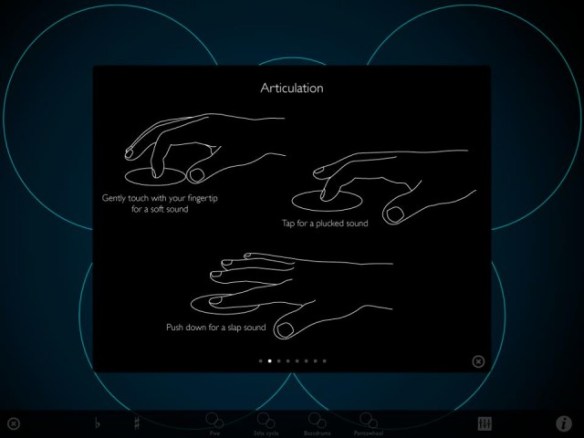
Even an app that utilises the amount of contact area made by your fingers on the device touch screen was forced to remove that functionality by Apple. To me, this type of gesture or articulation could be critical in helping people with accessibility issues – so why should its deployment be restricted at the whim of Apple, rather than being made available to all developers?

Apple will not countenance any app that “interferes” with the telephony functions of an iPhone, and until iOS 6 introduced “Do Not Disturb”, I wonder how many 3rd party apps with similar functionality were rejected by the iTunes Store?

Now Apple appears to be cornering other functionality and interactivity design – even if Apple didn’t think of them first…. In fact, every original app design or feature is like a piece of middleware, that allows the user to interact with the device’s operating system, in a way that the system developers probably had not anticipated; this process is at the heart of innovation – taking something good and making it even better.

The fanfare of the new iPhone 5S (and its colourful cousin the 5C) probably won’t allow any criticisms about iOS 7 to rain on Apple’s new product parade – but I can’t help feeling that as customers we are being oversold each new release of an Apple device or operating system upgrade.

Although every incremental release or upgrade is supposed to come with lots of great new features and benefits, we actually lose some functionality and user options as Apple continuously locks down customisation and personalization. For example, iTunes 10.8 disabled the option to manually sync Notes between devices – now it’s all done via iCloud, and legacy data that predates iCloud (or is in a folder “On My iPhone” and thus not “recognised” by iCloud) has to be copied over to a cloud-enabled folder, one-by-one, as I have learned to my cost. Why does Apple think it can determine how I manage my own data?

While I understand that all product developers rely on user experience and expectations to help them develop new features, and they need customers to migrate to single, common platforms and versions as quickly as possible post-release, I’d prefer that my loyalty and patience were not taken for granted.

Why it’s important to make time for play

Do we spend enough time playing? As adults, have we forgotten how to play? Have we in fact been conditioned to stop playing once we “grow up”?

Bigshot Front View

Most of us would probably recognise that a lack of play during our childhood can have serious consequences for our psychological development. Dr. Stuart Brown of the National Institute for Play makes the case that a lack of adult play has a negative impact both on our energy levels and on our mental well-being. Again, most people would appreciate that taking time out from our daily tasks and routine can lift our spirits and put us in a better frame of mind – it can also help us with problem-solving and creative thinking – but few of us make a conscious effort to schedule some dedicated and regular play activity into our day. (And I don’t mean simply spending an hour or two playing computer games.)

How we play is just as important as what we play with, and the type of play activity that engages us – in short, we are what we play. So the absence of any play may suggest something is missing in our lives.

When I was a child, some of my favourite toys enabled me to design and build things, to construct working models with clockwork and electric motors, to assemble, disassemble and re-assemble simple electronic circuits for radios, light-operated switches and walkie-talkies. I even built a rudimentary synthesizer using parts stripped from an old TV set, and a keyboard made from an ice cream tin. OK, so I wasn’t going to get a gig with Kraftwerk, but I did learn about capacitors, resistors, transistors, diodes, rheostats, transformers and relays, even if I couldn’t get a recognizable tune out of the instrument itself.

This avid curiosity about how things work once caused me to take apart a clockwork motor, which I was then unable to get to work again. My father, an engineer, simply said, “Never take something apart unless you know how to put it back together”, sage advice which is helpful even today in my role as a strategist, executive coach and business consultant.

I would suggest that there is a link between abandoning play in adulthood and a growing lack of curiosity about how things actually work once we get older, coupled with our increasing passivity towards new technology. For example, how many of us would know (or care) how to repair simple mechanical or electrical appliances in our homes?

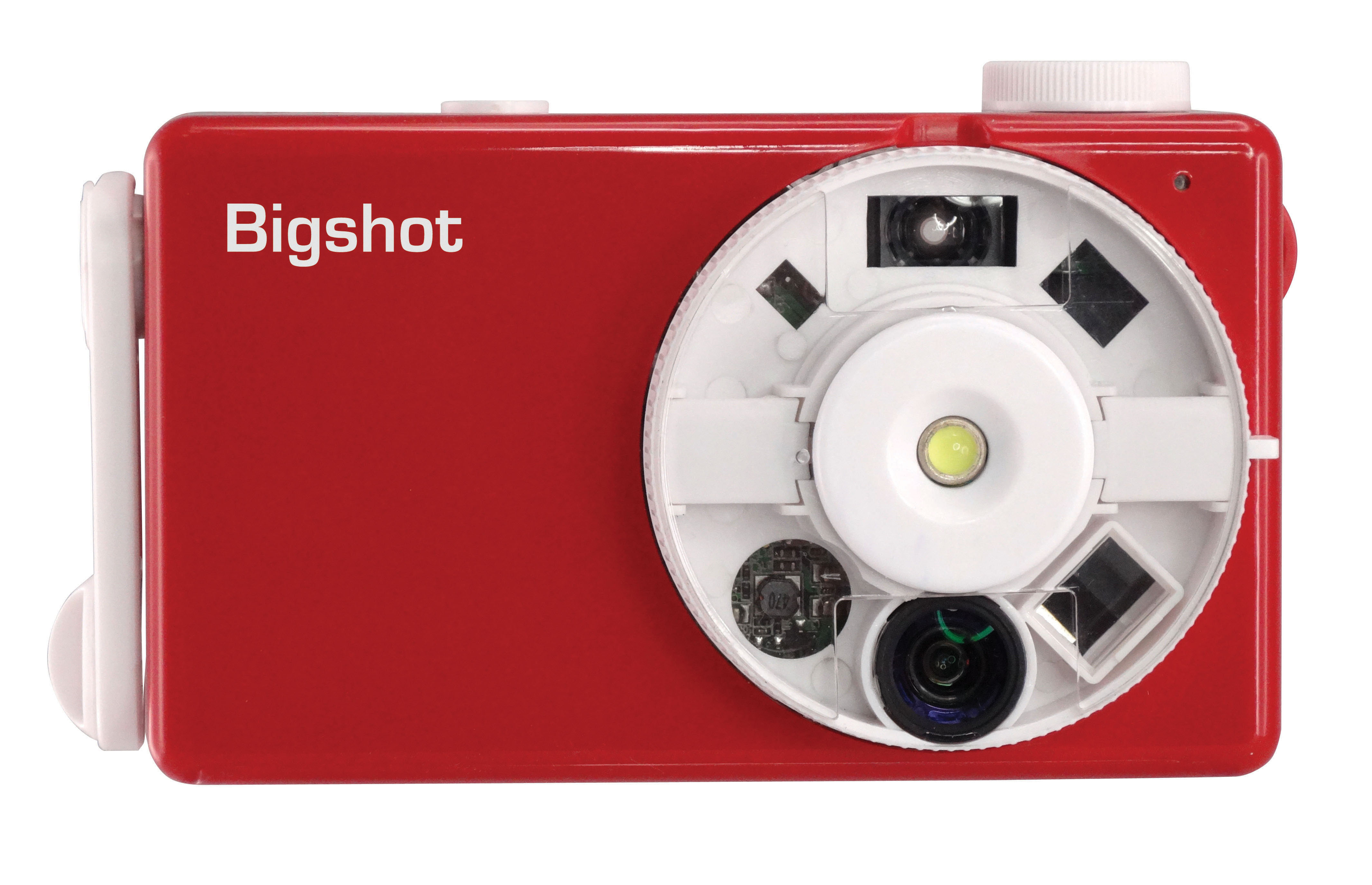
While there has been an understandable effort aimed at encouraging children to learn how to write code, this emphasis on software comes at the expense of learning how machines work, how hardware is designed, how electronic and mechanical components combine together. This software bias has prompted a team of educationalists to launch the Bigshot digital camera kit designed to help children learn through play by making a real digital camera, and to understand the relationship between software and hardware. Others are teaching summer schools that combine software programming with engineering and robotics – but the broader goal is to develop problem-solving, logic, comprehension and reasoning skills.

Our pursuit of creative or constructive play in adulthood is not helped by the obsession designers and manufacturers have with producing “sealed units” – hardware that comes with “no user serviceable parts inside”*.  Even if we succeeded in taking the back off a gadget and having a look inside, it would probably invalidate the warranty and extinguish our consumer protection rights.

If we don’t understand how the things we use are designed to work, how can we tell if something is wrong, how can we learn to improve them, how can we find new ways of using them?

Smart companies and organizations understand the importance of learning through play and actively encourage their people to spend time “playing” – either through the pursuit of pet projects, or through creative, collaborative and social activities designed to instil innovation and fresh thinking.

As such, I’m very interested to hear from organizations that incorporate “play” into their regular activities, to understand why and how they do it, and to learn about the outcomes and benefits it delivers. I can be contacted via this blog, LinkedIn or Twitter.

*Note: Software is often just as bad with so-called “default” settings that get in the way of our ability to play around with and explore the programs we use.