Notes from Blockchain Week

Blockchain Australia, the national industry body, recently organised the first National Australian Blockchain Week – a mix of on-line and in-person events, hosted in Sydney and Melbourne. Overall, it was an impressive line up of speakers and topics, featuring key local figures and presenting some intriguing announcements from politicians, regulators and practitioners alike.

The recurring themes were: Regulation, Tax and Innovation.

Despite past pronouncements about adopting a light-touch regulatory regime when it comes to Blockchain technology, the absence of definite regulation risks stifling innovation and/or driving projects overseas to more receptive jurisdictions. (Irony of the week #1: contrast this with the early and positive regulatory engagement with Digital Currency Exchanges (DCE) and other market participants in Australia, not to mention previous progress in removing the absurd GST treatment on the purchase and sale of cryptocurrencies).

Now, the industry is (once again) asking policy makers: to clarify the law as it relates to decentralised protocols, digital assets and utility tokens; to streamline the confusing and over-complex tax system as it applies to DeFi: and to define a specific regulatory boundary (rather like the UK’s FCA perimeter) within which crypto assets need to be regulated. Sadly, the latter is extremely hard to acheive thanks to the very broad definition of “financial product” within the Australian Corporations Act.

Throughout the four days, there were several highlights: Senator Bragg’s keynote speech on driving the policy agenda to bring clarity to regulators and markets alike; a progress report on the National Blockchain Roadmap; tax and legal updates from Joni Pirovich and Michael Bacina; a showcase of local Blockchain start-up projects (more on that next week); and a couple of enterprise presentations on the ASX’s DLT replacement for CHESS and the Blockchain-based insurance project between the R3 consortium and Grow Super. But apart from a couple of other Blockchain-in-business sessions, there was a noticeable absence of corporates, major banks, traditional financial services and institutional investors.

There was a lot of commentary around the fact that many Blockchain businesses and crypto projects still find it challenging to access regular banking facilities in Australia (Irony of the week #2: Westpac’s windfall from the recent Coinbase IPO). There was also a lot of discussion about the need for investor education before crypto and digital assets can go “mainstream” – which I find surprising when plenty of people seem to be finding their way without any help from traditional financial advisors, and yet no-one is required to educate themselves before their money is put into compulsory superannuation or real estate assets. Even where crypto assets are being included in retail investor products, the allocation is very modest and is being transacted offshore (see Raiz’s 5% allocation via the US-based Gemini Trust). Why not use one of the several established and well-run exchanges, crypto funds and OTC providers here in Australia?

Regarding the potential offshore brain drain, much was made of the work that Singapore is doing to attract Blockchain and crypto businesses. But I think the focus on Singapore risks overstating the situation there, and overlooks what is actually happening (and could happen) in Australia. For example, while Singapore may have more favourable tax arrangements for new Blockchain projects, I understand that ordinary retail investors don’t have access to crypto funds (not even ETPs). The Singaporean issuance of digital assets via tokenisation has to be done via an SPV structure. And while many ICOs have been issued from Singapore, they could not be marketed to local investors. At least Australia has a robust DCE sector, e.g. Independent Reserve, BTC Markets, and Bit Trade (now part of Kraken); early on we saw some very successful retail products such as CoinJar; and the local industry continues to nurture innovative decentralisation projects – we just need to sort out those “policy settings”, and give more encouragement to local entrpreneuers and innovation. (Irony of the week #3 – when former ALP politician and self-styled crypto OG, Sam Dastyari, was asked if the private equity fund he works for was investing in Blockchain or crypto, there was a deafening silence…)

Finally, one of the main benefits of Blockchain Week has been to entice people out of hibernation, and to attend in-person events after months of lock-downs and restricted movement. It felt good to be back.

Next week: Blockchain Start-up Showcase
FinTech Australia Road Show

This week I had hoped to blog about the latest FinTech Australia Road Show in Melbourne – unfortunately, COVID-19 intervened, and the event has been postponed.

So instead, here is my personal quick take on recent developments in the local FinTech scene:

A tale of 2 neobanks

Maybe Australia isn’t ready for challenger banks, despite the early interest and apparent market demand. Xinja* has decided to give back its banking license, having spent a ton of money on obtaining it in the first place. It couldn’t sustain savings and deposit accounts (even in a low-interest rate environment) without sufficient regulatory capital, the funding for which has failed to materialise; and without deposits, Xinja couldn’t offer loans. There is talk of launching a US share-trading app instead (à la Robinhood) but given the recent shenanigans with Wall Street Bets, Reddit, hedge funds and GameStop day traders I don’t suppose the regulatory path to market will be that easy. Xinja looks like it’s done.

Meanwhile, NAB has just announced that it is acquiring the shares in 86 400 that it does not already own, in order to merge it with NAB’s digital brand, Ubank. Which further suggests neobanks can’t survive on their own in the Australian market, with the dominant and regulatory protected cartel of the Big 4. (My good friend Alan Tsen has described this latest transaction as a turducken….)

Other challenger brands in Australia are having to take different approaches: Up is piggybacking off Bendigo and Adelaide Bank’s ADI license; Volt describes itself as a BaaS provider (“banking as a service”); Judo is focused on business banking; and the UK’s Revolut is bringing a mix of credit cards, payment solutions and forex services (including crypto), rather than transaction banking. Meanwhile, another BaaS from the UK, Railsbank is currently recruiting locally for a GM to leads its Australian roll-out.

Finally, despite some concerns about the BNPL sector (“buy now, pay later”), Afterpay is partnering with Westpac‘s BaaS platform to offer banking services to its customers.

Whither the Big 4?

Speaking of which, what are the Big 4 doing in the broader sphere of FinTech?

Despite (or because of?) buying a neobank, NAB has apparently closed down the Labs part of NAB Ventures, the often-mentioned, but largely silent startup incubator. CBA has created X15, a similar FinTech ventures platform with the ambitious goal of launching 25 businesses in 5 years (I seem to recall NAB Ventures once had a similar mandate?). Westpac‘s own FinTech fund, Reinventure is expected to do well out of the forthcoming Coinbase IPO; so much so that Reinventure is planning to decouple from Westpac, and launch a new fund focused on DeFi opportunities. ANZ has been putting out some commentary on its ANZi platform for FinTech innovation and partnerships – but its remit is limited to trade finance, home ownership and open data, and it is being very coy as to what specific bets they are making. Ho hum.

Did somebody mention crypto?

In case you hadn’t realised, we are experiencing something of a bull market in crypto.

Coinspot just announced they have 1,000,000 customers. Raiz Invest has launched its retail savings portfolio product with a 5% allocation to Bitcoin. Other funds like Every Capital are planning similar retail offerings. Luno is advertising on Melbourne’s tram shelters. And the Australian division of eToro is talking up DeFi. Game on!

Next week: Transition – post-pandemic career moves

* Declaration of interest – the author participated in the Xinja equity crowd-sale a few years ago

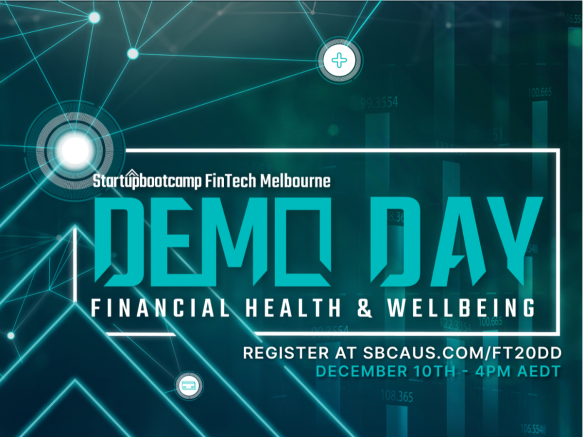
Startupbootcamp – Melbourne FinTech Demo Day

Taking its cue from some of the economic effects of the current pandemic, the latest Startupbootcamp Melbourne FinTech virtual demo day adopted the theme of  financial health and well-being. When reduced working hours and layoffs revealed that many that people did not have enough savings to last 6 weeks, let alone 6 months, lock-down and furlough have not only put a strain on public finances, they have also revealed the need for better education on personal finance and wealth management. Meanwhile, increased regulation and compliance obligations (especially in the areas of data privacy, cyber security and KYC) are adding huge operational costs for companies and financial institutions. And despite the restrictions and disruptions of lock-down, the latest cohort of startups in the Melbourne FinTech bootcamp managed to deliver some engaging presentations.

Links to each startup are in the names:

Datacy

Datacy allows people to collect, manage and sell their online data easily and transparently, and gives businesses instant access to high quality and bespoke consumer datasets. They stress that the data used in their application is legally and ethically sourced. Their process is also designed to eliminate gaps and risks inherent in many current solutions, which are often manual, fragmented and unethical. At its heart is a Chrome or Firefox browser extension. Individual consumers can generate passive income from data sales, based on user-defined permissions. Businesses can create target data sets using various parameters. Datacy charges companies to access the end-user data, and also takes a 15% commission on every transaction via the plugin – some of which is distributed to end-users, but it wasn’t clear how that works. For example, is it distributed in equal proportions to everyone, or is it weighted by the “value” (however defined or calculated) of an individual’s data?

Harpocrates Solutions

Harpocrates Solutions provides a simplified data privacy via a “compliance compliance as a service” model. Seeing itself as part of the “Trust Economy”, Harpocrates is making privacy implementations easier. It achieves this by monitoring and observing daily regulatory updates, and capturing the relevant changes. It then uses AI to manage a central repository, and to create and maintain tailored rules sets.

Mark Labs

Mark Labs helps asset managers and institutional investors integrate environmental and social considerations into their portfolios. With increased investor interest in sustainability, portfolio managers are adopting ESG criteria in to their decision-making, and Mark Labs helps them in “optimising the impact” of their investments. There are currently an estimated $40 trillion of sustainable assets under management, but ESG portfolio management is data intensive, complex and still emerging both as an analytical skill and as a practical portfolio methodology. Mark Labs helps investors to curate, analyze and communicate data on their portfolio companies, drawing on multiple database sources, and aligning to UN Sustainable Development Goals. The founders estimate that there are $114 trillion of assets under management “at risk” if generational transfer and investor mandates shift towards more ESG criteria.

MassUp

MassUp is a digital white label solution for the property and casualty insurance industry (P&C), designed to sell small item insurance at the consumer point-of-sale (POS).
Describing their platform as a “plug and sell” solution, the founders noted that 70% of portable items are not covered by insurance policies, and many homes and/or contents are either uninsured or under-insured. MassUp is intended to simplify the process (“easy, accessible, online”), and will be launching in Australia under the Sorgenfrey brand in Q2 2021. For example, a product known as “The Flat Insurance” will cover items in and out of your home for a single monthly premium. As MassUp appears to be a tech solution, rather than a policy issuer, underwriter or re-insurer, I couldn’t see how they can achieve competitive policy rates both at scale and with simplicity (especially the claims process). Also, as we know, vendors love to “upsell” insurance on tech appliances, but many such policies have been seen to be redundant when considering existing statutory consumer rights and product warranties. On the other hand, short-term insurance policies (e.g., when I’m traveling, or on holiday, or renting out my home on AirBnB) are increasingly of interest to some consumers.

OnTrack Retirement

Ontrack provides B2B white label digital retirement planning solutions for financial institutions to help their customers in a more personalised way. There is a general consumer reluctance to pay for financial advice, but retirement planning is deemed too complicated. Taking an “holistic” approach, the founders claim to have developed a “best in class simulation engine” – founded on expected retirement spending priorities (rather than trying to predict the cost of living in 20 years’ time). Drawing on their industry experience, the founders stated that a key challenge for many financial planning providers is getting members comfortable with your service. I would also add that reducing complexity with cost-effective products is also key – and financial education forms a big part of the solution.

In Australia, the past 10 years has seen a major exit from the financial planning and wealth management industry – both at the individual adviser level (higher professional qualification requirements, increased compliance costs, and the end of trailing sales commissions in favour of “fee for advice”); and at the institutional level (3 of the big 4 banks have essentially withdrawn from offering financial planning and wealth management services). At the same time, there have been a number of new players – including many non-bank or non-financial institution providers – offering so-called robo-advice and “advice at scale”, mainly designed to reduce costs. In addition, the statutory superannuation regime keeps being tweaked so it is increasingly difficult to plan for the future, with the constant tax and other changes. Superannuation (a key success story of the Keating government) is just one of the “pillars” of personal finance in retirement: the others are the Commonwealth government aged pension (means-tested), personal wealth management (e.g., investments outside of superannuation); and retirement housing (with the expectation of more people opting to remain in their own homes). I would also include earnings from part-time employment while in “retirement”, as people work longer into older age (either from choice or necessity) – how that aligns with the aged pension and/or self-funded retirement is another part of the constantly-shifting tax and social security regime.

Plastiq.it

This product describes itself as a customer data platform that powers stored value, and was described as a “Safe harbour” solution (I’m not quite sure that’s what the founders meant in this context?). According to the pitch, consumers gain a fair and equitable outcome (consumer discounts), while retailers get targeted audiences. The team have created a vertically integrated gift card platform (working with MasterCard, Apple Pay and GooglePay), and launched JamJar, a cashback solution.

RegRadar

Similar to Harpocrates (above), RegRadar is a regulatory screening platform that helps companies “to set routes and avoid crashes”. The tool monitors regulatory changes (initially in the financial, food and healthcare sectors) and uses a pro-active process to developing a regulatory screening strategy, backed by analysis and a decision-support tool.

Having worked in legal, regulatory and compliance publishing for many years myself, I appreciate the challenge companies face when trying to keep up with the latest regulations, especially where they may be subject to multiple regulatory bodies within and across multiple jurisdictions. However, improved technology such as smart decision-support tools for building and maintaining rules-based business systems has helped enormously. In addition, most legislation is now online, so it can be searched more easily and monitored via automated alerts. Plus services such as Westlaw and Lexis-Nexis can also help companies track what is currently “good” or “bad” law by tracking court decisions, law reports and legislative updates. 

Next week: Goodbye 2020

Open Banking and the Consumer Data Right

While most of Australia has been preoccupied by things such as Covid-19 lock-downs, border closures, which contestant got eliminated from Big Brother/Masterchef, and which federal politician went to an NRL game (and depending on which State you live in), the ACCC has implemented the first phase of the Consumer Data Right regime (aka Open Banking).

The TLDR on this new regulation, which has been several years in the making, can be distilled as follows:

Banks can no longer deny customers the right to share their own customer data with third parties.

So, in essence, if I am a customer of Bank A, and I want to transfer my business to Bank B, I have the right to request Bank A to share relevant information about my account to Bank B – Bank A can no longer hold on to or refuse to share that information.

Why does this matter? Well, a major obstacle to competition, customer choice and product innovation has been the past refusal by banks to allow customers to share their own account information with third party providers – i.e., it has been an impediment to  customer switching (and therefore anti-competitive), and a barrier to entry for new market entrants (and therefore a drag on innovation).

Of course, there are some caveats. Data can only be shared with an accredited data recipient, as a means to protect banking security and preserve data privacy. And at first, the CDR will only apply to debit and credit cards, transaction accounts and deposit accounts. But personal loans and mortgages will follow in a few months. (And the CDR is due to be extended to utilities, telcos and insurance in coming years – going further than even the similar UK Open Banking scheme.)

Although I welcome this new provision, it still feels very limited in application and scope. Even one of the Four Pillar banks couldn’t really articulate what it will actually mean for consumers. They also revealed something of a self-serving and defensive tone in a recent opinion piece:

“Based on experience in other markets, initial take up by consumers is likely to be low due to limited awareness and broader sensitivities around data use.”

Despite our fondness for bank-bashing (and the revelations from the recent Royal Commission), Australians are generally seen as being reluctant to switch providers. Either because it’s too hard (something that the CDR is designed to address), or customers are lazy/complacent. In fact, recent evidence suggests existing customers of the big four banks are even more likely to recommend them.

For FinTechs and challenger brands, the costs of complying with some aspects of the CDR are seen as too onerous, and as such, act as another impediment to competition and innovation. Therefore, we will likely see a number of “trusted” intermediaries who will receive customer data on behalf of third party providers – which will no doubt incur other (hidden?) costs for the consumer.

Full competition will come when consumers can simply instruct their existing bank to plug their data into a product or price comparison service, to identify the best offers out there for similar products. (Better still, why not mandate incumbents to notify their existing customers when they have a better or cheaper product available? A number of times I have queried the rate on an existing product, only to be offered a better deal when I suggested I might take my business elsewhere.)

Recently, my bank unilaterally decided to change the brand of my credit card. Instead of showing initiative by offering to transfer my existing subscriptions and direct debits to the new card, the bank simply told me to notify vendors and service providers myself. If I didn’t request the change of card, why am I being put to the inconvenience of updating all my standing orders?

For real innovation, we need banks and other providers to maintain a unified and single view of customer (not a profile organised by individual products or accounts). Moreover, we need a fully self-sovereign digital ID solution, that truly puts the customer in charge and in control of their own data – by enabling customers to decide who, what, when, why and for how long they share data with third parties. For example, why do I still need 100 points of identity with Bank B if I’m already a client of Bank A?

Finally, rather than simply trying to make money from managing our financial assets, banks and others have an opportunity to ensure we are managing our financial data in a more efficient and customer-centric way.

Next week: Counting the cost of Covid19