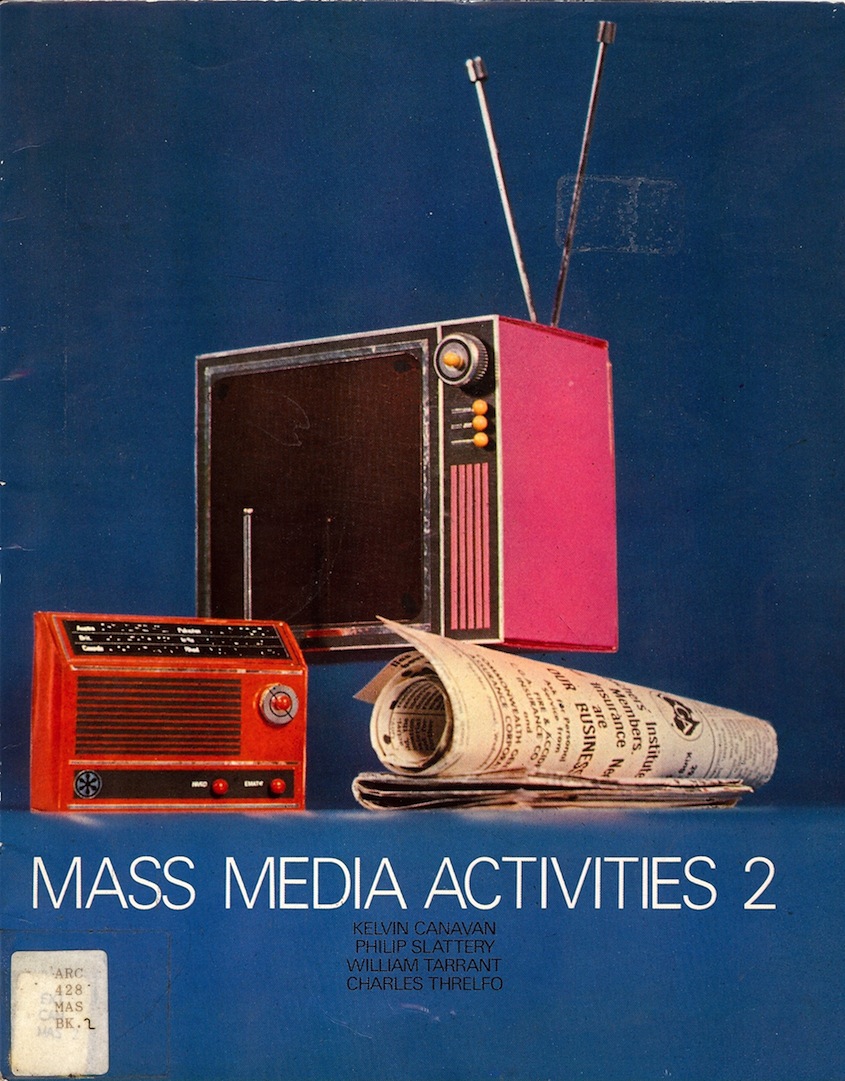
Radio comes of age in the social media era

About a year ago, I posted a blog on “Steam Internet” which included some ideas about the importance of radio as a communications platform – even in the age of social media.

Among the individual responses I received, a former colleague recalled how he grew up with radio, and how it was a significant presence in his life as a source of news and entertainment – it kept him company while revising for exams, and allowed him to “share” songs with this friends (via personalised mixtapes). He commented that a pharmaceutical company in Indonesia uses radio as a mainstream outreach channel – because it is relatively cheap, it offers targeted demographics, and it provides access to a large-scale, mass market.

He went on: “Radio is probably still the most effective medium to reach out to large audiences – it is targeted, it is always ON, it is always entertaining, it has loyal followers, and it does not require the listener to have an expensive receiver. More importantly, radio traditionally reached a far larger percentage of the population than what the Internet does today, especially in large developing markets.”

Consumer interest in and demand for audio content is recognised by today’s media industry – hence the growth of podcasting, audio platforms like SoundCloud, streaming services such as Spotify and Pandora, and radio apps like TuneIn – not to mention the growth in Internet radio, digital stations and web-streaming broadcasts.

I tend to agree that radio, after more than 100 years, still offers “new” opportunities for reaching an audience, even Gen Y – but as with any content strategy, it pays to get the model right by:

1. Having great content (plus engaging presenters and skilled producers)
2. Enabling access (broadcasting via any platform, anywhere, any time)
3. Cultivating a strong programming culture (i.e., scheduling and curating a logical flow of information, and across multiple platforms)
4. Encouraging audience participation – radio thrives on giving people a voice, either through phone-in sections, community-made programming, or connecting via “traditional” media such as SMS and Twitter

Radio is also very local (despite global access/reach via apps like SoundCloud Radio) and is usually subject to broadcast regulation. I’ve been involved with a community radio station over the past 3 years, and it has made me aware that audience diversity can be a challenge for broadcasters (how to cater for smaller, minority audiences?), but at the same time many people feel unconnected to mainstream media, such that radio is actually their preferred platform to engage with the world.

Acknowledgment My thanks to Rudy J. Rahardjo for his input to this article.

YouTube and guilty pleasures…

My local gym has recently installed new cardio equipment with touch screen monitors and internet access. So I find myself indulging in what some musicologists call “guilty pleasures” on YouTube – music that was so naff or cheesy when it first came out that no serious music lover would ever admit to liking it, but now it’s OK because retro is cool.*

Dollar-Hand-Held-In-Blac-116568

However, when I stumbled upon a couple of unauthorised YouTube posts featuring my own band, it got me thinking about all the “unofficial” uploads, and the impact that digital technology and social media are having through the increasing disregard for copyright and the rapid erosion of traditional business models by which content creators commercialize their intellectual property.

As more companies use digital media to support sales and marketing, brand management, customer engagement and market analysis, it becomes a valuable product or asset in its own right.

Even if you don’t believe your business is concerned with either content creation or commercializing intangible assets, there are implications for how you protect your business against commoditization or disintermediation.

What are the implications of new delivery channels for contemporary content creators, and what lessons does this offer to other businesses? 

For example, how can artists earn adequate fees from music streaming services? What do broadcasters gain from personalised radio apps? Who is making sure authors and publishers get their fair share of royalties from “curated” and aggregated content services?

The truth is, I don’t think anyone really knows the answers to these questions.

Some musicians may feel they are not adequately compensated by commercial streaming services; others recognise that the game has changed, that releasing recorded music is no longer enough to provide them with a living. In the past, musicians toured to promote their latest albums; now they release music to promote their next concert tour. They also know they must take more direct control over their income sources and revenue streams from music sales, live performance, merchandising and publishing.

For broadcasters, traditional content syndication models may no longer work if content can be disaggregated and re-aggregated without them really knowing about it. Internet streaming and web broadcasting are wonderful things, but how will advertisers react when broadcasters have limited ways of measuring the audience, because nobody knows where they are, or who they are, or when they are listening/watching?

Even authors and publishers, with a long and established history of licensing systems such as public lending rights, are wary of schemes to digitize their back catalogues. They are in a bind, because they know some income from these programs is better than none, but does it justify losing a high degree of control over the commercialisation and distribution of their copyright material?

Which brings me back to YouTube, one of the “best” examples of commercialised copyright infringement that the internet and social media have created. Even if file sharing services such as Megaupload are no longer with us, or controversial music re-sellers like LegalSounds have shut down, with very little effort anyone can extract content posted to YouTube, despite the fact that the latter does not actually support a download function.

For my part, I’ll happily admit to accessing YouTube content which is subject to copyright infringement – so much material on YouTube appears to have been posted without the prior consent (or knowledge) of the copyright holder. I’m actually very pleased that someone has posted it because I enjoy watching long-forgotten documentaries and TV interviews, out-of-print live recordings and broadcasts, and stuff that is unavailable commercially. But my consumption of this content is largely predicated on unauthorised uploading.

Although much of this “re-cycled” content is tagged with a “Standard YouTube License” (which simply means the viewer cannot record, download, monetize or claim ownership over the content), many people posting and uploading 3rd party content don’t have permission to do so in the first place. (Even a broad interpretation of “fair use” exemptions would not justify the wholesale uploading of complete albums which are still commercially available.)

I acknowledge that YouTube provides a copyright infringement process, and a Content ID system designed to help content owners assert copyright over material that has been unlawfully uploaded. But personally, I can’t help feeling that this is a rather disingenuous arrangement. YouTube stresses it is not in a position to determine copyright status – but it is more than happy to create opportunities for generating advertising revenue as part of the dispute resolution process (revenue which it presumably shares with the aggrieved copyright holder?).

YouTube started out as a platform for user-defined and user-contributed content. It does not create its own content – although it invests in original content for its “channels”,  and supports curated and personalised content (“recommendations”). This means YouTube attracts everything from amateur cat videos to professionally produced music promos, as well as highly original, creative and informative content uploaded by the independent musicians, artists, designers, educators and film-makers who create it and who choose to upload it.

And yet I keep coming back to the fact that YouTube is also full of “shared” content – content which is not owned by or licensed to the people uploading it. This is where the real commercial value of YouTube was always going to be found: in 3rd party content, however dodgy the provenance, because this reveals what might be popular and therefore, what can be monetized.

As a result, it could be argued that YouTube has been a considerable beneficiary of  copyright abuse – by using its analytics and other data mining, it can identify potential revenue “hotspots”, even if the content has not been legitimately uploaded in the first place.

So, while YouTube is very useful as an archive resource, its future is written in the terms of its commercial alliance with Vevo. This deal is designed to promote popular artists through the distribution of their music and video content via highly controlled sales and marketing channels.

On one level, it’s merely the latest attempt by major record labels to reclaim their market dominance over a music industry that is increasingly subject to vertical re-integration. On another, it will inevitably lead to an uneven playing field: some (a very few?) content producers will generate huge revenues from mobile and on-line platforms through their share of the advertising (rather than from traditional airtime and mechanical royalties); others (the majority?) will neither be able to collect royalties (because the model is broken), nor attract advertising (because they don’t have the marketing budgets to spend on buying an audience big enough to be of interest to advertisers).

What is happening in the content and media industries today will likely happen to other industries tomorrow, especially in the services sector; but we can already see that the development of domestic 3-D printers creates the possibility of “open source” designs for producing our own consumer products – so what impact will this have on manufacturing, for example?

*Confession: Yes, I admit that Dollar’s “Hand Held in Black and White” is one of the “guilty pleasures” in my record collection. It’s big on cheese and none of my friends would ever admit to liking it, but it features some classic ’80s synth arpeggios and electronic drum programming, and was produced by Trevor Horn as he transitioned from the bubblegum synth pop of the Buggles to the splendour that was Art Of Noise….

Paywalls go up – Staff numbers go down: a tipping point for Australian news media?

Ownership concentration dominates Australia’s Mass Media

The past 12 months have been a pivotal time for Australia’s mainstream news media. Having seen off controversial regulatory reforms that would have relaxed some cross-ownership controls (but also introduced more onerous oversight of press standards), harsh business truths and painful economic reality have returned, in the form of cost-cutting, new digital subscription models, and foreign competition.

The failed regulatory reforms generated public, industry and political debate around ownership concentration and the lack of media diversity; cross-ownership and the impact of media convergence; the need for revised rules around mergers and acquisitions; and calls for more control over media standards.

What does Australia’s Fourth Estate currently look like?

There are two daily national newspapers, and 10 daily capital city newspapers; all but one of these 12 titles are owned by just two companies: News Limited, and Fairfax Media. Only Sydney and Melbourne have more than one daily local newspaper. Together, News and Fairfax account for about 88% of print media. Both companies have significant interests in broadcast media. The sole “independent” daily newspaper is owned by Seven West Media, itself a major TV broadcaster. As further evidence of Australia’s concentrated content ownership, Seven West has a joint digital venture with Yahoo!, while its rival network broadcaster, Nine Entertainment has a similar joint venture with Microsoft. Prominent in the ownership mix are the names of Rupert Murdoch (News Limited), James Packer (Consolidated Press Holdings) and Kerry Stokes (Seven West Media) – each of whose companies have various interests in Australian pay TV. Meanwhile mining magnate and Australia’s richest person, Gina Rinehart has been buying into both Fairfax (along with John Singleton, a key figure in Australia’s advertising and radio industries) and Network Ten (along with James Packer and Lachlan Murdoch).

Another layer of complex media cross-ownership comes in the form of Australia’s regional TV networks. The main regional networks (WIN, Southern Cross and Prime) each have content affiliation agreements with one or other of the three metropolitan networks (Seven, Nine and Ten), and each have separate interests in radio. Just to confuse things even further, the owner of WIN, Bruce Gordon is a major shareholder in Network Ten, and in the past week it has been reported that he is open to merging WIN with either Nine or Ten. Not only would such a merger lead to further concentration (subject to regulatory approval), it would also see a re-alignment of the metropolitan and regional content agreements; and given past criticism of of reduced local and regional TV news content (and the closure or consolidation of local TV news rooms), I would imagine that without suitable regulatory provisions, local news content will be even further reduced.

What are the news media doing in response to current market challenges?

First, both News and Fairfax have announced staff cuts in an effort to offset declining circulation and advertising revenues from their print editions. The overall results have seen: departures by high-profile journalists; centralized news-gathering operations; outsourced sub-editing; re-alignment of print and on-line assets; and the closure of some local and regional titles. Most recently, Australian Associated Press (AAP) announced that newswire staff numbers are being reduced by 10%. AAP (whose largest shareholders are News and Fairfax) is a major provider of news content and sub-editing services to the mainstream media. The staff reductions among in-house editors and journalists have raised concerns about quality and diversity in Australia’s highly concentrated news media. Partly in response to this perceived decline in editorial standards, The Conversation (a not-for-profit venture, backed by a consortium of universities) was launched in 2011 as a platform for in-depth, objective and authoritative news analysis and commentary.

Second, both News and Fairfax are in the process of building subscription paywalls around their digital content. Fairfax has operated a paywall around its business title, the  Financial Review, for several years; but like News it is introducing freemium models for broader on-line news content. In their latest investor briefings, News and Fairfax have outlined a renewed strategic focus on digital platforms, although neither have given definitive timelines for sun-setting their print editions. Personally, I am somewhat confused by the different subscription models on offer (print, on-line and tablet editions) and what I can access as a subscriber to one or other platform (and as a domestic or overseas reader).

Third, UK publisher Guardian News and Media has launched an Australian edition of its online newspaper. Free to readers, the site is funded by local advertising, and supported by a combined UK/Australia editorial, production and commercial team. As with News and Fairfax, I’m confused by the commercial model for digital content – is there a dedicated Australian subscription within the tablet edition? – and I doubt whether the Guardian Australia can compete effectively with domestic news coverage. The Guardian claims that Australia is one of its largest markets outside the UK, but I wonder if that readership mostly comprises British backpackers wanting to check the latest results from the English Premier League… The Guardian Australia, along with The Conversation has benefited from the staff downsizing at News and Fairfax to co-opt some leading journalists and editors to its cause. Meanwhile, The Conversation has launched a beta site for the UK.

And the rest?

Elsewhere, News, Fairfax and other smaller publishers are building specialist digital content, particularly in business, finance, politics, property, motoring, careers and sport. Most of these assets are funded by advertising and sponsorship, or underwritten by cross-media promotion. A number of these outlets appear to source their content from unpaid bloggers and commentators, as a way of offering free marketing and audience exposure to their writers.

Despite the latest failed attempts at regulatory reform, I expect to see plenty of activity within Australia’s news media (once we get past the forthcoming federal election), fuelled by renewed debates over ownership concentration; the realignment of cross-media interests (especially among Australia’s media barons and billionaires); and the re-positioning of print vs online vs mobile.

Disclosure: the author does not hold a financial interest in, or have a commercial arrangement with any of the publishers mentioned in this article..

Why we need a “Steam Internet”

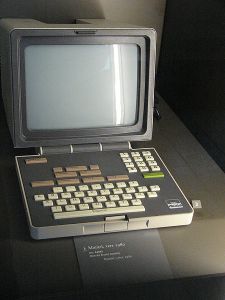
1981 Alcatel Minitel terminal(Photo by Jef Poskanzer - Licensed under Creative Commons Attribution-Share Alike)

1981 Alcatel Minitel terminal
(Photo by Jef Poskanzer – Licensed under Creative Commons Attribution-Share Alike)

The Internet is passing through a period of consolidation, as befits an industry that has reached maturity:

1. A small number of mega-players dominate the market: Microsoft, Amazon, Twitter, Apple, Facebook, Google, Yahoo!, PayPal, YouTube and Wikipedia.

2. Product lines are being rationalized, as companies trim their offerings to focus on core business – the latest victim being Google’s Reader tool for RSS feeds.

3. The distinctions between hardware, software, content and apps are blurred because of overlapping services, increased inter-connectivity via mobile platforms, and cloud-based solutions.

4. The business model for Internet access and Web usage is primarily based on data consumption and/or underwritten by 3rd party advertising. Social Media and search services are often not counted as part of the usage, thus confusing our understanding of what content actually costs.

5. Since our concept of what constitutes “news” is rapidly being redefined by Social Media, and readers increasingly rely on Social Media channels to access news, it is harder for content providers to charge a premium for value-added  information services such as quality journalism and objective news reporting.

I would argue that to rediscover a key purpose of the Net (as a means to send/receive meaningful news and information), we need to reflect on how radio broadcasting repositioned itself when television came along – hence “Steam Internet”.

“Steam Radio” was a term used in 1950’s Britain to differentiate sound broadcasting (radio) from audio-visual broadcasts (television). Although somewhat self-deprecating (suggesting something slow, and obsolete – echoing the demise of steam railways following the introduction of electric and diesel locomotives), it actually helped to embed specific values and purpose around the role of radio as a simple but effective medium to inform, educate and entertain, despite its apparent limitations.

My interest in radio means that I continue to use it as a primary source of daily news and current affairs, and as a convenient means to access international content. The discipline of radio means that content is generally well structured, the format’s limitations emphasise quality over quantity, and when done well there is both an immediacy and an intimate atmosphere that can really only be achieved by the audio format.

Far from becoming an obsolete medium in the Internet age, the growth of digital stations (as well as Internet radio and mobile-streaming) means that radio is undergoing a renaissance as it increasingly provides very specific choices in content, and offers ease of access without a lot of the “noise” of many news and information websites, with their pop-up ads, unstable video and data-hungry graphics.

Over the past decade, the major growth in Internet traffic in general, and World-wide Web usage in particular, has been driven by Social Media. However, neither the Net nor the Web was originally designed to be a mass-media platform, but the success of a highly interactive, deeply personalized and far-reaching network threatens the viability of the Internet as a means to effective communication.

As Web content and functionality has become more complex, so it actually becomes harder and more frustrating to find exactly what we want, because:

  • search and retrieval is advertising-driven and based on popularity, frequency and connectivity (rather than on context, relevance and quality);
  • content searches reduce everything to a common level of “hits” and “results”; and
  • there is little or no hierarchy as to how information and search results are structured (maybe we need a Dewey Decimal system for organising Web content?). This is one reason why Twitter is enhancing its search function by using human intervention (i.e., contextual interpretation) to make more sense of trending news themes.

I’d like to offer a short historical perspective to provide further context for the need for “Steam Internet” services:

Along with bankers and brokers, lawyers were among the first to recognize the importance of dedicated Internet services for transacting data and information. The first on-line information service I ever used was Lexis-Nexis (a research tool for lawyers) when I was a paralegal in the 1980’s. Lexis-Nexis is a database that enables users to search summaries, transcripts and reports of relevant court decisions regarding specific points of law. It is a very structured and hierarchical content source. Back then, it was a dial-up service, requiring the user to place the handset of a fixed-line telephone into an external modem that was connected to the computer terminal from which the search was conducted. The reason I can remember it so vividly is because the first time I used it, I forgot to specify sufficiently narrow search terms, which meant pages and pages of text being churned out – and probably a bill of over $200, as the service was charged according to the number of results returned and pages printed.

In the mid-1990’s, when I was setting up my Internet access, the ISP was owned and run by a university, which made sense when we think that the Net grew out of the academic world. But even though I had an ISP account, I still had to download, install and configure a graphical browser (Mosaic) to access the Web – or alternatively, I could subscribe to a dedicated dial-up service such as AOL, that offered a limited number of dedicated information services. Otherwise, my Internet access really only supported e-mail via DOS-based applications, and the exchange of files. (This was pre-Explorer and pre-Netscape, and the browser wars of the 1990’s and early-2000’s – which continue to this day with Microsoft copping another EU fine just this month.)

As the Web became more interactive, but also more dependant on “push”-content driven by advertising-based search, user experience was enhanced by RSS readers – to get to the information we really needed, and to personalize what content would be pushed to our desktops. When I was demonstrating financial market information services to new clients the built-in RSS reader was a useful talking-point, because I had configured it to display scores from the English Premier League as well as general news and industry headlines. (There is an urban myth that some of the most popular news screens on Bloomberg are the sports results…)

Just a few years ago, pre-Social Media, there were discussions about building a dedicated, faster, more robust and more secure business-oriented Internet platform, because the popular and public demands placed on the Web were putting an inordinate strain on the whole system. Businesses felt the need to create a separate platform – not just VPN’s, but a new “Internet 2” for government, universities and businesses to communicate and interact.  In the end, all that has happened is an expansion of the Top-Level Domains (.biz, .mobi), with a continued programme of generic TLD’s in the works, but this is simply creating more real-estate on the Web, not building a dedicated data and information-led Internet for business.

At this point, it’s worth reflecting that only last year, France’s Minitel videotex service and the UK’s Ceefax teletext service were both finally decommissioned, each having been in operation for over 30 years. In their prime, these were innovative precursors to the Web, even though neither of them was considered to be part of the Internet. Their relevance as dedicated information services should not be overlooked just because technology has overtaken them; that’s like saying the news media are redundant because their print circulation is in decline.

In conclusion, I’m therefore very attracted to the idea of a Steam Internet which mainly carries news and information services as a way to bring focus and structure to this content.    


Declaration of interest: from time-to-time the author is a presenter on Community Radio, but does not currently derive an income from this activity, so no commercial or financial bias should be implied by his personal enthusiasm for this broadcast medium.