Why we need a “Steam Internet”

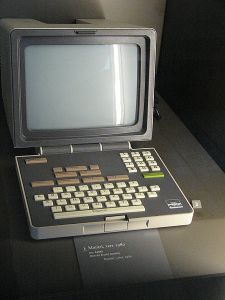
1981 Alcatel Minitel terminal(Photo by Jef Poskanzer - Licensed under Creative Commons Attribution-Share Alike)

1981 Alcatel Minitel terminal
(Photo by Jef Poskanzer – Licensed under Creative Commons Attribution-Share Alike)

The Internet is passing through a period of consolidation, as befits an industry that has reached maturity:

1. A small number of mega-players dominate the market: Microsoft, Amazon, Twitter, Apple, Facebook, Google, Yahoo!, PayPal, YouTube and Wikipedia.

2. Product lines are being rationalized, as companies trim their offerings to focus on core business – the latest victim being Google’s Reader tool for RSS feeds.

3. The distinctions between hardware, software, content and apps are blurred because of overlapping services, increased inter-connectivity via mobile platforms, and cloud-based solutions.

4. The business model for Internet access and Web usage is primarily based on data consumption and/or underwritten by 3rd party advertising. Social Media and search services are often not counted as part of the usage, thus confusing our understanding of what content actually costs.

5. Since our concept of what constitutes “news” is rapidly being redefined by Social Media, and readers increasingly rely on Social Media channels to access news, it is harder for content providers to charge a premium for value-added  information services such as quality journalism and objective news reporting.

I would argue that to rediscover a key purpose of the Net (as a means to send/receive meaningful news and information), we need to reflect on how radio broadcasting repositioned itself when television came along – hence “Steam Internet”.

“Steam Radio” was a term used in 1950’s Britain to differentiate sound broadcasting (radio) from audio-visual broadcasts (television). Although somewhat self-deprecating (suggesting something slow, and obsolete – echoing the demise of steam railways following the introduction of electric and diesel locomotives), it actually helped to embed specific values and purpose around the role of radio as a simple but effective medium to inform, educate and entertain, despite its apparent limitations.

My interest in radio means that I continue to use it as a primary source of daily news and current affairs, and as a convenient means to access international content. The discipline of radio means that content is generally well structured, the format’s limitations emphasise quality over quantity, and when done well there is both an immediacy and an intimate atmosphere that can really only be achieved by the audio format.

Far from becoming an obsolete medium in the Internet age, the growth of digital stations (as well as Internet radio and mobile-streaming) means that radio is undergoing a renaissance as it increasingly provides very specific choices in content, and offers ease of access without a lot of the “noise” of many news and information websites, with their pop-up ads, unstable video and data-hungry graphics.

Over the past decade, the major growth in Internet traffic in general, and World-wide Web usage in particular, has been driven by Social Media. However, neither the Net nor the Web was originally designed to be a mass-media platform, but the success of a highly interactive, deeply personalized and far-reaching network threatens the viability of the Internet as a means to effective communication.

As Web content and functionality has become more complex, so it actually becomes harder and more frustrating to find exactly what we want, because:

  • search and retrieval is advertising-driven and based on popularity, frequency and connectivity (rather than on context, relevance and quality);
  • content searches reduce everything to a common level of “hits” and “results”; and
  • there is little or no hierarchy as to how information and search results are structured (maybe we need a Dewey Decimal system for organising Web content?). This is one reason why Twitter is enhancing its search function by using human intervention (i.e., contextual interpretation) to make more sense of trending news themes.

I’d like to offer a short historical perspective to provide further context for the need for “Steam Internet” services:

Along with bankers and brokers, lawyers were among the first to recognize the importance of dedicated Internet services for transacting data and information. The first on-line information service I ever used was Lexis-Nexis (a research tool for lawyers) when I was a paralegal in the 1980’s. Lexis-Nexis is a database that enables users to search summaries, transcripts and reports of relevant court decisions regarding specific points of law. It is a very structured and hierarchical content source. Back then, it was a dial-up service, requiring the user to place the handset of a fixed-line telephone into an external modem that was connected to the computer terminal from which the search was conducted. The reason I can remember it so vividly is because the first time I used it, I forgot to specify sufficiently narrow search terms, which meant pages and pages of text being churned out – and probably a bill of over $200, as the service was charged according to the number of results returned and pages printed.

In the mid-1990’s, when I was setting up my Internet access, the ISP was owned and run by a university, which made sense when we think that the Net grew out of the academic world. But even though I had an ISP account, I still had to download, install and configure a graphical browser (Mosaic) to access the Web – or alternatively, I could subscribe to a dedicated dial-up service such as AOL, that offered a limited number of dedicated information services. Otherwise, my Internet access really only supported e-mail via DOS-based applications, and the exchange of files. (This was pre-Explorer and pre-Netscape, and the browser wars of the 1990’s and early-2000’s – which continue to this day with Microsoft copping another EU fine just this month.)

As the Web became more interactive, but also more dependant on “push”-content driven by advertising-based search, user experience was enhanced by RSS readers – to get to the information we really needed, and to personalize what content would be pushed to our desktops. When I was demonstrating financial market information services to new clients the built-in RSS reader was a useful talking-point, because I had configured it to display scores from the English Premier League as well as general news and industry headlines. (There is an urban myth that some of the most popular news screens on Bloomberg are the sports results…)

Just a few years ago, pre-Social Media, there were discussions about building a dedicated, faster, more robust and more secure business-oriented Internet platform, because the popular and public demands placed on the Web were putting an inordinate strain on the whole system. Businesses felt the need to create a separate platform – not just VPN’s, but a new “Internet 2” for government, universities and businesses to communicate and interact.  In the end, all that has happened is an expansion of the Top-Level Domains (.biz, .mobi), with a continued programme of generic TLD’s in the works, but this is simply creating more real-estate on the Web, not building a dedicated data and information-led Internet for business.

At this point, it’s worth reflecting that only last year, France’s Minitel videotex service and the UK’s Ceefax teletext service were both finally decommissioned, each having been in operation for over 30 years. In their prime, these were innovative precursors to the Web, even though neither of them was considered to be part of the Internet. Their relevance as dedicated information services should not be overlooked just because technology has overtaken them; that’s like saying the news media are redundant because their print circulation is in decline.

In conclusion, I’m therefore very attracted to the idea of a Steam Internet which mainly carries news and information services as a way to bring focus and structure to this content.    


Declaration of interest: from time-to-time the author is a presenter on Community Radio, but does not currently derive an income from this activity, so no commercial or financial bias should be implied by his personal enthusiasm for this broadcast medium.    

Facebook becomes “The Daily Like”?

Facebook has recently announced some changes to its core News Feed application. In short, Facebook subscribers will be able to apply a limited range of filters to their News Feed, by content type and source.

According to Facebook CEO Mark Zuckerberg: “What we’re trying to do is give everyone in the world the best personalised newspaper we can.”

That’s a big call.

First, this “newspaper content” will be sourced from your friends’ activity, (or their shared photos), a music feed (largely based on what your friends are listening to), or a feed of content from any page you like, or from any person that you follow.

Second, the updated News Feed design will promote the greater use of images, which will be given more screen space.

And thirdly, the goal is to grow revenue from sponsored posts and targeted advertisements, based on your personal “likes”, and other built-in Facebook algorithms like EdgeRank.

For me, whether published in print or on-line, the core prerequisites of a newspaper are:

  • A stated editorial policy, and preferably an independent editorial board 
  • Independent, objective and unbiased fact-based reporting (including fact-checking)
  • Robust journalistic standards
  • Strong editorial quality
  • Clear separation of content type (news, opinion, advertorial, advertising, sponsorship)
  • Adherence to a credible code of practice, especially on media ethics
  • Full declarations of interest by journalists, reporters and opinion writers*

Most newspapers are subject to media regulations or licensing systems around proprietorial “fitness”, ownership control, cross-media assets and censorship. Newspapers are also subject to general laws regarding libel, blasphemy, privacy, incitement, discrimination and copyright.

There are already a number of regulatory reviews of ownership, standards and ethics by mainstream news media in the wake of alleged phone hacking and other malpractices. There is also debate as to whether on-line platforms that carry “news” should be subject to more stringent media regulation.

Apart from some issues with censorship and legal requests to remove offensive material (which apply to all content providers), I don’t see Facebook operating under a formal newspaper regime.

While Facebook may aspire to become “The Daily Like”, I don’t believe it wants to be treated (or taken seriously) as a regular “newspaper”. Otherwise, it would likely have to register as a newspaper in every jurisdiction where its content is accessed,  disseminated or uploaded. Perhaps what Facebook really means is that it wants to dominate on-line advertising (using your own content as the bait) while continuing to claim the platform is “free” to end users.

*Declaration of interest: the author is not now on Facebook (reluctantly).

“Everything on the Internet should be free…”

Last week I got into a very heated dinner-party debate with an artist, an academic and a publisher about the economic value of copyright protection in particular, and intellectual property rights in general.

It started with a discussion about file-sharing and illegal downloads, and led to an argument about patenting genomes. I can’t attribute directly, but the gist of the argument was as follows:

1 Copyright and patents do not encourage innovation – they stifle it

2 Intellectual property rights represent a modern phenomenon – ancient societies managed to exist without them

3 Everything on the Internet should be free – and not subject to copyright protection

Let’s agree that formal intellectual property laws are a relatively recent invention – the modern concept of patents emerged in 15th century Europe, and the first British copyright law was passed in 1710. These laws then grew in importance as technology introduced the printing press and the industrial revolution.

I would argue, however that all civilisations have placed a premium on knowledge, creativity and invention. Regardless of whether this knowledge is based on folklore, scientific experiment, geographical discovery or geological exploration – specific rights, actual economic benefits and certain legal protections have been afforded to those who establish ownership or control of these assets. Examples would include the right to copy ancient manuscripts held in monastic libraries; the monopolies and protection granted to members of craft guilds in plying their skills; the trading rights granted to merchants; and restricting the practice of certain tribal traditions to selected community elders.

Most of these knowledge-based activities involve a high degree of effort, ingenuity and risk-taking – so in return, it was acknowledged there needed to be financial and other rewards to act as incentives. In the case of science and technology, these incentives are often deemed essential to offset the huge capital costs of developing new products and processes. In the case of copyright, the rewards of author royalties and content licensing fees are desirable to encourage people to come up with new ideas and new concepts – even if the purpose is simply to amuse and entertain us.

Of course, the economic rewards need not simply be derived from patents or copyright – tax-breaks for R&D or public grants to fund academic research are some examples of alternative financial incentives for both inventors and people of ideas.

As for the concept that “everything on the Internet should be free”, I am reminded of what I once told a client, who could not understand why access to the on-line version of a printed reference work was costing him more than the “physical” cost of adding a new user log-in and password to our content publishing platform: “OK”, I replied, “you can have all the content for free, but we’re not going to index it, or structure it with headings and sub-headings; we won’t tag it, insert cross–references, or add hypertext links; we won’t even edit it; and finally, we won’t update it every time there is new material.” He soon got the point.

Is being “creative” more authentic than being “realistic”?

How do we judge something to be authentic in the Information Age? In the 1990’s, I worked on several projects to transfer reference books from print to CD-ROM and on-line formats. Because much of this material comprised official documents of record, the digital versions had to be “authentic” to the hard copy (even though they were being presented in a totally different medium) and employ embedded cross-referencing, indexing and other navigational tools. In short, the digital editions had to have the visual likeness of a microfiche copy, the readability of an e-book, and the functionality of an html5 website (if I may be permitted a mixed technical metaphor).

The quandary facing many product developers and content curators these days is, “How far should we go in the pursuit of “realism” (and by inference, “authenticity”) when having to make editorial, creative and technical choices to achieve credible outcomes?” And as consumers, the challenge we face is, “How do we know that what we see, read, hear or experience is an accurate depiction of something that actually exists or once happened/existed, or that it represents a consistent rendering/interpretation of real/imagined/possible events within the context and confines of the media being used?”

The issue is not about “real” in contrast to “virtual”, “original” as opposed to “replica”, “copy” rather than “counterfeit” – and certainly not about “truth” over “fiction”.

I’m not going to dwell on whether our virtual lives are any more/less authentic than our flesh and blood existence – that’s a matter of EI and self-awareness. I’m not interested in debating the merits of CGI technology in cinema, or questioning the use of auto-tuning in pop music – that’s a matter of aesthetics. And I’m not even going to argue that Photoshop has no place in the news media – that’s a matter of ethics.

I’m more concerned with understanding how technology, combined with content, connectivity and convergence has reshaped the way we engage with new media, to the point that our ability to assess information objectively is impaired, and our experience of authenticity is seriously compromised.

Now for a test: Which of the following statements is the most authentic (or least inauthentic)?

1) “Documentary claims NASA commissioned film director Stanley Kubrick to fake the TV images of the Apollo 11 moon landing”

2) “Pop singer Beyonce mimes to the national anthem at President Obama’s Inauguration”

3) “Jane Austen to publish a new edition of “Pride and Prejudice”, featuring FaceBook, Twitter and sexting”

4) “Apple Corp announces that The Beatles are reforming, and will be performing their 1967 album “Sgt Pepper” live on tour”

OK, before dissecting the answers, I confess that one of these scenarios is totally made up – although, as we shall see, all of them have some basis in “reality”, and each of them presents a different dimension of “authenticity”.

1) Moon Landing: A few years ago, a documentary by William Karel called “The Dark Side of the Moon” suggested that NASA had indeed faked the Apollo 11 broadcasts. This story was based on an actual conspiracy theory that the TV images were a hoax, giving some credence to the notion that the Americans never went to the moon. The documentary uses a combination of recycled/re-contextualized archive footage, scripted interviews featuring real people playing themselves and professional actors playing fictional characters. To add credibility to the hoax theory that NASA commissioned Stanley Kubrick to shoot the fake moon landing in a studio, Karel involved Kubrick’s widow and other former colleagues. However, the names of the fictional characters are taken from characters in Kubrick’s own films. There are also bloopers and out-takes from the “interviews”. So, by the end of the film, it should be clear that the whole thing is a clever set-up – except that for some moon landing sceptics, “The Dark Side of the Moon” has lent support to their conspiracy theory. Recently, Gizmodo posted a brilliant rebuttal to the hoax theorists – namely, that neither NASA nor Kubrick could have faked the moon footage in 1969 because the required technology didn’t exist at that time…. I guess we’ll call this one an authentic/fictional mockumentary based on a real/imagined conspiracy theory concerning an alleged/improbable hoax.

2) Beyonce: It was revealed that Beyonce lip-sync’d her rendition of the national anthem, but she was miming to a real recording that she made with the actual US Marine Band the day before. Apart from the ongoing debate about whether pop singers do/don’t or should/shouldn’t mime during live performances (and let’s not get into the use of pre-recorded backing tracks…), the issues here are three-fold:

a) Does it make any difference to our experience of the event? (Probably not – anyone who heard Meatloaf perform at the AFL grand final a while back probably wishes he HAD been lip-sync’ing…)

b) Is Beyonce the first performer to mime at the Inauguration? No, and she won’t be the last, so big deal (Pre-recorded material is often used in these situations to compensate for bad weather, poor acoustics or possible technical hitches).

c) Does it make for a less authentic event? Possibly, but as others have pointed out, the President had taken the official oath the day before, and the outdoor event was more of a ceremony.

So, I’ll just label this an innocently staged event incorporating a well-intentioned fabrication designed to give the public what they want.

3) Jane Austen: This particular example of literary license does not involve the posthumously discovered work of a 19th century novelist. It doesn’t feature a 21st century medium channelling words from a dead writer. It doesn’t even concern the literary conceit of a contemporary author attempting to re-imagine a sequel to a classic work by an illustrious predecessor. (Although similar publishing events to all three scenarios have occurred in recent memory, so each of them is theoretically possible.) Instead, this refers to the forthcoming third “Bridget Jones” novel by Helen Fielding. It is generally  acknowledged that Jane Austen’s “Pride and Prejudice” was a reference point for Fielding’s first novel “Bridget Jones’s Diary”. The latter is neither a pastiche nor a parody of Austen, but does use similar themes and scenarios from “Pride and Prejudice” and places them in a contemporary context. Given that Fielding has recently been quoted as saying she has an interest in internet dating, it’s not too far-fetched to suggest that her characters will be busily sexting each other after a long session in the local wine bar. Let’s put this one in the category of artistic hommage, respectfully and authentically executed with due deference to its literary source material, and with a keen awareness of contemporary mores.

4) Sgt Pepper: OK, I admit that this scenario is totally fake, but it provides for some interesting hypotheses on how it might be done (assuming today’s technology, so no time-travel involved).

First, some background: as part of the music industry’s infatuation with managing and curating its back catalogue, there has been a noticeable trend for artists to tour and perform entire “classic” albums live on stage. This phenomenon reached its zenith last year, when German electronic band Kraftwerk performed a different album from their back catalogue at eight consecutive concerts staged in New York’s Museum of Modern Art. (Actually, I recall seeing Pink Floyd in 1977 when they played their two most recent albums, “Animals” (1977) and “Wish You Were Here” (1975) in full and in the exact same sequence as the original LP’s…)

Second, until cryonics and human cloning are a scientific certainty, I won’t be suggesting that we exhume the two members of The Beatles who are no longer with us, or grow a couple of replicants. Equally, I’m not interested in whether the 2009 interactive video game, “The Beatles: Rock Band” allows me and my friends to re-enact the experience of being The Beatles playing on stage – it’s not the same as a live concert performance.

Instead, here’s how the “Sgt. Pepper” album might be brought to life:

a) The surviving members of The Beatles recruit some colleagues to make up the numbers (cf. The Who, Rolling Stones, etc.)

b) A Beatles tribute band is hired to recreate the album faithfully and in its entirety (cf. too many examples to mention – there’s even a new trend to recreate “classic” rock concerts on their relevant anniversary. Meanwhile, American band Devo formed a new “version” of themselves, called Devo 2.0, comprising young unknown musicians – tellingly, this venture was a collaboration with Disney)

c) Use holograms to substitute for the missing members of the original line-up (well, holograms aren’t yet viable, but ghostly projections are a possibility – cf. deceased rapper Tupac – and the music business has produced various examples of posthumous, exhumed and recreated material featuring dead pop stars, The Beatles included)

d) Send out a team of replica android Beatles to perform on stage (cf. Kraftwerk – again)

Except that, the “real” Beatles abandoned live performances in 1966, thus they never performed any of the songs from “Sgt. Pepper” live in public (in fact, “Sgt. Pepper” is generally considered to be the first example of a rock album created totally within a studio environment, and never conceived of as a live experience, even though it is a loosely-defined concept album featuring a fictional “live” band – how post-modern can you get?). Hence, any attempt to stage or recreate a live concert of “Sgt. Pepper” as performed by The Beatles, even if it is plausible, would have to be considered totally inauthentic. But with  imagination (and a little help from our friends?) we can always dream…

POSTSCIPT: After posting this article, I came across the following insight into the creative process by novelist William Boyd:

“…the best way to arrive at the truth is to lie – to invent, to fictionalize. The curious alchemy of art – rather than the diligent assembling of documentary fact – can be a swifter and more potent route to understanding and empathy than the most detailed photographs or the most compendious documentation. You have to do your homework, sure – authenticity has to be striven for – but in the end it is the fecundity and idiosyncrasy of the novelist’s imagination that will make the thing work – or not.” [Taken from Boyd’s anthology of non-fiction writing, “Bamboo” (2005)]

Gizmodo

Beyonce

Fielding

Back Catalogue