Same old economic crises?

Amid the current turmoil surrounding tariffs and trade wars, I have been re-reading “Economics: The User’s Guide” by Ha-Joon Chang.

First published in 2014, this highly accessible introduction to economic theory and practice was written in the wake of the GFC, and the fallout that ensued from the US housing bubble and the consequential collapse (and public bailout) of major banks and financial institutions. The US bubble was largely caused by an imbalance in housing supply, poor lending standards, and over-engineering of mortgage-backed securities that quickly unraveled when banks lost confidence in each other, causing a major credit crunch and a lack of market liquidity.

Chang couldn’t have foreseen COVID and the knock-on effect on global supply chains and the impact of lock-down policies on overall productivity. He overlooks (ignores?) Bitcoin, a key ideological and technological response to the GFC, and he downplays the role of innovation in economic growth. However, his historical survey, his analysis of major economic theories (or “schools”) and his explanation of the roles that governments and the private sector play are all spot on and serve as a great resource for anyone wanting to try and make sense of the world.

Given the credit crunch at the heart of the GFC, the recent sell-off in the US bond markets reminds us that:

1. History repeats itself time and time again (albeit for different reasons)

2. Global markets are deeply interconnected, despite various attempts at de-coupling and policies designed to challenge globalisation and bring about increased protectionism

3. The US housing market is heavily reliant upon foreign investors since US treasuries both create market liquidity for new mortgage lending, and set key interest rates for borrowers – and major holders of US treasuries are foreign governments and institutional investors

The US mortgage market is underpinned by a near-socialist funding model (in the form of Fannie Mae and Freddie Mac), a propensity for long-term fixed rate loans, and a significant volume of non-recourse mortgages.

If a global trade war results in higher cost of goods for US consumers, and a bond sell-off results in higher interest rates, could we see a repeat of the GFC but driven by different causes?
False Economies – if it’s cheap, there must be a reason!

When I was 7 or 8 years old, I asked my parents to buy me a specific brand of toy as a birthday or Christmas present. With the best of intentions, they chose instead a close approximation of the real thing – presumably because it was cheaper, and to them it was exactly the same. Of course, being cheaper, it was badly designed, poorly made, and was nothing like the toy I had asked for. From memory, it only lasted only a few months before falling apart.

This was my first lesson in false economies – cheap and cheerful can quickly become cheap and nasty, rather like some cheaper brands of peanut butter, which are bulked out with sugar, oils, fats and other additives (instead of containing 100% peanuts).

Many years ago I had some shirts made in Shenzhen, because they seemed like a bargain. Sadly, another false economy – after I got them home, I realised the cut was all wrong, and I’m sure they had substituted a cheaper fabric to the one I had chosen. They were unwearable. On the other hand, some jackets I had made in Hong Kong lasted nearly twenty years, because I had paid a bit more to go to an established tailor.

I’m not saying that more expensive branded goods and so-called luxury items are always “better” – but as a general rule, when doing like-for-like comparisons, you get what you pay for. When an item costs more to buy, it invariably lasts longer because of the materials used, the better design, the superior manufacturing and the overall higher quality.

I appreciate that in the current economic environment, consumers are even more cost conscious, and are looking for value for money, if not actual bargains. But just because something is cheap, doesn’t mean it’s the better option. Look at the true cost of fast fashion, fast food, fast money

Next week: The Law of Diminishing Returns….

How about that AAA rating?

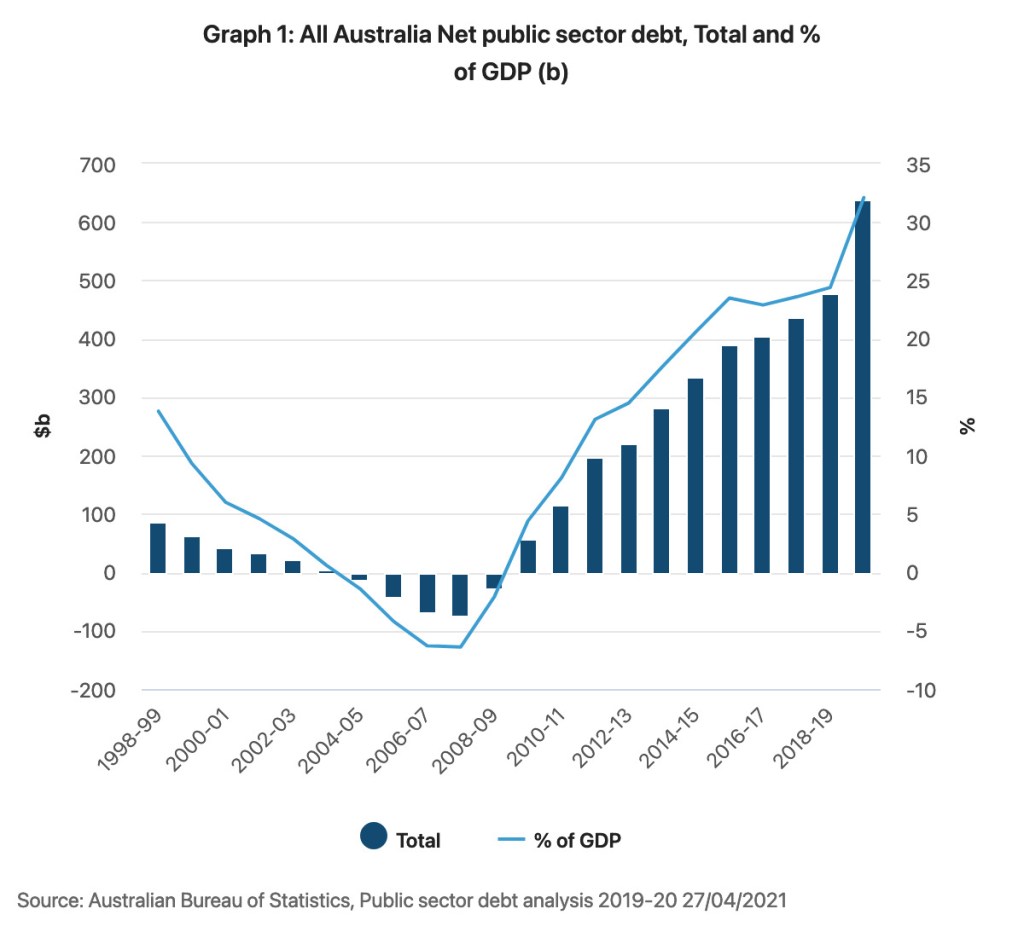
As the State of Victoria weighs up the costs of yet another lock down, you could be forgiven for thinking that the local economy has taken a further beating after the horrendous events of the past 15 months. Across Australia, thousands of companies and individuals accessed various government-sponsored financial aid packages to keep afloat, causing the federal government to borrow more money, at something like 8x the equivalent rate pre-COVID. National public debt is now expected to grow to more than 40% of GDP by the 2024-25 fiscal year – effectively double what it was in 2018-19.

So what has Australia done to retain its coveted AAA sovereign rating from Standard & Poor’s, and have the rating outlook upgraded from negative to stable? According to the ratings agency, and economists such as Westpac’s Bill Evans, there are probably three or four key factors that have warranted this optimistic economic reckoning.

First, while government borrowing (Quantitative Easing) has blown out as a proportion of GDP, the current low interest rates mean that the cost of servicing that debt is manageable.

Second, while the pursuit of QE has destroyed any hope of returning to an overall budget surplus, the deficit will return to similar levels last seen after the GFC, and the current account will continue to return a modest surplus over the coming quarters.

Third, despite the significant economic risks that were identified at the start of the COVID pandemic, the actual impact on the budget has been less than feared, and the economy is recovering faster than expected (as evidenced by latest employment data and consumer sentiment).

Fourth, Australian banks have seen an increase in customer deposits, meaning they are less reliant on more expensive overseas borrowing for their own funding.

Overall, just as with the GFC, Australia has managed to dodge a bullet (the shock to the system was less than anticipated) – in large part thanks to a resurgence in iron ore prices (again).

But weaknesses and disparities remain:

The over-reliance on commodity prices (mainly based on demand from China) hides the true nature of Australia’s balance of payments – we manufacture less than we used to, and our supply chains have been severely tested during the pandemic. And with international borders closed, we won’t see the same levels of GDP growth that resulted from immigration.

Our household savings rate as a percentage of disposable income has come down from its peak of 22% in July 2020, to less than 12% this past quarter, as people held on to their cash for a rainy day (or 3 months lock-down). The savings rate is expected to come down even further as consumers feel more confident and start spending again.

As with the GFC, home owners have chosen to pay down their mortgage debt – but the picture is more complex. Yes, interest rates remain low (and will likely stay so for at least another 18 months), despite commentary from another economist, Stephen Koukoulas suggesting that the RBA will have to raise rates sooner than expected. With property prices expected to increase 5-10% over the next 12 months, home owners will feel wealthier (but asset rich and cash poor?) as mortgage repayments reduce as a percentage of their home’s value. And while analysts at S&P expect banks’ credit loses to remain low while the economy recovers, the fact that two-thirds of banks’ exposures are to highly leveraged residential property could see increased stress when interest rates rise and if wage growth remains sluggish (more on the latter next week).

Australia’s sovereign credit rating is something of a badge of honour, and represents membership of an exclusive club – fewer than a dozen countries are rated AAA; no wonder it’s a big deal, and partly explains why the Prime Minister gets to attend the G7 (albeit as an observer). Comparatively speaking, Australia is doing very well when it comes to managing COVID (although we could be doing a lot better on a number of measures), and has an economy that continues to be the envy of many. Expect more on that AAA rating (“How good was that?”) as we head into the next Federal election…

Next week: Where is wage growth going to come from?