Idea over Form – Gehry vs Ando

Frank Gehry and Tadao Ando are two of the most famous architects in the world. Each has a distinctive style: Gehry produces organic and free-flowing designs, incorporating unexpected shapes, angles and materials to produce logic-defying structures that appear to float above the ground; while Ando creates solid concrete structures, very much tied to the earth (even buried within it), but ultimately deriving their form from the elements of space and light that they encapsulate.

Frank Gehry: "I have a dream" (image sourced from Archilovers.com)

Frank Gehry: “I have an idea” (Image sourced from Archilovers.com)

During my trip to Japan in late 2015, I had the pleasure of seeing examples of both their work: Gehry’s giant fish in Kobe and a show based on his recent project for the Fondation Louis Vuitton; and Ando’s series of galleries and museums that form part of the Naoshima Art Island project (including the Ando museum itself). It all came together at a major retrospective of Gehry’s work, “I have an idea” which, fittingly, is showing at 21_21 Design Sight in Roppongi, a building designed by Ando.

Interior of 21_21 Design Site (Photo © Rory manchee, all rights reserved)

Tadao Ando: Interior of 21_21 Design Sight (Photo © Rory Manchee, all rights reserved)

Despite the differences in their work, there are strong similarities, even commonalities – for example, they have both pushed aesthetic boundaries, and both have developed significant signature styles. They are also highly attuned to the use of space, light and materials. Their work is never pure ornament, everything has a purpose, even if it is “only” to maximise light or enhance the use of space. And their goal is to create a connection between the function of the building and its use or purpose. It’s architecture as facilitator, because it prompts, even demands, a reaction from the occupants: inhabitants, students, patients, patrons, visitors, employees.

For me, a key difference is how they appear to solve the problem of designing unique solutions for site-specific locations, while maintaining their distinctive styles. In his own words, Gehry starts with “an idea”, and then explores, extends and extrapolates the idea until he ends up with a design solution that lends itself to the desired outcome. His ideas may originate from the client brief, but the buildings always impose themselves upon their location, because in spite of the organic forms, they appear out of context (but not out of step) with their natural surroundings.

Whereas Ando’s work only truly reveals itself once the internal space has been created, usually achieved by removing the earth, and burying or submerging the building in the ground. From some angles, a number of Ando’s buildings have no visible superstructure, suggesting the intention is for them to be subsumed, even absorbed by the landscape. A few of his designs only “exist” when you are deep inside them, or when the natural light is used to achieve a specific effect.

Despite Gehry’s random designs and the somewhat chaotic nature of the iterative modelling process, he is actually a thorough technician; his design methodology has resulted in numerous software programs and other digital applications that are licensed for commercial use. The idea is a vital starting point, but the final form is more important.

By contrast, Ando’s singular use of polished concrete suggests a cold or even clinical approach to his practice; in fact, he is more of a purist in his search of form, and actually strives to establish a connection with and respect for nature. One senses that the form is actually subservient to the idea, however perfect the physical outcome.

Of course, idea and form are equally important, so I think the goal is to achieve a balance (not necessarily harmony) between the two. Even better is the creative tension where one continuously questions and informs the other. The best architecture is never fully resolved, and always asks more of us, however often we see it; mediocre buildings simply get ignored, or taken for granted. (And hopefully, the bad designs never get built…)

Next week: Is this The Conversation we should be having?

Why The Service Sector Lacks Self-Awareness

If you did a root cause analysis of companies that rate poorly for customer service, I predict it would reveal one or more of the following:

  • Outdated processes
  • Inadequate staff training
  • Poor product knowledge
  • Operational silos

What it usually comes down to is a chronic lack of self-awareness. (This is not helped if there is a failure of leadership, or a toxic culture within the organisation.) Despite all the customer feedback forms, platitudes such as “your call is important to us”, and the regular customer advocacy reports, unless service providers can truly put themselves in the shoes of their customers, they will never have sufficient knowledge or self-awareness with which to fully evaluate the “customer experience”.

Image: Customer Feedback Device (Source: Smarte Carte)

Image: Customer Feedback Device (Source: Smarte Carte)

Today’s customers are more knowledgable (because they have access to more information, they can shop around, and in some cases, they have more choice). Today’s customers are also actively encouraged to engage with corporate social media (by following, liking and sharing, and by becoming surrogate brand advocates). However, the increased levels of expectation that this “engagement” creates are not always matched by the post-sales customer experience.

I have written before about how companies can improve their customer service, using a practical 7-point scheme. I would challenge any organisation that rates itself highly for customer service, to assess its performance against those criteria, as well using the ubiquitous customer satisfaction scores (CSAT, NPS®, CES, etc.).

Nearly every time I have an interaction with a telco, utility, bank or other service provider, I receive an immediate follow-up customer feedback request. Once upon a time, I would have been quite willing to provide constructive feedback, as I used to believe that it was important for the voice of the customer to be heard. Nowadays, I am more hesitant, because I don’t believe this feedback is ever properly acknowledged, analyzed or acted upon.

So many of these feedback request forms are self-serving, because the person you dealt with is in effect soliciting personal feedback on their individual performance. And while that is important, it is rarely done in the specific context of the customer’s own experience, and is more concerned with the company’s internal policies and procedures.

I am also increasingly sceptical about feedback processes that are ostensibly used for staff training. First, time is valuable, so it would be nice if companies could reward their customers for making the effort to engage. Second, on the rare occasions where a company has contacted me in response to a complaint submitted online or via a feedback form, I never learn what specific steps the company is taking to rectify problems caused by operational or policy failings. Thirdly, why should I be responsible for telling you how to train your staff or improve your service – surely that’s your job!

In many cases, it is not the performance of an individual customer service representative that is the problem. More likely, it’s poor customer service training, inadequate product knowledge or a myopic perspective, reinforced by silo operations. When even the most pleasant and competent service rep tells me, “I’m sorry, but it’s the way the system is designed…”, they probably don’t realize what a disservice they are doing: a “system” is only as good as the people who design it, and the people who implement it. So, they are in effect criticising their own colleagues, and the organisation they work for.

This lack of self-awareness by customer service staff is reinforced by the limited discretion in trying to resolve customer problems. Along with the use of internal jargon and bewildering acronyms, there is nothing worse than having to complain long or loud enough in order to escalate a problem. It would be wonderful if companies could empower their staff by giving them (well-defined) individual discretion on problem solving, and incentivize them for taking responsibility for the end-to-end resolution process.

In addition, it’s really infuriating being handed from one specialist, team or department to another, especially due to labyrinthine help line service menus. Telco on-boarding processes are particularly notorious for having complex operational procedures, multiple hand-offs and ring-fenced communications. I recall one large service provider who told me that in-bound call-centre staff were unable to speak directly to their own web support teams, and even if they communicated via internal e-mail, they could not guarantee a response.

If I am beginning to sound a bit like a broken record, it’s because recent experiences only reinforce my belief that many companies still don’t understand what it’s like to be one of their customers. But there’s a huge paradox here: on the one hand, companies are trying to reduce customer churn, increase “stickiness”, and improve the share of wallet or lifetime customer value; on the other, the cost of new customer acquisition appears to be cheaper (thanks to social media tools and web analytics), so it doesn’t matter if they lose a few customers, because it’s not that difficult or expensive to find new ones.

If it’s no longer true that “the customer is always right”, because profit margins are being squeezed and companies are being told to “stop delighting your customers”, then service providers have to do a much better job of managing customer expectations. They also need to demonstrate genuine empathy and concern if things go wrong (which is difficult if they don’t have sufficient self-awareness). And if things do go wrong, they need to ask the customer “what could we have done differently to provide you with better customer service?”.

In my professional experience of product management and business development, understanding customer needs and identifying ways to improve service delivery (along with customer-centric perspectives rather than product-led processes), are genuine sources of competitive advantage. But it takes considerable self-awareness to engage customers beyond the level of a single transaction, to develop genuine rapport, and to build sustainable long-term relationships. If your organisation is challenged by poor customer service, and if you recognise this is in part due to a lack of self-awareness, please get in touch – I’d be very interested to understand your problem.

Next week: Idea over Form – Gehry vs Ando

Surrealism, Manifestos and the Art of Juxtaposition

Like all good coaches and mentors, the best artists challenge our assumptions, reframe our perspective, and re-contextualise both the positive and negative, to provide a narrative structure with which to navigate the world around us. Likewise, they don’t tell us what to think, but leave us to interpret events for ourselves, having given us the benefit of an informed and critical vantage point.

Image: "Untitled" (2012) by Greatest Hits, NGV, Melbourne © Greatest Hits

Image: “Untitled” (2012) by Greatest Hits, NGV, Melbourne © Greatest Hits

Over the holidays, I went to a couple of unrelated but inter-connected exhibitions that both played with our traditional perception of reality while demonstrating the importance of context in providing meaning.

The Comfort of the (Un)Familiar?

First up was Lurid Beauty: Australian Surrealism and its Echoes, at the NGV Australia. I’m a big fan of Surrealist art, having visited the landmark retrospective, Dada and Surrealism Reviewed at London’s Hayward Gallery in 1978 (and I later made a very minor contribution to a documentary on Eileen Agar in 1989). What I particularly like about Surrealism is its use of the familiar to create alternative realities, which is both comforting and unsettling. Sadly, I know next to nothing about Australian Surrealism (and I imagine I am hardly alone, given it has only recently gained formal recognition and critical appreciation).

So I was pleasantly surprised to find early pieces by major artists such as Albert Tucker and Sidney Nolan, which to my mind were far more interesting than the works for which they are popularly known. When seen alongside contemporaneous exhibits by Max Dupain, Eric Thake and James Gleeson, it’s easy to see how Surrealism was a significant influence on Australian art from the 1930’s to 1950’s. And yet I don’t recall many references to the local Surrealist movement or a wide acknowledgment of its impact on 20th century Australian art. More’s the pity, when you can see how the threads of Surrealism continue to be woven into the work of contemporary artists like David Noonan, Julie Rrap, Anne Wallace and Pat Brasington.

The Long Shadow of 19th Century Gothic

Part of the problem might be the fact that later, more familiar works by Nolan, Tucker and Gleeson have become severed from the artists’ original (and modernist) Surrealist roots. Instead, as I see it, these artists (along with Boyd, Perceval, Olsen et al) have been re-cast as part of the continuing 19th century Australian Gothic sensibility (Goths being more tangible than Surrealists?). This prism prefers the literal over the metaphorical, “real” legends over allegories, and landscapes over mind scapes.

Even Inarticulate Art Speaks for Itself?

Another issue, from my perspective, is that contemporary Australian Surrealism continues to play with psychological and political issues, alongside themes of gender, sexuality and hierarchy – topics designed to make us feel uncomfortable. Whereas, in my view, too many contemporary artists are either obsessed with process over form/form over content (to the point that any potential meaning is lost); or conversely, output is everything (often reducing their work to mere illustration or decoration).

Not Made Here?

On a purely aesthetic level, and to be hyper-critical for one moment, I wonder if Australian Surrealism is overlooked because received art opinion considers it to be too derivative of its European counterpart – and therefore, it has fallen victim to cultural cringe. One possible example is Barry Humphries‘ sculpture “Siamese Shoes” (originally made in 1958, shown here in its 1968 remake). While Humphries, according to the exhibition notes, “is considered to be Australia’s first Dada artist” (only 40 years too late, some might say…), I don’t believe for a moment that he was trying merely to imitate Meret Oppenheim‘s almost identical and much earlier work, “Das Paar” (originally made in 1936, remade in 1956).  When viewed in the context of its companion pieces that also formed part of Humphries’ solo exhibitions and artistic happenings, and when one considers Australia’s cultural climate of the 1950’s, then it’s more likely that Humphries was appropriating Dadaism and Surrealism for his own purposes, specifically designed to stir up his local audience out of their suburban bourgeois complacency.

Re-directing Surrealism’s Legacy in Australia

What was especially telling about Lurid Beauty was the 15-20 minute conversation I had with one of the gallery volunteers. She was very keen to get my views on the work, and asked how I came to learn about this particular exhibition. I got the impression that attendance has not been as high as anticipated, perhaps due to a lack of publicity. Despite being on several mailing lists for Melbourne’s arts and cultural events, I had not received any promotional material about this exhibition. We also discussed whether Surrealism features in the high school art curriculum, and whether the exhibition needed to emphasise the contemporary works and themes (rather than taking a somewhat traditional or historical narrative, based on a selective bunch of male artists – the usual suspects).

Given the legacy of Surrealism on film, literature, advertising, music videos, fashion and design, I think more could have been done to make this exhibition appeal to a broader and younger audience. The works, for the most part, are vibrant (if at times challenging), and even the themes depicted in the older pieces still resonate today. (A concurrent exhibition of Les Mason‘s advertising, graphic and visual design work only emphasises the point about Surrealism’s continuing influence.)

Finally, one very welcome aspect of Lurid Beauty was the extensive collection of original publications from the NGV’s library: magazines, catalogues, journals, and of course, André Breton‘s “Surrealist Manifesto”.

In the Artists’ Own Words

Speaking of Manifesto, this is the title of Julian Rosefeldt‘s video exhibition next door at ACMI. I had the privilege of hearing the artist introduce one of the works at a special screening, in which he mentioned his fascination with art manifestos. In a rare example of an artist directly and explicitly acknowledging his sources and inspiration, Rosefeldt shared with the audience that he had even become somewhat obsessed with a particular feminist manifesto. Not only did this provide some fascinating insights on the artistic process, it demonstrated yet again that we are all products of what has gone before, and it reinforced the importance of understanding art in the context of the history, theory and criticism, when it comes to interpreting old and new art.

Using around 50 different manifestos (artistic, political, cultural, critical), Rosefeldt has created 13 short films, each representing a particular art movement. The selected texts have been juxtaposed as monologues for 13 different characters, who deliver their lines, seemingly out of context with the visual settings, but at the same time, totally integrated into coherent narrative forms.

The fact that Cate Blanchett is cast in all 13 lead roles has no doubt created additional interest among local audiences. But, not to take anything away from her performances, this should be irrelevant – the point is that Rosefeldt has taken something with very specific meaning from one context, combined it with a mix of related and unrelated elements, and created a whole set of new meanings. (If anything, seeing simultaneous versions of Blanchett performing multiple, disparate roles, screened side by side, only underlines the fact that actors are the great deceivers – which, if any, is the “real” Cate?)

The videos are looped and synchronised. At times, the monologues converge and overlap, creating three and four-part harmonies for spoken word. This further de-contextualises the source materials, while lending them further meaning, even if we can’t immediately fathom what that might be. (Personally, I think it could be a subliminal reference to the Tower of Babel, or simply a comment on the manifestos themselves – and by extension, the vacuous words of so many artists’ statements.)

Less Is More

Two other works in the exhibition, Stunned Man and The Soundmaker (both from The Trilogy of Failure), are more straightforward narratives, also featuring a single character cast in a familiar setting.

First, Stunned Man is a dual screen projection, comprising mirror images of the same apartment. Over time, elements appear to interchange between the two screens, in a process of forward/reverse destruction and re-construction. But there are enough visual clues to suggest that not all is as it seems, in this parallel universe.

Next, The Soundmaker deconstructs the work of the Foley artist, using a similar process of destruction and re-construction – but split across three screens and two scenes, the viewer could be left wondering whether the “real” action is actually the soundtrack for the Foley artist at work.

What all these works demonstrate is that sometimes less is more – a simple idea can still be executed with wit, sophistication and restraint, to lend it a level of complexity that does not over-burden the final result. It requires a deft touch. There is nothing obvious or ponderous in these films. Nothing about these highly staged videos has been left to chance – every detail has been meticulously thought through. They are perhaps all too rare examples of when formal planning, combined with creative process and technical production, can give us content that is fully formed, but still open to interpretation.

The Artistic License

In my professional work as a coach and mentor, I’m not in the habit of constructing manifestos (believe it or not, I don’t possess that level of didacticism…). But I try to challenge my clients’ assumptions, reframe their situations, and draw on analogous scenarios (not just from business, but from technology, culture, art, music, etc.) that can help re-contextualise their perspectives, especially when clients are stuck. I see a large part of my role as consultant to use the “artistic license” I have been given to investigate, interpret and identify solutions to client problems – which at times can even take the form of a type of alchemy. As one client I worked with recently commented, “the way you reframed the situation was like pure gold”.

Next week: Why The Service Sector Lacks Self-Awareness

Another weekend, another hackathon….

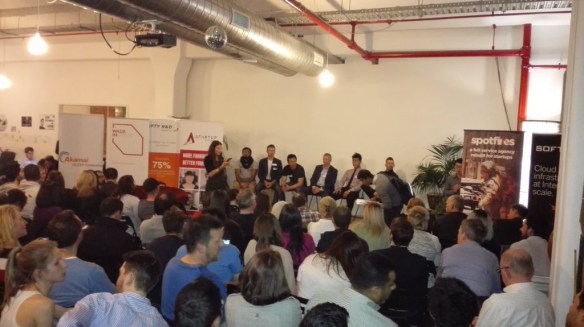
Last month, I competed in my second hackathon of the year, the #HSCodeFest sponsored by the Herald Sun and News Corp, and hosted by Melbourne University’s Carlton Connect. I’m pleased to say that our team of four, which was only formed on the first night, came 3rd in the pitch competition – with an idea for a news quiz app.

Screen Shot 2015-12-18 at 3.44.56 PMThat particular weekend was quite an eventful one for local startups – not only were there at least two other hackathons being held in Melbourne at the same time, but the State Government also announced its LaunchVic initiative. Small Business Minister, Philip Dalidakis found time in his busy schedule to address the #HSCodeFest participants, which was a great incentive. The previous weekend saw another Startup Weekend event, and last weekend Carlton Connect hosted yet another industry hackathon sponsored by the GE Industrial Challenge. And of course, since then we have had the Prime Minister announce the National Innovation and Science Agenda. To paraphrase Mr Turnbull, there’s never been a more interesting time to be a startup….

Having participated in Startup Weekend’s first #FinTech hackathon back in March this year, I was a lot more prepared, and had a much better idea of what to expect. Even though I didn’t pitch a specific idea on the opening night, I used my previous team-building experience to make sure we had a balanced mix of skills and expertise. I was also clear to make sure that once we had agreed on the project idea, everyone had specific roles, and we constantly checked in on progress and next steps.

As usual, the team generated far more content, data and ideas than we actually used in the pitch presentation. We also kept it very simple, by focusing on the key concept, demoing an MVP, outlining the commercial strategy, describing the business plan, and establishing just enough knowledge and awareness about the market opportunities, even though it had not been possible to fully scope them. For an insider’s view, check out my team-member Nathan’s blog.

We have seen over the past 12-18 months that the hackathon model is being deployed in many different ways to try to stimulate innovation and generate new business ideas. Even government departments and public utilities are getting in on the act, by enabling participants to access data sets, software, technology and APIs to see what they can come up with. Large corporates, who struggle to embed innovation into their organisations, are also holding internal competitions drawing on the experience of meetups, hackathons and pitch nights.

I only see this as a positive development, as long as the energy, enthusiasm and experience can be channelled into meaningful outcomes, which enable in-house talent and external expertise to combine to build great products and services that customers want, and/or identify and deliver significant process improvements and efficiency gains.

However, part of me is sceptical – as someone who is probably much older than the average age of a hackathon participant, I’m still amazed how many of my contemporaries either have no idea or simply don’t “get” the hackathon or meetup concept. They seem astonished that anyone would want to get together with total strangers, and spend their evenings let alone a whole weekend working with them, for “free”. To those of my peers who may see it that way, I would point out that participating in these events is a cheap and effective way of accessing new ideas and skills, meeting talented people, and acquiring new skills and knowledge.

Finally, if your organisation is thinking about running a hackathon or similar event for the first time, I’m more than happy to share my insights – contact me via this blog.

Since the holidays will soon be upon us, Content in Context is taking a short break. Normal service will be resumed on January 5. To my many regular readers and followers, I wish you all a safe and peaceful New Year.

Next: Surrealism, Manifestos and the Art of Juxtaposition