FinTech Fund Raising

In the wake of the Banking Royal Commission, will FinTech startups capture market share from the brands that are on the nose with customers? And will these upstarts manage to attract the necessary funding to challenge the deep pockets and huge balance sheets of the incumbents? This was the underlying theme of a recent panel discussion hosted by Next Money Melbourne.

The panel comprised:

Nick Baker from NAB Ventures, typically investing $1m-$5m in Seed to Series C rounds, self-styled strategic investor with a particular focus on RegTech, Data and Data Security, and AI/Deep Learning

Ben Hensman from Square Peg Capital, writing cheques of $1.5m-$15m into Series A onwards, more of a financial investor, mainly in businesses starting to scale. Sees that the industry is ripe for disruption because of the mismatch between profit pools and capital pools, compared to the size of the economy.

Alan Tsen an Angel investor, making personal investments of $10k-$25k, mostly into teams/founders that he knows personally and has had an opportunity to see the business evolve fairly close up.

Key topics included:

Open banking – Will this be the game-changer that many people think it will? Are the banks being dragged kicking and screaming to open up their customer databases? What will be the main opportunities for FinTech startups? While customers often express an intention to switch banks, the reality is that few actually do. In part because current processes make it relatively difficult (hence the current Open banking initiative, which will later be extended to utilities); in part because there is little to no differentiation between the major banks (in products, costs and service). Also, it seems that banks are quietly getting on with the task in hand, given that resistance is futile. My personal view is that banks may have a significant role to play as custodians or guardians of our financial and personal data (“data fiduciaries”) rather than directly managing our financial assets. For example, when it comes to managing the personal private keys to our digital wallets, who would we most trust to hold a “back up of last resort” – probably our banks, because even though we may love to hate them, we still place an enormous amount of trust in them.

Full stack financial solutions – Within FinTech, the panel identified different options between full stack startups, compared to those that focus on either the funding layer (sourcing and origination), tech layer, and the CX layer.

Neo-banks – Welcome source of potential competition, but face huge challenges in customer acquisition, brand awareness and maintaining regulatory capital requirements.

Unbundling the banks – Seen as a likely outcome from the Royal Commission, given that we have already seen the major banks largely exit the wealth management and advice business. But the challenge for FinTech startups will be in developing specific products that match and exceed current offerings, without adding transactional friction etc.

Identifying Strong FinTech Teams – There needs to be evidence of deep domain expertise, plus experience of business scaling. Sometimes it’s a fine balance between naivety and experience, and outsiders versus insiders – bringing transferable external experience (especially with a view to disrupting and challenging the status quo) can easily trump incumbent complacency.

Funding Models – While most VC funding is in the form of equity, some VCs offer “venture debt” (based on achieving milestones) which can be converted to equity, but while it can lead to founder’s equity dilution, it may represent a lower cost of initial capital for startups. The panel mentioned the so-called “Dutch model” (because it has been used by Dutch pension funds) that local mortgage company Athena has brought to the market. Rather than seeking wholesale funding or warehouse financing to back their home loan business, Athena allows institutional investors such as superannuation funds, to lend direct to homeowners. This means that the funds receive more of the mortgage interest margin than if they were investing in RMBS issued by the banks and mortgage originators. Athena is mainly geared towards refinancing existing mortgages, rather than new loans, but also offers a new approach to mortgage servicing and administration.

Generally, VCs prefer simpler structures rather than, say, funding milestones, because of the risk of misaligned goals, and the impact this may have on subsequent price rounds. There are some models that create a level of optionality for founders, and others which are royalty-based, or which use a form of securitisation against future cash flows.

Meanwhile, the panel were generally not in favour of IPOs, mainly due to the additional regulatory, compliance and reporting obligations of being a public company. So it would seem their favoured exit strategy is either a trade sale or a merger, or acquisition by a private equity fund or institutional investor.

Next week: Crypto House Auction

Startup Vic’s SportsTech Pitch Night

Last month’s Startup Vic’s Pitch Night featured SportsTech, one of the semi-regular topics in Startup Vic’s themed pitch nights. Hosted by LaunchVic at the Victorian Innovation Hub, supported by the Sports Geek podcast and Track, Victoria University’s sports partnership institute.

In a new partnership between Startup Vic and LaunchVic, upcoming pitch nights will feature EdTech, Diversity and HealthTech. Meanwhile, back to the sport. The competing pitches were (links in the names):

Benchvote

Describing itself as a Sports Fan Engagement Platform, Benchvote has a tag line of “the Canva of creating high performing digital campaigns for sport”. Covering marketing, sponsorship and commercial, the platform claims to achieve 50%+ conversion rates on campaigns, partly achieved through a gamification aspect to appeal to fans.

The platform offers campaign templates, drives social media traffic to users’ own websites,
thereby converting that traffic into firm leads. It also has the potential to support other related verticals – including entertainment, media and betting. The proprietary nature of the solution is the combination of a SaaS model plus insights algorithms.

Asked by the judges about customisation versus scaling, we were told that it is a totally white label solution. Although the platform can support agencies as well as product providers with creative content and digital assets, the preference is to let clients do their own (given the business origins as an agency turned software company).

In terms of the competitor landscape, it’s between agency solutions and software services on one hand, and integrated platforms and single solutions on the other.

Potentially integrating ticketing data, the team are also looking at international expansion, and are in the middle of a raise.

MarineVerse

This is a VR sailing platform, that claims to be “Democratising sailing by enable people to sail in VR”. A big call.

Already running a VR Regatta competition, the team is building a community of clubs, members, and daily races. There’s also a VR sailing classroom, with the MarineVerse Cup – a two-week event – to come. Competition exists in the form of Virtual Regatta, which is actually a non-VR, e-sports platform.

Offering a $10 per month subscription model, MarineVerse is banking on the new
Oculus Crest device to boost adoption. The business has been bootstrapped for three years, and is experiencing 8% monthly growth.

Targeting a demographic of 30-55 year olds who are cashed-up and time rich, the team are also developing multiplayer races. The judges asked if there was potential to support high-performance training and use player data for predictive performance or behaviour.

Unite

A platform for sports club and team administration, Unite developed by Eastwood sports tech offers apps such as training calendars, fixtures management, media engagements, sponsor obligations and travel planning. Designed to help manage “Commitments to the team and individual level”, Unite offers a B2B subscription module (individual team players are the actual users) for professional, semi-professional, e-sport and collegiate teams.

Although TeamWorks is a major competitor, in fact there is much more competition at the grass-roots level, because peak bodies and administrators want to own the data. Currently at the working prototype stage, with an MVP. The service is designed to manage and approve player activities and such as media commitments, sponsorship and endorsements. It is built as a hosted SaaS using AWS security features, sitting behind the  club’s own fire wall.

Wedge Pro

As the name suggests, this device is all about “The Art of Wedge Play”, designed to reduce player handicap, and help with short game training, especially lifted wedge shots. According to the pitch, many amateur players suffer from poor technique, poor distance control, and lack confidence.

Apparently, there is a $2 billion global market for golf accessories, such as this physical attachment which launches a monitor linked to an app.

A 2017 winner at the La Trobe Accelerator Program, the team is looking for an app developer for data capture. While offering post-sales service and device re-calibration (for adjustments according to player height, the cord length matrix and player handicap), judges wondered if there was also the opportunity for VR applications as well as the kinaesthetic experience. Asked about distribution, the team mentioned getting the product into golf shops and pro shops (without providing any specifics), while building a brand for a suite of golf tech products.

After all the cotes were counted, the People’s Choice was Unite while MarineVerse was the Judge’s favourite.

Next week: FinTech Fund Raising

Pitch X

Organised by Academy Xi in conjunction with Melbourne Silicon Beach, the latest edition of Pitch X was hosted at YBF Ventures last week. The event sponsorship, prizes and judging panel came from Everest Engineering, Luna, Shiftiez, Lander & Rogers, LaunchLink and YBF Ventures itself.

Image sourced from Pitch X Eventbrite page

Each each start-up was given 90 seconds to pitch, followed by a one-minute Q&A with the judges. The best three presentations were then shortlisted and invited back on stage to make a 5-minute pitch, followed by a 2 minute Q&A.

Some of the pitches were really only ideas, a few had reached MVP status, and a couple were in advanced beta with actual customers. And most of the projects still at the drawing board lacked key tech skills and resources to execute on their ideas. So there was a bit of an imbalance across the initial presentations. It’s not for nothing that most successful hackathon teams comprise a hacker, a hipster and a hustler…

In order of presentation the pitches were (website links where available are embedded in the startup names):

Backyarda – “the spontaneous experience curator”, promoting unsold event inventory via Facebook Messenger. Needs a co-founder and development skills as well as seed funding. Takes a 30% sales commission, and is at MVP stage, targeting 18-35 year olds.

Virtual Amputee Experience – providing training to prosthetic users and raising empathy and public awareness. Positioned as a research tool and data acquisition model. Seeking funding for software and hardware development. It’s a spin-off from an academic research project. Judges asked about the revenue modelling and the data privacy issues.

Betabot – by Beta Launch – “Empowering teammates, Supercharging augmented teams”. Designed as a Slack plug-in. The solution is in fact a time-zone calendar management tool. (But as the MC noted, it’s also the name of a computer virus…)

The Neighbourhood Effect – “your local green living guide”. Making it easier (and financially positive) to be green. Employs gamification and behavioral science, for example a User Questionnaire model. Free version plus white label solution for local governments, and product providers. IP resides in the data mapping. Has had success in ACT via a rapid local campaign model.

The Good Bite – “providing financial independence to women who are suffering domestic violence”. A social enterprise for corporate catering, offering training and employment opportunities.

Young Adult Grief Space – “online counselling service”. Based on a P2P experience via shared narratives. Very much an idea at this stage, judges asked how sessions would be moderated, and how professional counsellors would be involved.

Pearlii – “dental checkups via selfie”. Aimed at early detection and prevention.
Uses a smart phone app to take 5 photos, then applies a diagnostic algorithm via ML and image processing. Freemium model – a basic account plus a premium profile management solution. Building their own tech/IP from scratch, and see future applications in tele-medicine, removing reliance on experts, placing trust in AI, image processing and analysis.

Inside Outcomes – “better communications between psychologists and their patients between sessions”. An app to chart personal outcomes etc. Judges asked how it integrates with existing patient management systems? Currently much of the work is done manually.

Abadog – “behavioural advice for dog owners”. Consultation via observed data and individual report delivered online. 20% of dogs have anxiety disorder. There is a lack of certification or legislated standards for best practice for dog trainers and behaviouralists. Aiming for a subscription model.

The Social Agenda – “Efficacy and Integrity in Government”. Talked about three different modules for public policy design, deliberation and decision-making. Goal is “Policy Certainty”. Wasn’t clear what the actual project involves, so hard to evaluate the concept.

Winners were:

1st prize –  Neighbourhood Effect

2nd prize – Pearlii

3rd prize – Abadog

Next week – Startup Vic’s SportsTech Pitch Night

Life After the Royal Commission – Be Careful What You Wish For….

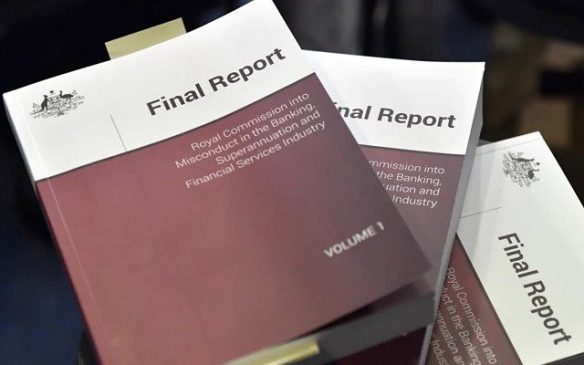
In the wake of the recommendations from the Royal Commission into Misconduct in the Financial Services Industry (aka the Hayne Report), one of the four major banks announced that it would be removing bonus payments for its front line tellers. This was supposedly in line with Hayne’s proposal that performance-linked remuneration, financial incentives and sales commissions in the financial services industry need to be restructured.

Image sourced from Small Caps

This prompted a mixed reaction among the public, based on some of the comments I have read on social media. Some felt that the tellers were being made scapegoats for the banks’ bigger failings – others felt that this was an inevitable outcome from the banking backlash.

Personally, I believe the announcement is potentially just one of the many likely “unforeseen consequences” to come out of the Royal Commission – I’m not saying this particular decision is good or bad, just that we need to be aware of what’s likely to happen based on Hayne’s key recommendations. Be careful what you wish for. And, as an underlying theme to this whole debate, let’s not forget that most Australians are shareholders (directly or indirectly via their Super) of the Four Pillar Banks (one of the greatest government-endorsed and legislatively protected market oligopolies around which also helped steer us through the GFC relatively unscathed….).

So, what else might we see?

First, as with financial advice, residential mortgages will move to a “buyer pays” model. Brokers would not be able to receive commissions from mortgage providers or other intermediaries based on the products they sell, recommend or refer – instead, mortgage applicants will be expected to pay for the services of a broker, who will therefore be under an obligation to find the best product for their client. But removing trailing commissions and other conflicted remuneration may also mean that brokers could seek to earn additional fees from their mortgage clients by re-contacting them a year or so later (with permission, of course) to inform them of a better deal. (Even now, lenders are not explicitly obliged to let existing customers know if they have a newer product that may be better for them). Some estimates suggest that fee-for-service will add about $3,000 to the initial cost of applying for a mortgage. Whether this will also lead to more competition among mortgage providers (who will no longer have to pay broker commissions) is not clear.

Second, the increased focus on acting in the best interests of the customer may result in placing all financial planners, brokers, advisors, insurers, and banks (and their officers, agents and employees) under a fiduciary duty of care to their clients – even if they are not directly managing specific assets, selling a specific product or advising on specific services or financial strategies. In other words, advisors etc. will be deemed to have taken ALL of a client’s needs and circumstances into account. (This is largely the result of the miss-selling of financial products, and the charging of fees for “no service”, by banks and their retail wealth management arms.)

Third, the increased cost of compliance will disproportionately impact smaller financial institutions such as credit unions, member-owned banks and other mutual societies, who came through the Royal Commission pretty much unscathed. Those costs will need to be passed on, to customers and members. Of course, there has also been some political debate around the need for some sort of banking levy – which will ultimately be passed on to shareholders or customers (who are often the same people…).

Fourth, and related to the above, the separation of roles between those superannuation trustees who act as both fund trustees and as responsible entities of managed investment schemes will have a knock-on effect in terms of operating and compliance costs. Such dual-regulated entities will have to decide whether to focus on their trustee role, or appoint a separate and independent responsible entity in respect of the asset management.

Fifth, the higher compliance and regulatory obligations may deter or inhibit more competition – either from new market entrants from overseas, or from local start-ups. The recent restricted ADI model (aimed at enabling challenger or neo-bank brands) has not exactly seen a raft of applications, and off-shore banks tend to come and go in successive waves, largely driven by market conditions. If lending standards are further tightened, it may be less attractive for foreign firms to set up local operations. In fact, there have been calls to force some smaller superannuation funds to merge with larger funds, or exit altogether for reasons of scale and efficiency – potentially taking out some of the competition in that sector. And if mortgage brokers have to move to a fee-for-service model, it will likely force some providers to exit the industry, as happened with the FOFA reforms in financial planning and wealth management.

Sixth, at the level of corporate governance, boards of financial services providers will need to be mindful of their duty to act in the best interests of the company – which has traditionally meant the share holders – and the increased duty of care towards their customers, which may at times be at complete odds. Non-executive directors willing to serve on the boards of banks and insurers may also be harder to find, at a time when there is already a high concentration of directors who sit on multiple boards across Australia’s biggest companies. So, board diversity may be even harder to achieve, especially if non-executive directorships become subject to even greater formal qualification, to ensure board members have appropriate professional experience, industry knowledge and technical expertise, as well as financial competence and risk management skills.

Finally, all this is happening as we face something of a credit squeeze (thanks to increased lending standards and greater provisioning for risk-weighted assets) heightened economic uncertainty (slowing GDP growth, lower productivity, wage stagnation, falling property prices), and an upcoming General Election campaign during which the Hayne Report will be held up as a key reason for why “things have to change”. The irony being that, except in a few areas, the complaints aired and wrong-doing uncovered during the Royal Commission could have been addressed by the regulators and enforcement agencies via existing laws on financial services, prudential standards, and general consumer protection (unfair contract terms, unconscionable conduct, deceptive and misleading behaviour). Plus, the Australian Financial Complaints Authority (which combines the remit of the former Financial Ombudsman Service, the Credit and Investments Ombudsman and the Superannuation Complaints Tribunal) has a wide jurisdiction over consumer complaints relating to Credit, Finance and Loans, Insurance, Banking Deposits and Payments, Investments and Financial Advice, and Superannuation. And as with most External Dispute Resolution agencies, AFCA and its predecessors have an obligation to report on systemic issues within their industry.

Next week: Pitch X