It’s not enough to be #disruptive – you also have to #collaborate

For most tech #startups, especially in #fintech, it’s no longer just about being #disruptive – there’s a growing realization that entrepreneurs also have to be #collaborative.

One year on from his last visit to Melbourne, Stripe co-founder John Collison was back in conversation with Paul Bassat from Square Peg Capital, courtesy of Startup Victoria and sponsors Envato, LIFX, BlueChilli, Bank of Melbourne and PwC. Previously, John spoke about the need to be “disruptive rather than incumbent”, yet it seems that Stripe’s growing success can be attributed to relationships with other providers in the payments industry, such as AliPay and VISA, plus deals with retail sites such as Catch Of The Day and RedBalloon. Oh, and it probably helps that most U.S. presidential candidates are using Stripe for campaign donations….

Stripe has already launched an SDK platform for developers, and is planning to launch StripeConnect, a market place platform. The point being, the more users (upstream and downstream) you can plug into your platform, the greater the traction, but also the deeper the collaboration. Why would you want to annoy your potential partners, vendors and suppliers?

Meanwhile, Australia is now Stripe’s 4th largest market, and close to being its 3rd largest.

Going forward, despite some criticism (e.g., it’s still not rolled out in Australia), ApplePay has huge potential. It has an estimated 800m credit cards registered with iTunes (making it 5x bigger than PayPal), and with people currently paying as little as $1.69 per song download, ApplePay could crack the market for broader micropayments (e.g., the $2 on-line daily newspaper?).

However, Stripe stills sees that there are disconnects between traditional credit card application processes, account registration forms, payment solutions, merchant set-up and downstream payments for low-value (but high volume) transactions.

Looking ahead, Collison is talking up opportunities in same-day delivery for e-commerce (hard to see this happening outside of Australia’s main metro areas – unless the infrastructure is there…), and better video-conferencing services (again, in Australia this is hampered by poor broadband services).

A few days later, and Adrian Stone from AngelCube was in conversation with StartUpGrind‘s Melbourne convener, Chris Joannou. Adrian restated the sentiment that angel investors tend to back founders rather than ideas, which can seen by some of the ventures AngelCube has backed so far, including Tablo, LIFX and CoinJar. Each venture has been successful in raising early-stage funding (despite some teething problems and much pivoting), although AngelCube itself has not yet completed an exit.

Rather like his associate Dave McClure from 500 Startups, Adrian recognizes that for various reasons, VCs are having to make smaller, multiple bets, rather than betting the farm on single or a few ideas.

Perhaps this gives further credibility to the proposition that every portfolio (including individual members in retail and industry superannuation funds?) should have a discretionary 1-2% allocation to startups, but you still need an investment vehicle or platform to screen and manage opportunities. Sadly, we see that there is still a disconnect between institutional investors and startup founders. The former are having to get bigger to reduce operating costs, yet this means they have what one friend of mine has defined as the “Allocation Gap”. And of course, founders far outnumber the available sources of VC funding. Time for a rethink on how investors can collaborate to access startup opportunities?

Next week: Cultural Overload


The David and Goliath of #Startup #Pitching

Anyone wanting to follow the startup scene in Melbourne will quickly discover that there are meetups, hackathons and user groups nearly every night of the week. Who needs a social life when we’ve got startup happenings to keep us entertained, busy and off the streets! The frequency and close proximity of these events can lead to some interesting contrasts; one such example came when Oxygen Ventures‘ annual splash The Big Pitch was held the same week as UpWork‘s more modest Networking & Pitch Night (part of The Pulse Meetup). It was almost a case of David and Goliath…


Screen Shot 2015-06-19 at 5.58.28 pmScreen Shot 2015-06-19 at 5.58.57 pmThe biggest difference between the two events was the prize on offer – the Big Pitch offers the winners up to $5m in venture capital funding; The Pulse offers $500 in Upwork credits (and high fives all round). No doubt, the application, screening and selection process is more onerous for the former than the latter. And as was frequently pointed out once The Big Pitch gala proceedings got underway, this competition is “serious” and “adult”. But that’s not to say that the entrepreneurs pitching at The Pulse weren’t equally passionate or serious. Most of the finalists at The Big Pitch had already launched products and were gaining market traction, as had several of those presenting at The Pulse.

So, in the interest of objectivity (and pure entertainment), here are the 10 pitches I watched across the two competitions, in no particular order, with my personal comments on each. Without going to the respective websites, can you work out which startup finalists belong to which competition?

LaundryRun

Too little time, long day at work, or just can’t be bothered doing your washing? Let LaundryRun pick up your dirty clothes at a time of your choosing, and bring them back when you need them all nice and clean. Tapping into the trend for concierge services for busy inner city hipsters, hackers and hustlers, LaundryRun is joining the likes of YourGrocer to outsource domestic services.

Given that the founders already have a traditional laundry and dry-cleaning business, one assumes they know to make the economics work (they claim the customer pricing is comparable to walk-in trade). Plus they have had some early media coverage, and it makes sense to focus on higher-density neighbourhoods, especially if they can establish regular pick-up and drop-off schedules.

But the problem will be in getting enough repeat business, although if most of the collection and delivery is done in the evenings, maybe that addresses the need for consolidation (and gets round peak traffic hours).

Gamurs

As I have confessed before, gaming is not my thing. I don’t see the appeal, I barely understand the jargon, and I certainly don’t have any aesthetic appreciation for the advertising, graphics and branding that goes into these products. But I accept that it’s a big business, and that the gamers of today are possibly the software geniuses of tomorrow.

Gamurs claims to be the ultimate social network for all things gaming. It has had some user interest (probably because it is a free platform), but it felt that there was nothing really new here. Despite a dedicated team, and some impressive growth projections (albeit only for Australia) it was difficult to see where the revenue would come from as there are competing channels, and the games industry is built around platform and brand verticals.

The pitch mentioned “content consumption” a lot, but I had no idea what that meant, and I was left thinking this was simply an on-line magazine for enthusiasts and hobbyists.

EpicCatch

I’ve seen this exact same pitch before. It’s cute, and has an interesting angle on the online dating model. Sort of MeetUp meets Tinder, with a focus on curated dating experiences. But other than some neat one-liners, this presentation was really an in-person advert designed to drive customer usage.

I’m sure the business will do well among its target demographic (although not quite sure they have this totally figured out), but unsurprisingly it did not win because according to some recent research, VC’s don’t like the dating business model.

  Biteable

This self-serve provider of templates for animated videos presents a very neat idea, and was established to fill the gap between expensive agency services, complicated pro tools and clunky DIY apps. It’s free to use, but for $99 you can remove the Biteable watermark.

There are limited options for changing some aspects of the template content, but maybe this will form part of the up-sell model. However, the numbers look questionable – how many repeat users would there be, and wouldn’t frequent users go for professional solutions anyway?

Perhaps there are strong niches or use cases that Biteable could explore, rather than trying to gain traction across a wide market?

CoreCool

Referring to the number of fatalities in India’s recent heat wave, CoreCool demonstrated a human need for their simple low-energy heating and cooling solution, especially for the elderly and the infirm. Using tested technology to regulate core body temperature (in essence, a contact heat exchange unit), CoreCool also sees a market in the recreational and well-being sectors.

If the product makes any claims as to its medical or health care benefits, it may need to comply with the relevant class of therapeutic goods regulations. It was not clear whether any clinical trials have been undertaken or whether the product is subject to any patents. However, there was lots of support for the idea among the audience.

Development challenges include scaling production to achieve retail pricing, and maximizing battery life.

FLEET

This was a project that proved very popular with the audience, even though it is still at concept stage – quite literally, it has not yet got off the ground. FLEET plans to bring cheap satellite internet to the estimated 60% of the world’s population that are not connected, or don’t have access.

With impressive scientific credentials, a passionate presenter and market research to back her case, it was easy to see why this pitch was many people’s favourite. But without the co-operation of incumbant telcos and their willingness to trade with a third-party platform, FLEET may struggle to establish a business case, unless they can hook into alternative distribution technology and supply chains.

At the very least, FLEET could provide a shot in the arm for Australia’s satellite industry.

Blinxel

Pitches always look better when the presenter can provide a product demo. Such was the case with Blinxel, a startup that is looking to bring simple and low-cost AR/VR video and hologram-like content to your smart phone or tablet.

Using a dedicated depth camera, Blinxel can capture video content, then upload the file via the cloud to your device. The team behind Blinxel is a bunch of enthusiastic 3-D content producers who want to disrupt the current high-cost model, which is also wasteful, as little content is recycled and OEM’s are apparently locked into proprietary technology.

I can see many uses, from education to tourism, as long as the content creation process is scalable, the need for stand-alone technologies can be minimised, and the price/speed/quality equation makes sense.

SocialStatus

Aiming straight for the marketer’s heart, SocialStatus aims to provide social media analytics on steroids – although only supporting Facebook pages at present. With a focus on peer and industry benchmarking, SocialStatus is building its expertise around the key metrics of engagement, growth and click-thru rates.

Adopting a freemium model (plus a 2-tier subscription price) and using simplified tools (canned reports and automated data from streamlined metrics), SocialStatus looks clean, easy to use and speaks directly to content marketers and community managers.

Unless they can protect their analytical IP, and extend coverage to other social media platforms, I think SocialStatus may find it difficult to defend their position.

Meet&Trip

A simple pitch: if you are travelling overseas, and want to connect with fellow travellers who might be interested in planning and sharing a road trip, this is the solution for you. Claiming that Facebook and other social networks don’t allow you to create time and location-based forums that are both moderated, curated and for a specific purpose, Meet&Trip aims to connect users with similar interests and lifestyles.

It’s a nice idea, but other than being specialist bulletin/message board, I can’t see what else Meet&Trip has planned, or how it intends to fund itself.

In the analogue world, most major cities and tourist destinations used to publish magazines dedicated to the interests of travellers, backpackers and itinerant expats. They had classified adverts of the kind: “planning a trip to Uluru; share expenses and driving; no boofheads”. Maybe this still happens? As an aside, London’s Antipodean community used to park and trade their dormobiles along the Thames Southbank – so anyone looking to buy a VW Combi and “do” Europe with like-minded travellers knew exactly where to go.

Storie

I have to admit, when I heard this pitch, my immediate reaction was, “Oh. Yet more video content that I don’t have time to watch (or care about).” And despite the apparent novelty of being able to capture, edit and share content from within the same app (i.e., build a series of scenes into a story before you hit “publish”), it felt like yet another social media pitch in search of a business solution.

Kudos to the young team for bringing their idea to our attention – but to me it felt like it was trying to take the best bits of YouTube, Vine, Instagram, Facebook and Tumblr without adding anything radically new.

As with Biteable (above), my recommendation to Storie would be to explore commercial opportunities among deep or niche content-rich markets, rather than trying to scale across shallow, thin and widely dispersed public audiences.

Conclusions

  • The winners in their respective competitions were SocialStatus and CoreCool, with honourable mentions for LaundryRun, FLEET and Blinxel.
  • We are starting to see some further variegation among startup pitches – more firmware, hardware, B2B – but the bulk are still pushing consumer-based, ad-backed products targeting the (over)crowded markets for sharing social, mobile and video content.
  • Reflecting Melbourne’s ethnically diverse startup scene, a significant number of these pitches were made by recent migrants to Australia.
  • Several pitches confined their growth potential to the domestic market – which is understandable, but self-limiting. Despite its reputation as a relatively early adopter of new technology, by and large Australia is still quite conservative, with a tendency to favour incumbant brands that operate in semi-protected duopolies and oligopolies (supermarkets, telcos, banks, newspapers, automotive).
  • I don’t believe in disruption for its own sake, but few of the pitches offered truly disruptive business models, other than through pricing (i.e., charge nothing and hope that advertising will cover the costs) or via self-service solutions. I would like to have seen more disruptive intent around supply chains, distribution and channels to market.

Next week: Deconstructing #Digital Obsolescence
 

How to spend $60m on #Innovation and #Entrepreneurship for #Startups

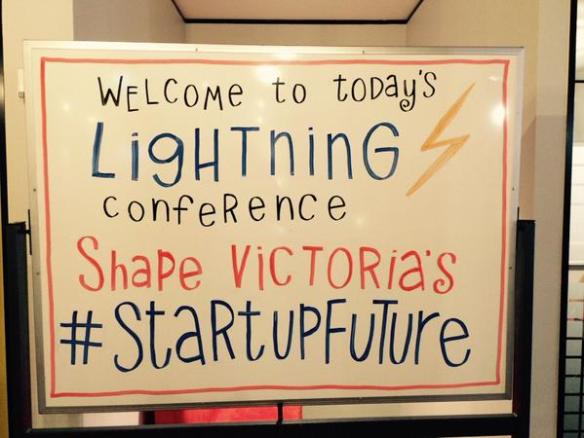
In the recent Victorian State Budget, the government allocated $60m over 4 years to supporting startups, via innovation and entrepreneurship. While not an insignificant sum, it’s still not a huge amount in the overall scheme of things. Having made the announcement, the government hurriedly undertook some rapid community and stakeholder consultation, to figure out how to spend the money. I was fortunate enough to be invited to one of the consultation exercises, a half-day lightning conference organised by Dandalo Partners, facilitated by Collabforge, and hosted by Teamsquare co-working space.

LightningConference

The theme of the Lightning Conference was #StartUpFuture

At the outset, there was an assumption that whatever recommendations came out of the consultation process, a new quango would be formed to oversee the implementation of the program and distribution of the funding. I don’t think I was alone when I expressed my concern that this was rather like putting the cart before the horse – the implication being, “Why seek our opinion, views and recommendations if you’ve already decided the solution?”

To their credit, the organisers took this on board – for example, rather than creating yet another entity, maybe the funding could be facilitated by an existing body such as Startup Victoria – but it felt that the consultation exercise was at risk of “going through the motions”.

Across the various topics that were discussed in the self-forming and self-directed breakout sessions, there were probably 5 key themes:

  1. Community
  2. Infrastructure
  3. Funding
  4. Sustainability and 
  5. “Picking Winners”. 

Here are the main points from each of those themes:

1. Community

There was general agreement that the local startup and entrepreneurial community is well-established, reasonably well-connected (I myself knew about 10% of the participants from various networks) and growing fast.

However, there was also a common view that more could be done to bring entrepreneurs and like-minded people together. For example, how do people know what ideas or projects everyone is working on, how can people find help or make offers of help in terms of matching skills, experience, knowledge, resources? How do we connect suppliers and investors to startups?

Sure, there are numerous meetups and regular startup events, but is there a better way to leverage this potential?  And there are various matching services linking entrepreneurs to mentors, but they are rather ad hoc, and in the case of connecting startups and investors, there are probably more challenges than there are opportunities (see Funding, below).

In short, how can the community come together in a more collaborative way?

2. Infrastructure

It’s quite easy to see that Victoria (mainly Melbourne) has a vibrant startup ecosystem, simply based on the number and frequency of meetup events, founder workshops and hackathons. But there still appear to be numerous obstacles to getting started – from establishment costs and bureaucratic red tape, to tax impediments and access to funding.

Some of these challenges are being addressed at Federal level (e.g., streamlining the company registration process, tax cuts for SMEs, and changes to both equity crowdfunding and employee share schemes). But that’s part of the challenge in itself – at the individual State level, there is relatively little that can be done on fiscal policy (apart from payroll tax and land tax), and all reforms relating to securities financing need Federal legislation and the involvement of market regulators.

The State government has more autonomy around local industry policy settings and planning, as well as making funding available via grants. This means, though, that government is forced to prioritize one sector over another (see “Picking Winners”, below), and a system of grants often results in a mini-industry that is created around grant applications, awards and distribution.

At a practical level, some participants took the view that more could be done to facilitate early stage startups and product prototyping – such as a continuous education and open-enrollment program for entrepreneurs, and co-working spaces for small-scale manufacturing, materials-testing, and engineering. (I am aware of at least a couple of local projects in this space – a biotech co-working lab and an “Internet of Things” open access workshop).

If the State government is looking to plug a gap, investing in R&D facilities might be one option.

3. Funding

This remains the biggie – and a topic previously covered both in this blog, and via numerous commentators and advisers. Even though there are many local pitch competitions, incubators and accelerator programs (plus Shark Tank and That Startup Show make for interesting/amusing viewing…) the elephant in the room is that there are too many startups chasing too few investors.

Competition for resources is positive, as long as it’s an efficient, transparent and accessible market, where the laws of supply and demand are equitable and the rules of engagement are clearly understood.

One industry veteran noted that the local investor community can normally provide small-scale startup funding up to $5m (via “family, friends and fools” and angel backers), and even larger, early-stage equity funding over $50m (via Venture Capital, Private Equity and Family Offices). But in the $5m-$50m range there are far fewer options.

Leaving aside the pros and cons of traditional secured and unsecured bank lending and emerging P2P lending platforms, there is a funding gap that could be filled via Australia’s superannuation scheme:

  • First, we need to find ways to get large retail and industry super funds along with other institutional investors to invest directly in local startups. At present, thanks to the Silicon Valley effect, these instos are more comfortable handing their money to US-based fund managers who then charge a premium to invest the assets in local startups. (I call this a very expensive boomerang….)
  • Second, in the absence of suitable investments for retail investors who may want to allocate part of their portfolio to startup opportunities, part of their superannuation assets could be used to invest in early-stage startups via a form of savings products or fixed income bonds. The retail bond market (such as it is) is heavily skewed towards sovereign debt (treasury bonds) and bonds issued by financial institutions (often in the form of hybrid securities, which are essentially a form of deferred equity). There have been attempts (and even regulatory reforms) to encourage the development of a deeper retail bond market in Australia, but these efforts appear to have stalled.

An enlightened approach to asset allocation could direct even a very small part of the $1.8tn superannation savings into startups that could have significant outcomes. If SMEs are seen as the backbone of future economic activity and jobs (as well as innovation and entrepreneurship), helping to accelerate startup growth will deliver multiple long-term dividends.

4. Sustainability

This wasn’t a huge topic of discussion, but it deserves an honourable mention because it surfaced in several ways:

  • Economic (e.g., making better use of available resources, not funding startups that go nowhere etc.)
  • Social impact (e.g., the growth of social enterprises)
  • Environmental (e.g., the conscious capitalism movement and the importance of “for purpose” enterprises such as B-Corps that want to minimize their environmental footprint)
  • Government (e.g., how to foster startups that want to help deliver better public services, and how to change public sector procurement policies that give startups more of a look-in)

There is also a need to reflect the changing demographics of the workplace, so that sustainable employment opportunities (in whatever form they exist) are made available to both mature-age workers and new school leavers.

So perhaps part of the $60m could be put towards (re)training initiatives.

5. “Picking Winners”

First up, let me say I always get nervous when we put our elected representatives in charge of deciding the fate of specific industries, especially when it’s taxpayers’ money at risk. Call me a cynic, but I’m not sure that picking winners is the government’s forte. I understand the need to support certain sectors that contribute to GDP growth, create employment opportunities, generate taxable revenue, instil industry innovation and develop cutting-edge technology – but the example of the domestic automotive industry is one where political ideology probably got the better of sound economics, as public subsidies eventually came to look like throwing good money after bad.

If nothing else, picking or backing winners is fraught with problems of favouritism, lobbying, murky back room deals and “jobs for the boys”. Better to create the foundations upon which broader innovation and entrepreneurship can thrive, and let the market decide. That way, the government can still claim the credit, and frame the conversation around its role as an enabler.

On the day, the discussion was more about the long lead time before anyone would know whether the program had been successful (assuming we can agree on what success should look like). In reality, re-tooling innovation and entrepreneurship is a 10-year initiative (which is difficult to manage in the face of short-term policy settings linked to 3 and 4-year election cycles).

  • Should we teach entrepreneurship and innovation in schools (alongside coding and STEM subjects)?
  • Should government use local plebiscites to determine where/when/how the funding should be allocated?
  • Should we use the money to directly fund startup founders (rather like the UK’s enterprise allowance scheme in the 1980s)?

There was also a suggestion that the money could be used to promote local startup success stories, in order to foster an understanding of truly viable startups, to identify and fast-track high-potential entrepreneurs, as well as define what is takes (time, money, resources, networking and connections) to build scalable and sustainable startup businesses (i.e., companies generating $250m+ in revenue, not lifestyle ventures or small family owned concerns).

If we do need to pick winners, perhaps we can easily agree which ones they are based on current trends, future needs and demographic demands:

  • Health, biotech and medtech
  • Fintech and big data analytics
  • Education and lifelong learning
  • Renewables and green technologies
  • High-tech engineering and manufacturing

In which case, we should simply help the State government prepare an investor profile, set an optimum portfolio performance target (based on financial returns, innovation scores and a mix of social and environmental outcomes) and give the $60m to a skilled fund manager.

FOOTNOTE:

For further ideas, please see 10 Random Ideas…

POSTSCRIPT:

A couple of further contributions to the innovation debate from AVCAL around tax reform, and from OneVentures around superannuation allocation.


Next week: Medtech’s Got Talent

Connecting Investors and Founders

In recent weeks I have been listening to business founders and investors talk about what each party is looking for in the other when it comes to striking a potential deal. We know that due diligence, planning and preparation as well as financial analysis are all critical to success – but investors are essentially buyers, and as with any product or service, people buy from people. More often than not, relationships based on a common connection, mutual respect, purposeful rapport and personal interaction will form the basis of most investment decisions.

Here are some examples of what you might expect to encounter when thinking about selling your own business, or bringing in external investors.

handshake-220233_1280

What are investors looking for?

At a networking event hosted by Startup Victoria, established investors talked about their criteria for investment.

First and foremost, investors need to know the business you are in (the basic principle being “if you don’t understand it, don’t invest in it”). In the case of an early-stage business, investors also need to know how/where they can add value, since they expect to be more involved with the strategy and execution.

Second, as explained at a workshop hosted by AICD/KPMG, there are only a few types of transactions:

  • Strategic – such as a trade buyer or targeted M&A transaction
  • Financial – such as a Private Equity fund or Family Office
  • Succession – a management buy-out or generational transfer
  • Public – an Initial Public Offer, such as an ASX listing

Each will have their preferences and processes, and as a business owner or founder, you need to understand what each option means for you. Your interests need to be fully aligned, otherwise all the planning and due diligence in the world won’t prepare you for potential disappointment, unmet expectations or even a failed transaction. For example, as a founder wishing to sell your business, are you prepared to see the new buyer shut down one of your cherished products?

Third, financial and strategic investors will have very specific objectives and timelines. As one early-stage investor said: “I’m not a lifestyle investor”, meaning, “I don’t invest in a business to fund your lifestyle” (I invest to fund my own lifestyle…). So, the goal is to invest, drive growth and exit within 3-5 years having generated a target multiple of return on investment. Another investor took a contrarian view, commenting that he had never yet sold out of any business he had invested in – because he takes a longer perspective, and he likes the people he invests in.

Finally, and following on from the last point, investors (especially in start-ups and founder-operated businesses) are often buying the people and the team, not just the business. This prompted the comment about “can you have a beer” with the business owners or founders? The “getting to know you” process is very important for establishing the relationship, exploring what each party is looking for, and framing the nature and terms of the transaction.

What are founders and owners looking for?

Apart from money, what else might you be looking for when contemplating a business sale or bringing in external investors?

Depending on what stage your business is, you will likely need capital for specific purposes, or you may be looking for a particular type of investor. So, know what type of funding you require, and what you might be expecting from the investor.

If it’s contacts and introductions you want, then as shows like Dragons’ Den and Shark Tank demonstrate, investors will extract a high price in return for opening up their precious address books.

Just as investors check out the people as well as the business, owners who are seeking external funding should really do their homework on prospective investors – especially when it comes to unsolicited or unexpected offers to buy your business.

One speaker (who has been on both sides of the transaction) noted that he was wary of a particular investor, because he knew that the relationship would be difficult – a feeling that was borne out by problems at board meetings, and challenges getting shareholder alignment and agreement on critical strategic decisions.

Even if as a founder you are seeking to exit your business via a trade sale or equity transaction, in many cases the new owners or investors will expect you to stay on in the business, to maintain continuity. As is frequently the case, the owner’s sale proceeds will be subject to an earn out to ensure the business meets its projected forecasts.

I have known some entrepreneurs who have left a corporate role to start a new business, with the specific aim of being acquired by their former employer – and I know of at least one such founder who has managed to do this more than once, but a condition of purchase is usually golden handcuffs linked to a performance target.

Other Considerations

There is a commonly held view that if you don’t need to bring in external investors, then you should hold out as long as possible. It’s also said that debt is cheaper than equity, and with current interest rates at a record low, borrowing from a bank or other lender is quite possibly a better option.

However, as I have written previously, there are several obstacles to getting startup funding, especially from banks. In particular, banks prefer secured lending, so if you don’t have sufficient assets (or if you are reluctant to put the family home at risk), and if you don’t have consistent cashflow (for factoring or invoice discounting purposes), your borrowing options will be limited.

An alternative to either bringing in external investors or taking out a loan might be to enter into a joint venture or similar partnership that gives you access to cash and other facilities, while retaining control of your business. For example, a JV to develop a new product or enter a new market can de-risk the opportunity, while enabling you to leverage skills or other expertise that you may not have.

If you are intending to sell your business, even one that is a mature and going concern, most advisers will tell you that the planning and preparation will take 2-3 years, especially as buyers will likely want to see a minimum of 3 years’ trading information and financial records. Don’t underestimate the time it will take to pull together the accounts, document key aspects of the business such as IT systems and processes, catalogue the IP, consolidate CRM and client account information, get a valuation and ensure key personnel are in place as part of the transition team.

Finally, don’t forget to obtain professional tax and accounting advice – I’ve heard business advisers lament the fact that many retiring business owners just about realise enough money to pay off their mortgage, once the sale transaction costs, business debts and tax bills have been settled.

Next week: The changing economic relationship of “work”