Defining RoDA: Return on #Digital Assets

How do we measure the Return on Investment for digital assets? It’s a question that is starting to challenge digital marketers and IT managers alike, but there don’t appear to be too many guidelines. Whether your social media campaign is being expensed as direct marketing costs, or your hardware upgrade is being capitalised, how do you work out the #RoDA?

In most businesses, measuring the expected RoI of plant or equipment is usually quite easy: it’s normally a financial calculation that takes the initial acquisition price, amortized over the useful life of the asset, and then forecasts the “yield” in definable terms such as manufacturing output or capacity utilisation.

However, when we look at digital assets, many of those traditional calculations won’t apply, either because the usage value is harder to define, or the benchmarks have not been established. Also, while hardware costs may be easy to capture, how are digital assets such as websites, social media accounts, software (proprietary and 3rd party) and domain names being reported in the P&L, cash-flow analysis and balance sheet?

Sure, most hardware (servers, PCs and physical networks) can be treated as capex (e.g., if the purchase price is more than $1,000 and the useful life is 2-5 years). But how do you make sure you are getting value for money – is it based on some sort of productivity analysis, or is it simply treated as fixed overhead – regardless of your turnover or operating costs?

As we move to cloud hosting and #BYOD, many of these assets utilised in the course of doing business won’t actually appear on the company balance sheet. Yet they will have some sort of impact on the operating costs. Most software is sold under a licensing model, where the customer does not actually own the asset. (But, if the international accounting standards change the treatment of operating leases longer than 12 months, that 2-year cloud hosting fee might just became a balance sheet item.)

I was once involved in the acquisition of a publishing business that was converting legacy print products to digital content. Not only did they capitalise (and amortize) the servers and the conversion software, they also capitalised the data entry costs (using freelance editors) to avoid the expense hitting the P&L. Nowadays, that’s a bit like putting the HTML coding team on the balance sheet and not the payroll…

In some cases, the costs associated with maintaining an e-commerce website or registering a URL, will remain as overhead or operating expenses. But over time, businesses will want to have a better understanding of their RoI for different online sales and digital marketing channels, especially if they have been investing considerably in their design, build and maintenance. Measuring online visitor data, customer conversion rates and average yield per sale, etc. are becoming established metrics for many B2C sites. Having a good grasp of your #RoDA may just give you a competitive edge, or at least provide a benchmark on effective marketing costs.
 

Pricing for the Digital Age – A Postscript

Last week I wrote about pricing for digital content. In the past, I’ve also written about geo-blocking.

So, I decided to conduct a (very) small experiment in price comparison by market territory.

I chose a specific book title, and compared prices of the digital and print editions, between several retail sites, in 3 markets (Australia, UK and USA).

Before I conducted the exercise, my expectation was that Australia would be the most expensive (based on current exchange rates*), and USA the cheapest, but not much cheaper than the UK. But I was surprised by the results….

First, digital version:

Apple’s iTunes store: Australia A$37.99; USA A$37.76; UK A$41.83

Amazon: Australia A$20.60; USA A$20.61; UK A$33.18

eBooks.com: Australia A$40.95; USA A$37.72; UK A$48.03

Booktopia: A$39.95

I was surprised that the iTunes price between Australia and the USA was so close – when it comes to music, iTunes Australia is usually far more expensive than either the USA or UK. Amazon appeared to have the title on sale, but I can’t work out why the UK prices are so much higher. Thanks to geo-blocking, of course, I cannot access the slightly cheaper price in the US store. But I was able to buy it from Amazon.com (and at the same, cheaper price as Amazon.com.au).

Second, print edition (based on shipping costs to/within Australia):

Amazon: Australia not available; USA A$40.89 (inc. P&P to Australia); UK A$50.37 (inc. P&P to Australia)

Book Depository: A$32.31 (inc. P&P from UK)

Angus & Robertson: A$39.99 (inc. P&P within Australia)

Readings: A$40.95 (inc. P&P within Australia)

Booktopia: A$48.45 (inc. P&P within Australia)

Clearly, Book Depository is the best option by far (and is frequently so) and seems willing to undercut its parent company, Amazon – or maybe there’s a deliberate strategy as Amazon.com.au does not yet sell physical products. However, the much higher price charged by Australia’s Booktopia might speak volumes about the state of local retail….


NOTE:

Prices were converted from the published local price on each website, then converted to A$ using xe.com


Pricing for the Digital Age

Understanding the 4 Ps of marketing (Product, Price, Place, Promotion) has traditionally been critical to commercial success.

Theory has it that if you produce the right product for your target market, at the right price, make it available in the right place, and give it the right promotion, the market will buy it.

The model has worked well for both goods and services. But how is the model holding up in the digital arena?

In the Digital Age, a combination of technology, different transaction models and new marketing tools means that the Product (content), Place (internet) and Promotion (social media) not only co-exist, they are so inter-twined that in some cases they are almost one and the same thing: for example, a Justin Bieber video clip on Vevo, an in-app purchase for Angry Birds, BBC news headlines on Twitter. The boundaries are blurred between the content, the means of production, and the point of distribution and promotion.

So, how do content providers approach Pricing? If that’s the main point of differentiation, how do they compete on price (even though we sort of know that competing on price alone is often a race to the bottom, where nobody wins)?

In fact, even though the price of digital content sold via services like iTunes and Google Play is set by the content owner, they generally have to price according to set price bands and at specific price points determined by the retail platform – and often for particular territories (thanks to the practice of geo-blocking). The alternatives are to sell direct (which means creating a separate sales and distribution infrastructure) or via 3rd party platforms (which may not have the market presence of iTunes or Google Play).

With so much content available for “free” (as long as customers are willing to submit certain personal information, or are prepared to tolerate advertising) the current wisdom suggests that you have to give (some) content away in order to attract customers who might be willing to pay for it (over time). But is that a long-term strategy for success?

In my experience, pricing in the Digital Age is all about the 4 As:

  • Actual Costs – what are the costs of design, development, production and distribution (plus overheads)?
  • Acquisition Costs – what does it take to get new customers (and not just “followers” and “likes”)?
  • Adhesion Costs – what makes content “sticky” (and what will it take to keep your customers once they start paying)? Is it frequent new content? Is it service quality? Is it establishing brand loyalty?
  • Alternative Costs – what choices do your customers have (both traditional and non-traditional competition)? What are the switching costs?

Finally, when competing on price, especially if it’s not a like-for-like comparison, where are the acceptable customer trade-offs between your product and a competing service (e.g., do you know the customer drivers and the purchase decision processes)? What do your customers think they are paying for? Just because you place a high degree of value on some aspect of your content (e.g., exclusivity) does the customer value it the same way?


Publishers’ Choice: Be a Victim, or Join the Vanguard?

I recently posted a blog about saving the Australian publishing industry, prompted by some research I was doing on government-sponsored initiatives, notably EPICS and BISG. This generated a couple of (indirect) responses, one from the Department of Industry itself, the other from a long-time colleague in the industry. More on these later.

The future of publishing - circa 2000....

The future of publishing – circa 2000….

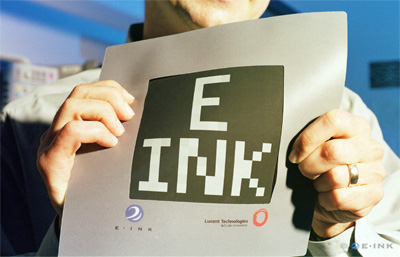
But first, some more industrial archeology, by way of demonstrating that book publishers are not shy about new technology – remember the first electronic ink? When I was working at the Thomson Corporation in the late 1990s, we were given access to a prototype version of what we would now recognise as an e-reader. It was about the size and thickness of a mouse pad but less flexible, and could only hold a small amount of data in its memory (content was uploaded via an ethernet cable). It was described as the future of book publishing, and was predicated on the idea of portability (it could be rolled up like a newspaper if the screen was thin and pliable enough), and updating it with new content whenever it was (physically) connected to a computer or the internet.

However, whatever their apparent appetite for new technology, publishers struggle to adapt their business models accordingly, or they are fixated on “old” ways of monetizing content, and locked into traditional supply chains, archaic market territories (geo-blocking), restrictive copyright practices and arcane licensing agreements; and unlike other content providers (notably music, TV and newspapers which have shifted their thinking, albeit reluctantly) the transition to digital is still tied to specific platforms and devices, unit-based pricing and margins, and territorial restrictions.

Anyway, back to the future. In response to my enquiry about the outcome of the BISG initiative, and the creation of the Book Industry Collaborative Council (BICC), the Department of Industry offered the following:

“A key outcome of the BICC process was to have been the establishment of a Book Industry Council of Australia, an industry-led body based on the residual BICC membership that would come to be a single point of policy communication with government, though following its own reform agenda in the identified areas and unsupported by any taxpayer funding. Terms of Reference and so forth were drawn up but as nearly as we can ascertain from media monitoring and contacts, the BICA was never formed. It appears the industry is waiting to ascertain what the current government’s policy priorities might be, as expressed in the outcomes of the current Commission of Audit and Budget, before possibly resurrecting the BICA concept and/or the policy issues identified in the BICC report.” (emphasis added)

My read on this is that the industry won’t take any initiatives itself until it knows what the government might do (i.e., let’s wait to see if there are any handouts, and if not, we can plead a special case about the lack of subsidies/protection and the threat of extinction…).

This defeatist attitude is not just confined to Australia – my former colleague recently attended the 2014 Digital Book World Conference in New York. He commented:

“I was disappointed to see the general negativity of the publishing industry and the “victim” like mentality – also the focus on the arch-enemy – AMAZON! I see great opportunities for content – but companies have to get their head around smaller micro transactions and a freemium model. Big publishers are “holding on” to margins – it’s a recipe for disaster – [but] I think we can become small giants these days.”

There are some signs that the industry is taking the initiative, and even grounds for optimism such as embracing digital distribution in Australia, moving to a direct-to-consumer (“D2C”) model in the USA, and new approaches to copyright and licensing in the UK.

The choice facing the publishing industry is clear: continue to see itself as a victim (leading to a self-fulfilling prophecy of doom and extinction), or become part of the vanguard in developing leading-edge products and services for the digital age.