Taxing the Intangibles – coming soon to a screen near you!

No sooner had Netflix launched in Australia than Treasurer Joe Hockey announced the imposition of GST on “intangibles” purchased from overseas vendors. The Treasurer has also indicated that the GST-free threshold for on-line imports will be lowered from the current $1,000. Dubbed the “Netflix tax”, Australian consumers should now expect to pay more for their digital content such as video, music, software and e-books, even though on most evidence, we are already charged more for comparable products than in other markets.
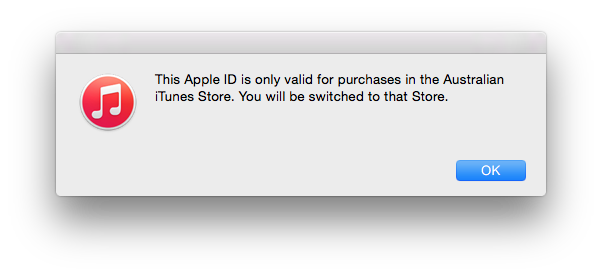
Geo-blocking is already an obstacle for Australian consumers…

Backdrop

We all know why the Treasurer has proposed this scheme: the Government has to make up for declining tax receipts, and appease the States who are squabbling over the allocation of GST revenue between them. Plus the current Senate inquiry into corporate tax avoidance by companies like Apple, Google and Microsoft (who divert locally sourced income to offshore entities to reduce their income tax liability in Australia) is driving the public and political agenda on global tax minimization schemes (which are nothing new, of course).*

But it’s not as simple as slapping an extra 10% on the price of a movie download, even though GST is a relatively easy and cost-effective way of generating tax revenue. For one thing, there is little consistency in how vendors currently sell their digital products in Australia. Secondly, geo-blocking is already an obstacle for Australian consumers, leading to the sort of content piracy infringement that will now make local ISP’s and their subscribers more vulnerable to legal action, following the recent “Dallas Buyers Club” court ruling. Thirdly, local retailers who have long campaigned to have the GST-free threshold removed or lowered fail to acknowledge why customers prefer to shop from overseas vendors.

Goods & Services Tax

GST (similar to VAT in Europe) is a simple consumption tax. It applies to the sale or supply of most items (except things like fresh food and health services) at a flat rate of 10%.

Even better, the Government and the tax authorities rely on businesses to collect, report and remit GST receipts, making it relatively cheap to administer (when compared to other taxes) via the Business Activity Statement process managed by the Australian Taxation Office.

The GST is a key topic of the current review of the tax system – likely to result in a higher rate (or different rates), and/or broader application to items not currently included.

Vendor Inconsistency

In principle, I don’t have a problem in paying GST on digital items I buy from overseas vendors – but there is so much inconsistency that there is a risk of consumers having to pay two lots of sales tax.

For example, every iTunes receipt issued by Apple Pty Ltd (an Australian entity) states that the sale amount already includes GST – in which case, Apple should be remitting that component to the ATO, and no need for a price increase.

However, Adobe chooses to invoice me from Ireland, and as such no GST (or VAT) is applied, but I am charged forex fees, even though the invoice amount is expressed in Australian dollars, because my bank treats this as a foreign transaction.

Meanwhile, although some UK vendors I buy from direct do not apply GST/VAT on my orders (Amazon UK included), others do – meaning I risk having to pay both the GST and VAT. As a further sign of vendor inconsistency, Amazon’s US store does not appear to deduct US sales tax for foreign customers; neither the UK or US Amazon stores sell music downloads to Australian customers; and Amazon’s Australian store only sells e-books and apps.

Geo-blocking

The decision in the “Dallas Buyers Club” IP infringement case brought by Voltage Films, has again drawn attention to Australia’s poor reputation for copyright piracy as evidenced by the number and frequency of illegal downloads.

Some journalists have commented that distributors often delay the local release of imported content (for various reasons) although this was not seen as a justification for piracy (and quite rightly so).

While foreign films are frequently released later in Australia, it’s interesting that TV (even free to air channels) has woken up to this, and now broadcasters rush to fast-track imported shows to keep audiences happy.

It’s also interesting to note that the Productivity Commission, as part of its competition policy review of IP laws, has suggested that if local rights holders and distributors choose not to exercise their commercial rights, under a “use it or lose it” model, third-party distributors would be able to step in. This also has the potential to undermine the archaic industry practice of geo-blocking, whereby sales of music, film and TV content (physical and digital) are restricted by territory.

Local retailers and distributors need to lift their game

Does the absence of GST really encourage consumers to buy from offshore retailers? I would beg to differ.

Local rights holders often do not bother to make content and products available in Australia. And local retailers won’t usually stock products if they are not readily available from wholesalers or distributors.

I recently had to contact an overseas artist, the UK record label and its Australian distributor several times to make their music available online in Australia. The local distributor had not bothered to release the content, even though they had the rights, but geo-blocking prevented me from accessing it legally from overseas suppliers.

It’s the combination of inadequate local distribution, non-availability, higher prices and lacklustre service that encourages Australian consumers to buy from overseas, even if that means circumventing geo-blocking. In many cases, I doubt the addition of GST will be a serious deterrent to online overseas shopping.

In my own case, I once found that the local branches of a global retail brand chose not to stock the item I wanted, and their US parent geo-blocked me from ordering on-line. So I resorted to buying in the “grey” or parallel imports market, from an offshore vendor willing to ship direct to Australia. It was still cheaper, even after shipping costs, and even if GST had been added (I probably paid US sales tax on the transaction anyway), than if I had bought from a local retailer (assuming they bothered to stock the item).

Hopefully, this debate on GST and the Productivity Commission’s review of competition policy will finally give local retailers an incentive to do a better job of serving their customers.

* The debate on corporate tax minimization might want to look at where “value” is created, and where the revenue is booked, that gives rise to a tax on the resulting profits. For me, the retail value of intangibles such as digital products is created when someone pays to download them, at the point of sale – i.e., in the consumer’s geographic location.  Although the vendor may argue that the IP is owned by an offshore entity to whom they must pay royalties, the individual download itself does not have any standalone value, until it is accessed by the consumer. Even a high rate of royalty repatriation could not be more than the retail price, so logic might suggest that local profits should be taxed accordingly.

Next week: What can we learn from the music industry?
2015 – A Year for Optimism?

After a very challenging 2014, I am trying to face 2015 with a spirit of renewed rationalism and optimism. It won’t be easy, but if we can remain true to our real purpose, and (re)-connect with those things that bring us a sense of joy with the world, maybe we can get through it together. Now, more than ever, we need a Chief Rational Optimist


#SoundCloud app update fails Product Management 101

The Golden Rule of Product Management is ‘under-promise and over-deliver’ (otherwise known as ‘managing expectations’). If anyone needs a case study on how NOT to release a new app upgrade, SoundCloud is proving to be a rich source of material…..

Background image via SoundCloud - post-production editing by the author

Background image via SoundCloud – post-production editing by the author

Last week, SoundCloud broke the Golden Rule by releasing a new version of its iOS phone app before it was finished. It did so without telling its customers in advance – not even the paying subscribers. Only after a considerable backlash on Twitter and Facebook (and a growing number of 1-star ratings in the iTunes Store) did the company start addressing customer complaints, via a rather anodyne blog. Based upon user comments, this response has failed to placate subscribers. While SoundCloud admitted that the shiny new release was not the final product, it was unable to give any indication when the rollout will be completed.

For the uninitiated*, SoundCloud is to audio what YouTube is to video. It allows customers to upload audio files that can then be shared with and downloaded by the community of users. It is entirely powered by user defined content:

  • content created and uploaded by content creators, and
  • content curated by users (via re-posts, playlists and social media interaction).

Audio content takes the form of:

  • music, mixtapes, podcasts, radio programmes and spoken word contributions.

Social media content takes the form of:

  • likes, feedback comments, and data on the number of plays, likes, downloads, followers and re-posts.

Many content creators are Pro Users, who pay upwards of $70 a year for the privilege. In return, they get a platform for hosting and distributing their content, and access to a global community of listeners. However, unlike other music streaming services such as Spotify and Pandora, SoundCloud does not charge listeners (yet), nor does it carry 3rd party advertising or sponsored content (yet).

Although SoundCloud has been highly successful (thereby contributing to the decline of MySpace?), it faces a range of competitors – from Twitter Music and Bandcamp to Mixcloud and 8tracks (as well as the aforementioned subscription streaming services).

In recent months, there has been some industry speculation about SoundCloud’s next business move, mostly in relation to increased monetization. There has also been some commentary about copyright infringement, a new cookie policy, and access to SoundCloud’s back-end data by major record labels. Leaving aside the usual conspiracy theories (Big Brother is listening in on you), future commercial relationships with major labels could mean that record companies with more marketing budget than talent may be given preferred access to listeners’ accounts and activity, in order to promote the next generation of Lady Gaga wannabes. And this prospect has no doubt contributed to some concerns among the user community, especially content creators that fuel SoundCloud’s platform.

From the start, SoundCloud has done a couple of things really well (in addition to the widgets for embedding sound files in 3rd party websites, and a few other technical tools): first, it has made it easier to discover new music; and second, it has enabled thousands of independent and unknown musicians to get some public exposure. The mobile app has now seriously compromised both of these features, because a lot of the existing functionality has been removed or suppressed pending the ‘full’ release (admittedly, these functions are still supported on the desktop version).

In short, the new app release has created the impression that SoundCloud is focussing on listeners (rather than content creators) and plans to make it much easier for major labels to connect with consumers, thereby squeezing out the independent musicians, producers and labels who have helped to make SoundCloud successful in the first place.

*FOOTNOTE: Declaration of interest – I maintain a Pro User subscription to SoundCloud under my nom de musique.

ACKNOWLEDGMENT: Credit is due to ‘Do Androids Dance?’ (itself a beneficiary of the SoundCloud user community) for continuing to cover this developing story

F for Facsimile: What are ‘Digital Forgeries’?

Last week, I attended the 2014 Foxcroft Lecture, given by Nicholas Barker, entitled “Forgery of Printed Documents”. The lecture prompted the question, what would we consider to be a ‘digital forgery’?

Make Up

The lecture was an investigation into a practice that emerged in the 18th century, when reproductions (‘fac similes’ – Latin for ‘make alike’) of early printed texts were created either as honest replicas, or to enable missing pages from antiquarian books to be restored to ‘make up’ a complete work. In some cases, the original pages had been removed by the censors, for others the pages had been left out in error during the binding process, and mostly they had simply been lost through damage or age.

Other factors created the need for these facsimiles: the number of copies of a book that could be printed at a time was often limited by law (censorship again at work), or works were licensed to different publishers in different markets, but printed using the original plates to save time and money.

Despite the innocent origins of facsimiles, unscrupulous dealers and collectors found a way to exploit them for financial gain – and of course, there were also attempts to pass off completely bogus works as genuine texts.

Replication vs Authentication

Technology has not only made the mass reproduction of written texts so much easier, it has also changed the way physical documents are authenticated – for example, faxed and scanned copies of signed documents are sometimes deemed sufficient proof of their existence, as evidence of specific facts, or in support of a contractual agreement or commercial arrangement. But this was not always the case, and even today, some legal documents have to be executed in written, hard-copy form, signed in person by the parties and in some situations witnessed by an independent party. For certain transactions, a formal seal needs to be attached to the original document.

Authenticating digital documents and artifacts present us with various challenges. Quite apart from the need to verify electronic copies of contracts and official documents, the ubiquity of e-mail (and social media) means it has been a target for exploitation by hackers and others, making it increasingly difficult to place our trust in these forms of communication. As a result, we use encryption and other security devices to protect our data. But what about other digital content?

Let’s define ‘digital artifacts’ in this context as things like software; music; video; photography; books; databases; or digital certificates, signatures and keys. We know that it is much easier to fabricate something that is not what it purports to be (witness the use of photo-editing in the media and fashion industries), and there is a corresponding set of tools to help uncover these fabrications. Time stamping, digital watermarks, metadata and other devices can help us to verify the authenticity and/or source of a digital asset.

Multiplication

In the case of fine art, the use of digital media (as standalone images or video, as part of an installation, or as a component in mixed media pieces) has meant that some artists have made only a single unique copy of their work, while others have created so-called ‘multiples’ – large-scale editions of their work. (The realm of ‘digital works’ and ‘digital prints’ produced by photographers and artists is worthy of a separate article.)

Making copies of existing digital works is relatively simple – the technology to reproduce and distribute digital artifacts on a widespread scale is built into practically every device linked to the Internet. Not all digital reproduction and file sharing is theft or piracy – in fact, through the wonders of social media ‘sharing’, we are actually encouraged to disseminate this content to our friends and followers.

The song doesn’t remain the same

Apart from the computer industry’s use of product keys to manage and restrict the distribution of unlicensed copies of their software, the music and film industries have probably done the most to tackle illegal copying since the introduction of the CD/DVD. At various times, the entertainment industries have deployed the following technologies:

  • copy-protection (to prevent copies being ripped and burned on computers)
  • encryption (discs and media files are ‘locked’ to a specific device or user account)
  • playback limits (mp3 files will become unplayable after a specific number of plays)
  • time expiry (content will be inaccessible beyond a specific date)

Most of these technologies have been abandoned because they either hamper our use and enjoyment of the content, or they have been easy to over-ride.

One technical issue to consider is ‘digital decay’ (*) – mostly, this relates to backing up and preserving digital archives, since we know that hard drives die, file formats become obsolete and software upgrades don’t always retrofit to existing data. But I wonder whether each subsequent copy of a digital artifact introduces unintentional flaws, which over time will generate copies that may render nothing like the original?

In the days of analogue audio tape, second, third and fourth generation copies were self-evident – namely, the audible tape hiss, wow and flutter caused by copying copies, by using machines with different motor speeds, and by minor fluctuations in power. Today, different file formats and things like compression and conversion can render very different versions of the ‘same’ digital content – for example, most mp3 files are highly compressed (for playback on certain devices) while audiophiles prefer FLAC. Although this is partly a question of taste, how do we know what the original should sound like? With a bit of effort, we can re-process an ‘original’ downloaded mp3 into our own unique ‘copy’ which may sound very different to the version put out by the record company (who probably mastered the commercially released mp3 from studio recordings created using high-quality audio processing and much faster data sampling rates).

So, would the re-processed version be a forgery?

(*) Thanks to Richard Almond for his article on Digital Decay which I found very useful.