Integrity and the Acid Test: How Would it Look as Front Page News?

We have been hearing a great deal recently about allegations of political corruption in Australia, culminating in the resignation of a State Premier. This has raised questions about integrity in public office, given the steady stream of stories concerning dubious donations to election campaigns, murky business deals involving politicians and party power-brokers, misuse of trade union members’ assets by officials who were also prominent party figures, opaque political lobbying by industry, tawdry backroom deals to preference election candidates… oh, and the gift of a $3,000 bottle of wine.
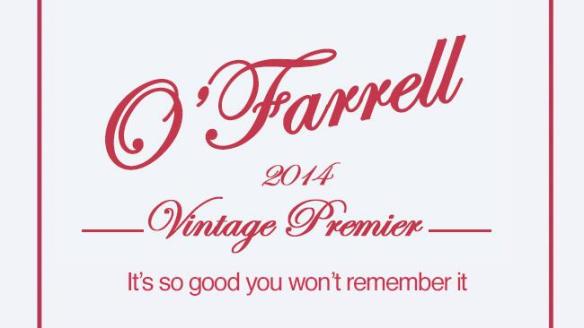
Premier Cru-elled de Chateau ICAC?

I won’t dwell on the whys and wherefores of Mr O’Farrell’s resignation, except to say this: If the Premier genuinely believed he did not receive the bottle of wine in question, and his assertion was subsequently shown to be wrong, does this amount to giving false witness? Surely, the act of giving false evidence involves the commission of a deliberate lie, either with the intention of causing a deception or creating an erroneous version of events. It seems that had Mr O’Farrell, as a Member of the New South Wales Parliament, remembered to declare the gift on his register of pecuniary interests, but later forgot about it or failed to recall it when giving evidence, he might have been made to look merely foolish. However, failing to register the gift was either a costly mistake or a grave error of judgement, and by forgetting it altogether (including his handwritten letter of thanks) it reveals a certain level of incompetence. Yet, how many foolish and incompetent politicians manage to keep their jobs, and even get re-elected?

Some commentators have suggested that the nature of the Premier’s resignation showed real integrity – but the truth is, once the facts contradicted his evidence, his position became untenable, and he realised he had no choice in the matter. (The relevant inquiry had in fact already cleared Mr O’Farrell of any suggestion of wrongdoing in the matter under investigation, but now his reputation is probably tarnished by the implication or perception of corrupt behaviour.)

The big lesson from these latest events is that when we get wrapped up in process or get sidetracked by personal, political or financial outcomes, we can easily lose sight of the need to act with integrity and to exercise our authority and powers of influence with transparency. Otherwise, we end up colluding which allows the smell of corruption to permeate. Politics is not alone in these matters – religious institutions, professional sport and corporate boardrooms have more than contributed to the current malaise.

I experienced a small but significant test of personal integrity early on in my career, when I was working as a paralegal in local government. Part of my role was to provide impartial legal advice to local residents facing housing problems. At the time, the area was undergoing intensive gentrification, and many private tenants were being “persuaded” to move out by landlords and property developers. In many cases, all I could do was advise parties of their respective rights, particularly the tenants who had protection from harassment and unlawful eviction under the relevant housing laws. In some cases, the council could mount criminal prosecutions for more serious offences, but this was rare.

So, one day, one of my “clients” (the advice service was free to the public) brought me a personal gift: a bottle of vodka and a bottle of champagne (probably no more than $50 in total value). I initially refused because I did not feel it was necessary or appropriate that he reward me in this way for simply doing my job. However, because my legal advice had enabled him to negotiate a lucrative payout from his landlord to vacate his home, and because he had been brought up to value displays of gratitude, he insisted I keep the gift and refused to take it back.

I could have just taken the bottles and not said anything to anyone, as there were no witnesses. But whether it was my conscience, or the thought that the client might have said something to a third party that may have compromised me, I immediately raised the matter with my manager. He acknowledged my honesty in reporting it (even though I wasn’t really sure what the council policy was on gifts), but said I could keep the present as it was of nominal value, and because I hadn’t sought or solicited a personal benefit. (He also said that if it was a bottle of gin, he might have taken it for himself… but I think he was joking?)

Nowadays, I’m not so sure that I would have got the same response, and over the years, having worked in some high-profile and highly regulated industries, I am aware that there is far more scrutiny around formal compliance, self-regulation, voluntary codes of conduct and business ethics. Of course, individuals need to feel comfortable about the organization they work for and the role they are expected to perform, to ensure there is alignment with their personal values. In addition, I’m often reminded of three questions you should ask yourself in corporate life whenever you have any doubts about the integrity of your actions:

  • Would you still do it if the CEO or Chairman was watching?
  • What might your clients or your shareholders think?
  • How would it look if it made front page news in the morning?

I think the problem for many modern politicians is that they hardly ever say exactly what they are thinking, for fear of letting slip a personal opinion that may differ from their public persona or their party’s stated policy position. (How often nowadays do Ministers resign on a point of personal principle?) Worse, it has been suggested that “loyalty to party” has been displaced by “loyalty to faction”. As a consequence, they are compromised because they forget about individual accountability; and they collude because they either prefer to toe the party line or hide behind the collective shield of cabinet, ministry or faction. In doing so they demonstrate a lack of personal integrity. Unfortunately, when even “benign” or “innocent” collusion emerges, corruption is never very far away.


POSTSCRIPT:

Since drafting this blog, I have heard several “wise after the event” comments from the chattering classes, which can be summarised as follows:

  • If the original enquiry was not interested in a bottle of wine, was the Premier “mere” collateral damage of the anti-corruption investigation?
  • How could he possibly have forgotten about such a significant gift, and his written note of thanks? What was going on? What was he thinking? What were his staff doing?
  • The 1959 Grange vintage is somewhat overrated (and well past its best drinking) – which might suggest it was worth less than $3,000 (NB: gifts under $500 do not need to be declared on the Parliamentary register of MPs’ pecuniary interests…)
  • On the other hand, bottles of 1959 Grange are being advertised at over $4,000 because the notoriety has boosted its value
  • It again raises questions about whether the electorate can trust any of our politicians – the backdrop being “lies” and “broken promises” over pre-election commitments

When Less really is More

I’ve been doing some home renovations recently, which meant that my kitchen was out of action for several weeks, giving me an excuse to visit a number of local restaurants for the first time. This experience made me realise that as with most other things in life, when it comes to restaurant menus, less is definitely more – the fewer the items, and the simpler the design, the more likely I will enjoy the meal.

At the risk of drawing a very long bow, I see there is a lesson here for anyone involved in product development, content marketing, or service-based solutions: the more choice we lavish on our customers, the more likely we are to confuse or overwhelm them, and ultimately disappoint or even lose them as customers.

As consumers, we are increasingly accustomed to having multiple and seemingly endless choices. While this can make for healthy competition (as long as it can support and sustain market efficiencies), sometimes the fewer options we have the more invested we are in our decisions.

In the case of a restaurant menu, having fewer choices is actually a good thing – either because we are more likely to think carefully before ordering, or because we are being guided to choose between items that have been purposely selected and assembled (curated?) by the chef. Plus, if we make a wrong or poor decision, there may be less to choose from the next time!

So, I found I really appreciated menus that had only 2-3 entrees, no more than 4 main dishes, and a discrete dessert selection. (OK, so the wine list can know no bounds….) Also, if the maitre d’ or waiters have to spend too much time explaining the menu structure, then it tells me more often than not that the restaurant hasn’t got it right.

When you think about it, the notion of “less is more” makes complete sense in this context:

  • If a restaurant has too many items, then not all of them can be of equal quality – how can the kitchen specialise in such a wide variety of dishes?
  • The best ingredients are usually those in season, and preferably locally sourced – which should be a natural constraint on the menu selection
  • Faced with limited choices, there is actually less risk of “menu anxiety” – whereas, agonising over a long list of dishes, or spending time ploughing through an over-elaborate menu can actually diminish the appetite…

I would also be more willing to let the chef decide for me, because a more focused menu should mean that the restaurant is more able to play to its strengths – this concept of the chef as curator should sit at the heart of product portfolios, content selection strategies and customer service options, while still making the customer still feel they have made an informed choice or purchasing decision.

Over the years, I have had the privilege to dine out in major cities and tourist destinations around the world. Some of the most memorable dining experiences I have had usually come down to a specific dish served in a particular restaurant – local speciality, seasonal ingredient, signature recipe, etc. – to which I have often gone back for more because it created such a lasting impression first time around, and because I know my choice will never fail to disappoint. (Of course, there is also the Proustian echo of associating food with a significant time or place….but let’s not over complicate the theory.)

If only everything else could be as reassuringly simple and consistent as a well-designed menu and a well-prepared meal.

Radio comes of age in the social media era

About a year ago, I posted a blog on “Steam Internet” which included some ideas about the importance of radio as a communications platform – even in the age of social media.

Among the individual responses I received, a former colleague recalled how he grew up with radio, and how it was a significant presence in his life as a source of news and entertainment – it kept him company while revising for exams, and allowed him to “share” songs with this friends (via personalised mixtapes). He commented that a pharmaceutical company in Indonesia uses radio as a mainstream outreach channel – because it is relatively cheap, it offers targeted demographics, and it provides access to a large-scale, mass market.

He went on: “Radio is probably still the most effective medium to reach out to large audiences – it is targeted, it is always ON, it is always entertaining, it has loyal followers, and it does not require the listener to have an expensive receiver. More importantly, radio traditionally reached a far larger percentage of the population than what the Internet does today, especially in large developing markets.”

Consumer interest in and demand for audio content is recognised by today’s media industry – hence the growth of podcasting, audio platforms like SoundCloud, streaming services such as Spotify and Pandora, and radio apps like TuneIn – not to mention the growth in Internet radio, digital stations and web-streaming broadcasts.

I tend to agree that radio, after more than 100 years, still offers “new” opportunities for reaching an audience, even Gen Y – but as with any content strategy, it pays to get the model right by:

1. Having great content (plus engaging presenters and skilled producers)
2. Enabling access (broadcasting via any platform, anywhere, any time)
3. Cultivating a strong programming culture (i.e., scheduling and curating a logical flow of information, and across multiple platforms)
4. Encouraging audience participation – radio thrives on giving people a voice, either through phone-in sections, community-made programming, or connecting via “traditional” media such as SMS and Twitter

Radio is also very local (despite global access/reach via apps like SoundCloud Radio) and is usually subject to broadcast regulation. I’ve been involved with a community radio station over the past 3 years, and it has made me aware that audience diversity can be a challenge for broadcasters (how to cater for smaller, minority audiences?), but at the same time many people feel unconnected to mainstream media, such that radio is actually their preferred platform to engage with the world.

Acknowledgment My thanks to Rudy J. Rahardjo for his input to this article.

Has streaming killed the video store?

In the era of Quickflix and internet TV services, why would anyone continue to patronise a bricks and mortar DVD shop? Well I, for one, am a  regular customer of my local independent video store, and here’s why:

First, choice. Clearly, they don’t have every film or TV series ever made, but there’s more than enough to discover during my lifetime. And they stock loads of titles not yet available to stream or download in Australia. (See previous blog on geo-blocking – and at the time of writing, Netflix is not available in Australia.)

Second, they have a great international selection, and their catalogue is not dominated by the latest Hollywood blockbusters. They have a particularly good section of art-house titles, as well as all-time classics, mainstream comedy and big-name dramas.

Third, it’s cheaper. There’s a minimal sign-up cost, no monthly subscription fees, and on average, the nightly cost of a DVD rental can be far less than alternative services. Plus, with most of their DVD’s, you get the bonus material not always available via streaming.

Fourth, it’s quicker. I know this sounds counter-intuitive, but with the slow internet speeds in Australia, it actually takes me less time to walk the few blocks to the video store and back than it does to download a full-length film.

Fifth, the staff make informed recommendations. OK, recommender engines are getting more and more sophisticated, but many still seem to be based on what people bought/downloaded, and not so much on what they actually watched, and really liked. But the video store staff are very knowledgeable about films, and having watched a lot, they can usually offer some personal suggestions based on what I have previously enjoyed.

Finally, the local DVD store is something of a community service, and for that alone I will continue to support it.