Infographic Resumes: Form over Content?

I’m old enough to remember when the filofax personal organiser (think PDA for hipsters?) became the must-have accessory in the yuppy culture boom of the early ’80s. (I recall my housemate, a creative at a leading ad agency, dashing around in panic one morning when he couldn’t find his filofax before he left for work – “That’s got my whole life in it!”.)

About the same time, home computers and desktop publishing software came on the market, and everyone became their own graphic designer.

One (thankfully short-lived) outcome when these trends collided was the emergence of the desktop designed resume, that could be printed out and stored in a filofax, including some that folded out to reveal the candidate’s illustrated profile. (I kid you not – I received several of these “cutting edge” CV’s when hiring for graduate-entry roles.)

More recently, there appears to be a fascination for infographic resumes – with a number of online tools available to turn your illustrious career into a poster with apparent ADHD – such as Pinterest, Kinzaa, Vizualize.me, and re.vu, among others.

I have no problem with using infographics to portray data and content in interesting and informative ways. But the problem with many of the resume designs I have seen is that they are either limited to portraying careers in a purely linear and/or statistical fashion; or they overcompensate by using “gimmicks” such as over-stylised graphics, irrelevant iconography and even multiple fonts. Much about these designs reveal a tendency for form over content.

While it’s important to be able to tell a good story, what employers often want to know is: what can you do for them and their clients, now and in the future?
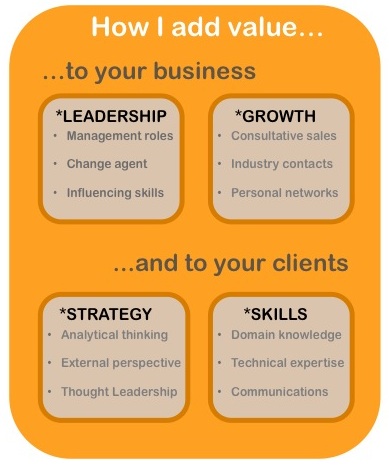
Rory Manchee - Value Proposition - Sept 2014


Content Marketing and the “New Hierarchy of Needs”

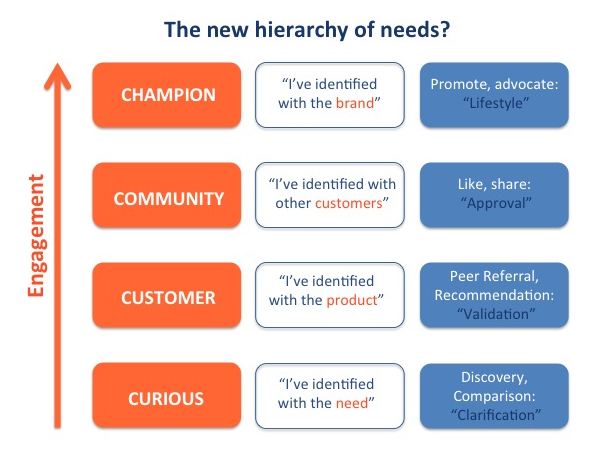
Maslow’s theory on the “Hierarchy of Needs” has become shorthand for explaining human behaviour and motivation – primarily in our personal lives, but increasingly in our working lives. At the risk of offering an answer to yet another first world problem, it seems to me that many social media platforms and content marketing solutions are trying to recalibrate Maslow for generating deeper (and sometimes more meaningful) engagement with consumers. So, by way of a simple infographic, I am offering my own theory on the new hierarchy of needs:

New Hierarchy of Needs


When we are looking for a product or service to meet a need, we are usually in “discovery mode” – we are searching for content that helps us by offering suggestions, comparing products and prices, and clarifying the precise need. So, we are either browsing, curious, or looking for assistance.

Having found some possible solutions, we seek reassurance via informed recommendations, peer referrals and published reviews. We may place different weight on this information depending on the source, but we are seeking justification for our reason to buy, or validation for becoming a customer.

If we are happy with our choice, and given the right opportunity and encouragement, we may be willing to tell our friends and anyone else who’s interested via Likes and social media posts and reviews. This is an interesting point in the engagement transaction – going from peer-to-peer sharing, to looking for approval for our decision from the wider community.

Finally, if we are so enamoured with the product, and we enjoy sharing our experiences, we may be flattered into making a lifestyle statement about our preferences; we could become a self-identified “voice of authority” through blogging and endorsements, or we might be willing to be closely identified with a brand as an advocate or champion (the sort of customer beloved of Net Promoter Scores).

The ultimate consumer-turned-champion was, of course Victor Kiam, the customer who liked the product so much, he bought the company….

C-Suite in a quandry: To Blog or Not To Blog…

Should CEO’s be on social media? That is the question many boards, PR advisers, marketeers and C-Suite occupants are faced with these days. Partly driven by existentialist angst (“I Tweet therefore I am”), partly a desperate act of “me too”, many CEOs are in a dilemma about how to engage with the new media.

While it might sound like a good idea to have a CEO blog, in the wrong hands or used inappropriately, it can come across as inauthentic, too corporate, or just crass.

The use of CEOs as “personal brands” is nothing new – think of Richard Branson, Anita Roddick, Steve Jobs, Jack Welch etc. And while social media has the potential to extend the CEO’s reach to customers, shareholders and employees, it also abhors a vacuum. If companies do not take control of their public persona, their customers and employees (supporters and detractors alike) will fill the void for them.

I am seeing this debate play out in different ways:

First, there is a difference between a personal brand and a business brand, so it is important to establish boundaries while recognising how the CEO’s personal standing can be used effectively to complement the corporate presence.

Second, having the CEO recognised as an expert can enhance personal influence but may not directly benefit the company if it is not relevant to the business – does Warren Buffet’s prowess on the ukulele boost instrument sales, or help the share price of Berkshire-Hathaway?

Third, if CEOs do choose to outsource their blog content, make sure it is genuine and aligns not only with the CEO’s personal values but also with those of the company, customers, shareholders and employees.

Finally, CEOs or Boards struggling with this topic, or those worried about whether to take the plunge into social media would be advised to consult Dionne Kasian Lew‘s new book, “The Social Executive”, which is sure to become an essential guide on the subject.