101 #Startup Pitches – What have we learned?

During the past 3 years of writing this blog, I have probably heard more than 100 startup founders pitch, present or share their insights. Most of these pitch nights have been hosted by Startup Victoria, with a few on the side run by the Melbourne FinTech Meetup and elsewhere.
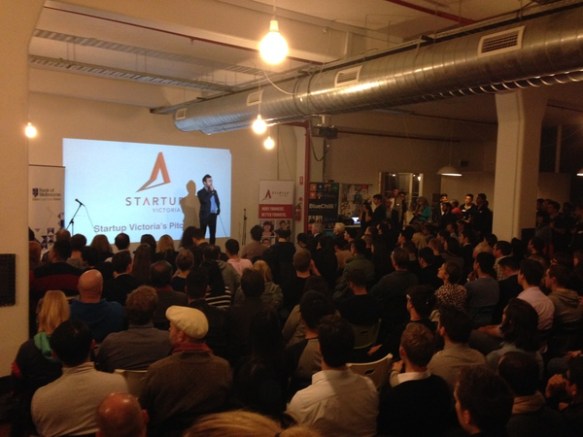
Image sourced from Startup Victoria Meetup

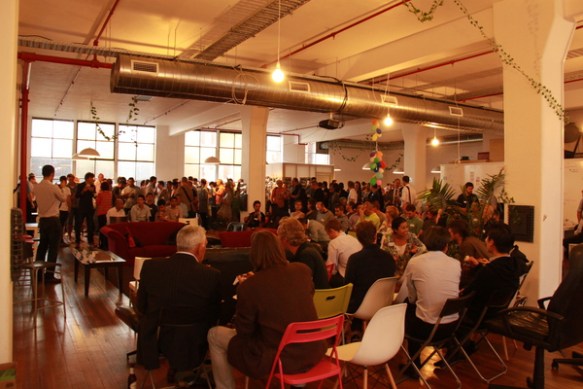
Image sourced from Startup Victoria Meetup

Based on all these presentations, I have collated a simple directory of each startup or pitch event I have covered or mentioned in this blog, as well as a few key accelerators and crowdfunding platforms.

What have we learned over that time?

First, apart from the constant stream of new startups pitching each month, it’s been impressive to witness the Melbourne startup community collaborate and support one another.

Second, some of the international founders who have spoken are among the rock stars of startups – and we are fortunate that they have been willing to spend time in Melbourne.

Third, a number of the local startups who have pitched during this time have become well-established and well-known businesses in their own right.

This all means that besides creating great products and services, and being willing to share their experiences, the founders have helped aspiring founders and entrepreneurs to appreciate the importance of:

  • product-market fit;
  • working with agile processes and lean startup models;
  • tackling prototyping and launching MVPs;
  • learning what to measure via key metrics;
  • figuring out funding; and
  • knowing when to pivot or fold.

Looking at the cross section of pitch nights, panel discussions and guest speakers, there are some significant trends and notable startups to have emerged:

Industry focus: Not surprisingly, the pitches are heavily biased towards FinTech, MedTech, Education, Digital Media, Enterprise Services and Consumer Services. There are a some key startups focused on devices (e.g., SwatchMate and LIFX); a smattering in recruitment, fashion, gaming, health and well-being, property services, social media and even logistics. But there are surprisingly few in environmental technology or services.

Business models: Two-sided market places abound, as do customer aggregators, sharing platforms (“the Uber for X”, or “the AirbnB of Y”), freemium apps and subscription services (as opposed to purely transactional businesses). There are also some great social enterprise startups, but surprisingly no co-operative models (apart from THINC).

Emerging stars:  Looking through the directory of startups, some of the star names to have come through during this time, based on their public profile, funding success, awards (and ubiquity at startup events….) include:

CoinJar, LIFX, Tablo, SwatchMate, etaskr, DragonBill, Culture Amp, Eyenaemia, Timelio, Moula, nuraloop,  Konnective, OutTrippin and SweetHawk.

Acknowledgments: Some of the startups and pitches in the list are just ideas, some don’t even have a website, and some didn’t get any further than a landing page. However, I have not been able to include all the startups that turned up at Startup Alley, nor the many more startup founders I have met through these events (but whom I didn’t get to see pitch or present), nor the startup ideas that were hatched during the hackathons I have participated in. And there are a few startups that I could not include because I heard them pitch at closed investor events. Finally, I am and have been very fortunate to work with a number of the startups listed, in various capacities: Brave New Coin, Ebla, Re-Imagi, Slow School of Business and Timelio. To these startups and their founders, I am extremely grateful for the opportunities they have given me.

Next week: Putting a Price on Value
 

Startup Victoria’s #Pitch Night for #Startup Week

The grand finale of Melbourne Startup Week was Startup Victoria‘s regular pitch night held at inspire9. Six months in, and this new monthly format has become a major fixture on the startup calendar, judging by the audience size, and the range of startups applying to pitch. There are still a few teething problems (the AV quality is a bit variable, and some of the judging panels are probably too “soft”…), but it’s established something of a benchmark against which other pitch nights might be compared. This month’s cohort covered medtech, wellness and the greetings industry.

StartUp Vic 240616

Cardly

Cardly is an online service that allows users to send personalized greetings cards to friends and loved ones. Under the banner of “you write, we post”, customers can choose from a range of artist-designed cards, add their own message, and Cardly will then print and send the card from a location as close as possible to the recipient (currently London, Sydney and New York).

A variant on the familiar 2-sided market model, Cardly has built a community of independent artists who supply the card designs. Artists are charged a sales commission on each order, and they get their own store front on Cardly. And for anyone struggling for words, there’s a range of predefined texts and doodles.

Because this is a print-on-demand model, using digital printing, there is zero wastage (unlike the traditional greeting card industry where over-production and limited distribution are commercial headaches). However, even with some “handwriting” fonts, there are some design and user limitations, which something like the Sensel Morph touch-sensitive track-pad may be able to address?

Cardly is aiming to take a chunk of the retail market and disrupt the global greetings card industry. The judges took a slightly different view. Based on the founders’ own data, consumer customers will probably send an average of 12 cards per annum, and at $6.45 per card, it’s a tough sell. However, by looking at a lower cost per acquisition, addressing the corporate market and offering a white label solution, the business would be in a better position to scale. There was also a suggestion for an engineered viral solution to drive traction through collaborative cards, and other ideas for partnerships (e.g., gift buying services and gift cards).

Cardihab

Cardihab (“Get Back To Life”) has appeared in this blog before, and is a CSIRO spin-out that has developed a mobile support solution for cardiac patients via an app and a patient/GP portal. As someone whose father is recovering from major heart surgery, this pitch got my personal vote!

The success rate is staggering – patients using the app are 70% more likely to complete rehab. So far, four hospitals have signed up, with three more in the pipeline. As well publishing their research, the founders see Cardihab as being a broader platform for managing chronic illnesses.

Currently in the process of getting investor ready, the proposed business model will charge an annual license for hospitals, plus a per patient fee.

The judges had some questions about the potential market (“Anyone with heart disease”) and wanted to know a bit more about the bench strength of the team.

Black

Staying with the medtech and after-care theme, Black‘s modest goal is to “revolutionise healthcare”, via an in-home observation solution that scans patient movement and analyses interaction with their helpers. The scanner strips out personal data (features, attire) using skeleton tracking to monitor movement and falls, while learning from patient gestures. It can use real-time alerts to contact helpers, carers and emergency services.

The scanning software is currently trialing in casinos to refine the machine-learning algorithms, and all trials are subject to ethical approval.

Although still at a conceptual stage (in terms of health care applications), and notwithstanding privacy concerns, this project demonstrates that predictive tools will be vital to helping the elderly and the infirm to continue living independently in their own homes, which will have significant advantages to the cost of long-term care, preventative health services, patient rehabilitation and after-care services. There are doubtless other, similar solutions in development, and the outcome will likely be a mix of blended services based on ease of use, cost of roll-out, system interoperability and patient efficacy.

Honee

Last to present was the team from Honee which is bringing digital connectivity to the wellness, fitness and beauty industry. The solution they offer is designed to make it easier to discover and book an appointment for a treatment, consultation or workout session, by connecting merchants and users.

With previous international experience at Delivery Hero, Quandoo and Zomato, the founders have strong startup business credentials in adjacent markets – connecting consumers to service providers via search discovery, customer reviews, personal recommendations and proximity.  Of particular interest in this sector is the growing “wellness travel market”.

There are undoubtedly competitors already working on similar solutions; and it may just be that I’ve seen far too many pitches in the past few years, but I’m sure there was a startup out there offering a “just in time” service to help find and book appointments for personal services – Fit Me In? – and I recall another comparable startup idea for restaurants to offer last-minute menu specials via a location-based app.

Nevertheless, as we know, execution is key, and the judges asked about the huge cost to build a consumer brand – hence Honee is focusing on service providers to get their brands on line. There is an MVP in pre-launch, and Honee has built a mobile responsive website, with a grant from the Melbourne Accelerator Program.

After the vote (and thanks to technology, the results of which were available in minutes….) Cardly was declared the night’s winner.

Next week: Moving #innovation from “permitted” to “possible”

Another weekend, another hackathon….

Last month, I competed in my second hackathon of the year, the #HSCodeFest sponsored by the Herald Sun and News Corp, and hosted by Melbourne University’s Carlton Connect. I’m pleased to say that our team of four, which was only formed on the first night, came 3rd in the pitch competition – with an idea for a news quiz app.

Screen Shot 2015-12-18 at 3.44.56 PMThat particular weekend was quite an eventful one for local startups – not only were there at least two other hackathons being held in Melbourne at the same time, but the State Government also announced its LaunchVic initiative. Small Business Minister, Philip Dalidakis found time in his busy schedule to address the #HSCodeFest participants, which was a great incentive. The previous weekend saw another Startup Weekend event, and last weekend Carlton Connect hosted yet another industry hackathon sponsored by the GE Industrial Challenge. And of course, since then we have had the Prime Minister announce the National Innovation and Science Agenda. To paraphrase Mr Turnbull, there’s never been a more interesting time to be a startup….

Having participated in Startup Weekend’s first #FinTech hackathon back in March this year, I was a lot more prepared, and had a much better idea of what to expect. Even though I didn’t pitch a specific idea on the opening night, I used my previous team-building experience to make sure we had a balanced mix of skills and expertise. I was also clear to make sure that once we had agreed on the project idea, everyone had specific roles, and we constantly checked in on progress and next steps.

As usual, the team generated far more content, data and ideas than we actually used in the pitch presentation. We also kept it very simple, by focusing on the key concept, demoing an MVP, outlining the commercial strategy, describing the business plan, and establishing just enough knowledge and awareness about the market opportunities, even though it had not been possible to fully scope them. For an insider’s view, check out my team-member Nathan’s blog.

We have seen over the past 12-18 months that the hackathon model is being deployed in many different ways to try to stimulate innovation and generate new business ideas. Even government departments and public utilities are getting in on the act, by enabling participants to access data sets, software, technology and APIs to see what they can come up with. Large corporates, who struggle to embed innovation into their organisations, are also holding internal competitions drawing on the experience of meetups, hackathons and pitch nights.

I only see this as a positive development, as long as the energy, enthusiasm and experience can be channelled into meaningful outcomes, which enable in-house talent and external expertise to combine to build great products and services that customers want, and/or identify and deliver significant process improvements and efficiency gains.

However, part of me is sceptical – as someone who is probably much older than the average age of a hackathon participant, I’m still amazed how many of my contemporaries either have no idea or simply don’t “get” the hackathon or meetup concept. They seem astonished that anyone would want to get together with total strangers, and spend their evenings let alone a whole weekend working with them, for “free”. To those of my peers who may see it that way, I would point out that participating in these events is a cheap and effective way of accessing new ideas and skills, meeting talented people, and acquiring new skills and knowledge.

Finally, if your organisation is thinking about running a hackathon or similar event for the first time, I’m more than happy to share my insights – contact me via this blog.

Since the holidays will soon be upon us, Content in Context is taking a short break. Normal service will be resumed on January 5. To my many regular readers and followers, I wish you all a safe and peaceful New Year.

Next: Surrealism, Manifestos and the Art of Juxtaposition

The convergence of #MedTech – monitoring, diagnostics, remediation

Earlier this year, I participated in MedTech’s Got Talent, a competition for medical technology and biotech startups, organised by STC. Now, HCF in partnership with Slingshot have announced a similar accelerator program, called Catalyst. Launched at a recent meetup event hosted by Startup Victoria*, Catalyst is the latest industry initiative to lend support to the growing #MedTech sector. It’s fair to say that the sector is not without its challenges (regulatory compliance and IP protection being foremost), but there is substantial investor interest given the potential for growth and widespread application of the resulting technologies. I also see that there is increasing convergence in respect to some of the digital products being brought to the market – through the use of wearables, mobile apps and analytics to deliver monitoring, diagnostic and remedial solutions.

Screen Shot 2015-11-22 at 8.10.47 PMAt the Catalyst launch, three #MedTech founders discussed their startup experiences and offered some insights to budding applicants. Jarrel Seah (Eyenemia), Phil Goebel (Quanticare) and Leonore Ryan (Cardihab – Cardiac Rehab Solutions) covered the product development process, being part of an accelerator program, and the specific challenges of medical technology.

There was  broad agreement that Australia (and Victoria in particular) has a strong and successful history of #MedTech development and innovation. There was also a sense that the future funding of telehealth services will be key to the sector’s development, especially the shift from “fee for service/solution” to “fee for value” models.

Aside from the regulatory and IP challenges, two of the biggest hurdles for #MedTech are the customer complexity, and procurement models, which can be summarised as follows:

Who Pays? Is it the clinician, patient or carer? Who, in effect, is the customer?

How Do They Pay? Each State has its own procurement and hospital funding models, plus there is the interplay of private health insurance and providers.

During the product development process, the founders stressed the need to manage expectations for an MVP, the use of customer discovery interviews, and the importance of making clinicians part of the solution. There is also a problem with data gaps (e.g., hospital re-admissions), and the requirement to establish patient trust: while the software, data and apps can support more meaningful consultation, there still has to be some human component to foster behaviour change. There was also a comment about marketing for tomorrow’s market, not the current state.

Having each been through some form of accelerator program, there was common agreement on the benefits:

  • Access to networks of mentors and strategic advisers
  • Help with navigating the regulatory landscape
  • Options for one-off funding to help convert trials to customers
  • Ability to focus on the project, along with peer stimulation, and a sense of urgency

Each of the three startups mentioned here deploy some combination of smart phone technology, sensors and analytics – just as Dr.Brand does, which featured at the recent Future Assembly. The notion was reinforced most recently at Swinburne University’s Design Factory Gala NIght which showcased, among others, innovative #MedTech student projects that utilise a mix of digital display/visualisation, wearable devices, mobile apps and analytics to address three key cognitive-related issues: patient falls in hospitals, dementia, and Asperger syndrome.

Previously, I have described health as one of the three pillars of the digital economy. Furthermore, the future of #MedTech (as distinct to biotech) is going to be built on the combined deployment and integration of smart sensors, personal devices, artificial intelligence and machine learning to monitor, diagnose and remediate behaviour – not necessarily to cure the patient, but to overcome physiological challenges and age-related conditions.


*Apologies – normally I acknowledge the Startup Victoria event sponsors – but since the team have been doing such a great job in securing new supporters, there are so many to mention!

Next week: There’s an awful lot of coffee in Japan (but not much espresso….)